
How to use the Etsy fee calculator
- Enter your item price and the shipping you charge the buyer.
- Add your cost to make the item (materials, packaging) and your shipping cost (the label).
- Enter the buyer's sales tax rate. Etsy collects it, and payment processing is charged on it.
- If the sale came from an Offsite Ad, choose 15% or 12%.
- Set the profit margin you want to see the price that gets you there.
Etsy fees in 2026 (US sellers)
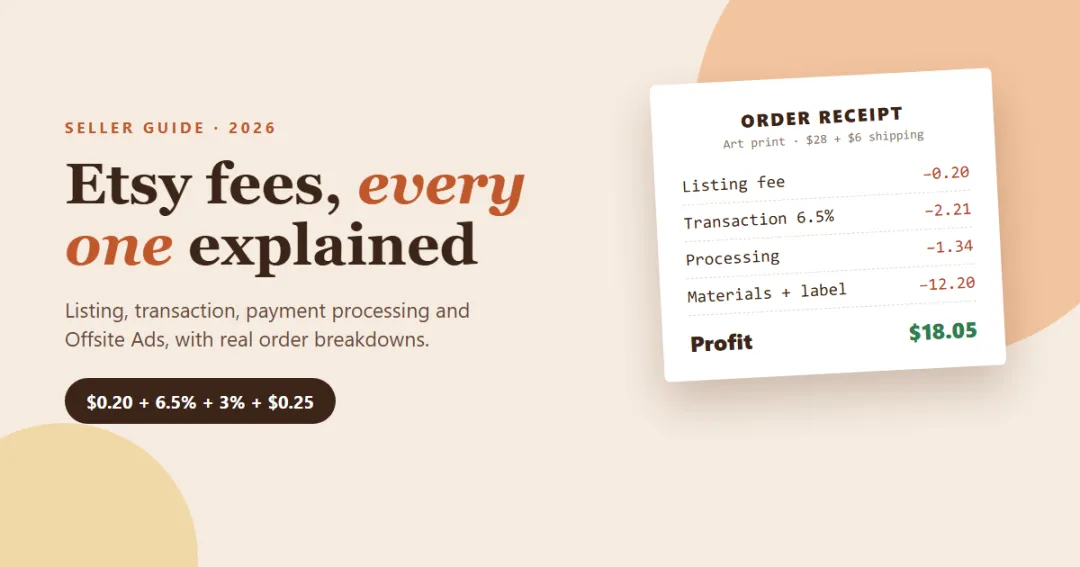
| Fee | Rate | Charged on |
|---|---|---|
| Listing fee | $0.20 | each listing, for 4 months or until it sells |
| Transaction fee | 6.5% | item price + shipping + gift wrap |
| Payment processing | 3% + $0.25 | the full order total, including sales tax |
| Offsite Ads | 15% or 12% | item price + shipping, max $100 per order |
Rates checked in October 2026. Sellers outside the US pay different processing rates, and Etsy can change its fees, so compare with the Fees & Payments section of your shop.
A worked example
You sell a candle for $35 with $5 shipping. The buyer's sales tax is 7%.
- Listing fee: $0.20
- Transaction fee: 6.5% × $40 = $2.60
- Payment processing: 3% × $42.80 + $0.25 = $1.53
- Total Etsy fees: $4.33, and Etsy deposits $35.67
The candle costs you $9 to make and $4.50 to ship, so you keep $22.17, a 55% margin. Your break-even price is about $10.46. If the same sale came through an Offsite Ad at 15%, Etsy would take another $6.00 and your profit would drop to $16.17. Price with that in mind if your shop is under $10,000 a year and you haven't opted out.
How to keep more of each sale
- Price for fees from the start. Fees take roughly 10% of every order, and more with ads. Build them into the price instead of absorbing them.
- Don't undercharge shipping. You pay 6.5% on shipping either way, so charging less than the label costs is a loss twice over.
- Watch multi-quantity listings. Each sale renews the listing for another $0.20; that's fine on a $35 item and painful on a $3 one.
- Bundle small items. The $0.25 processing fee and $0.20 listing fee weigh more on cheap items. Sets and bundles raise the order value.
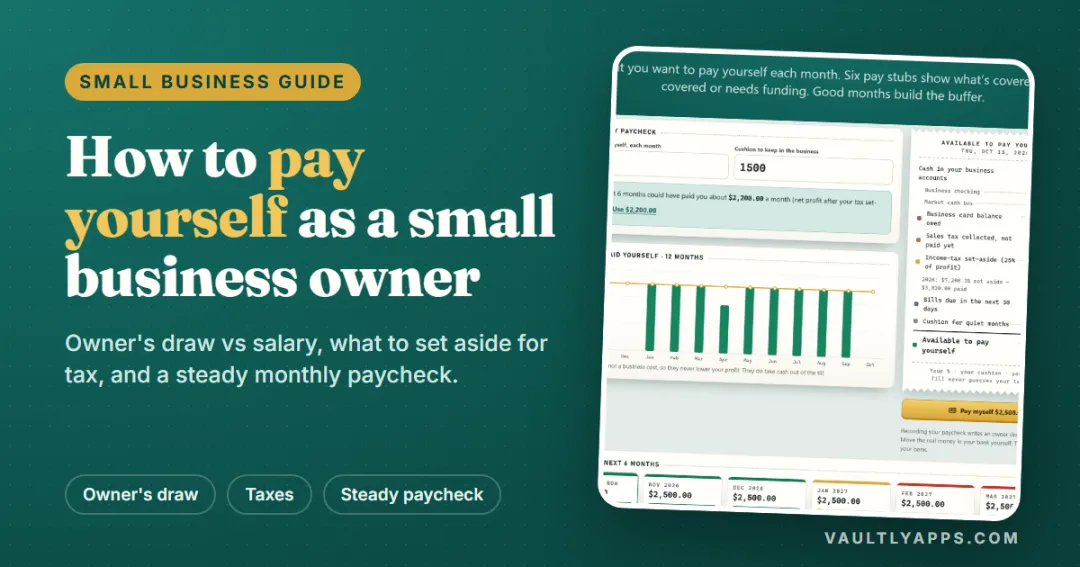
- Count your time. If your "profit" is really your wage, see what you earn per hour. The guide on how to pay yourself as a small business owner shows how.
Set the right price
Work backwards from the margin you need. The markup calculator turns your cost into a price, the profit margin calculator checks margin after any marketplace's fees, and the break-even calculator tells you how many sales a month cover your fixed costs, from supplies bought in bulk to software subscriptions.
Selling on eBay as well? The eBay fee calculator does the same job with eBay's fees.
See the whole shop, not one order
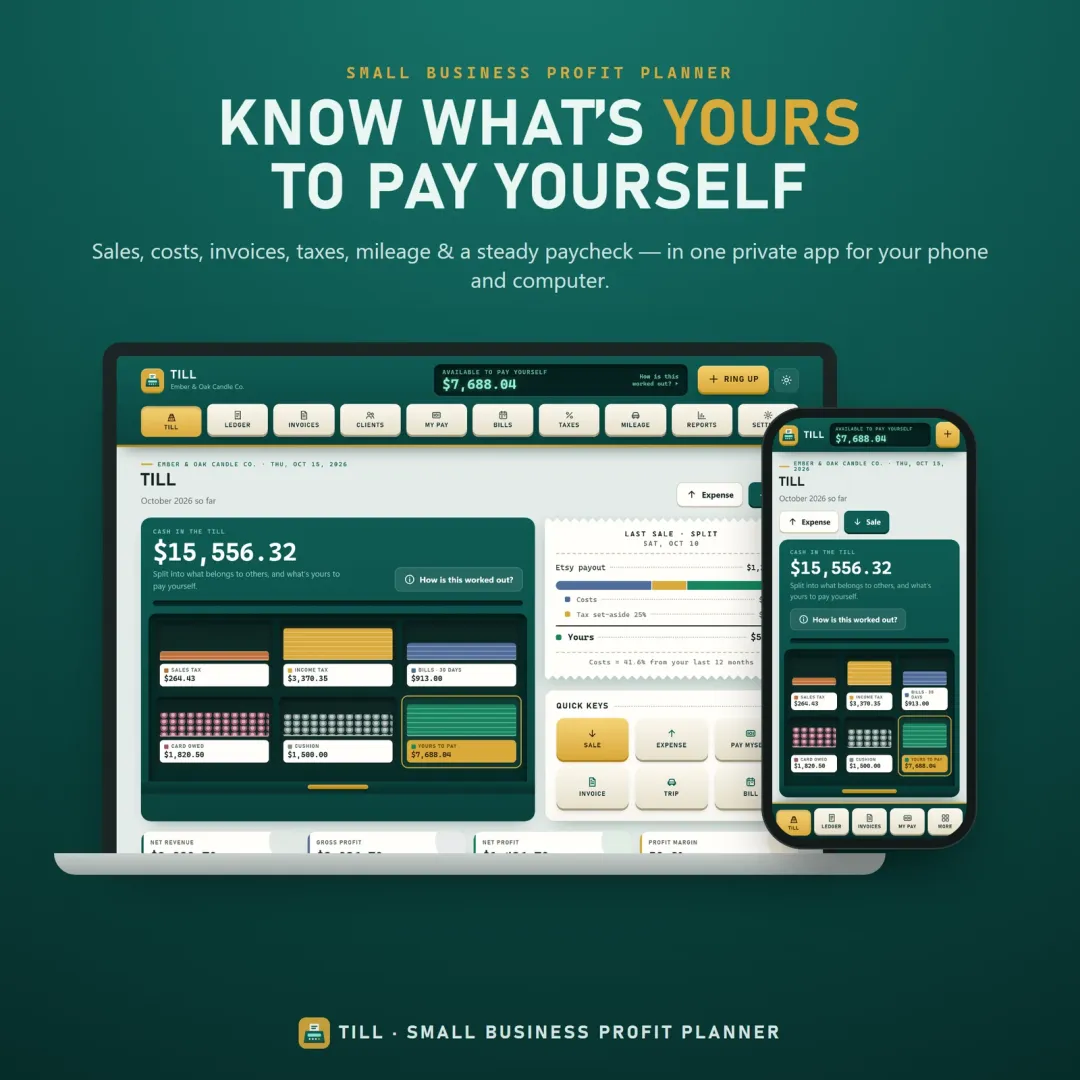
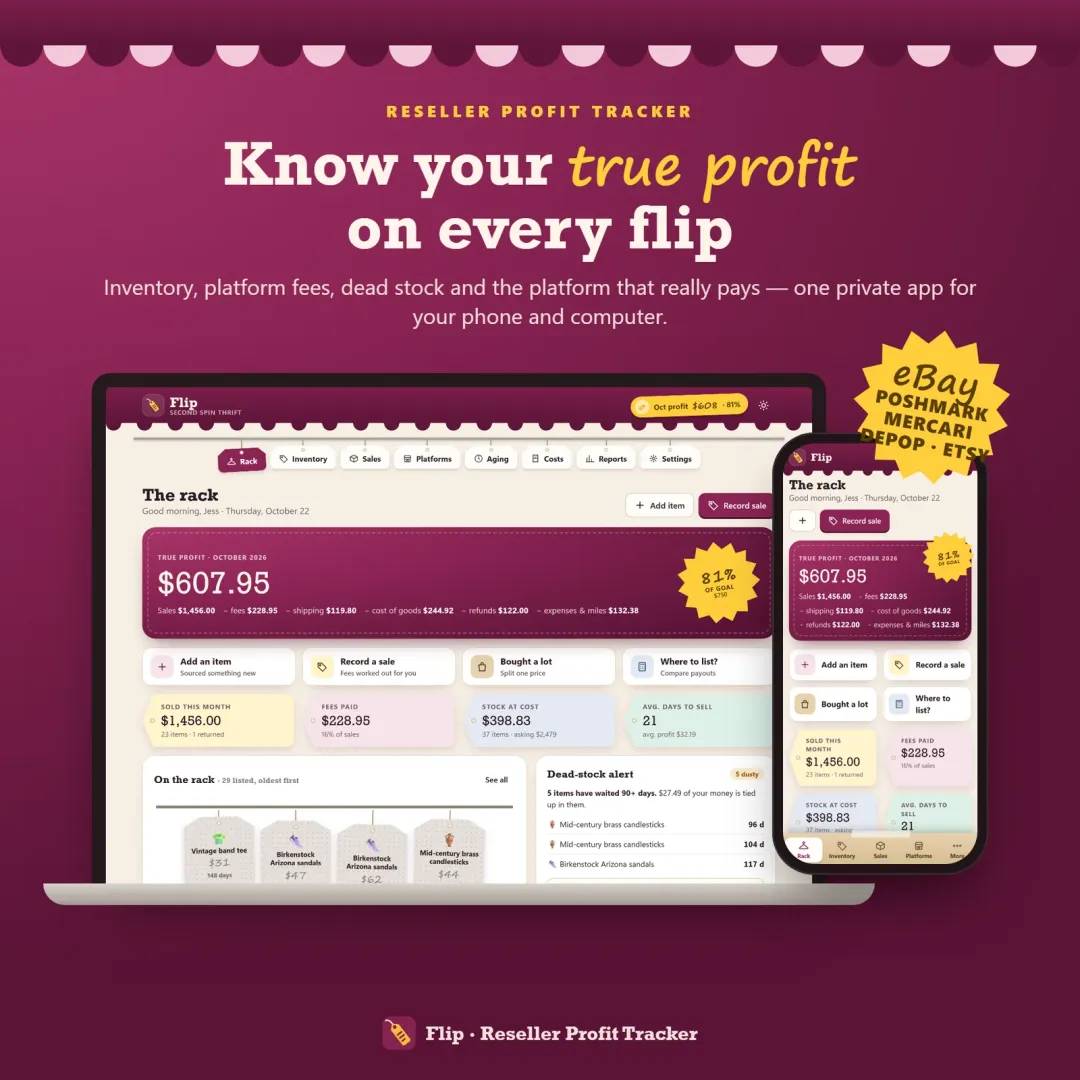
One order is easy; a month of orders with refunds, ads and supplies is where profit disappears. Till is a small business profit planner that shows revenue, costs and what you can pay yourself each month. If you resell rather than make, Flip tracks every item's fees and profit across platforms. Both have a free demo with sample data.
Frequently asked questions
How much does Etsy take per sale?
Does Etsy charge fees on shipping?
What are Etsy Offsite Ads fees?
Do I pay the listing fee again when an item sells?
What price should I charge on Etsy?
Are there other Etsy fees?
Written by
Finance Specialist & Editor, VaultlyApps
Emma Whitfield writes and edits the VaultlyApps money guides and free calculators. Her focus is US household finance — budgeting on a real paycheck, paying down credit card and student debt, emergency funds and savings goals, renting — and the money side of freelancing and small-business income, from pricing and profit margins to self-employment tax. Every guide is researched against primary sources such as IRS publications and the CFPB, every number is checked in our tested calculators, and tax content is reviewed each year when new IRS figures come out. Emma is not a licensed financial adviser or tax preparer; her work is general education, not personal advice.
Researched against primary US sources, checked against independent calculators and reviewed by a finance expert on our team. Written for US readers — general education, not financial, tax or legal advice. Editorial policy · Disclaimer