
How to use the eBay fee calculator
- Enter the sold price and the shipping the buyer paid (0 for free shipping).
- Add what you paid for the item and your real shipping cost: the label plus packaging.
- Pick the category. Most items are 13.6%; books, movies and music are 15.3%. Choose "Custom rate" if you have an eBay Store.
- Enter the buyer's sales tax rate (eBay's fee includes it), any Promoted Listings rate and whether the buyer is outside the US.
You'll see every fee, what eBay pays you, your profit and margin and your break-even price.
eBay fees in 2026 at a glance
| Category | Final value fee | Per-order fee |
|---|---|---|
| Most categories | 13.6% up to $7,500, then 2.35% | $0.40 ($0.30 for $10 or less) |
| Books, movies & music (not vinyl) | 15.3% up to $7,500, then 2.35% | $0.40 / $0.30 |
| Trading cards & coins | 13.25% up to $7,500, then 2.35% | $0.40 / $0.30 |
| Handbags | 15% up to $2,000, then 9% | $0.40 |
| Athletic shoes $150+ | 8% | none |
These are US rates for sellers without a Store, checked in October 2026. eBay changes fees from time to time, so always compare with the fee table in your Seller Hub.
A worked example
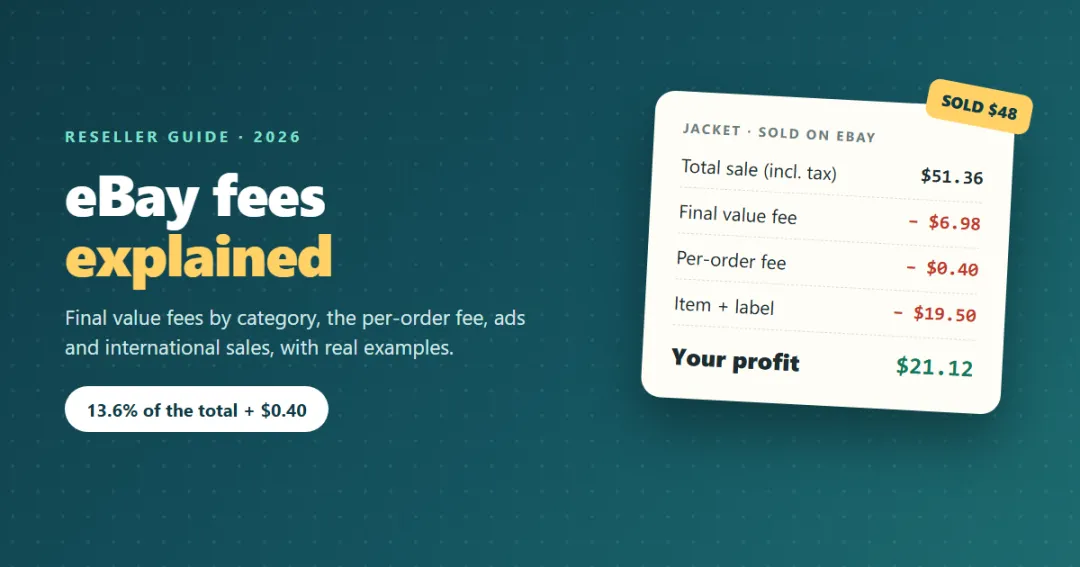
You sell a jacket for $40 and charge $8 shipping. The buyer's state charges 7% sales tax, so the total sale is $51.36.
- Final value fee: 13.6% × $51.36 = $6.98
- Per-order fee: $0.40
- Total eBay fees: $7.38
- eBay pays you: $48 − $7.38 = $40.62
You paid $12 for the jacket at a thrift store and $7.50 for the label and mailer, so your profit is $21.12, a 44% margin on what the buyer paid you. The break-even price for the same item and shipping is about $15.29: list for less and you lose money.
Fees that catch resellers out
- Fees on shipping and tax. The percentage applies to the whole amount the buyer pays. Charging more shipping doesn't avoid the fee.
- Promoted Listings. A 5% ad rate on that $51.36 sale is another $2.57. Track which sales came from ads.
- International buyers. eBay adds 1.65% when the buyer's address is outside the US.
- Below-standard seller level. If your account falls below standard, eBay adds 6% to the final value fee. Ship on time and keep defects low.
- Insertion fees. Most sellers get 250 free listings a month; after that, listings cost $0.35 each in most categories.
Price your items so every sale is worth it
A sale isn't worth it just because it sells. Fees take about 14–16% of each order, and your shipping supplies, gas to the thrift store and time cost money too. Before you buy inventory, check what the item sells for, run it through this calculator and make sure the profit is worth the effort.
Use the markup calculator to set a target markup on what you pay at the source, and the sell-through rate calculator to see how fast a category really sells. Selling on Etsy too? The Etsy fee calculator works the same way with Etsy's fees.
Track every flip, not just one
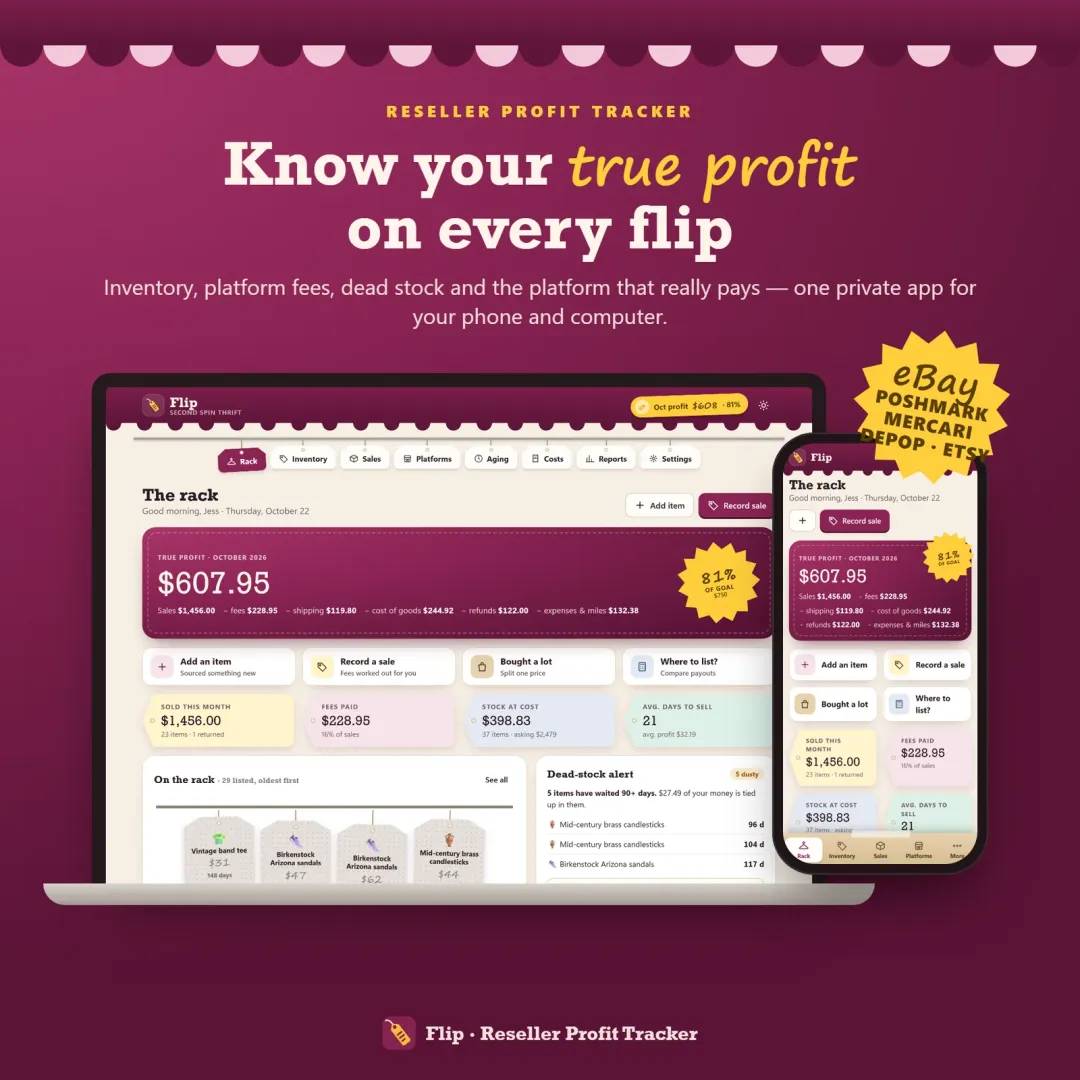
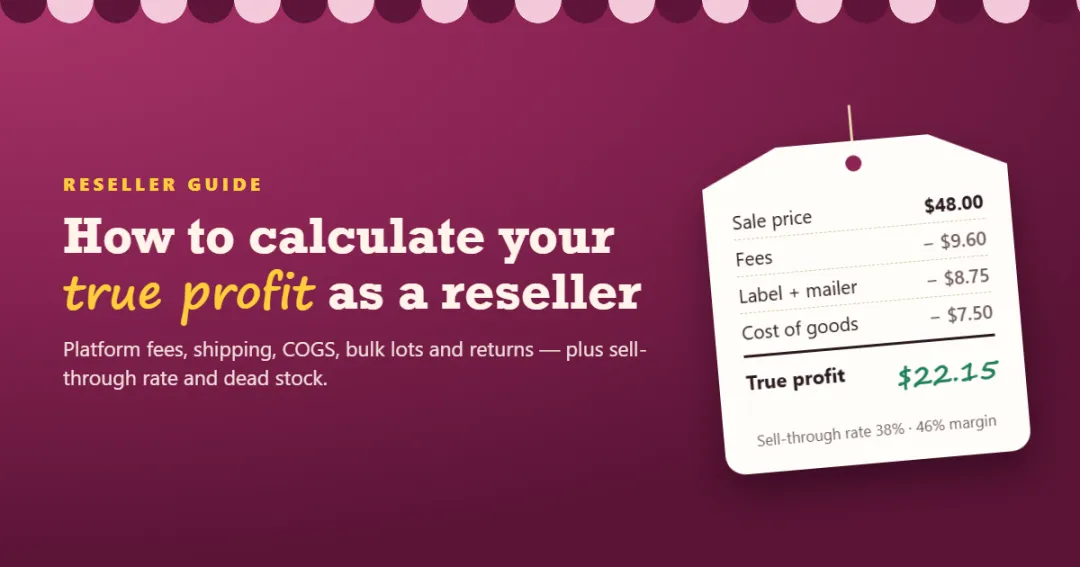
One sale is easy to work out. Fifty a month across eBay, Poshmark and Mercari is not, and that's where resellers lose track of real profit. The step-by-step guide on how to calculate reseller profit shows the full method, including unsold inventory and mileage. When you're ready to stop using spreadsheets, Flip tracks every item from purchase to payout, with fees and profit per platform.
Taxes on eBay profit
eBay sends a Form 1099-K once your sales pass the IRS reporting threshold, but tax is owed on profit, not on sales. If you resell as a side business, your profit is also subject to self-employment tax. The self-employment tax calculator estimates what to set aside.
Frequently asked questions
How much does eBay take from a $100 sale?
Does eBay charge fees on shipping and sales tax?
What is the eBay per-order fee?
Does eBay charge a separate payment processing fee?
How do Promoted Listings fees work?
Is it cheaper to have an eBay Store?
How do I calculate profit on an eBay sale?
Written by
Finance Specialist & Editor, VaultlyApps
Emma Whitfield writes and edits the VaultlyApps money guides and free calculators. Her focus is US household finance — budgeting on a real paycheck, paying down credit card and student debt, emergency funds and savings goals, renting — and the money side of freelancing and small-business income, from pricing and profit margins to self-employment tax. Every guide is researched against primary sources such as IRS publications and the CFPB, every number is checked in our tested calculators, and tax content is reviewed each year when new IRS figures come out. Emma is not a licensed financial adviser or tax preparer; her work is general education, not personal advice.
Researched against primary US sources, checked against independent calculators and reviewed by a finance expert on our team. Written for US readers — general education, not financial, tax or legal advice. Editorial policy · Disclaimer