Poshmark vs Mercari vs Depop (and eBay): Which Pays Resellers the Most in 2026?
Poshmark takes 20%, Mercari 10%, Depop just 3.3% + $0.45 in the US, and eBay about 15%. But the platform with the lowest fees isn't always where you make the most. Here's a side-by-side of fees, profit on real items, buyers, shipping and speed — and how to choose where to list.
In this article
- The fees side by side (2026, US)
- What you actually keep: three real items
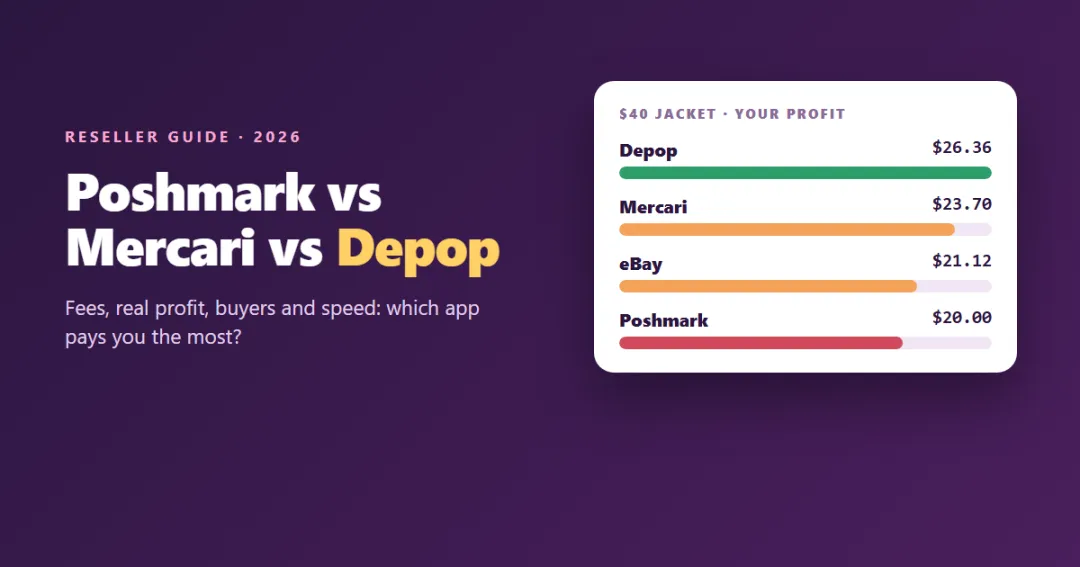
- A $40 jacket (bought for $12, $8 shipping, $7.50 label)
- A $100 pair of boots (bought for $25, $10 shipping, $9 label)
- A $12 T-shirt (bought for $3, $5 shipping, $4.50 label)
- Watch Poshmark's $15 line
- Fees aren't everything: buyers, speed and effort
- How to choose where to list
- Don't forget the costs behind the fees
- Taxes on reselling
- Track it all in one place
- The short version
You found a great jacket at the thrift store for $12. Where should you sell it? Poshmark, Mercari, Depop and eBay all promise buyers, and all take a cut — but very different cuts. Pick the wrong one and you could give away a quarter of the sale; pick the "cheapest" one and the jacket might sit for months.
This guide compares the four biggest reselling apps for US sellers in 2026: their fees, what you actually keep on real items, who buys there, how shipping works and how fast things sell. To compare any item on seven platforms at once (including Etsy, Amazon FBA and Shopify), use the free reseller fee calculator.
The fees side by side (2026, US)
| Platform | Seller fee | Charged on | Shipping |
|---|---|---|---|
| Poshmark | $2.95 under $15; 20% from $15 | item price | buyer pays a flat prepaid label |
| Mercari | 10% | item price + shipping | buyer pays or you offer free shipping |
| Depop | 3.3% + $0.45 (no selling fee on most US listings) | price + shipping + tax | buyer pays or you offer free shipping |
| eBay | 13.6% + $0.40 per order (most categories) | price + shipping + tax | you set it, or free shipping |
Rates come from public fee guides checked in October 2026. Mercari and Depop in particular have changed their fees several times in recent years, so check the app before you list; every rate is editable in the calculator.
What you actually keep: three real items
For each item: the buyer's sales tax is 7%, and on Mercari, Depop and eBay the buyer pays shipping and you pay for the label. On Poshmark the buyer's label covers shipping.
A $40 jacket (bought for $12, $8 shipping, $7.50 label)
| Platform | Fees | Your profit |
|---|---|---|
| Depop | $2.14 | $26.36 |
| Mercari | $4.80 | $23.70 |
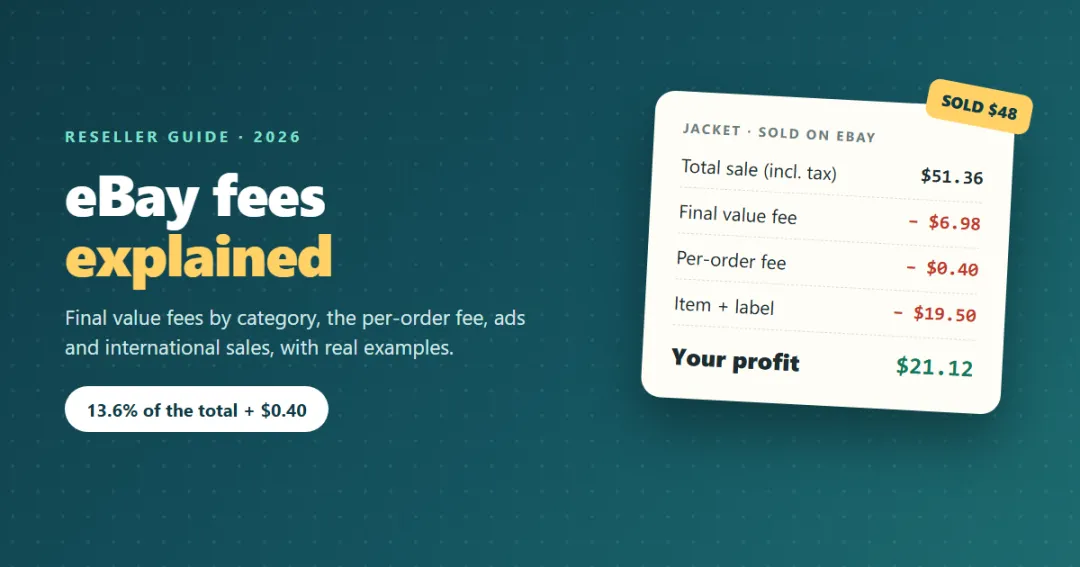
| eBay | $7.38 | $21.12 |
| Poshmark | $8.00 | $20.00 |
A $100 pair of boots (bought for $25, $10 shipping, $9 label)
| Platform | Fees | Your profit |
|---|---|---|
| Depop | $4.33 | $71.67 |
| Mercari | $11.00 | $65.00 |
| eBay | $16.41 | $59.59 |
| Poshmark | $20.00 | $55.00 |
A $12 T-shirt (bought for $3, $5 shipping, $4.50 label)
| Platform | Fees | Your profit |
|---|---|---|
| Depop | $1.05 | $8.45 |
| Mercari | $1.70 | $7.80 |
| eBay | $2.87 | $6.63 |
| Poshmark | $2.95 | $6.05 |
On fees alone, Depop wins every time for US sellers, then Mercari, eBay and Poshmark. The gap grows with price: on the $100 boots, Poshmark's 20% costs $15.67 more than Depop.
Watch Poshmark's $15 line
Poshmark charges a flat $2.95 under $15 and 20% from $15. An item at $14.99 pays $2.95; at $15 it pays $3.00, almost the same. But at $16 you pay $3.20 and at $20 you pay $4. Price small items just under $15 when it makes sense.
Fees aren't everything: buyers, speed and effort
A sale you don't make earns nothing. Before you move everything to the cheapest platform, weigh these:
Who's buying.
- eBay has by far the most buyers and works for almost everything, from clothes to electronics and collectibles.
- Poshmark is fashion-first, with an active community, "sharing" and lots of offers and bundles.
- Depop skews younger, with vintage, Y2K and streetwear doing especially well.
- Mercari sells a broad mix: clothes, home goods, toys, electronics.
Speed. The platform that sells your category fastest often beats the one with the lowest fees. Money tied up in unsold stock isn't profit. Measure it: the sell-through rate calculator shows what share of your listed items actually sell each month, and you can compare it platform by platform.
Offers. Poshmark and Mercari buyers expect to make offers; leave room in your price. Depop and eBay buyers also send offers, but less constantly.
Shipping effort. Poshmark's prepaid label is the simplest: print and drop off. On the others you choose a service and weigh the package, and undercharging shipping eats your profit.
How to choose where to list
- Start with your category. Fashion: Poshmark, Depop and Mercari. Vintage and streetwear: Depop and eBay. Everything else: eBay and Mercari.
- Compare the payout for a typical item in the reseller fee calculator.
- Cross-list your best items on two or three platforms, and delist the moment one sells.
- Price per platform. You can list a little higher on Poshmark to cover its 20% and leave room for offers.
- Review every month: which platform sold the most, at the best margin, in the fewest days?
Don't forget the costs behind the fees
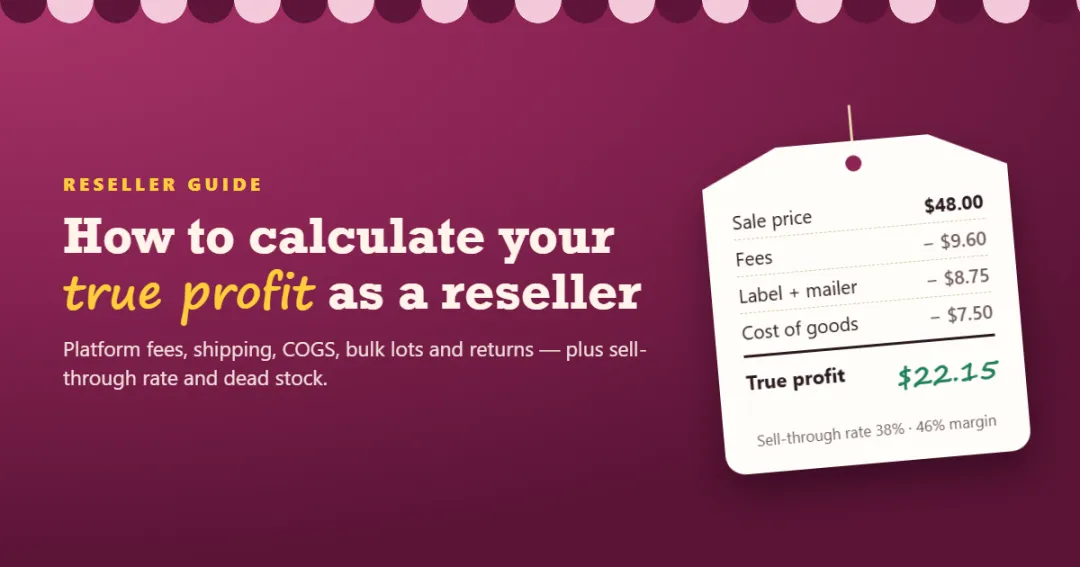
Platform fees are only part of the picture. Mailers, tape, a label printer, cleaning supplies, gas to the thrift store and your time all come out of the profit too. Our step-by-step guide on how to calculate reseller profit shows how to count them, and the markup calculator helps you set a minimum buy-to-sell markup so every item is worth sourcing. Many resellers aim to sell for at least three times what they paid.
Going deeper on the big marketplaces? Our guides to eBay fees and Etsy fees explain every fee with examples.
Taxes on reselling
Reselling items you bought for profit is a business. Tax is owed on profit, not sales, and as a business your profit is also subject to self-employment tax. Platforms send a Form 1099-K once your payments pass the IRS threshold, so keep records of what you paid for each item. Our guide to quarterly estimated taxes explains how to set money aside and pay during the year.
Track it all in one place
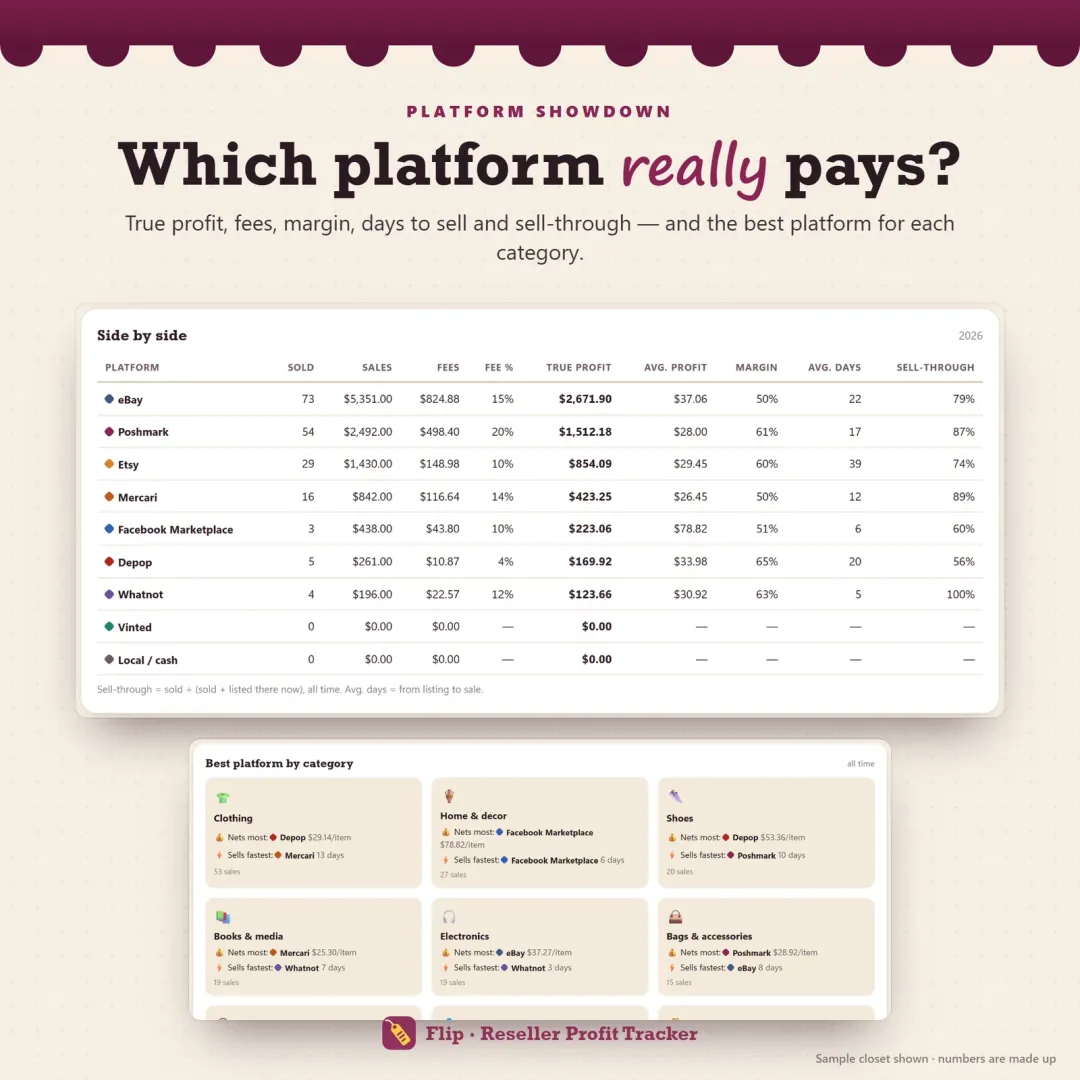
Knowing which platform really pays best needs data from all of them. Flip is a reseller profit tracker with editable fee presets for eBay, Poshmark, Mercari, Depop and Etsy. It works out each sale's true profit, shows platforms side by side and flags dead stock before it gathers dust. When your reselling grows into a full business, Till helps plan monthly profit and what you can pay yourself. Both have a free demo with sample data you can open in your browser.
The short version
- Fees (US, 2026): Depop 3.3% + $0.45, Mercari 10%, eBay about 13.6% + $0.40, Poshmark 20% (or $2.95 under $15).
- On a $40 item, profit ranges from $20 on Poshmark to $26.36 on Depop.
- Speed and buyers matter as much as fees; measure sell-through by platform.
- Cross-list, price per platform and delist fast.
- Compare any item in the reseller fee calculator.
Frequently asked questions
Which is better for sellers, Poshmark or Mercari?
Is Depop cheaper than Poshmark?
Where do clothes sell fastest?
Should I cross-list on all of them?
Who pays shipping on Poshmark, Mercari and Depop?
Do I have to pay tax on reselling income?
Written by
Finance Specialist & Editor, VaultlyApps
Emma Whitfield writes and edits the VaultlyApps money guides and free calculators. Her focus is US household finance — budgeting on a real paycheck, paying down credit card and student debt, emergency funds and savings goals, renting — and the money side of freelancing and small-business income, from pricing and profit margins to self-employment tax. Every guide is researched against primary sources such as IRS publications and the CFPB, every number is checked in our tested calculators, and tax content is reviewed each year when new IRS figures come out. Emma is not a licensed financial adviser or tax preparer; her work is general education, not personal advice.
Researched against primary US sources, checked with our calculators and reviewed by a finance expert on our team. Written for US readers — general education, not financial, tax or legal advice. Editorial policy · Disclaimer