Should You Rent or Buy a House in 2026? How to Decide With Real Numbers
Buying isn't automatically smarter than renting, and rent isn't money thrown away. Here's how to compare the full cost of owning with renting and investing the difference, what the break-even point is, how rates, home prices and how long you stay change the answer, and a checklist to decide.
In this article
"Why pay someone else's mortgage?" is the classic argument for buying. "Why tie yourself down with repairs and a huge loan?" is the classic argument for renting. Both have a point, and neither settles the question. The answer depends on numbers: how long you'll stay, what owning really costs each month, what similar homes rent for, and what you'd do with the money if you rented.
This guide shows how to compare renting and buying properly, with a worked example, the break-even point, how mortgage rates and home prices change the answer, and a checklist to decide. Run your own numbers in the free rent vs buy calculator.
Compare the full cost, not rent vs mortgage
The most common mistake is comparing rent with the mortgage payment alone. The monthly cost of owning includes:
- Principal and interest on the mortgage,
- property tax (often around 1% of the value a year, but from 0.3% to over 2% by state; see the property tax calculator),
- homeowners insurance,
- maintenance and repairs, commonly budgeted at about 1% of the home's value a year,
- HOA dues if there are any,
- PMI with less than 20% down.
And there are one-off costs: closing costs when you buy (often 2–5%) and agent and closing costs when you sell (often 5–6%).
Renting has fewer costs: rent, renters insurance, and occasional moving costs.
The fair comparison: rent and invest the difference
Owning builds wealth through home equity: the home's value grows while the loan shrinks. Renting doesn't, unless the renter invests the money they didn't spend on a down payment, closing costs and the higher monthly cost of owning. A fair comparison counts both:
- Buyer's wealth = home value − selling costs − remaining loan + anything the buyer invests in months when owning costs less than renting.
- Renter's wealth = the down payment and closing costs invested from day one + the monthly difference invested whenever renting costs less.
That's exactly what the rent vs buy calculator does, month by month.
A worked example
- Home: $350,000, 10% down, 6.3% 30-year mortgage
- Property tax 1.1%, maintenance 1%, insurance $1,800 a year, no HOA
- Buying costs 3%, selling costs 6%, home value growth 3% a year
- Rent: $2,000 a month, rising 3% a year; renters insurance $180 a year
- Investments earn 6% a year
In year one, owning costs about $2,729 a month against $2,015 for renting. The renter invests the $35,000 down payment, $10,500 of buying costs and the ~$700 monthly difference.
| Year | Wealth if you buy | Wealth if you rent |
|---|---|---|
| 1 | $27,527 | $56,927 |
| 3 | $56,204 | $80,303 |
| 5 | $87,214 | $104,340 |
| 8 | $138,594 | $141,510 |
| 9 | $157,142 | $154,163 |
| 10 | $176,457 | $166,928 |
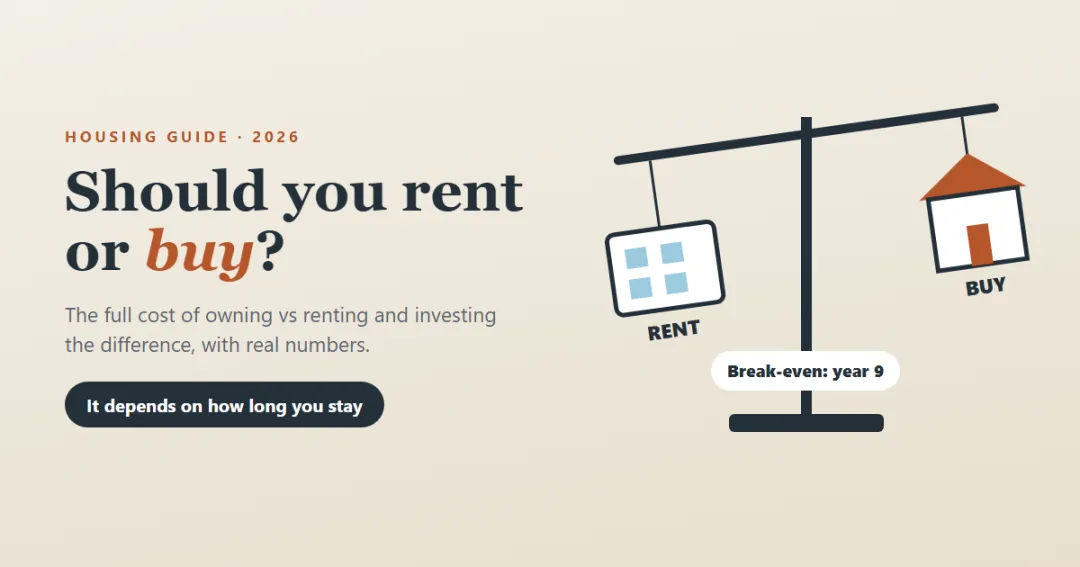
Renting leads for the first 8 years. From year 9, buying pulls ahead; after 10 years the buyer is about $9,500 better off, and after 15 years about $54,000. Stay only 5 years and renting wins by about $17,000.
What changes the answer
Same example, changing one thing at a time (10-year comparison unless noted):
| Change | Result |
|---|---|
| Stay 5 years | Renting ahead by about $17,100 |
| Stay 15 years | Buying ahead by about $53,900 |
| Mortgage rate 5% | Buying wins from year 5, ahead by about $61,000 |
| Mortgage rate 7.5% | Renting ahead by about $39,300 |
| Home value growth 1% (15 years) | Renting ahead by about $50,200 |
| Rent $2,400 instead of $2,000 | Buying wins from year 4, ahead by about $83,000 |
| 20% down instead of 10% | Still year 9, buying ahead by about $11,600 |
Four things matter most:
- How long you stay. Buying and selling costs need years to recover.
- Rent compared with the cost of owning. Where rents are high relative to prices, buying wins sooner.
- Mortgage rates. Every point changes the picture a lot.
- Home price growth. At 3% a year buying looks good; at 1% it may never catch up within 15 years.
Quick rules of thumb
- Price-to-rent ratio: home price ÷ a year's rent. Below about 15 favors buying; above about 20 favors renting. Our example: 14.6.
- The 5% rule: multiply the home price by 5% to estimate the yearly unrecoverable cost of owning (tax, maintenance, cost of money). $350,000 × 5% = $17,500, or about $1,460 a month. If comparable rent is below that, renting may be the better deal. Our $2,000 rent is above it, which is why buying wins in the long run.
Use them to sense-check, then run the real numbers.
Money isn't the only factor
- Flexibility. Renting makes it easy to move for a job, a relationship or a better neighborhood.
- Stability and control. Owning means no landlord, no surprise non-renewal, and freedom to renovate.
- Time and stress. Owners handle repairs, roofs and water heaters; renters call the landlord.
- Forced saving. If extra money tends to get spent rather than invested, a mortgage acts as automatic saving and buying wins sooner in practice.
A checklist before you buy
- You plan to stay at least 5–7 years.
- You have the down payment and closing costs (see the closing costs calculator).
- You'll still have an emergency fund after closing.
- The full monthly cost fits your budget; check with how much house can I afford.
- Your income is stable and your debts are under control.
- The rent vs buy numbers favor buying over your time frame.
If several boxes are empty, renting a bit longer while you save isn't failure; it's strategy. Find a comfortable rent with the rent affordability calculator, and keep your down payment somewhere safe and reachable; our guide to CD vs high-yield savings explains where.
Track the decision over time
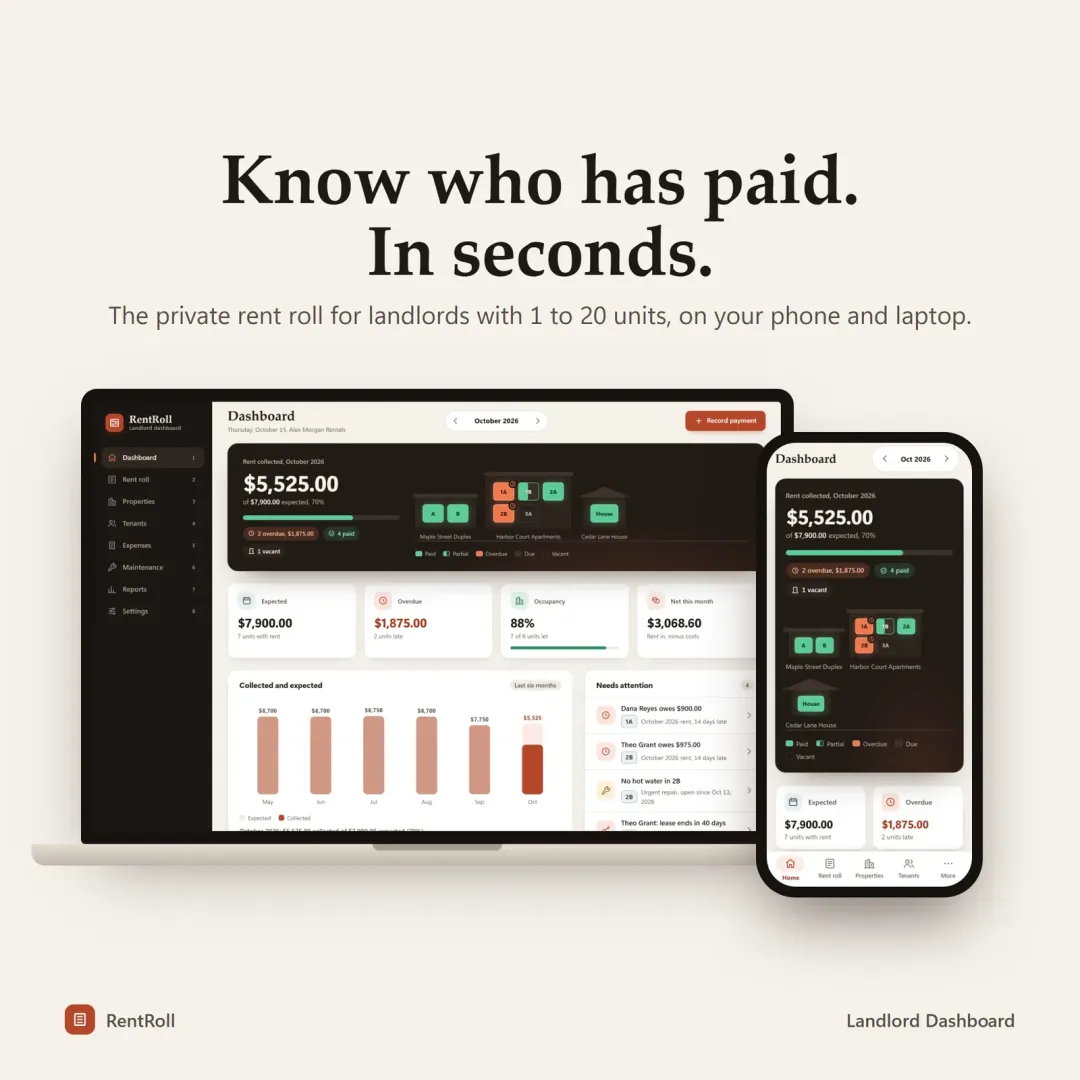
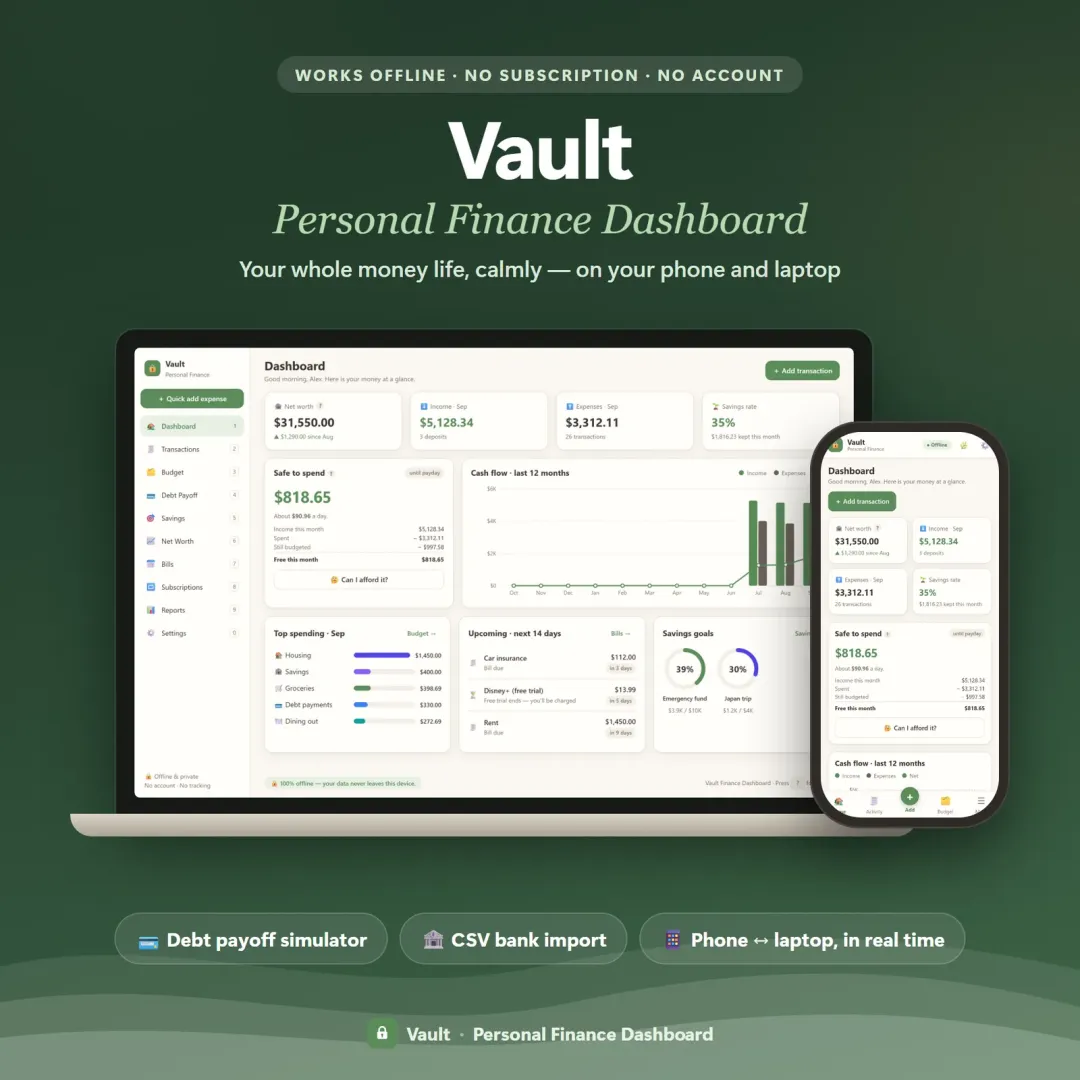
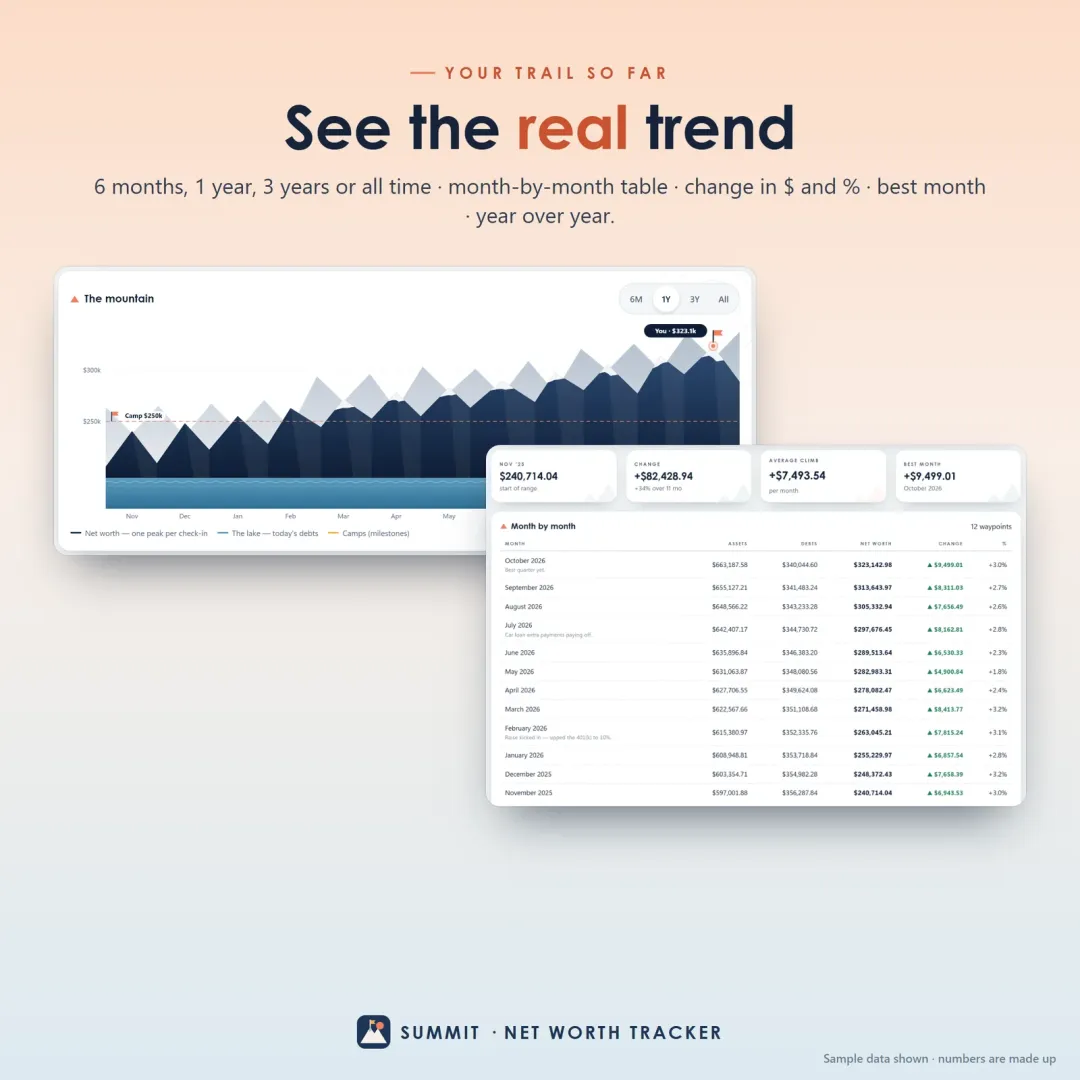
Whichever you choose, the measure of success is your net worth growing. Summit is a net worth tracker that shows home equity or investments, savings and debts on one screen with a monthly check-in, so you can see if your choice is paying off. Vault keeps your budget, bills and savings goals together while you save, and RentRoll helps if you ever become a landlord. Each has a free demo with sample data.
The short version
- Compare the full cost of owning with renting and investing the difference.
- Buying usually needs 5–10 years to beat renting, because of buying and selling costs.
- Rates, home price growth and rent levels can swing the answer by tens of thousands.
- Don't buy without the down payment, closing costs and an emergency fund.
- Run your own numbers in the rent vs buy calculator.
An illustration based on assumptions; home prices, rents and investment returns are uncertain.
Frequently asked questions
Is it better to rent or buy in 2026?
How long should you live in a house to make buying worth it?
Is renting throwing money away?
What is the 5% rule for renting vs buying?
What is a good price-to-rent ratio?
Should I buy if I can afford the monthly payment?
Written by
Finance Specialist & Editor, VaultlyApps
Emma Whitfield writes and edits the VaultlyApps money guides and free calculators. Her focus is US household finance — budgeting on a real paycheck, paying down credit card and student debt, emergency funds and savings goals, renting — and the money side of freelancing and small-business income, from pricing and profit margins to self-employment tax. Every guide is researched against primary sources such as IRS publications and the CFPB, every number is checked in our tested calculators, and tax content is reviewed each year when new IRS figures come out. Emma is not a licensed financial adviser or tax preparer; her work is general education, not personal advice.
Researched against primary US sources, checked with our calculators and reviewed by a finance expert on our team. Written for US readers — general education, not financial, tax or legal advice. Editorial policy · Disclaimer