
VaultlyApps logo VaultlyApps

Free calculator

Rent vs Buy Calculator: Is It Better to Rent or Buy a Home?

Enter the home you'd buy and the rent you'd pay. The calculator compares your wealth year by year if you buy or if you rent and invest the difference, and shows the break-even point: how long you need to stay for buying to pay off.

By Updated Private — runs in your browser Free, no sign-up Save, print, PDF & CSV — with a QR code to reopen it
Buying

1% of the value is a common rule.

Agent + closing when you sell.

Renting

Over your time frame


Buying breaks even


Month one


Wealth each year (after selling costs)
YearIf you buyIf you rent

Whoever spends less each month invests the difference at your return; the renter also invests the down payment and buying costs. Excludes tax deductions and moving costs. Home prices and returns are assumptions, not forecasts.

For readers in the United States. Estimates for planning only — not financial, investment, tax or legal advice. Disclaimer · How we check our numbers

Vault app icon

Want these numbers to update by themselves?

Vault — Personal Finance Dashboard — keeps this plan current as you log real payments. Try the free demo, no sign-up.

How to use the rent vs buy calculator

  1. Under Buying, enter the home price, down payment, mortgage rate and term, property tax, maintenance, insurance, HOA and buying and selling costs.
  2. Under Renting, enter the monthly rent, the expected yearly rent increase and renters insurance.
  3. Set the home value growth, the return you'd earn investing, and how many years you'll stay.

The calculator works month by month. Whoever spends less, the owner or the renter, invests the difference. The renter also invests the down payment and buying costs from day one. Each year it compares the owner's wealth (home value minus selling costs and the remaining loan, plus investments) with the renter's investments.

The example, year by year

$350,000 home, 10% down, 6.3% for 30 years, 1.1% property tax, 1% maintenance, $1,800 insurance, 3% buying and 6% selling costs, 3% home value growth. Rent $2,000 rising 3% a year. Investments earn 6%.

Year Wealth if you buy Wealth if you rent
1 $27,527 $56,927
3 $56,204 $80,303
5 $87,214 $104,340
8 $138,594 $141,510
9 $157,142 $154,163
10 $176,457 $166,928

In year one, owning costs about $2,729 a month against $2,015 for renting, and selling right away would lose the buying and selling costs. Over time, rent rises while the mortgage payment stays the same, the loan shrinks, and the home's value grows, until buying overtakes.

What tips the balance

  • How long you stay. The biggest factor. Buying and selling costs need years to recover.
  • Rent vs the cost of owning. Compare rent with the full monthly cost of owning, not just the mortgage.
  • Mortgage rate. Higher rates mean more interest and a later break-even.
  • Home value growth. At 3% a year buying looks good; at 0–1% renting often wins for a decade or more.
  • What renters do with the difference. The comparison assumes the renter invests it. If the extra money would just be spent, buying acts as forced saving and wins sooner.

Rent or buy: a quick checklist

Buying tends to make sense when:

  • you expect to stay at least 5–7 years;
  • the full monthly cost isn't far above comparable rent;
  • you have the down payment, closing costs and an emergency fund;
  • your job and income are stable.

Renting tends to make sense when:

  • you might move within a few years;
  • local prices are high compared with rents;
  • you'd have to stretch your budget or empty your savings to buy.

Plan the purchase

If buying looks right, work out the price that fits your income with how much house can I afford and the cash you'll need with the closing costs calculator. Renting for now? Use the rent affordability calculator to find a comfortable rent, and invest or save the difference: our guide to CD vs high-yield savings explains where a down-payment fund belongs.

See your wealth either way

Rent or buy, what matters is your net worth growing. Summit is a net worth tracker that shows your home equity or investments, savings and debts in one view with a monthly check-in. Vault keeps your budget and goals together, and RentRoll helps if you ever rent out a property you own. Each has a free demo with sample data.

An estimate based on your assumptions. Home prices, rents and investment returns are uncertain.

Frequently asked questions

Is it better to rent or buy?

It depends mostly on how long you'll stay and how rent compares with the full cost of owning. In the example ($350,000 home, 10% down, 6.3%, $2,000 rent), renting comes out ahead for the first 8 years and buying wins from year 9. If you might move within five years, renting is usually cheaper.

How long do I need to stay for buying to make sense?

Long enough for home value growth and the principal you pay off to outweigh buying and selling costs, which together often take 8–10% of the price. That's frequently 5 to 10 years; the calculator shows your break-even year.

What costs of owning do people forget?

Property tax, homeowners insurance, maintenance and repairs (often 1% of the home's value a year), HOA dues, PMI with less than 20% down, closing costs when you buy and agent and closing costs when you sell.

Isn't rent just throwing money away?

Not exactly. Mortgage interest, property tax, insurance and maintenance are also money you don't get back. Renting buys housing and flexibility; if a renter invests the money they'd otherwise put into a down payment and higher monthly costs, they can build wealth too.

What is the price-to-rent ratio?

Home price divided by a year's rent. In the example, $350,000 ÷ $24,000 = about 14.6. Roughly, below 15 tends to favor buying, 15–20 is close, and above 20 tends to favor renting, but your own numbers and plans matter more.

Does the calculator include tax benefits?

No. Since the standard deduction rose, most homeowners don't itemize, so the mortgage interest deduction helps fewer people. If you do itemize, buying looks a little better than shown.

Written by

Emma Whitfield

Finance Specialist & Editor, VaultlyApps

Emma Whitfield writes and edits the VaultlyApps money guides and free calculators. Her focus is US household finance — budgeting on a real paycheck, paying down credit card and student debt, emergency funds and savings goals, renting — and the money side of freelancing and small-business income, from pricing and profit margins to self-employment tax. Every guide is researched against primary sources such as IRS publications and the CFPB, every number is checked in our tested calculators, and tax content is reviewed each year when new IRS figures come out. Emma is not a licensed financial adviser or tax preparer; her work is general education, not personal advice.

Researched against primary US sources, checked against independent calculators and reviewed by a finance expert on our team. Written for US readers — general education, not financial, tax or legal advice. Editorial policy · Disclaimer

From VaultlyApps

Apps that do this for you

Each one has a free live demo with sample data — open it in your browser, nothing to install.

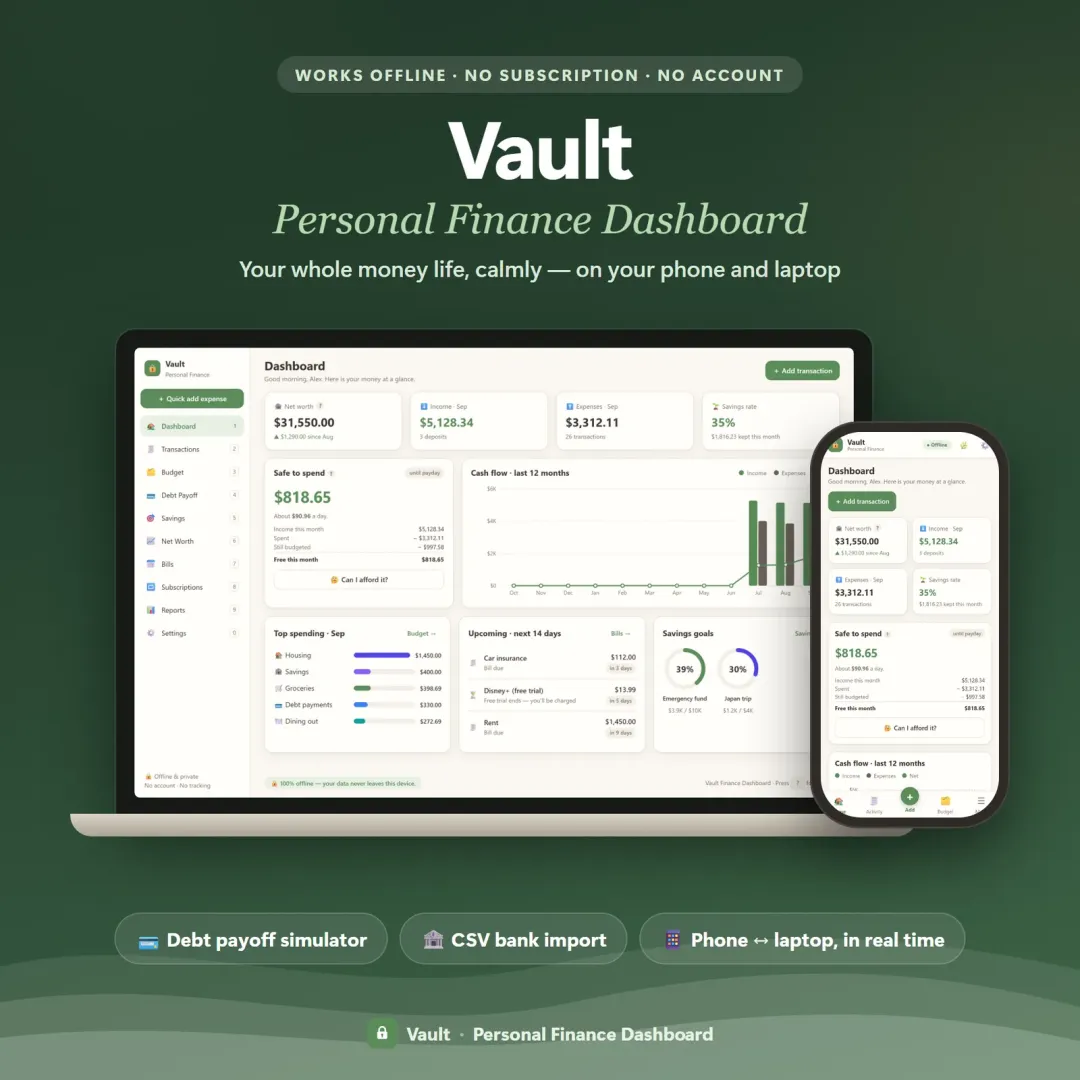
Vault personal finance dashboard shown on a laptop and a phone, with the safe-to-spend number and cash-flow charts Live
Vault app icon

Vault

Personal Finance Dashboard

Your whole money picture on one private dashboard — safe-to-spend, budgets, bills, goals, debt payoff and net worth, on your phone and laptop.

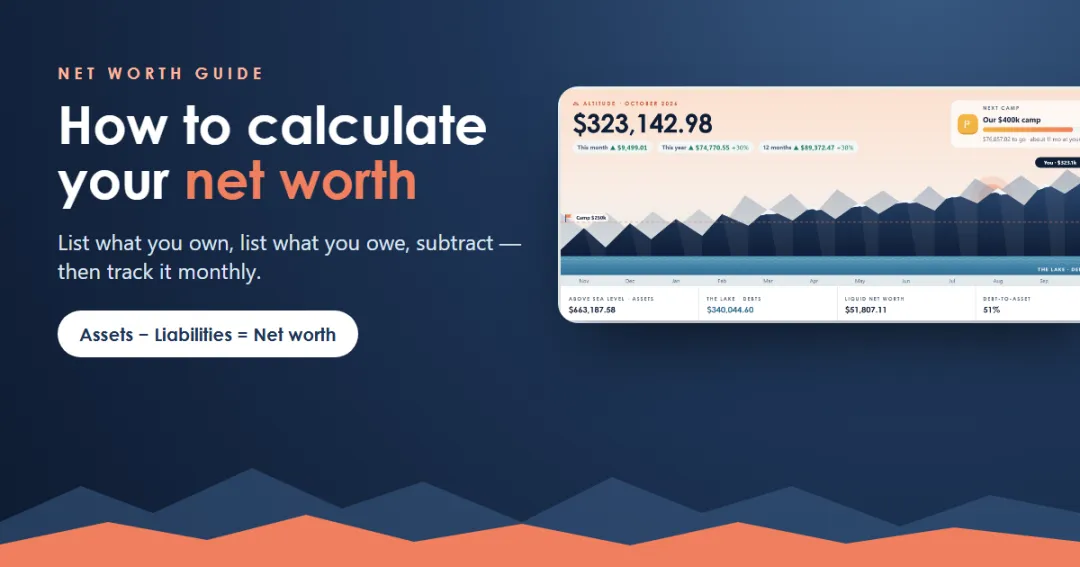
Summit net worth tracker app showing net worth as a mountain range with one peak per monthly check-in Live
Summit app icon

Summit

Net Worth Tracker

A private net worth tracker for your phone and computer — add what you own and what you owe, check in once a month and watch your net worth climb, with milestones, a what-if forecast and a printable Net Worth Statement.

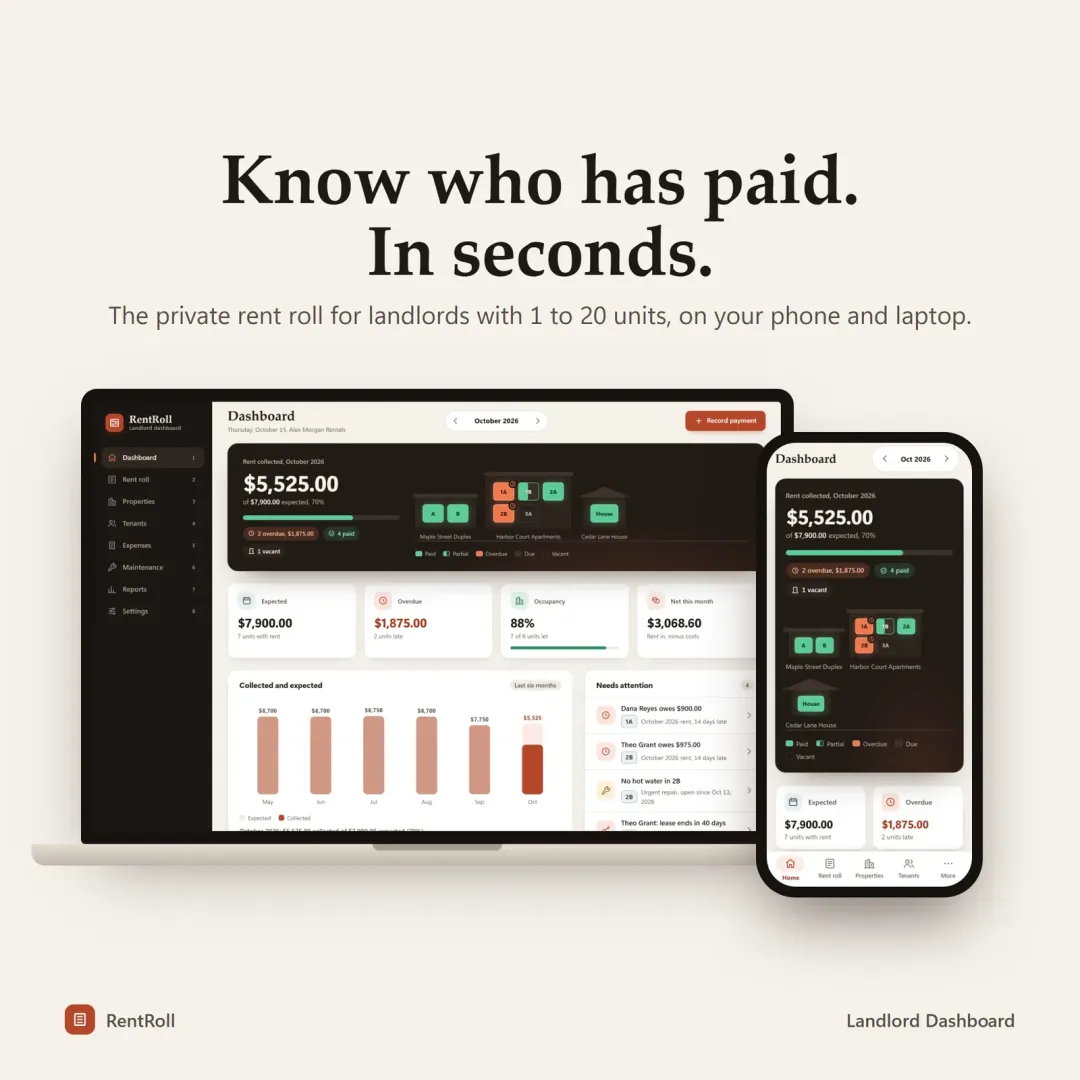
RentRoll landlord dashboard with buildings whose windows light up when rent is paid Live
RentRoll app icon

RentRoll

Landlord Dashboard

A private rent roll and property manager for landlords with 1 to 20 units — rent collection, late fees, leases, maintenance and Schedule E tax reports.

Keep planning

Related calculators

All calculators

Further reading

Guides on this topic

All articles
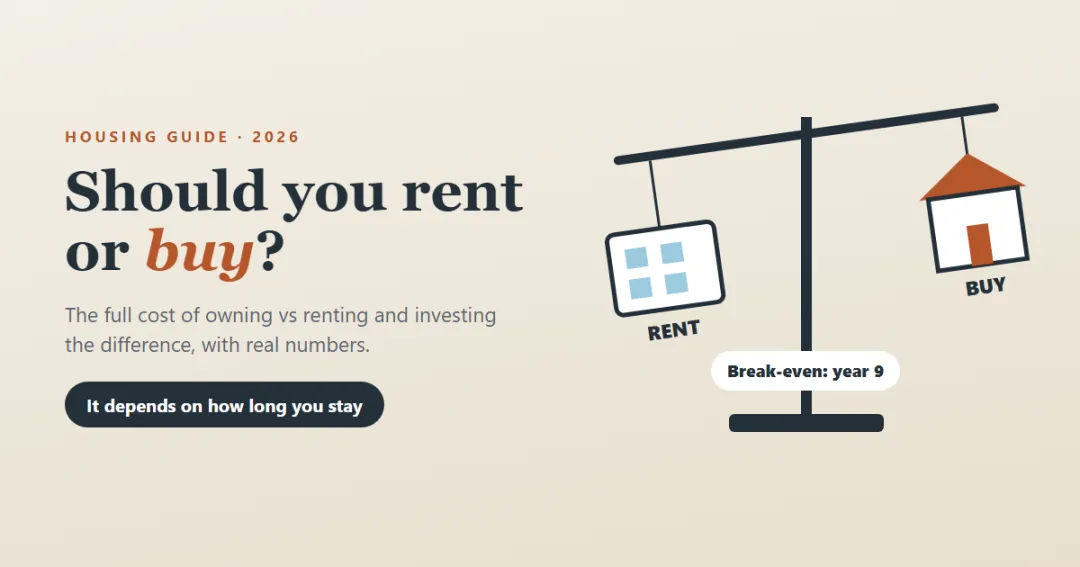
Rent or buy — a scale weighing a rented apartment against a house with a mortgage

Personal Finance

Should You Rent or Buy a House in 2026? How to Decide With Real Numbers

Buying isn't automatically smarter than renting, and rent isn't money thrown away. Here's how to compare the full cost of owning with renting and investing the difference, what the break-even point is, how rates, home prices and how long you stay change the answer, and a checklist to decide.

7 min read
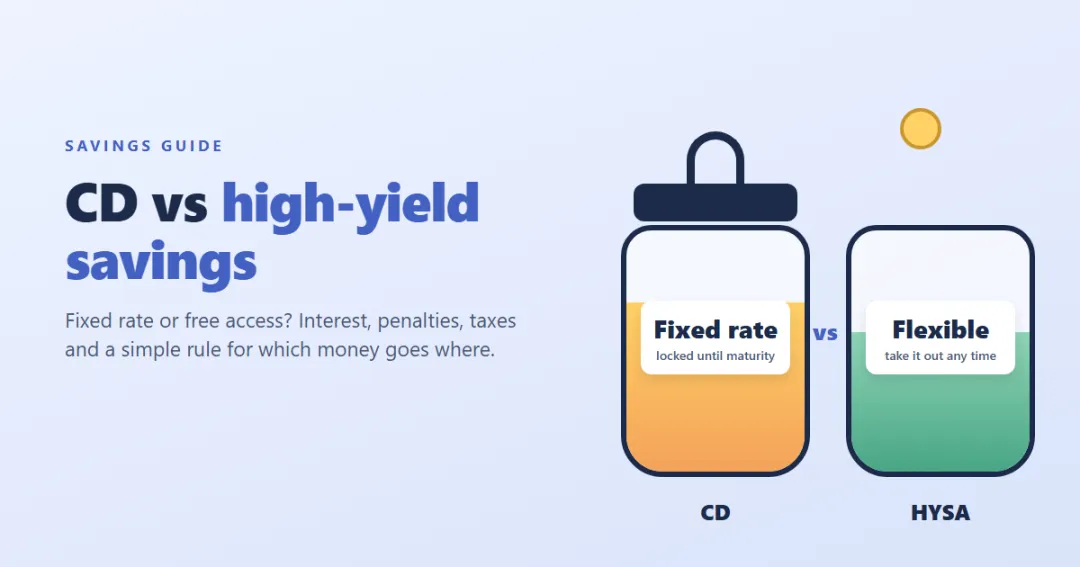
CD vs high-yield savings account — a locked jar with a fixed rate next to an open jar with a variable rate

Personal Finance

CD vs High-Yield Savings Account: Which Is Better for Your Money?

A CD locks in a rate; a high-yield savings account keeps your money free but its rate can fall. Here's how they really compare — interest, early withdrawal penalties, taxes and safety — with worked examples, a simple rule for which money goes where, and how to build a CD ladder.

9 min read

Try Vault free in your browser

Your whole money picture on one private dashboard — safe-to-spend, budgets, bills, goals, debt payoff and net worth, on your phone and laptop. The live demo uses sample data — nothing to install, no sign-up.

We use optional cookies for anonymous analytics. Nothing optional is set until you choose. Cookie policy