CD vs High-Yield Savings Account: Which Is Better for Your Money?
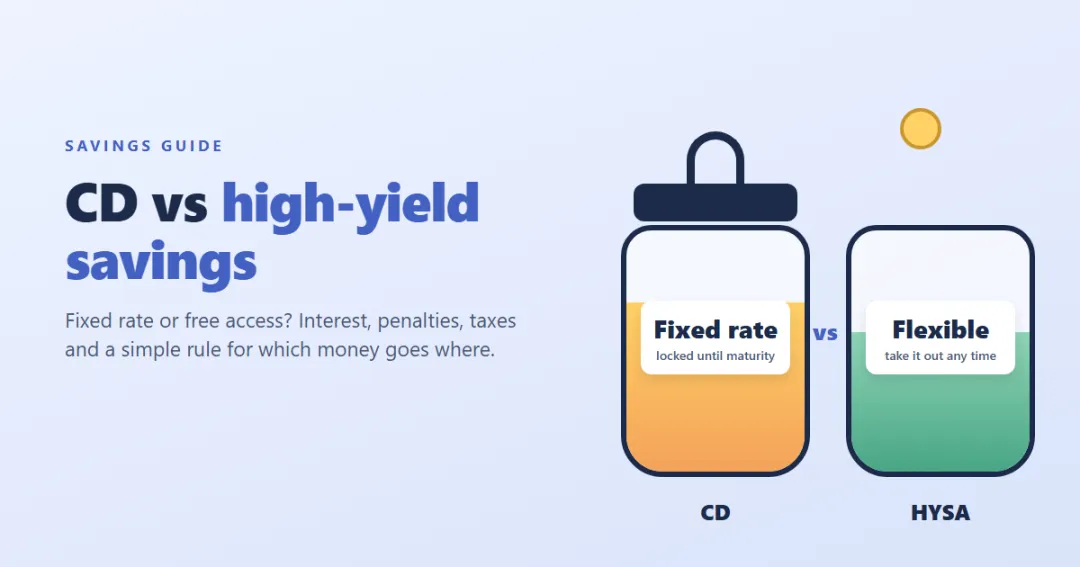
A CD locks in a rate; a high-yield savings account keeps your money free but its rate can fall. Here's how they really compare — interest, early withdrawal penalties, taxes and safety — with worked examples, a simple rule for which money goes where, and how to build a CD ladder.
In this article
- The short answer
- CD vs HYSA at a glance
- How much each one earns: worked examples
- One year, $20,000
- Five years, $20,000
- Early withdrawal penalties, in real numbers
- Taxes are the same
- Safety: equally safe
- Which money goes where
- High-yield savings account
- CD
- The best of both: a CD ladder
- Other options in between
- When to choose which
- Make the interest count
- The short version
You've saved some money and want it to earn something while it waits. Two of the safest places to put it are a certificate of deposit (CD) and a high-yield savings account (HYSA). Both are insured, both pay far more than a regular checking account, and both are boring in the best way. But they work differently, and picking the wrong one can cost you interest — or charge you a penalty right when you need the money.
This guide compares the two side by side, with worked examples on a $20,000 balance, explains early withdrawal penalties and taxes, and gives you a simple rule for which money goes where. If you want to test your own numbers, the free CD calculator shows interest, maturity value and the cost of cashing out early.
The short answer
- A CD pays a fixed rate for a fixed term. You agree not to touch the money until it matures, and you pay a penalty if you do.
- A high-yield savings account pays a variable rate. You can take money out whenever you want, but the bank can lower the rate at any time.
So: money with a date on it suits a CD; money you might need any day belongs in a high-yield savings account.
CD vs HYSA at a glance
| CD | High-yield savings | |
|---|---|---|
| Interest rate | Fixed for the term | Variable, can change any time |
| Access to money | Locked until maturity | Any time |
| Early withdrawal | Penalty (months of interest) | No penalty |
| Adding money | Not after opening (usually) | Any time |
| Insurance | FDIC/NCUA up to $250,000 | FDIC/NCUA up to $250,000 |
| Tax on interest | Ordinary income | Ordinary income |
| Best for | Goals with a known date | Emergency fund, short-term savings |
How much each one earns: worked examples
The rates below are examples to show how the comparison works, not today's offers. Rates change often; check current ones before you choose.
One year, $20,000
- 12-month CD at 4.1% APY: you earn $820, guaranteed.
- HYSA at 3.8% APY all year: you'd earn about $760.
- HYSA that starts at 3.8% and is cut to 3.3% over the year: about $705.
The CD wins by $60 to $115 in this example, and its result is certain. The HYSA's result depends on what the bank does with its rate. In return, the HYSA money was available every single day.
Five years, $20,000
- 5-year CD at 4.0% APY: about $4,333 in interest.
- HYSA averaging 3.5% APY: about $3,754.
Locking in for longer can pay off when rates are expected to fall. But five years is a long time, and life changes. That's where the penalty matters.
Early withdrawal penalties, in real numbers
A CD's penalty is usually a number of months of interest. Two examples on $20,000:
- 12-month CD at 4.1%, penalty 3 months of interest, cashed out after 4 months: you'd have earned about $270, the penalty is $205, so you leave with about $20,065. Almost all the interest is gone.
- 5-year CD at 4.0%, penalty 12 months of interest, cashed out after 1 year: you'd have earned $800 and the penalty is $800. You get back exactly $20,000, a year of interest lost.
Cash out even earlier and the penalty can exceed what you've earned, eating into your deposit. That's why a CD is only a good deal for money you're confident you won't need. Try different penalties and exit dates in the CD calculator.
Taxes are the same
Interest from both a CD and a high-yield savings account is taxed as ordinary income, at your federal bracket plus any state tax, in the year it's credited. A CD's interest is taxed each year even if it stays in the CD until maturity. Your bank sends a Form 1099-INT.
At a 22% federal rate and no state tax, the 12-month CD's $820 becomes about $640 after tax. Taxes don't change which option is better; they just shrink both.
If you want interest that's exempt from state income tax, US Treasury bills are worth a look; they're federally taxed but not taxed by states.
Safety: equally safe
At banks insured by the FDIC, or credit unions insured by the NCUA, both CDs and savings accounts are protected up to $250,000 per depositor, per institution, per ownership category. If you have more than that, spread it across banks or ownership categories. Neither product can lose money from market movements, unlike stocks or bonds.
Which money goes where
A simple way to decide is to sort your savings by when you'll need it.
High-yield savings account
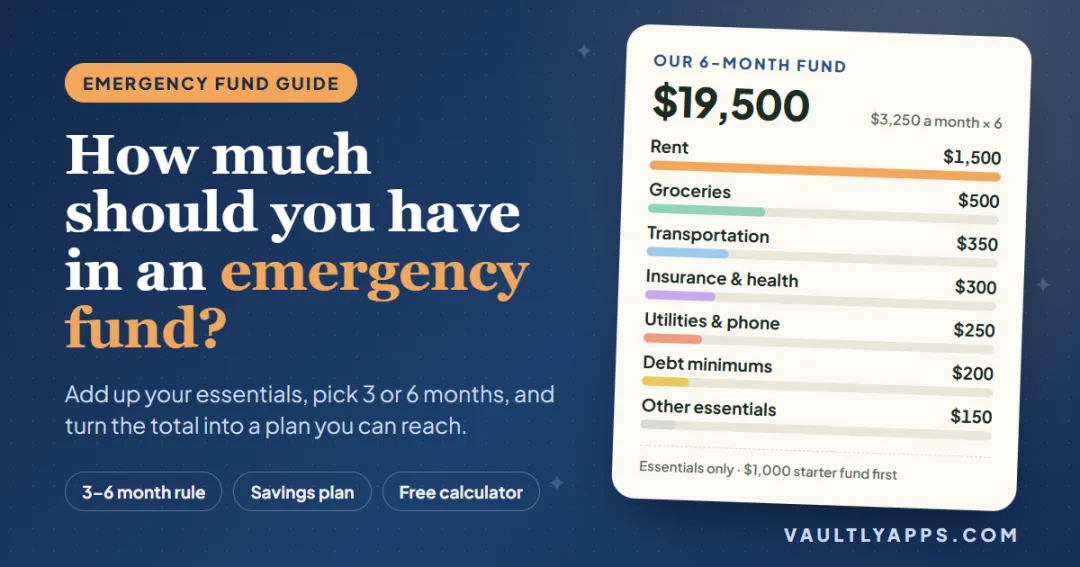
- Emergency fund: three to six months of essential expenses, ready the day the car breaks down. The emergency fund calculator helps you size it, and our guide on how much emergency fund you need explains the trade-offs.
- Short-term goals with no fixed date: a vacation "sometime next year", a cushion for irregular income.
- Money you're still adding to every month.
CD
- Goals with a known date: a house down payment in 18 months, tuition next fall, a wedding in two years.
- Extra savings beyond your emergency fund that you want to lock in at today's rate.
- Money you're tempted to spend: the penalty is a speed bump.
The best of both: a CD ladder
A CD ladder spreads your money across several CDs with different end dates, so some money comes free regularly while most of it earns longer-term rates.
Example with $20,000:
- $4,000 in a 1-year CD
- $4,000 in a 2-year CD
- $4,000 in a 3-year CD
- $4,000 in a 4-year CD
- $4,000 in a 5-year CD
Every year, one CD matures. You can use that money, or reinvest it in a new 5-year CD at the top of the ladder. After four years, every rung is a 5-year CD, earning 5-year rates, but $4,000 still becomes available every year. You never have to break a CD early as long as your needs fit the schedule.
A shorter version works for nearer goals: three CDs maturing in 3, 6 and 9 months.
Other options in between
- No-penalty CD: a fixed rate, and you can withdraw everything without a penalty after a short initial period. The rate is usually a bit lower than a regular CD.
- Money market account: like a savings account, sometimes with check-writing; variable rate.
- Treasury bills: short-term US government debt from 4 weeks to a year, interest free from state income tax.
- Brokered CDs: bought through a brokerage. You can sell them before maturity instead of paying a penalty, but the price may be lower than what you paid if rates have risen.
When to choose which
Choose a CD when:
- you know when you'll need the money, and it's at least a few months away;
- you have a full emergency fund elsewhere;
- you think rates may fall and want to lock in today's rate.
Choose a high-yield savings account when:
- the money is your emergency fund;
- you might need it at short notice or don't know when;
- you're adding to it regularly;
- CD rates aren't meaningfully higher than savings rates.
Use both when you have more saved than your emergency fund needs: keep the emergency fund in savings and ladder the rest.
Make the interest count
Whatever you choose, the biggest difference comes from saving consistently, not from squeezing out a tenth of a percent. Automate a transfer on payday, give each goal its own account or bucket, and check progress monthly.
To see how regular deposits grow over years, use the compound interest calculator; to work out the monthly amount for a goal, use the savings goal calculator. For retirement money, a 401(k) with an employer match usually beats both: see the 401(k) calculator.
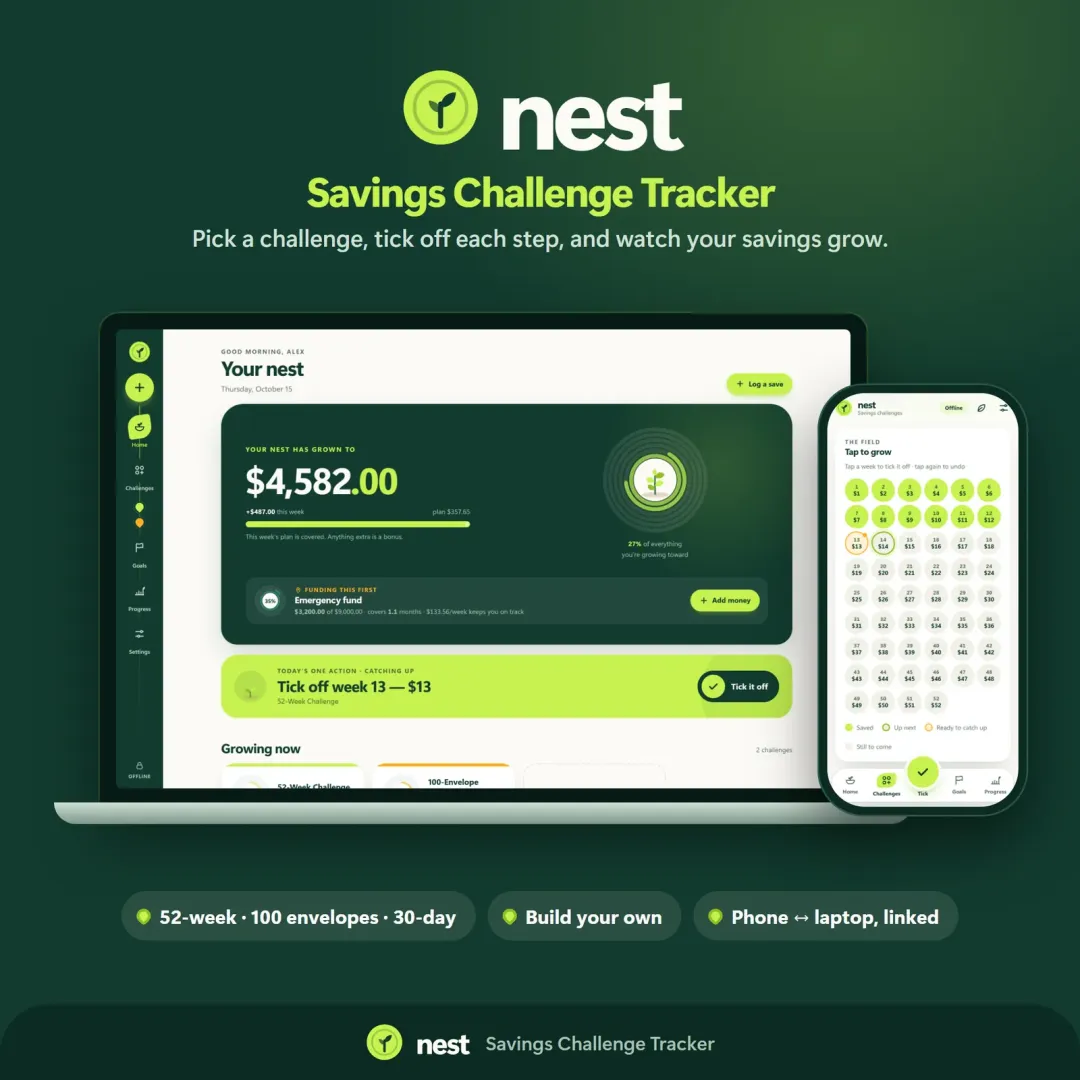
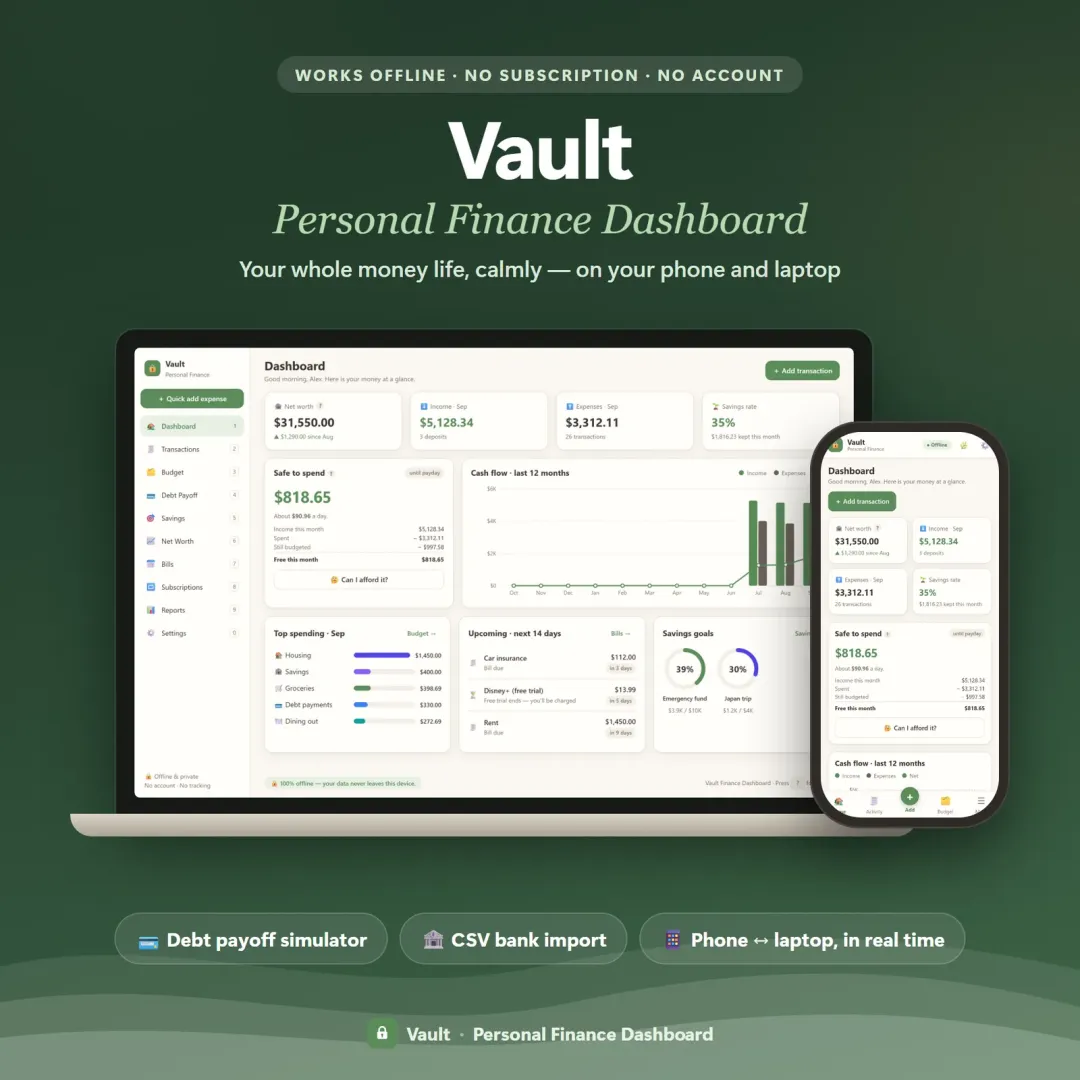
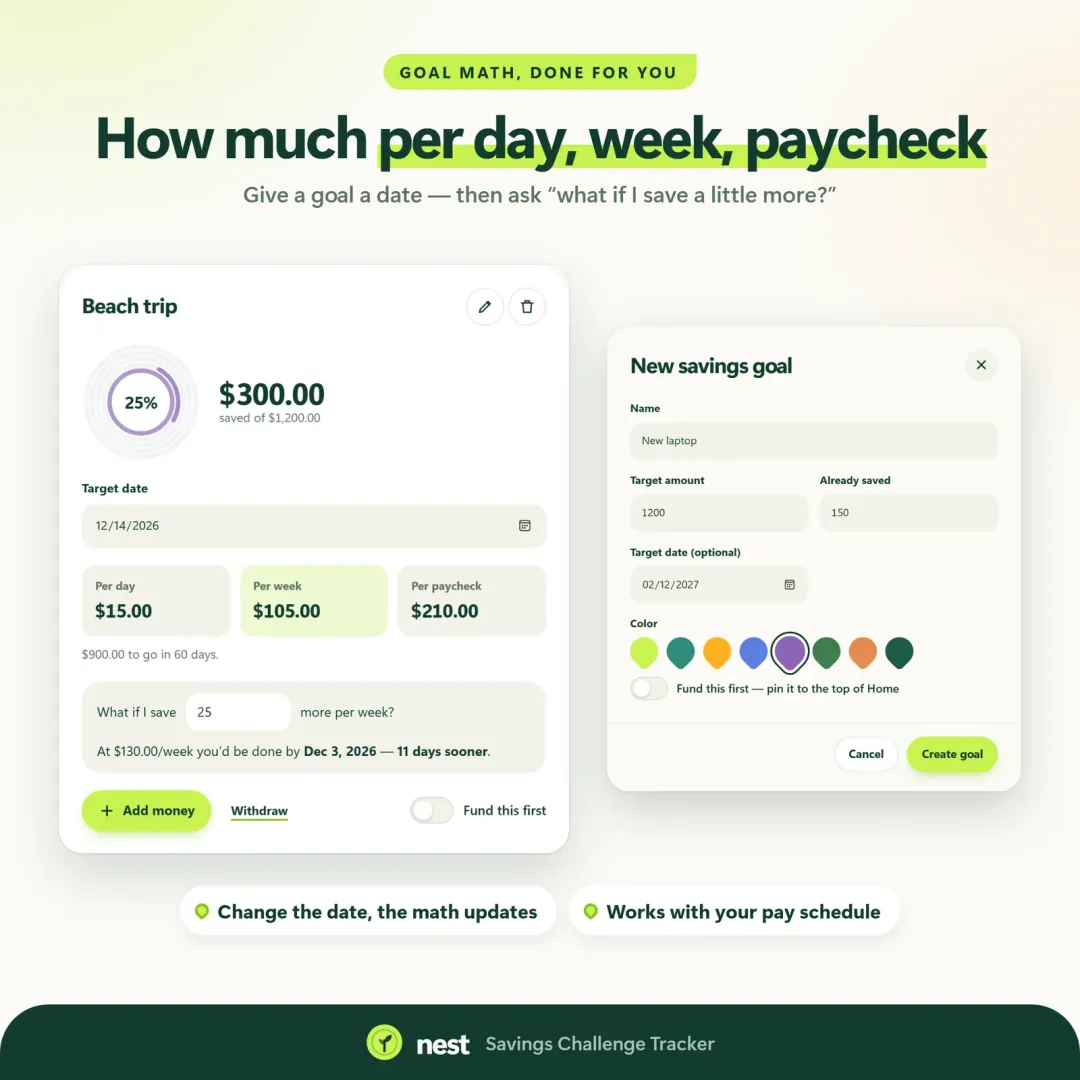
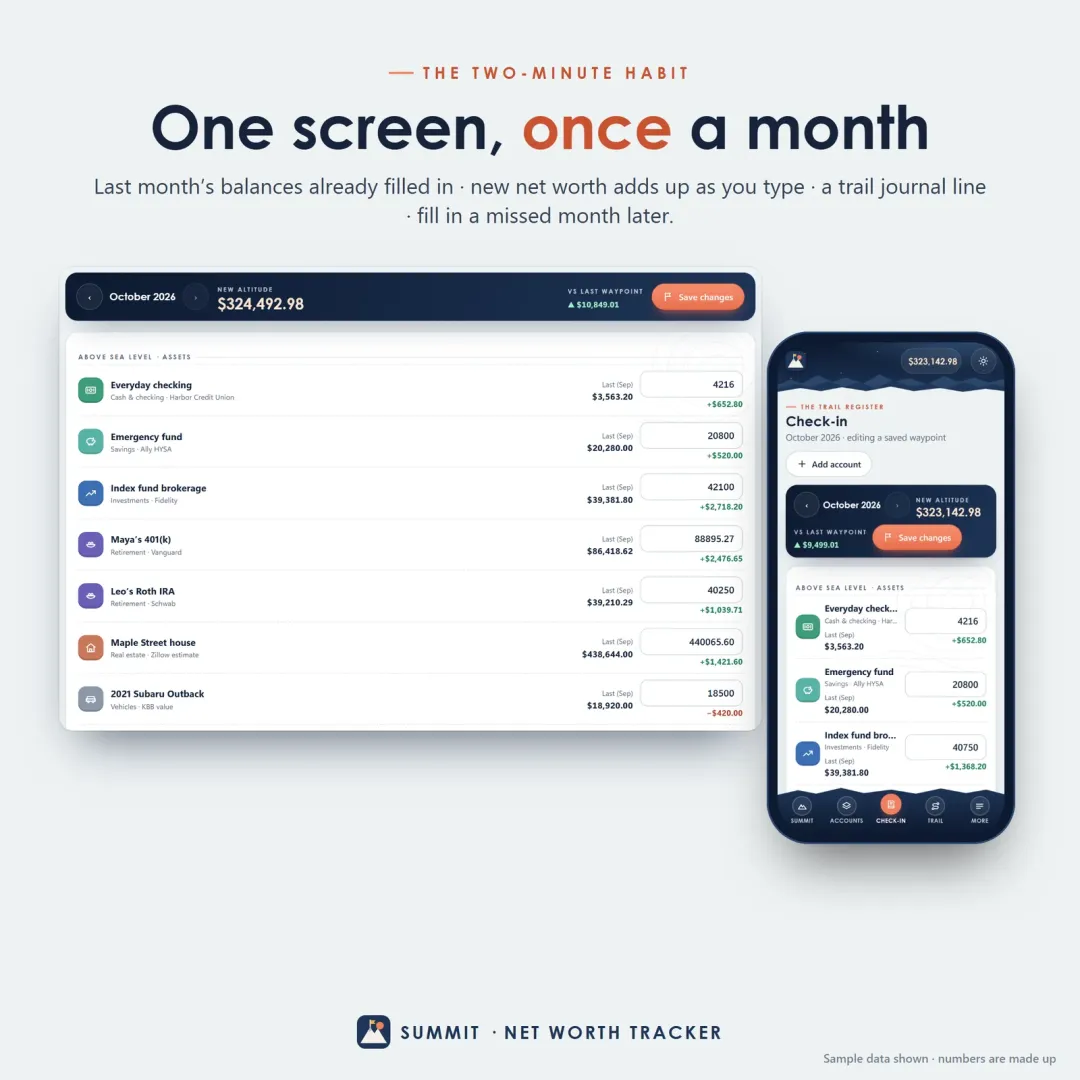
Nest is a savings tracker for goals and challenges: each goal gets a target date, a weekly amount and a progress board. Summit is a net worth tracker that keeps your CDs, savings, retirement accounts and debts on one screen with a monthly check-in, and Vault is a personal finance dashboard for your budget and goals. Each has a free demo with sample data you can open in your browser.
The short version
- CD: fixed rate, fixed term, penalty to leave early. Best for money with a date.
- High-yield savings: variable rate, access any time. Best for your emergency fund.
- Both are insured to $250,000 and taxed the same.
- A CD ladder gives you higher rates and regular access.
- Before opening a CD, read the early withdrawal penalty and what happens at maturity.
Run your numbers in the CD calculator before you lock anything in.
Frequently asked questions
Is a CD better than a high-yield savings account?
Can you lose money in a CD?
How much is the penalty for cashing out a CD early?
Are CDs and savings accounts taxed the same?
Should my emergency fund be in a CD?
What is a no-penalty CD?
What happens when my CD matures?
Written by
Finance Specialist & Editor, VaultlyApps
Emma Whitfield writes and edits the VaultlyApps money guides and free calculators. Her focus is US household finance — budgeting on a real paycheck, paying down credit card and student debt, emergency funds and savings goals, renting — and the money side of freelancing and small-business income, from pricing and profit margins to self-employment tax. Every guide is researched against primary sources such as IRS publications and the CFPB, every number is checked in our tested calculators, and tax content is reviewed each year when new IRS figures come out. Emma is not a licensed financial adviser or tax preparer; her work is general education, not personal advice.
Researched against primary US sources, checked with our calculators and reviewed by a finance expert on our team. Written for US readers — general education, not financial, tax or legal advice. Editorial policy · Disclaimer