How Much Should You Have in an Emergency Fund?
How much emergency savings you really need, worked out step by step: add up your essentials, choose three, six or more months, and turn the total into a monthly plan you can actually reach.
In this article
- Step 1: Add up your essential expenses
- Step 2: Choose how many months you need
- Step 3: Turn the target into a plan
- Start with a $1,000 starter fund
- Then save on a schedule
- Where to keep your emergency fund
- What counts as an emergency?
- Emergency fund or debt payoff first?
- After you use it: refill first
- Track it so it actually happens
"Save three to six months of expenses" is the most repeated piece of money advice there is. It's also the least helpful, because it doesn't tell you which expenses, three or six, or how on earth to save that much. This guide answers all three with one worked example, so you finish with a real number and a date — not just a rule of thumb.
Want to skip ahead? The free emergency fund calculator does every step below with your own numbers.
Step 1: Add up your essential expenses
The rule is based on essential expenses, not your income and not everything you spend. The question is simple: if your paycheck stopped tomorrow, what would you still have to pay?
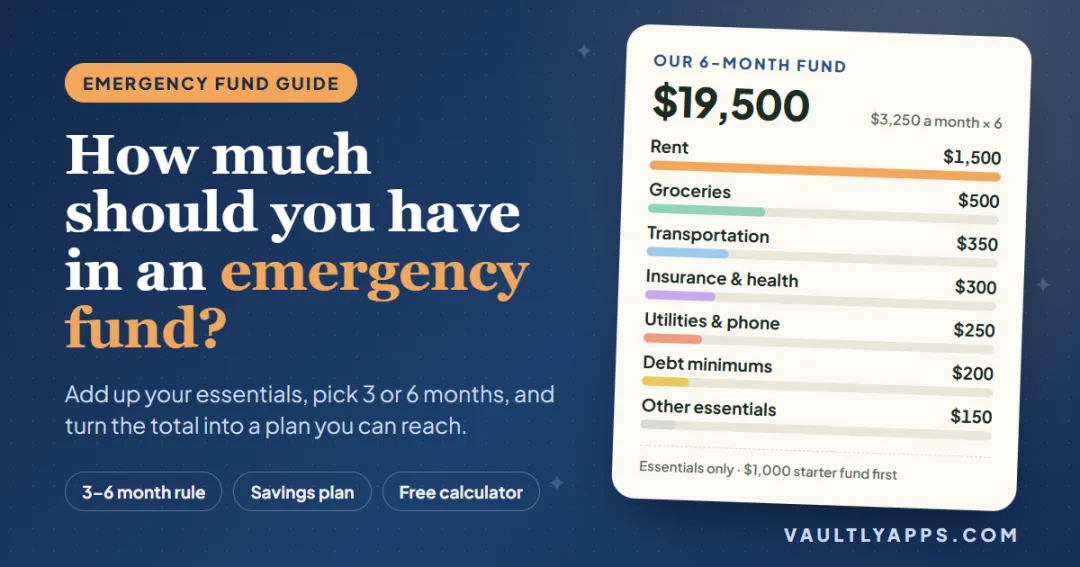
Here's our example household — two adults, one car, renting:
| Essential | Monthly cost |
|---|---|
| Rent | $1,500 |
| Utilities and phone | $250 |
| Groceries | $500 |
| Transportation (car payment, gas, insurance) | $350 |
| Health insurance and prescriptions | $300 |
| Minimum debt payments | $200 |
| Other essentials (childcare, toiletries, pet food) | $150 |
| Total essentials | $3,250 |
What's not on the list: dining out, streaming services, shopping, travel, gym memberships, retirement contributions and extra debt payments. In a real emergency those get paused, so your fund doesn't need to cover them.
This household's take-home pay is $5,200 a month — so the emergency fund is based on about 62% of what they bring home. That's why the target is lower than "six months of income," and much more reachable.
Tip: not sure what you spend? Use the "needs" line from the 50/30/20 budget calculator as a first estimate, then refine it from a couple of months of statements.
Step 2: Choose how many months you need
Three to six months is a range, not a rule. Where you land depends on how quickly your income could be replaced:
| Your situation | Months to aim for |
|---|---|
| Two steady incomes, no dependents | 3 months |
| One steady income, or a household with children | 6 months |
| Single earner with dependents | 6–9 months |
| Self-employed, freelance, commission or seasonal income | 9–12 months |
| A job that could take a long time to replace, or a health condition | 9–12 months |
Our example household has two incomes but a child on the way, so they pick six months:
$3,250 × 6 = $19,500
A three-month fund would be $9,750 — a good first milestone on the way.
Step 3: Turn the target into a plan
$19,500 can feel impossible. Broken into steps, it isn't.
Start with a $1,000 starter fund
Before anything else, get $1,000 into savings. It covers the most common surprises — a car repair, a vet bill, a deductible — without reaching for a credit card. At $400 a month, it takes about three months.
Then save on a schedule
Our household already has $2,000 saved and can put away $400 a month in a high-yield savings account earning 4% APY:
| Milestone | Target | Time at $400/month | Time at $600/month |
|---|---|---|---|
| 3 months covered | $9,750 | 1 year 7 months | 1 year 1 month |
| 6 months covered | $19,500 | 3 years 5 months | 2 years 4 months |
Interest helps a little along the way — about $1,400 by the time the six-month fund is complete at $400 a month.
Three and a half years is a long time, so they look for ways to speed it up:
- Automate it. A transfer the day after payday means the money is saved before it can be spent.
- Save windfalls. Tax refunds, bonuses and cash gifts go straight to the fund.
- Raise it with every raise. Moving from $400 to $600 a month takes more than a year off the six-month goal.
- Celebrate milestones. One month covered, three months covered — each one is real security.
Where to keep your emergency fund
An emergency fund has two jobs: be there in full, and be easy to reach. That rules out investing it.
- High-yield savings account — the usual choice. Insured by the FDIC (banks) or NCUA (credit unions) up to the limits, and earning interest. Compare accounts by APY.
- Money market account — similar, sometimes with check-writing.
- Separate from checking — at a different bank, if that helps you leave it alone.
Avoid stocks, crypto and anything with a penalty for early withdrawal. The point of this money is that it's certain, not that it grows.
What counts as an emergency?
Use three questions: is it unexpected, necessary and urgent?
- Yes: losing your job, a medical bill, an urgent car repair you need for work, a broken furnace in January, emergency travel for family.
- No: a sale, a vacation, holiday gifts, the yearly car registration.
Costs you know are coming — even if they're irregular — belong in a sinking fund, not your emergency fund. Our holiday budget guide shows how a sinking fund pays for December in cash.
Emergency fund or debt payoff first?
If you have high-interest credit card debt, it's tempting to throw everything at it. But with no savings at all, the next surprise goes straight back on the card. The order most people find works:
- $1,000 starter fund.
- High-interest debt — with the debt snowball or avalanche.
- The full three to six months.
After you use it: refill first
Using your emergency fund means it worked. Afterwards, pause extra goals and refill it first — the same automatic transfer, maybe a little bigger, until you're back to your target.
Track it so it actually happens
A savings plan only works if you can see it moving.
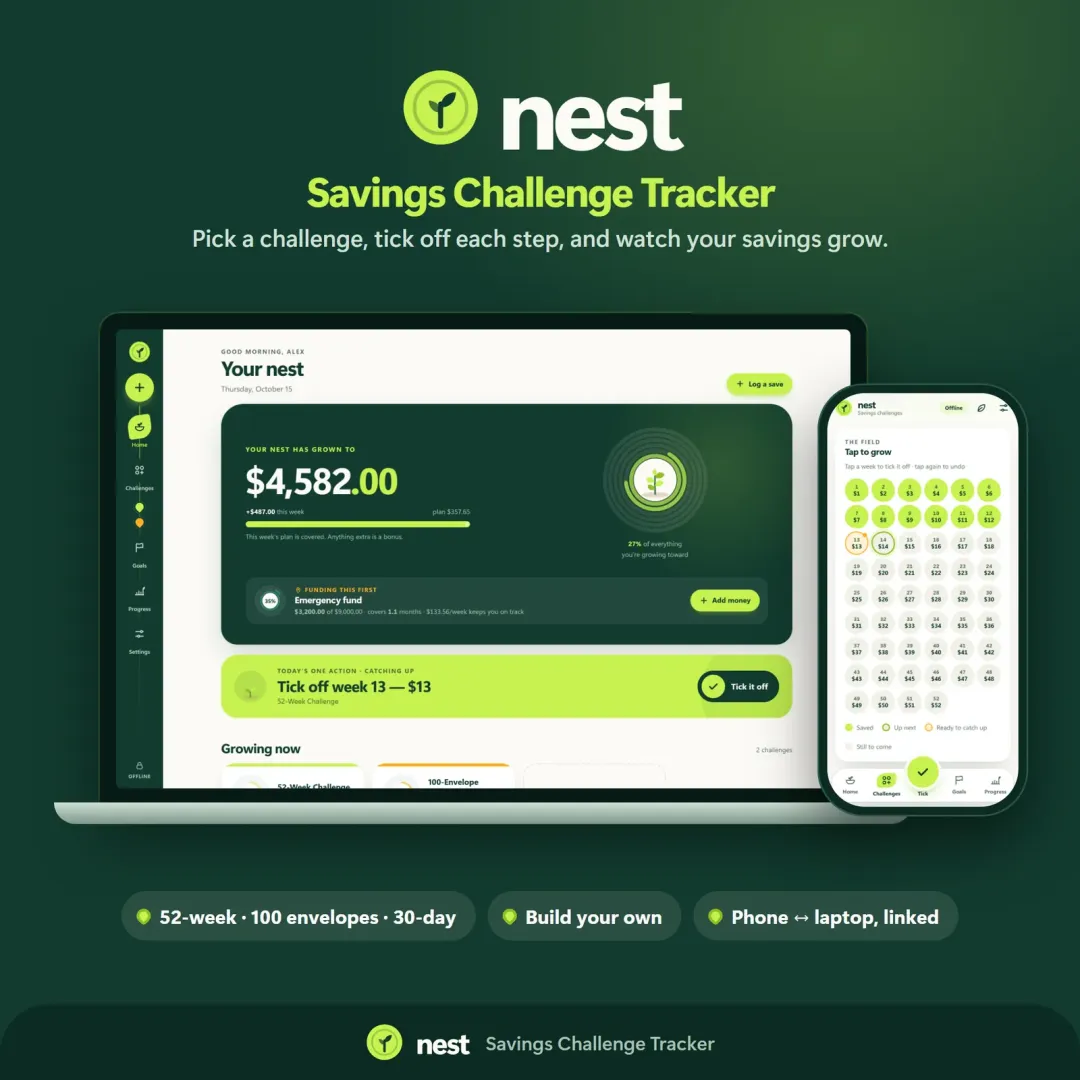
- Nest — the VaultlyApps savings challenge tracker turns a big goal into small weekly steps you tick off. Try the free Nest demo.
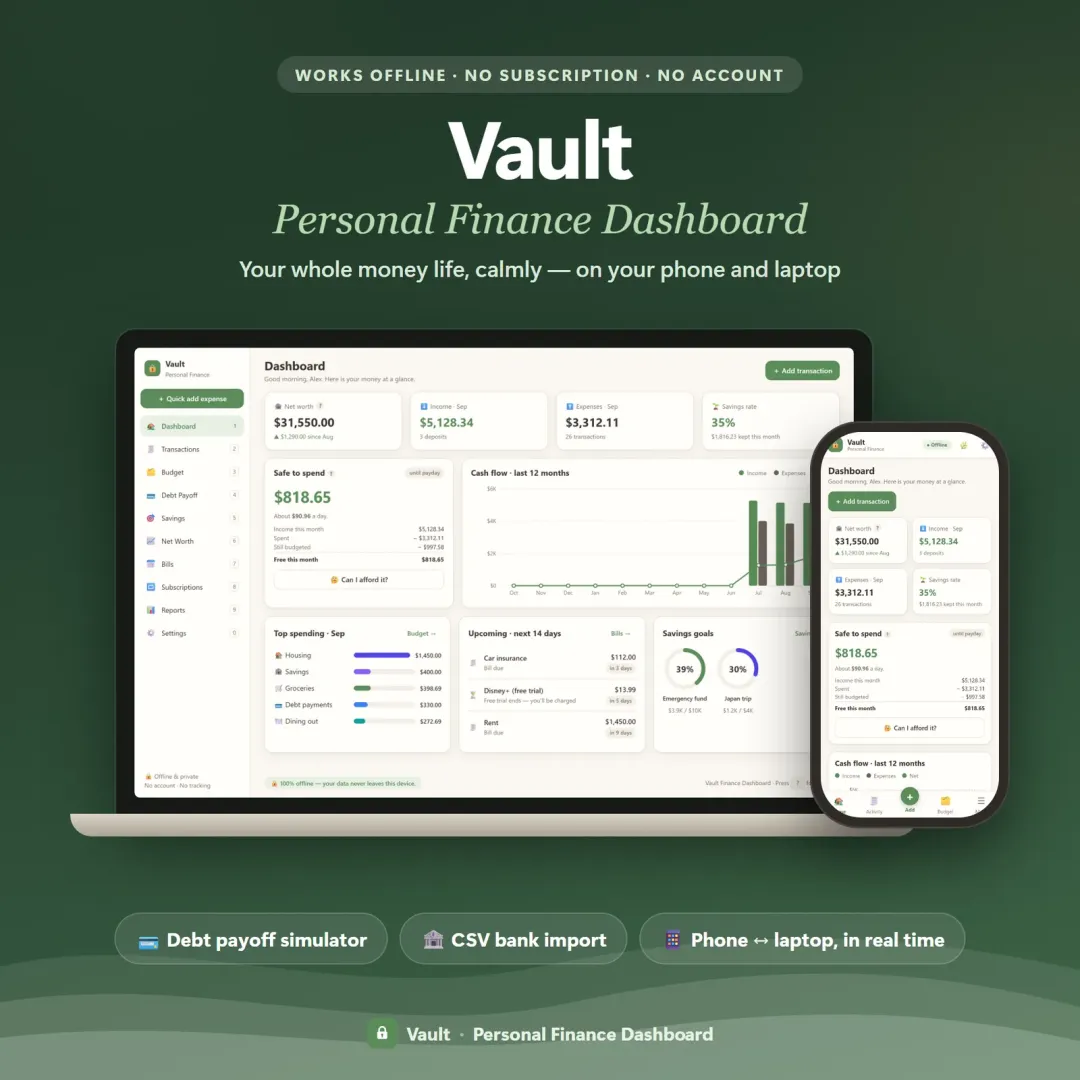
- Vault — a private finance dashboard that keeps your budget, bills, savings goals and net worth together, so the emergency fund is part of the whole plan. Try the free Vault demo.
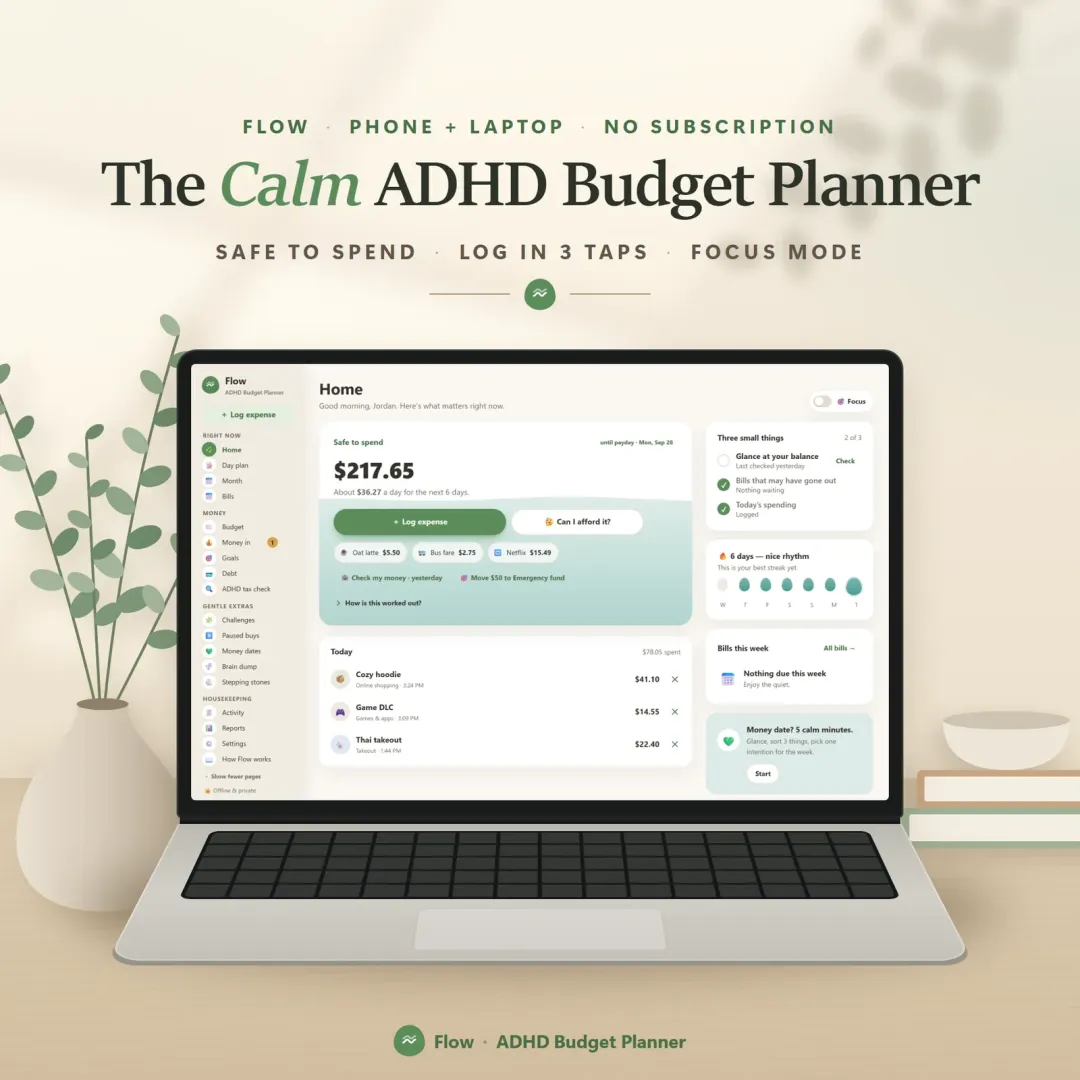
- Flow — if detailed budgets never stick, Flow's one Safe to Spend number already leaves room for savings. See the Flow demo.
Or start right now: put your own numbers into the free emergency fund calculator, then use the savings goal calculator to see what each paycheck needs to set aside. Both let you print the plan or save it as a PDF, with a QR code that reopens it on your phone.
Frequently asked questions
How much should I have in my emergency fund?
Is $10,000 enough for an emergency fund?
Should my emergency fund cover my whole income?
How do I start an emergency fund with little money?
Should I invest my emergency fund?
Should I pay off debt or save an emergency fund first?
Key terms
Written by
Finance Specialist & Editor, VaultlyApps
Emma Whitfield writes and edits the VaultlyApps money guides and free calculators. Her focus is US household finance — budgeting on a real paycheck, paying down credit card and student debt, emergency funds and savings goals, renting — and the money side of freelancing and small-business income, from pricing and profit margins to self-employment tax. Every guide is researched against primary sources such as IRS publications and the CFPB, every number is checked in our tested calculators, and tax content is reviewed each year when new IRS figures come out. Emma is not a licensed financial adviser or tax preparer; her work is general education, not personal advice.
Researched against primary US sources, checked with our calculators and reviewed by a finance expert on our team. Written for US readers — general education, not financial, tax or legal advice. Editorial policy · Disclaimer