What Is a Safe-to-Spend Number (and How Do You Calculate It)?
Your bank balance isn't what you can spend. A safe-to-spend number subtracts bills, savings and planned spending first — here's the formula, worked examples for monthly, weekly and irregular pay, and the mistakes to avoid.
In this article
- Why your bank balance is misleading
- The safe-to-spend formula
- What belongs in "still committed"
- A worked example (paid monthly)
- A worked example (paid weekly)
- Irregular bills: the sinking-fund fix
- Safe to spend with irregular income
- Mistakes that make the number wrong
- How to use safe to spend day to day
- What to do when the number is low
- Safe to spend and a zero-based budget
- Couples and shared accounts
- A 10-minute weekly check-in
- When the number is high: give the extra a job
- Let an app do the arithmetic
You open your banking app and see $1,850. It feels like plenty — until rent, the phone bill and a savings transfer leave in the next ten days. A safe-to-spend number solves this by answering a better question: how much of this money is actually free?
Why your bank balance is misleading
A bank balance is a snapshot of the past: what has arrived minus what has already left. It doesn't know that:
- your rent leaves on the 1st,
- a yearly subscription renews next week,
- you promised $300 to your emergency fund this month,
- you still need groceries until payday.
So the balance overstates what's available — which is how people overspend while "having money in the bank". It can also understate it: if you've already paid your big bills, a low balance may still leave room for a normal week. Either way, the balance alone doesn't answer the question you're really asking.
The safe-to-spend formula
Safe to spend = income this period − spent so far − still committed
- Income this period — money that has actually arrived in the current month or pay period.
- Spent so far — everything that has already gone out, including bills already paid.
- Still committed — money that is promised but hasn't left yet: upcoming bills and subscriptions, planned savings transfers, minimum debt payments and the rest of your planned budget for essentials like groceries and fuel.
Then:
Daily amount = safe to spend ÷ days until next payday
What belongs in "still committed"
Most mistakes happen here, so use a checklist. Before you trust the number, make sure it includes:
- Fixed bills not yet paid — rent or mortgage, utilities, phone, internet, insurance.
- Subscriptions and memberships renewing before payday, including yearly ones.
- Debt payments — at least the minimums, plus any planned extra payment.
- Savings transfers you've decided to make this period.
- Essential variable spending — groceries, fuel, transit, medicine — for the days left.
- Known one-offs — a birthday, a school trip, a car service booked for next week.
- Your share of irregular bills (more on this below).
If something is promised, it's committed — even if it hasn't been billed yet.
A worked example (paid monthly)
Say it's the 18th, and you're paid monthly on the 30th — 12 days away.
| Item | Amount |
|---|---|
| Income this month | $3,400 |
| Spent so far (including bills already paid) | −$1,890 |
| Still committed: upcoming bills | −$420 |
| Still committed: savings transfer | −$300 |
| Still committed: debt payment | −$250 |
| Still committed: groceries and fuel until payday | −$180 |
| Safe to spend | $360 |
$360 ÷ 12 days = about $30 a day for everything that isn't already planned.
That $30 is the honest answer to "can I go out for dinner?" — not the $1,850 in the bank.
A worked example (paid weekly)
The formula works the same way for shorter pay periods. The trick is to set aside part of each paycheck for monthly bills, so the rent doesn't land on one unlucky week.
Say you're paid $820 every Friday, it's Tuesday, and payday is 3 days away:
| Item | Amount |
|---|---|
| This week's pay | $820 |
| Spent so far this week | −$210 |
| Still committed: this week's share of rent | −$325 |
| Still committed: phone bill due Thursday | −$45 |
| Still committed: savings | −$40 |
| Still committed: groceries until Friday | −$70 |
| Safe to spend | $130 |
$130 ÷ 3 days = about $43 a day.
A $1,400 monthly rent works out to roughly $323 a week over a year (1,400 × 12 ÷ 52), so setting aside $325 every week covers it with a little to spare.
Irregular bills: the sinking-fund fix
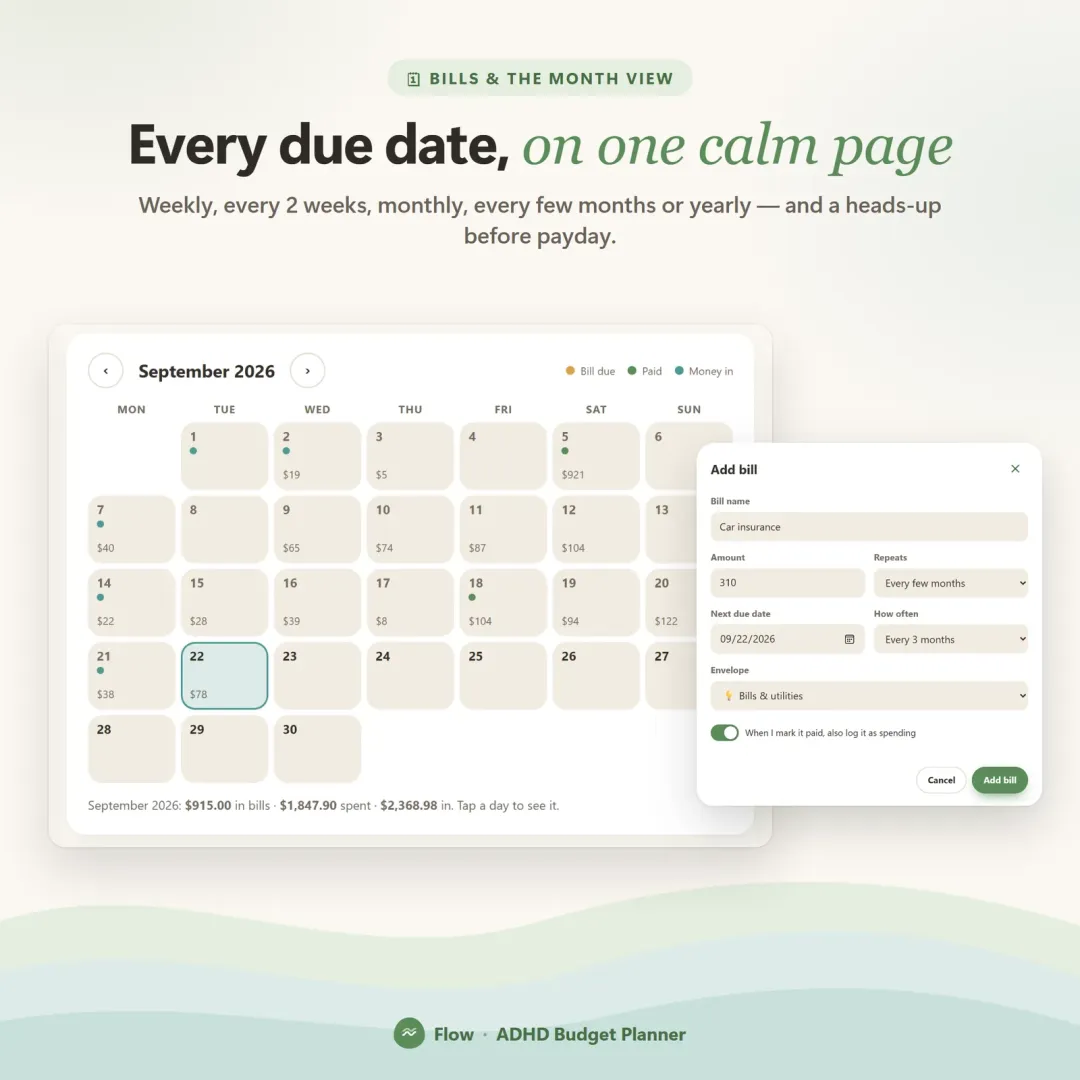
The bills that break a safe-to-spend number are the ones that don't arrive every month: car insurance every six months, a yearly software plan, holiday gifts, school fees. The fix is to turn each one into a small monthly amount, called a sinking fund, and count it as committed every month.
| Irregular cost | How often | Monthly share |
|---|---|---|
| Car insurance $720 | Every 6 months | $120 |
| App subscription $96 | Yearly | $8 |
| Holidays and gifts $600 | Yearly | $50 |
| Total committed each month | $178 |
Move that $178 into a separate account each month. When the insurance bill arrives, the money is waiting, and your safe-to-spend number doesn't crash that month.
Yearly subscriptions are the easiest to forget. Our guide on how to track subscriptions shows how to find every one and convert it to a monthly share.
Safe to spend with irregular income
If you're freelance, self-employed or paid by commission, two rules keep the number honest:
- Count only money that has arrived. An invoice that's "probably paid next week" isn't income yet.
- Pay yourself a steady amount. Let client payments land in a holding account, then move a fixed "paycheck" to your everyday account once or twice a month. Calculate safe to spend from that paycheck, not from the lumpy deposits.
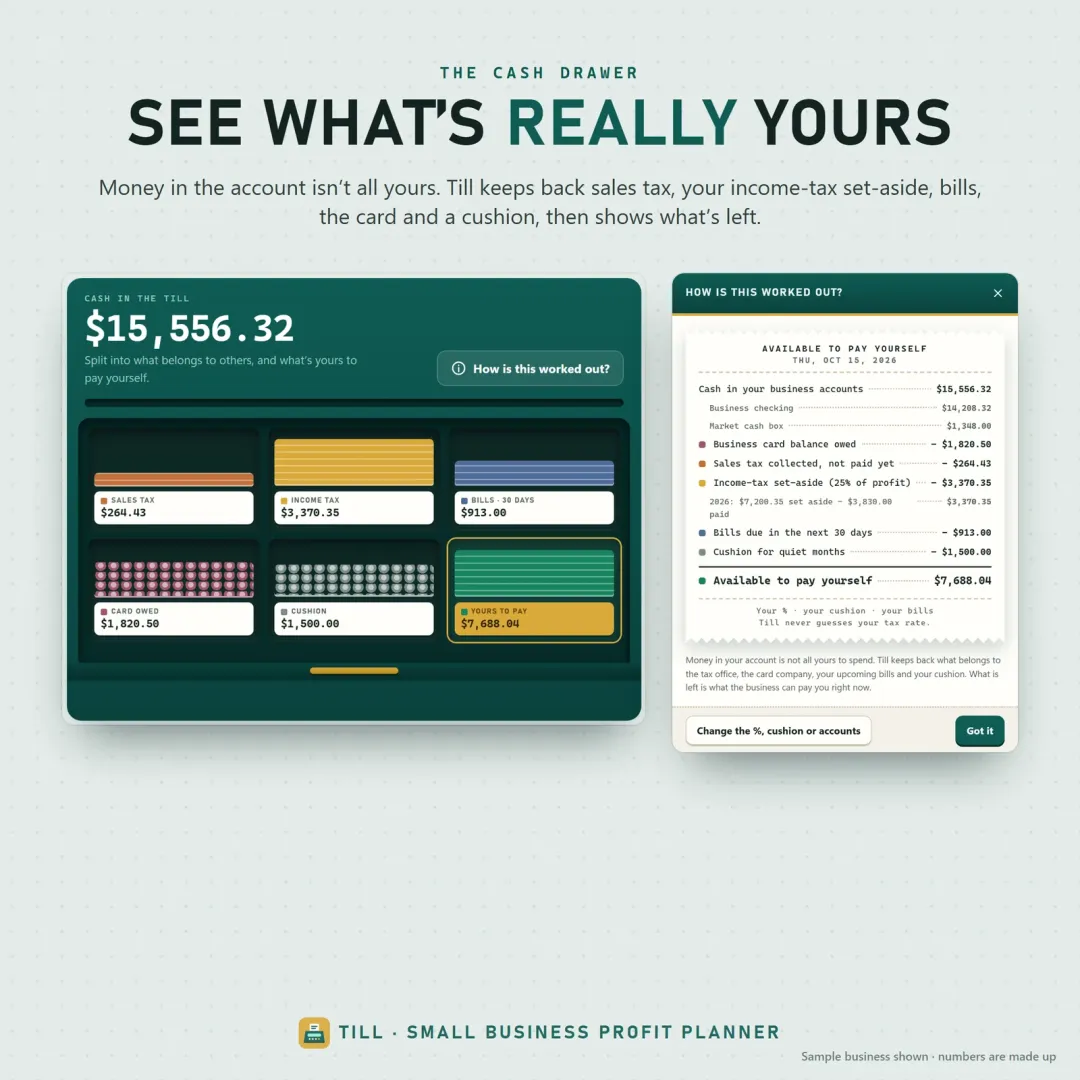
Good months then build a buffer in the holding account, and quiet months still pay you. Our guide to how to pay yourself as a small business owner walks through setting that paycheck step by step, with a worked example. Business owners can go one step further and separate money that belongs to others — sales tax, income tax, upcoming bills — before deciding what's available to pay themselves.
Mistakes that make the number wrong
- Forgetting irregular bills. Annual subscriptions, insurance and car registration hit hard when they're not in "still committed". Spread them across the year in a sinking fund.
- Counting money that hasn't arrived. If a freelance payment is "probably next week", leave it out until it lands.
- Not logging small spending. Coffee and delivery fees add up. If logging feels like a chore, reconcile instead: type in your real bank balance now and then and let the difference absorb what you missed.
- Treating savings as optional. If savings come out of "whatever is left", there will rarely be anything left. Commit them up front.
- Calculating once a month. The number is only useful if it's current.
- Using a credit card balance as spending money. Purchases on a card still have to be paid. Count card spending as spent the day you make it, not the day the bill arrives.
How to use safe to spend day to day
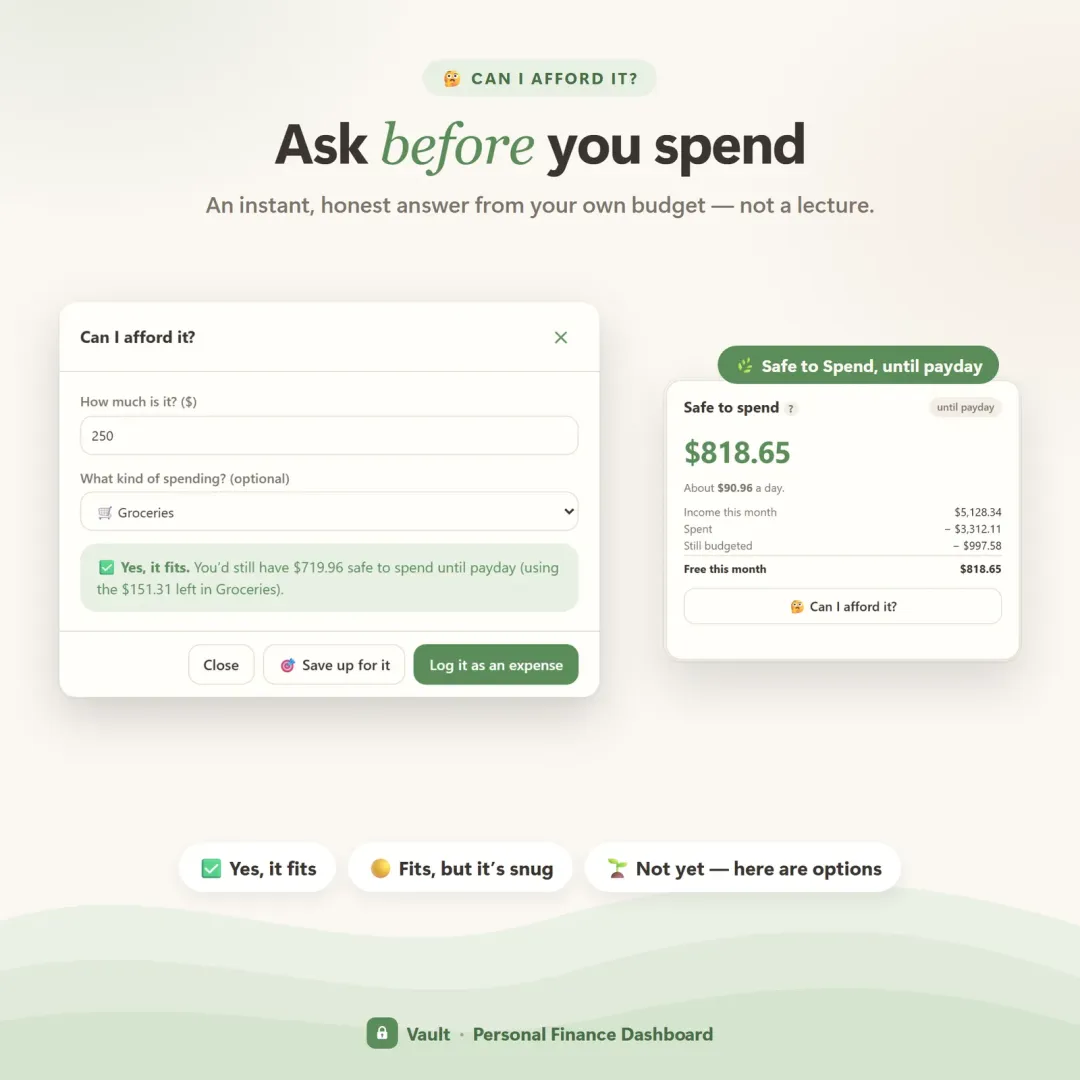
- Check before non-essential purchases. If something costs more than today's amount, it either waits, comes from another category, or becomes a savings goal.
- Let the daily amount roll over. Spend $10 today and tomorrow's daily figure rises.
- Watch the trend, not just the number. If safe to spend is negative most months, the plan needs changing — not more willpower.
What to do when the number is low
A low or negative number is information, not failure. Work through these in order:
- Check it's right. Is a bill counted twice, or a paycheck missing?
- Move money between flexible categories — less eating out this week, more groceries.
- Delay what can wait. A purchase planned for this week can often move to next payday.
- Pause, don't cancel, a savings transfer if the alternative is putting essentials on a credit card.
- Fix the cause next month. A recurring shortfall usually points to one category that's under-planned, or a subscription nobody uses.
If debt payments are what squeeze the number, our comparison of the debt snowball and debt avalanche shows how a fixed monthly payment can clear debts faster without leaving you short each month.
Safe to spend and a zero-based budget
Safe to spend works with any budgeting style, but it fits especially well with a zero-based budget — a plan where every dollar of income is given a job before the month starts: bills, savings, debt, groceries, fun money. Once every dollar has a job, "still committed" is simply the part of each job that hasn't been spent yet.
The budget answers "what is the plan for this month?". Safe to spend answers "how much room is left in the plan right now?". You need both: a plan without a live number is easy to drift away from, and a live number without a plan has nothing to subtract.
Couples and shared accounts
When two people spend from the same account, a single balance is even more misleading — each person sees money the other has already mentally spent. Two simple setups work well:
- One shared number. Both people check the same safe-to-spend figure before non-essential purchases, and both log spending (or reconcile with the real balance) every few days.
- Shared bills, separate fun money. Joint income pays bills, savings and groceries. Each person then gets a fixed personal amount moved to their own account, and spends it however they like without checking with anyone.
Either way, agree on what counts as "committed" — especially savings goals — so the number means the same thing to both of you.
A 10-minute weekly check-in
If daily tracking isn't realistic, a short weekly routine keeps the number accurate:
- Update the balance. Type in what's actually in the account so missed transactions are absorbed.
- Look ahead seven days. Which bills, renewals and plans are coming? Are they all in "still committed"?
- Check the daily amount. Is it enough for a normal week? If not, adjust a flexible category now, not on Friday.
- Note one change for next week — a subscription to cancel, a cheaper grocery plan, a transfer to automate.
Ten minutes on a Sunday evening is often enough to stop the end-of-month surprise.
When the number is high: give the extra a job
A healthy safe-to-spend number at the end of a pay period is a chance, not just a relief. Decide in advance where unspent money goes — an emergency fund, an extra debt payment, or a savings challenge. The 52-week savings challenge is a simple way to turn leftover money into a habit.
Let an app do the arithmetic
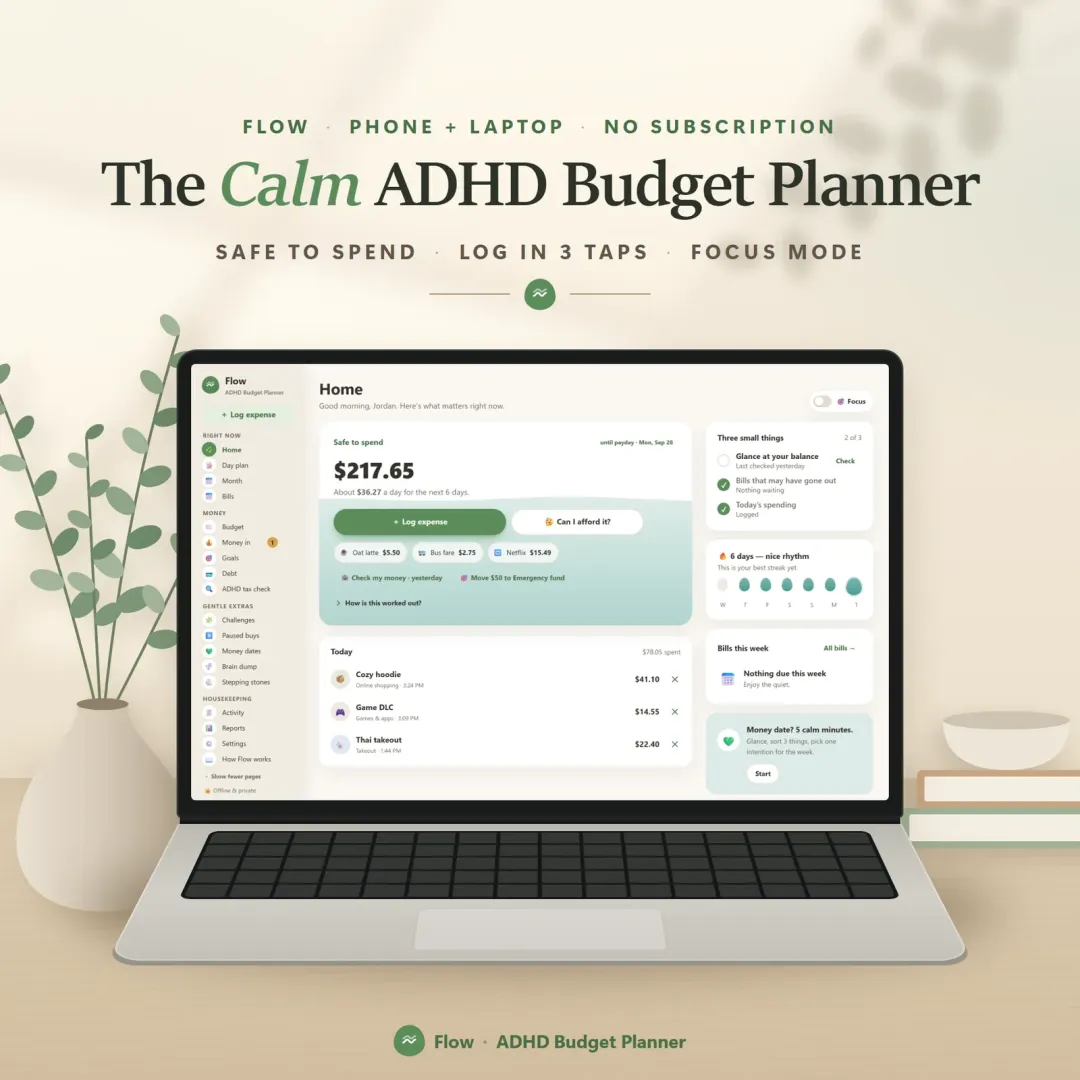
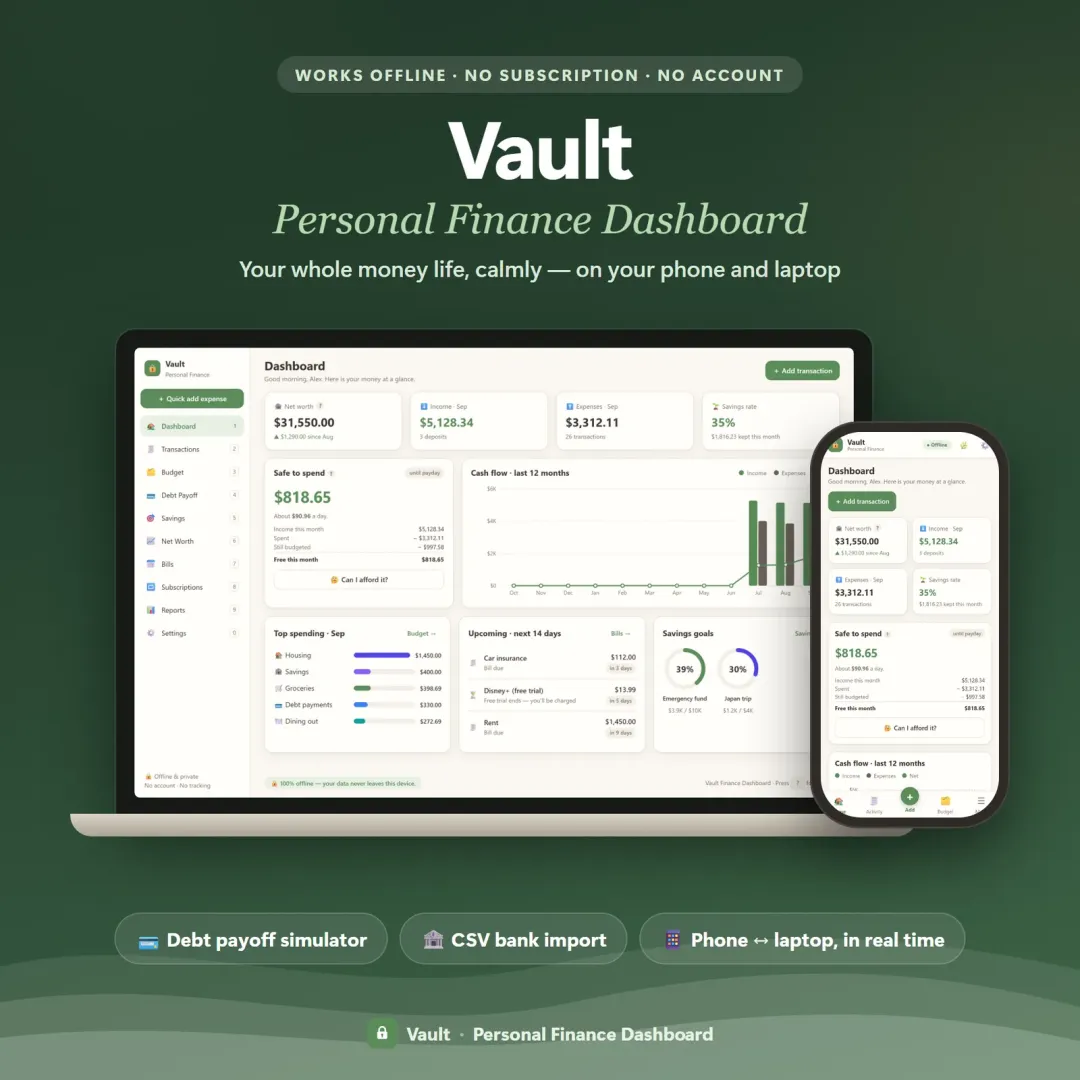
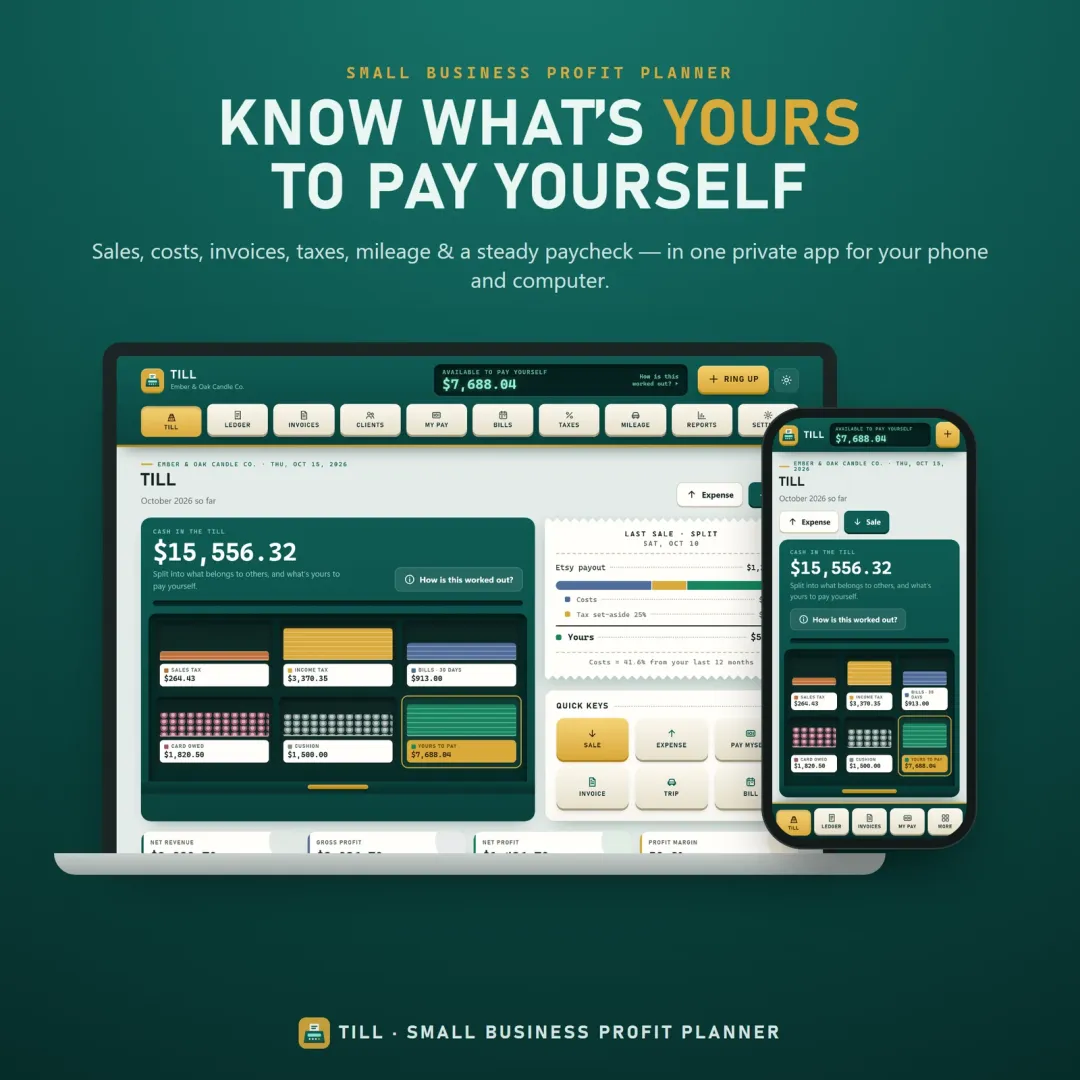
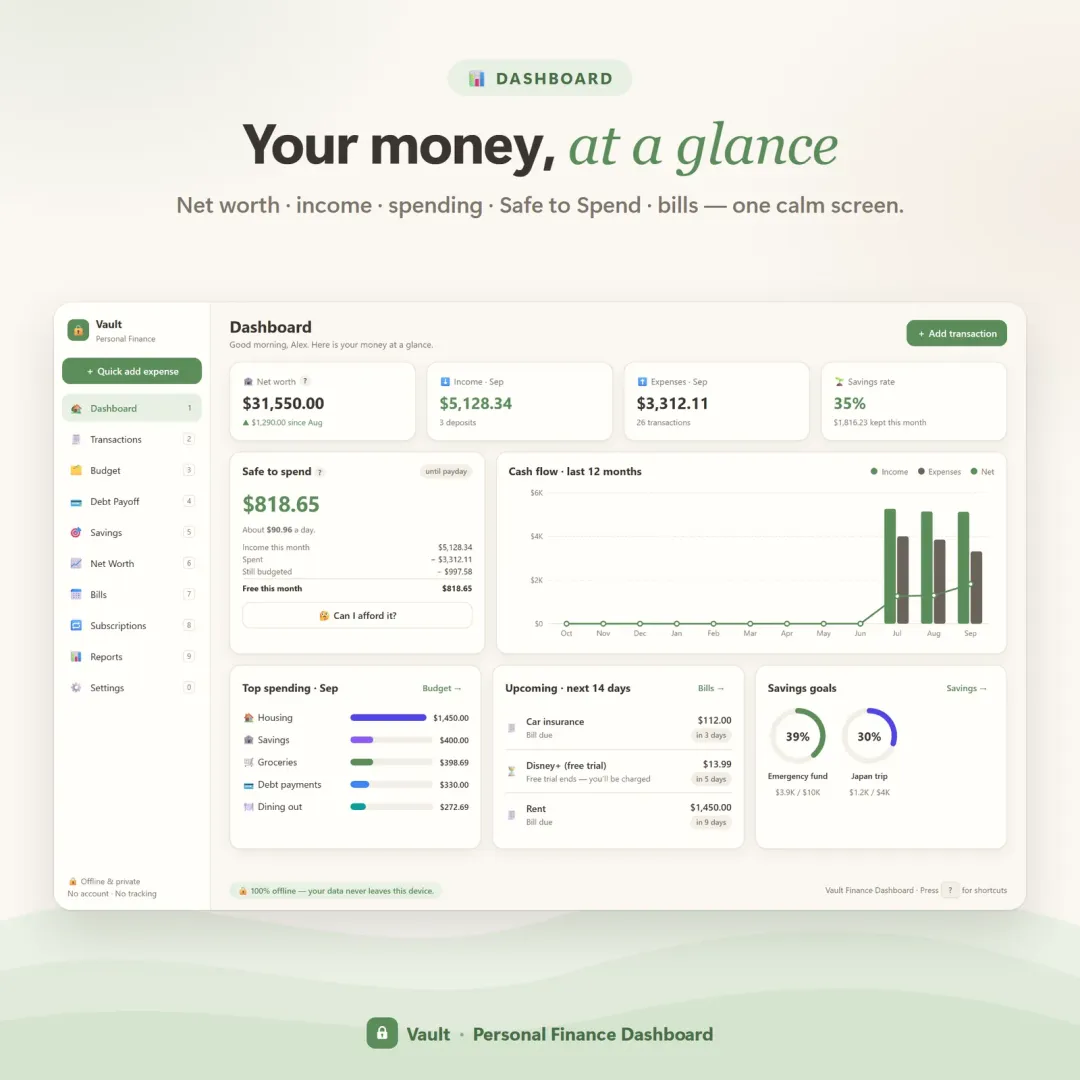
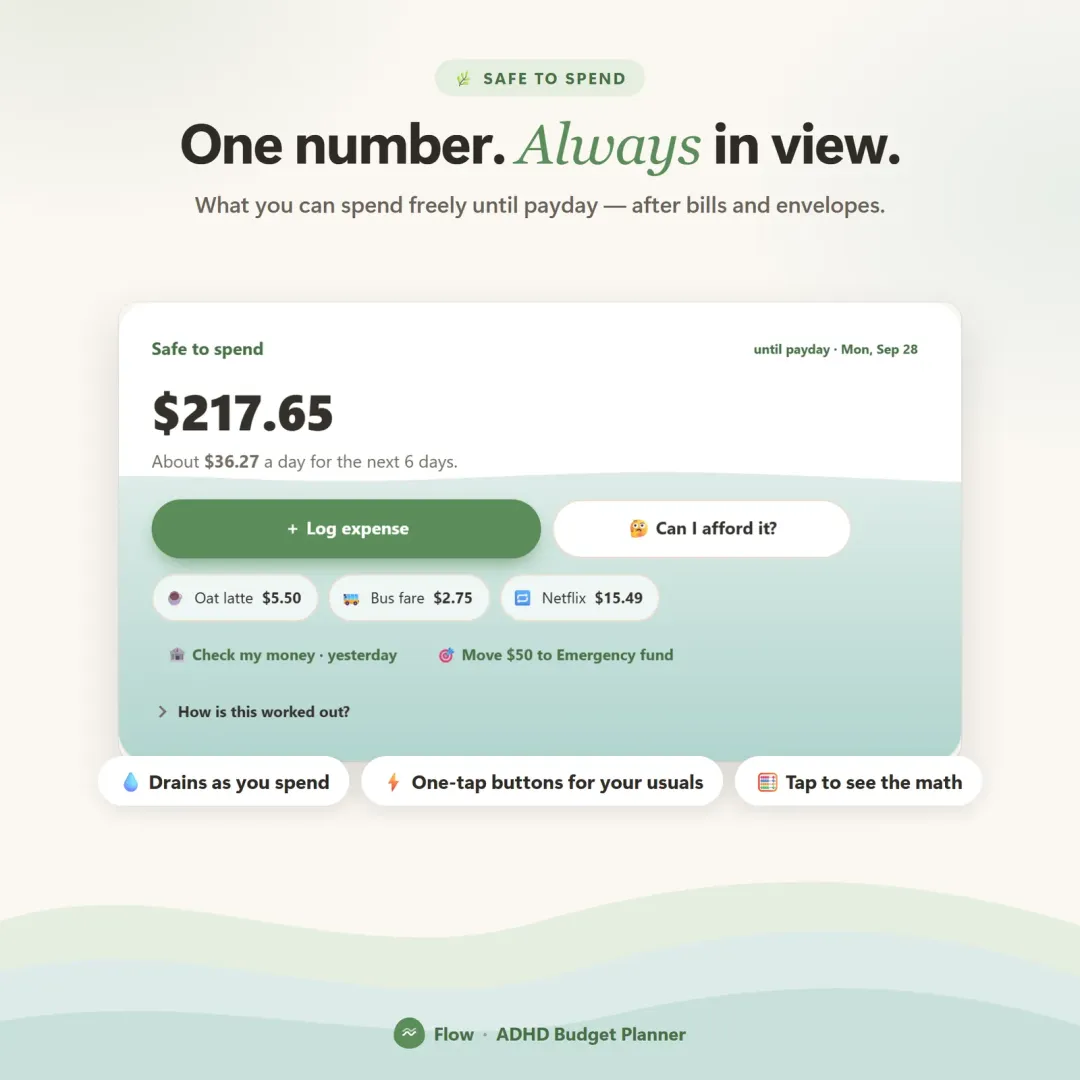
Calculating this by hand every day is tedious, which is why most people stop. Vault shows safe to spend on its dashboard, explains every line behind the number and includes a "Can I afford it?" check. Flow, our ADHD-friendly budget planner, keeps a single Safe to Spend number in view — with the amount free until payday and a per-day figure — and lets you correct it by typing your real bank balance. For business owners, Till shows what's available to pay yourself after tax, bills and the card. All three have free live demos.
Frequently asked questions
What is the difference between safe to spend and my bank balance?
How often should I recalculate my safe-to-spend number?
What if my safe-to-spend number is negative?
Does safe to spend work with irregular income?
Should savings come out before or after safe to spend?
Is safe to spend the same as a budget?
Written by
Founder & developer, VaultlyApps
Mohammad Ali is the developer behind VaultlyApps. He designs, builds and tests every VaultlyApps product himself, with a focus on private, practical tools that solve one real problem well. His background also includes the construction industry, which shapes how he thinks about software for real-world work.