What is really yours
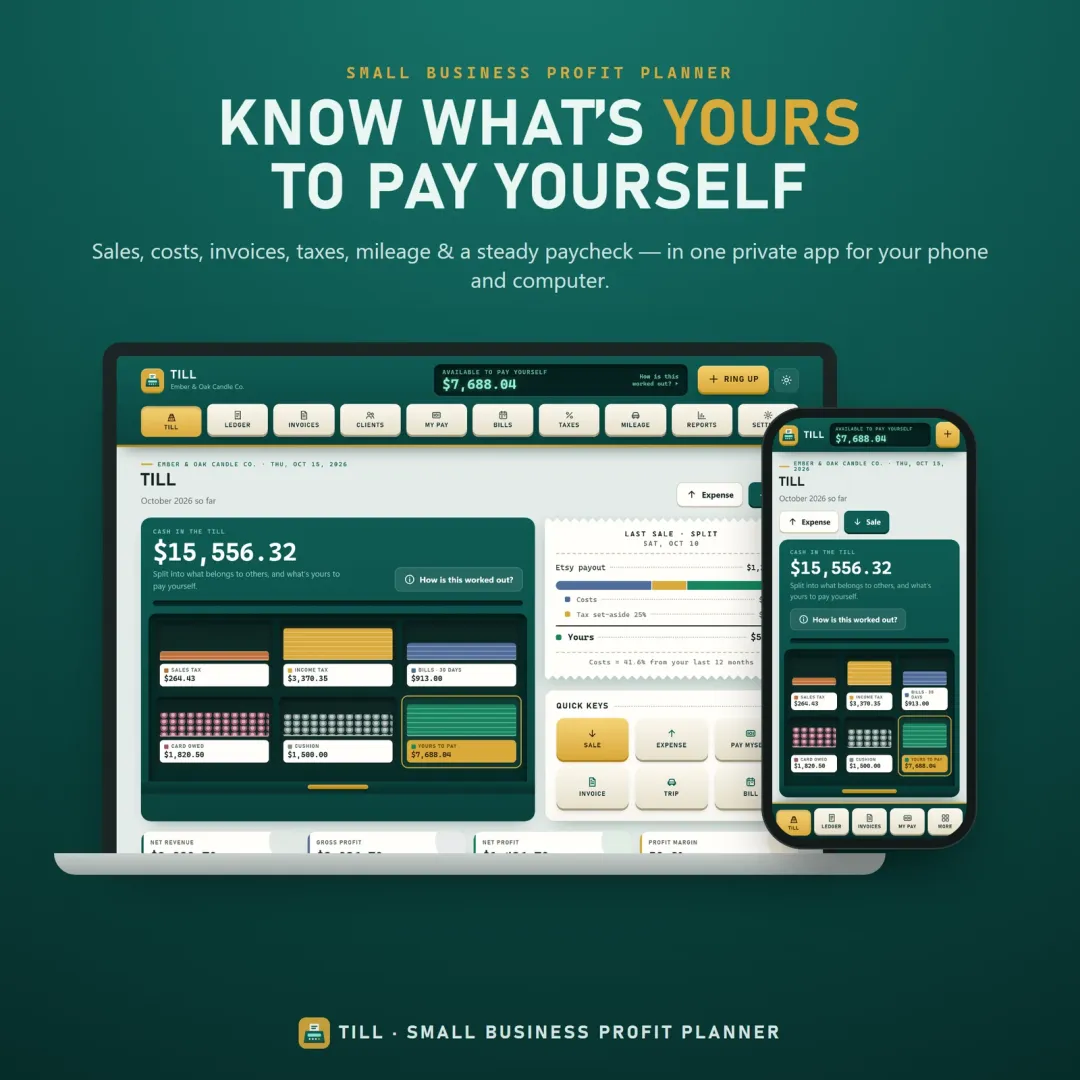
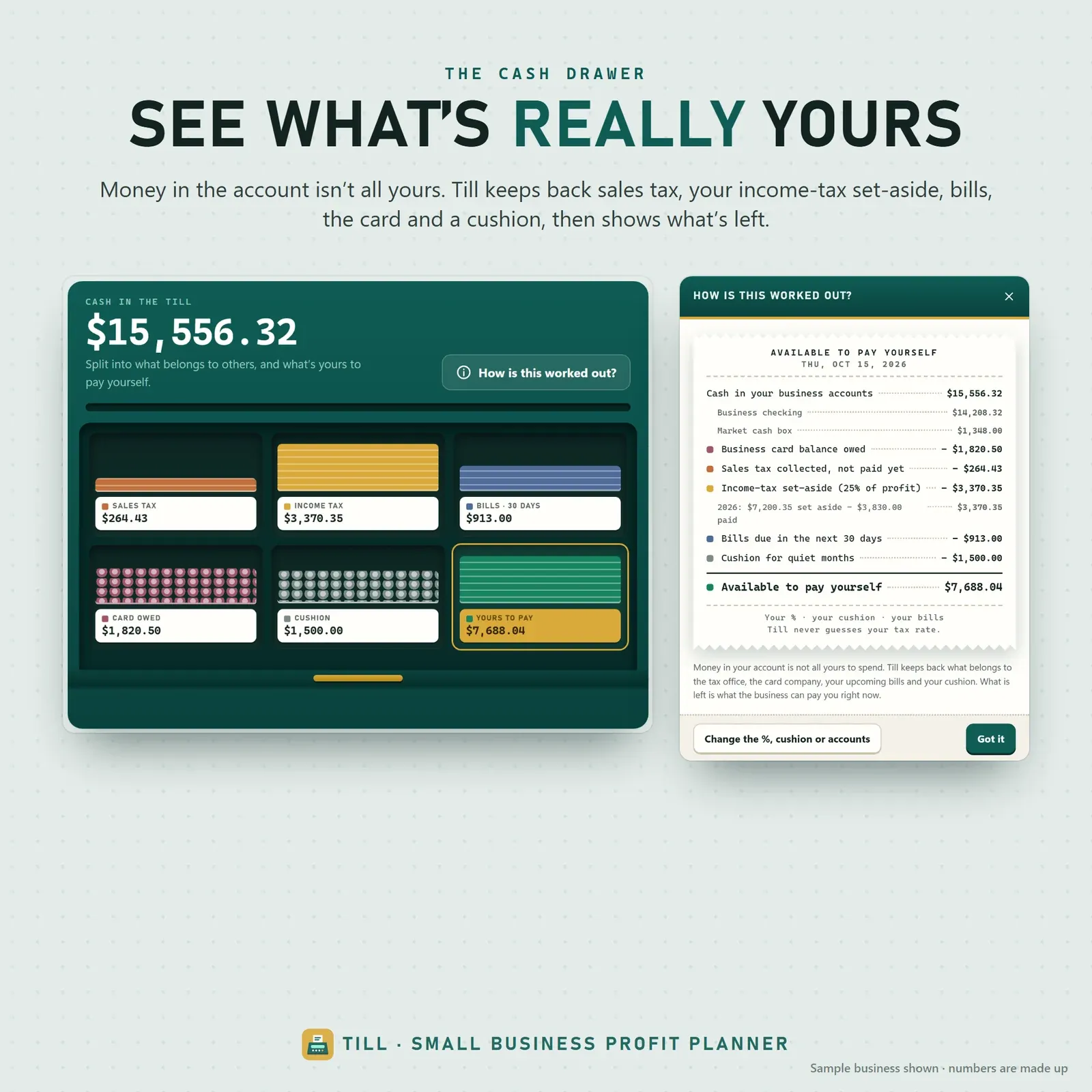
Till's signature screen is the cash drawer. The cash in your business accounts is split into bins — sales tax you collected, the income tax you're setting aside, bills due in the next 30 days, the business card balance and your cushion — and whatever is left is available to pay yourself. Tap "How is this worked out?" to see every line.
It's the business version of a safe-to-spend number. If that idea is new, our guide What is a safe-to-spend number? explains it with worked examples, including irregular income.
Built like a shop till
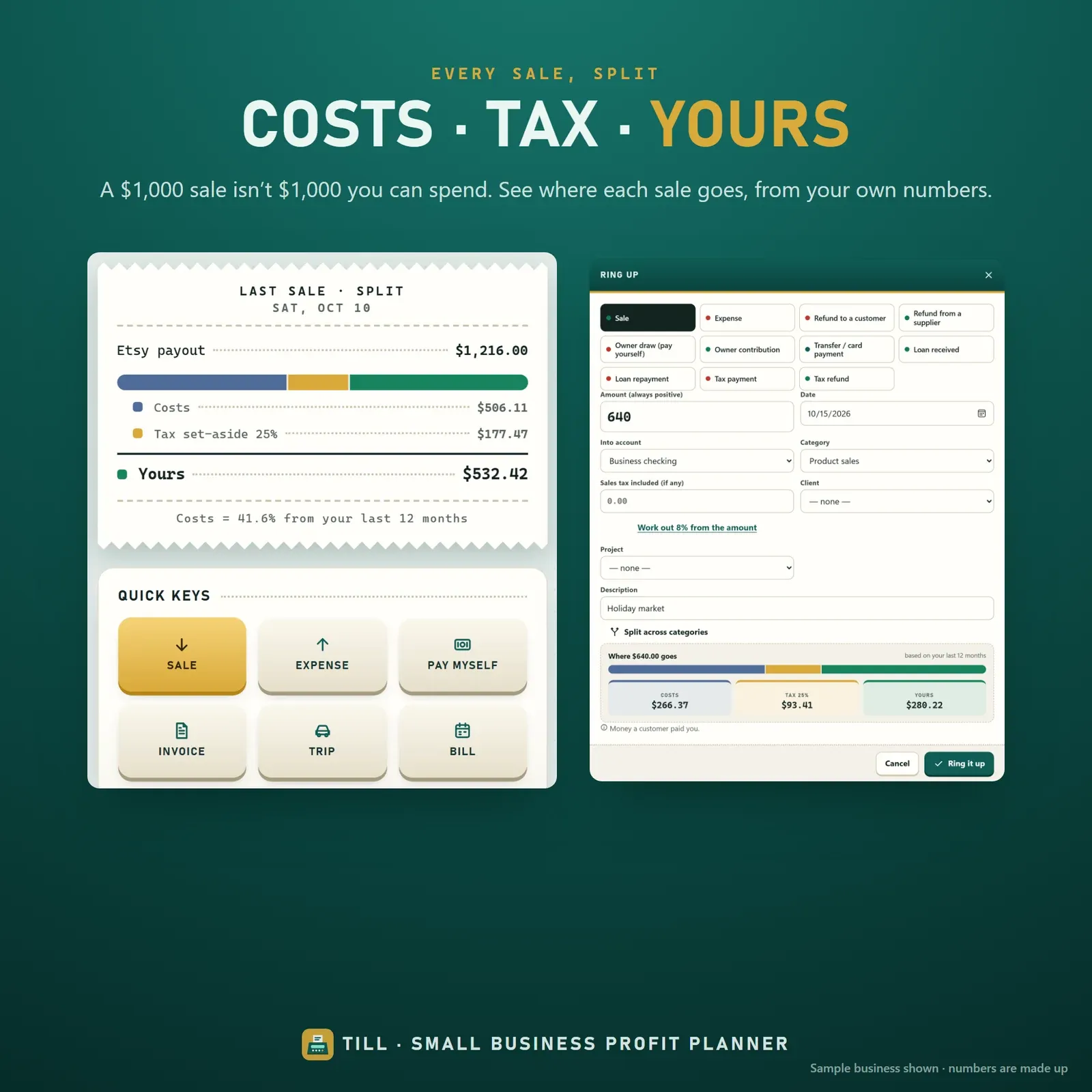
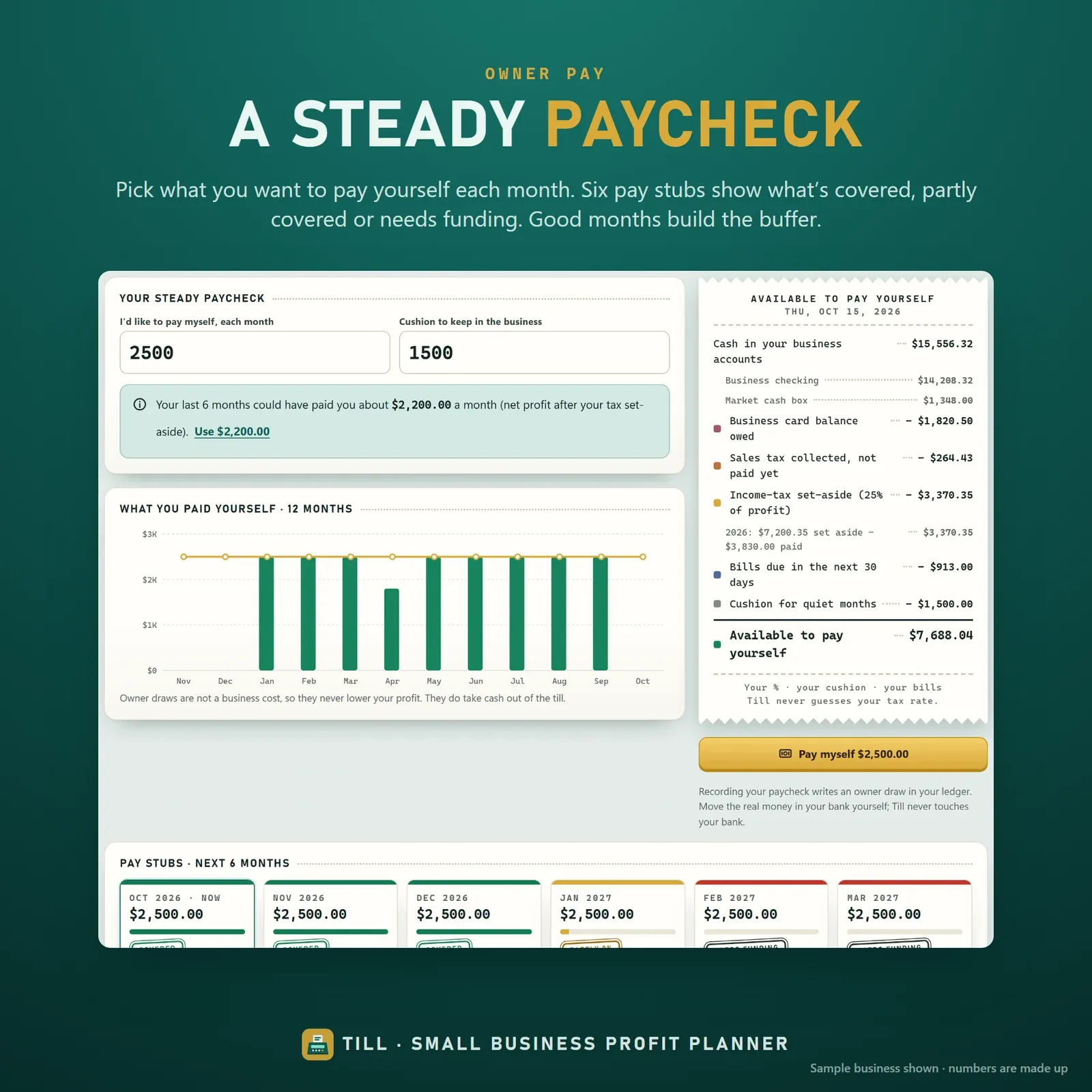
Every sale is rung up like a receipt and shows its split: costs, tax and your share, based on your own numbers. Invoices get rubber-stamp statuses, and the owner pay planner prints six pay stubs so you can see which months are covered before you pay yourself. Three themes — Counter, Night shift and Thermal paper — keep the shop-till feel.
Income and expenses without the jargon
Till records eleven entry types: sale, expense, refund to a customer, refund from a supplier, owner draw, owner contribution, transfer or card payment, loan received, loan repayment, tax payment and tax refund. You always type a positive amount; the type decides whether money comes in, goes out or just moves, so there are no wrong-sign mistakes.
You can split one payment across several categories, record only the business share of a mixed purchase, and keep income, direct costs (materials, shipping, platform fees) and operating expenses apart — so net revenue, gross profit, net profit and margin are always clear. A searchable ledger filters by month, account and type, and CSV import brings in bank or marketplace history with a preview and undo.
Invoices and clients
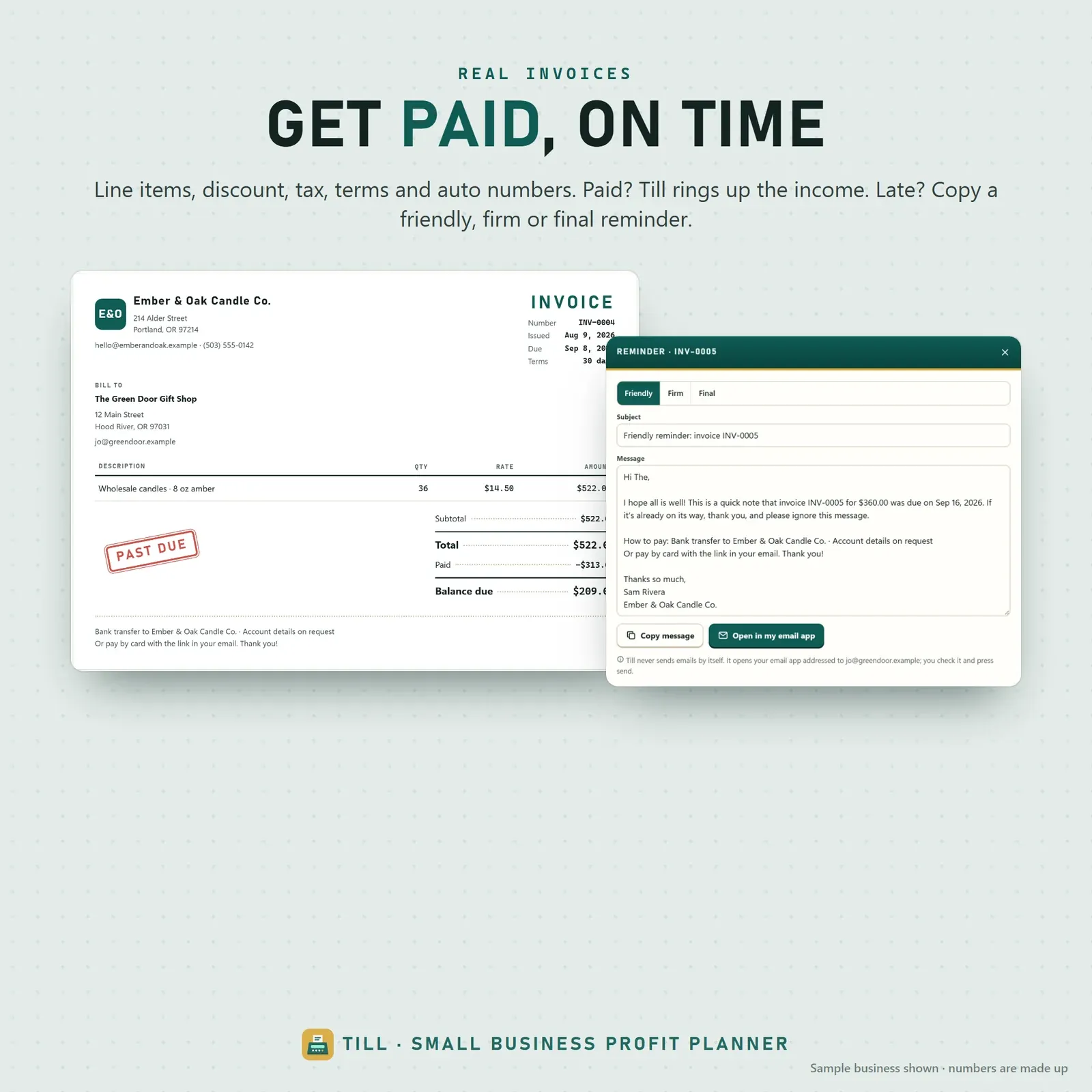
Create invoices with clients, line items (quantity × rate), discount, tax, payment terms and automatic invoice numbers, with your business name and address on a printable page. Statuses run draft, sent, partly paid, paid and overdue. Record a full or part payment and Till rings up the income for you. For overdue invoices, copy a friendly, firm or final reminder or open it in your email app — Till never sends anything by itself.
Clients and projects show profit for each, so you can see which work is really worth it.
Pay yourself a steady paycheck
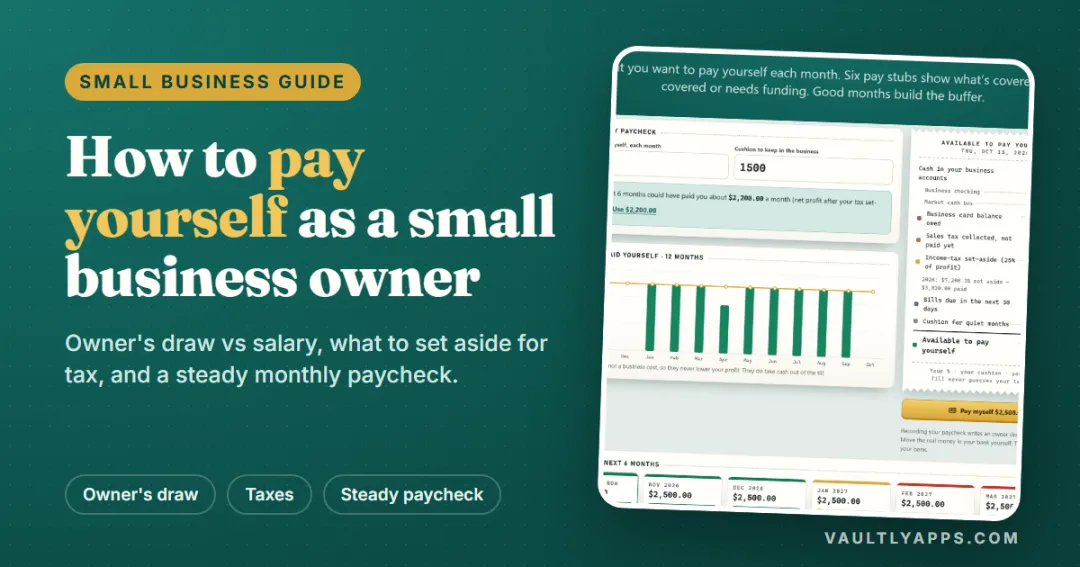
Choose the paycheck you'd like each month and a cushion to keep in the business. Six pay stubs show which months are covered, partly covered or still need funding — good months build a buffer for quiet ones. After three months of records, Till shows what your recent months could have paid you. "Pay myself" records an owner draw; you move the real money in your bank. New to owner's draws? Read how to pay yourself as a small business owner.
Tax, mileage, bills and reports
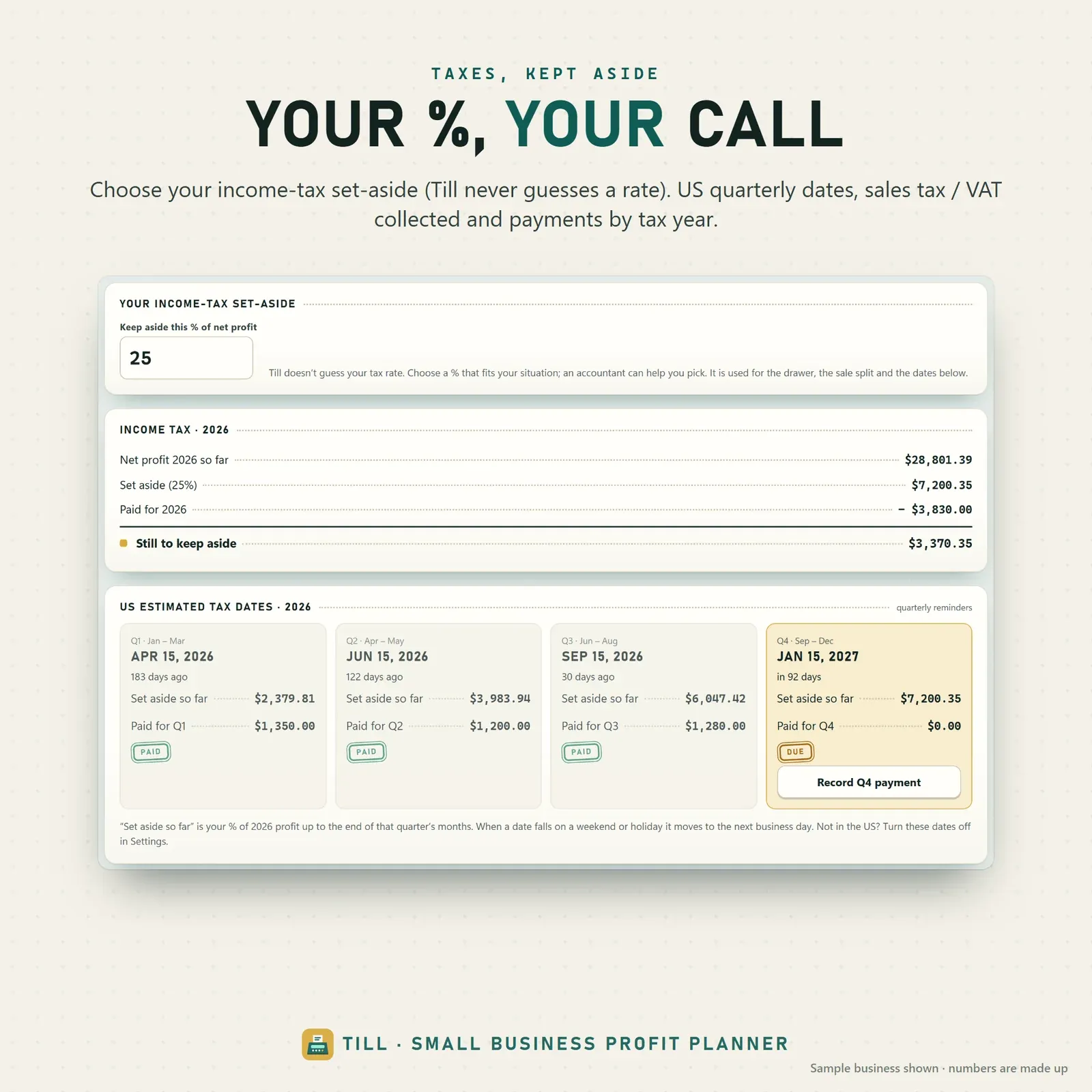
- Tax set-aside at the percentage you choose — Till never guesses your tax rate — with US quarterly estimated tax dates (which can be turned off outside the US).
- Sales tax, VAT or GST collected, paid and still held, and tax payments tagged with the tax year they were for.
- Mileage log with date, from and to, purpose, round trips and client, a yearly total and a deduction estimate at the rate you confirm.
- Recurring bills with overdue flags; tap Paid to record the expense.
- Monthly budget per category plus an income target.
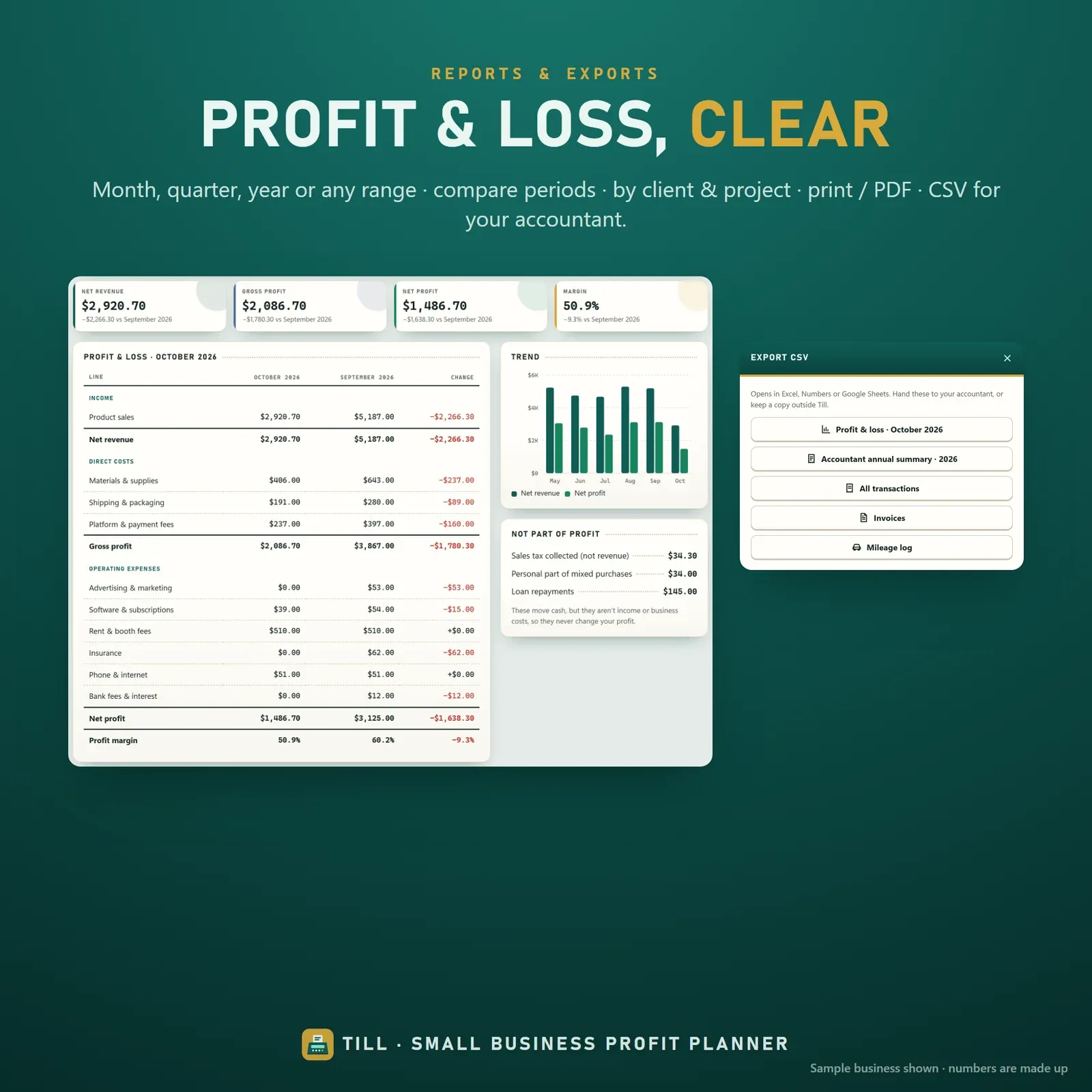
- Reports for any month, quarter, year or date range, compared with the period before or a year earlier: profit and loss, profit by client and project, a trend chart, clean printouts and CSV exports for your accountant.
Who Till is for
Freelancers, makers, Etsy sellers, market and craft-fair sellers, self-employed service providers and sole traders — anyone whose income changes month to month and who wants clearer business finances without building a spreadsheet. It's built for one owner running one small business.
Comparing tools? Our checklist for choosing business software includes Till as an example and a scorecard you can use for any option.
A typical week with Till
- When you make a sale: ring it up on your phone — at the market, the studio or the desk.
- When you buy supplies: record the expense, or let the weekly CSV import catch it.
- When an invoice is paid: record the payment; the income is added automatically.
- Friday: check the cash drawer and the pay stubs, then decide whether to pay yourself this week.
- Quarter-end: check the tax set-aside against the quarterly dates and print the P&L.
Privacy and devices
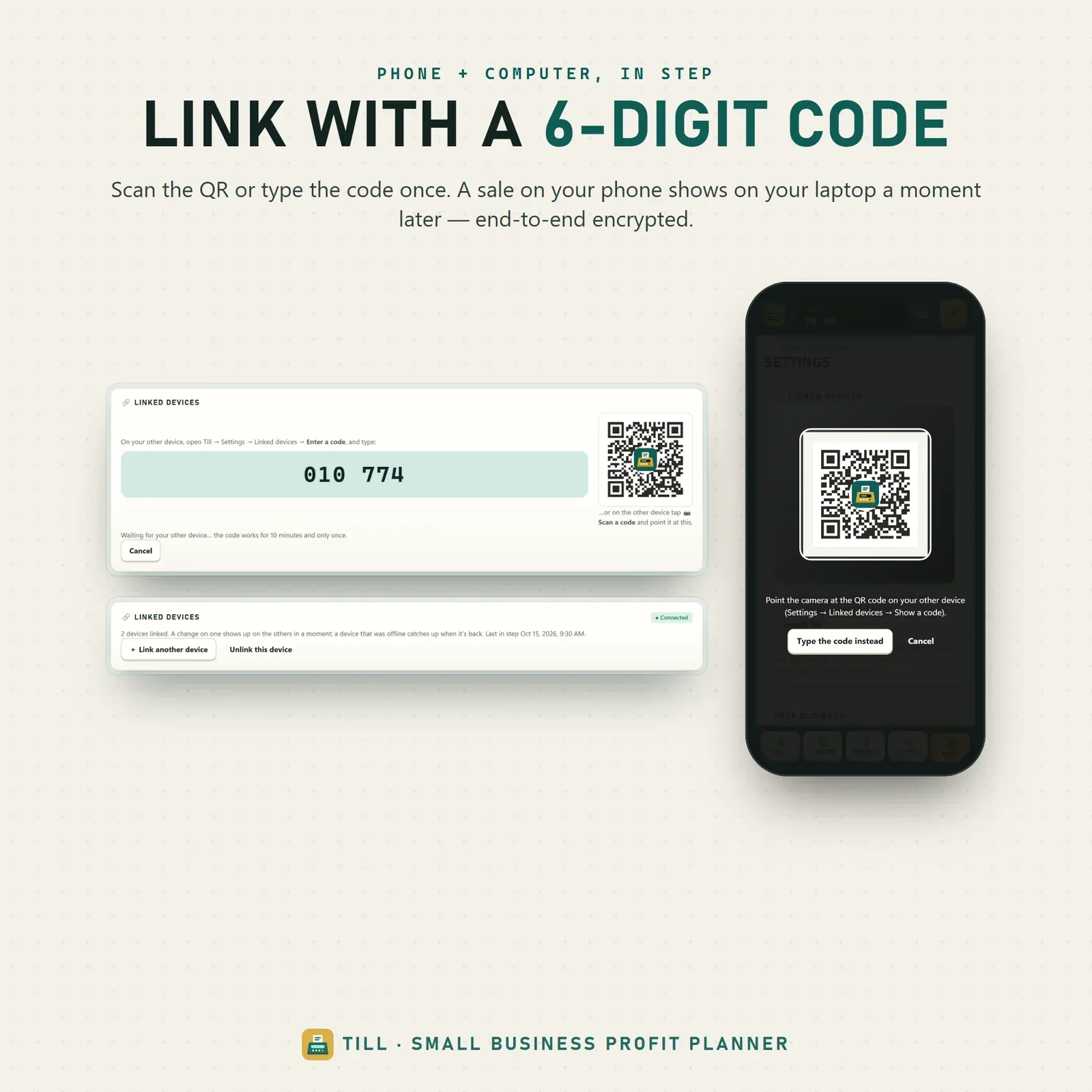
Till has no account and no bank connection. Your records stay on your own devices. Link your phone and laptop once with a 6-digit code or QR, and a sale rung up on your phone appears on your laptop a moment later — encrypted on the device before it travels. A device that was offline catches up when it reconnects. Backup and restore take one file.
Till installs from your private link on iPhone, iPad, Android, Mac, Windows and Chromebook and works offline once installed. Any currency symbol works, sales tax can be renamed VAT or GST, and distances can be miles or km.
What you get
- Your private Till link and QR code.
- A 13-page PDF guide: Start Here, How to Open & Install, How Till Works and the license.
- Bonus printables: 7 business worksheets, 6 goal boards to colour in, and 3 phone plus 2 desktop wallpapers.
- Free updates for the app itself.
Getting started
- Open your private link from the Start Here page and install Till.
- Explore the sample business, Ember & Oak Candle Co., with the guided tour.
- Clear the samples, enter your starting balances and choose your tax percentage.
- Ring up your first sale and pick your paycheck.
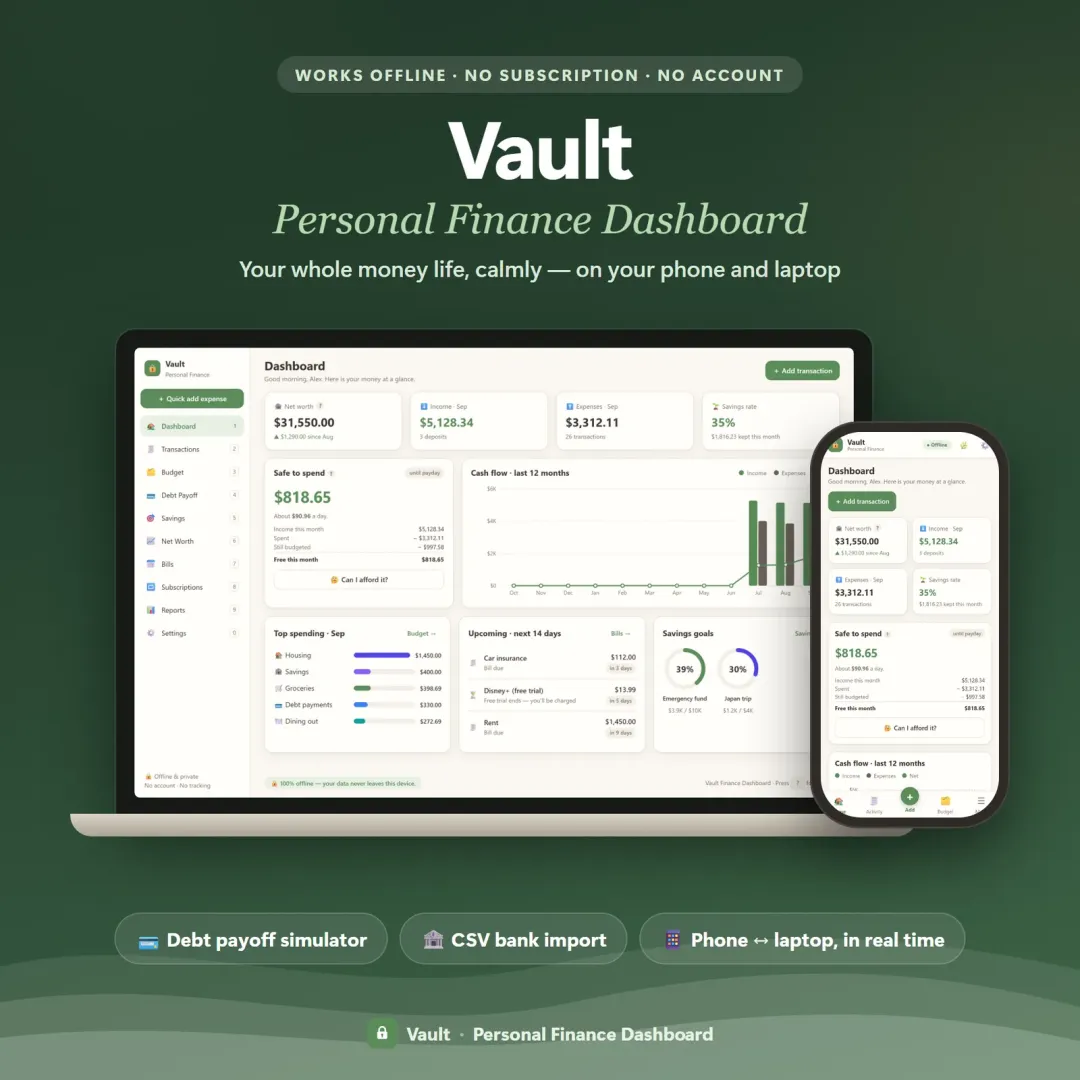
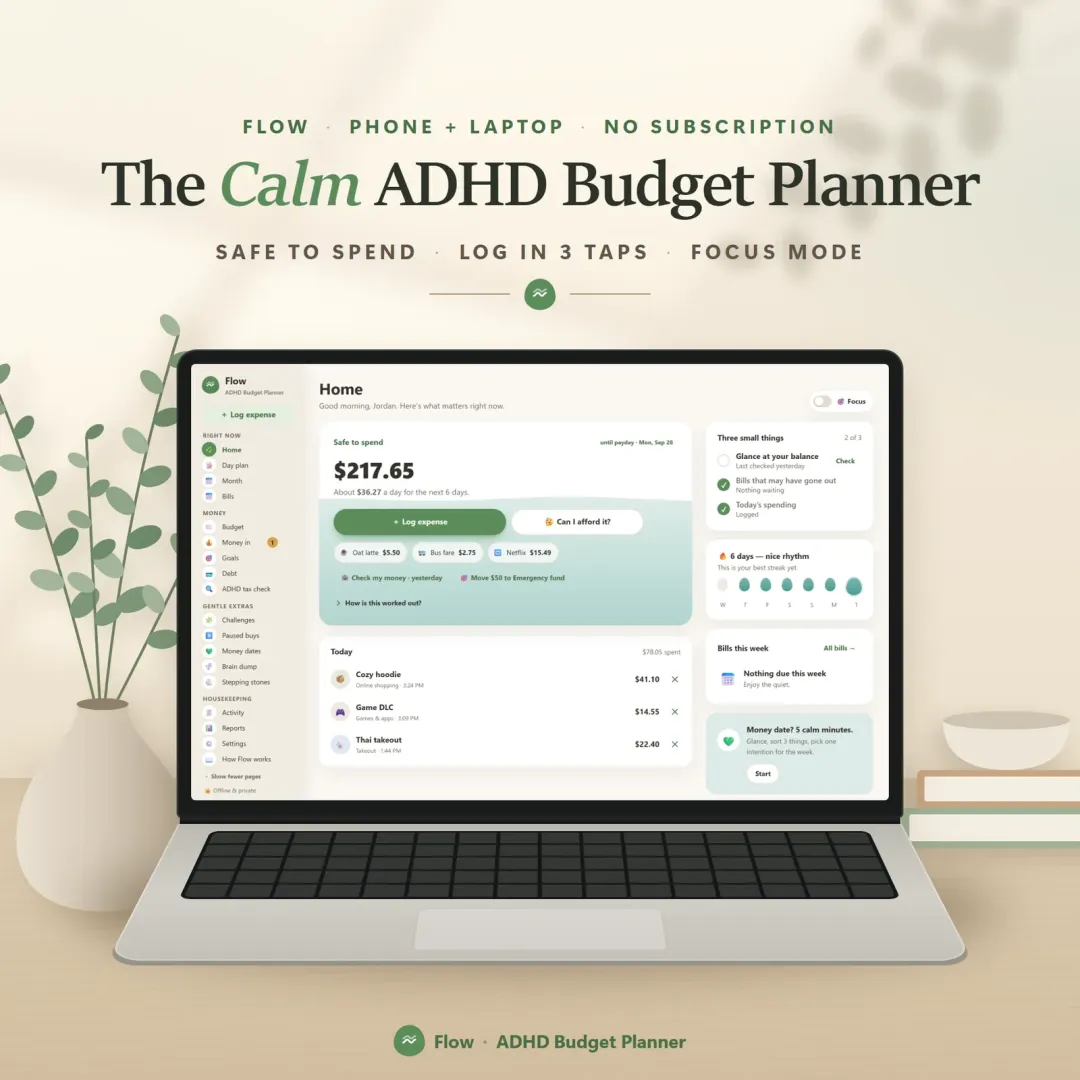
Landlords can use RentRoll for rental properties alongside Till. For personal money — the household side of a small business owner's life — see Vault or Flow.
Good to know
Till is a planning and record-keeping tool, not tax, legal or financial advice. Records stay on your own devices; it needs internet the first time you open it on each device and works offline after that.