
How to use the emergency fund calculator
- Enter your essential monthly expenses — only what you'd still pay if your income stopped tomorrow.
- Choose how many months to cover: 3, 6, 9 or 12.
- Enter what you've already saved and what you can save each month.
- Add your savings account's APY if it earns interest.
You'll see your emergency fund target, how much is still to save, how many months your savings cover today, and the month you'll be fully funded — with a month-by-month plan you can print or download.
How much emergency fund do you need?
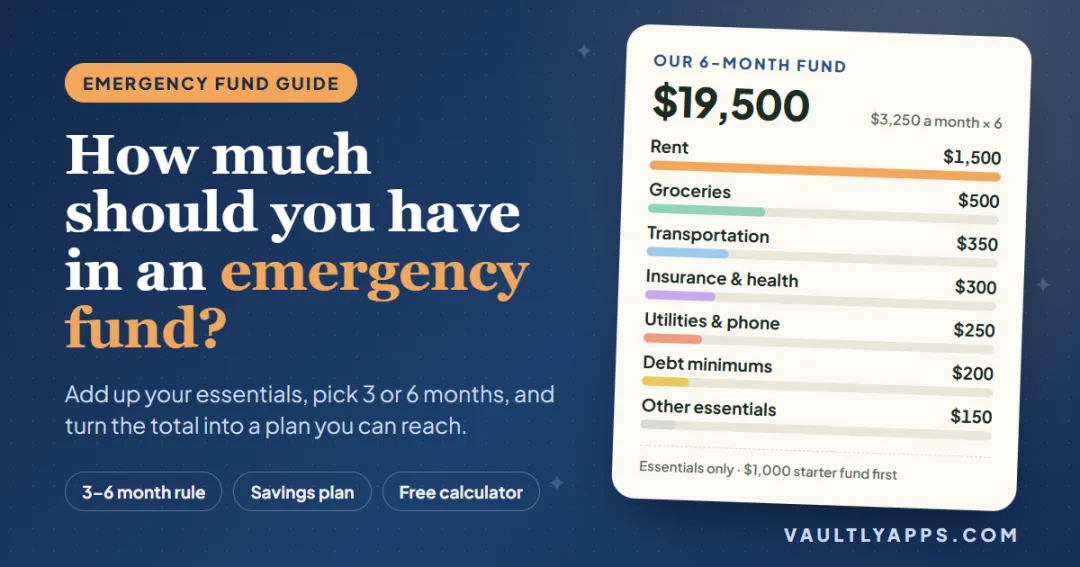
Your target is simple: essential monthly expenses × months of cover.
| Essentials a month | 3 months | 6 months |
|---|---|---|
| $2,000 | $6,000 | $12,000 |
| $3,000 | $9,000 | $18,000 |
| $4,000 | $12,000 | $24,000 |
| $5,000 | $15,000 | $30,000 |
3 months or 6 months?
- 3 months — stable job, two incomes, few dependents, good job prospects in your field.
- 6 months — the only earner, children or other dependents, a single income, or a job that could take a while to replace.
- 9–12 months — self-employed, freelance, commission or seasonal income, or a health condition that could affect work.
How long will it take to save?
Starting from zero with a savings account paying 4% APY:
| Saving each month | $10,000 fund | $20,000 fund |
|---|---|---|
| $250 | 3 years 2 months | 6 years |
| $500 | 1 year 8 months | 3 years 2 months |
| $750 | 1 year 2 months | 2 years 2 months |
| $1,000 | 10 months | 1 year 8 months |
Long timelines are normal — that's why many people start with a $1,000 starter fund first. It covers the most common surprises, like a car repair or a vet bill, and you build up from there.
What counts as an essential expense?
Include:
- Rent or mortgage, property tax and HOA
- Utilities and phone — electricity, water, gas, internet, cell phone
- Groceries (not dining out)
- Transportation — car payment, gas, insurance, transit
- Insurance and health — health premiums, prescriptions, regular care
- Minimum debt payments — the minimums only, not extra payments
Leave out: dining out, streaming and other subscriptions you'd cancel, travel, shopping, and savings contributions. Not sure what you spend? The 50/30/20 budget calculator splits your income into needs, wants and savings — the "needs" line is a good starting point.
Where to keep your emergency fund
An emergency fund needs to be safe and quick to reach — not invested for growth.
- A high-yield savings account at an FDIC-insured bank or NCUA-insured credit union is the usual choice. Compare rates by APY.
- Keep it separate from checking, so it doesn't quietly get spent.
- Avoid stocks and crypto for this money — they can drop just when you need it.
What counts as an emergency?
An emergency is unexpected, necessary and urgent: losing your job, a medical bill, an urgent car or home repair, emergency travel. Known costs that come round every year — car registration, holiday gifts, annual insurance — belong in a sinking fund instead, so they don't drain your emergency savings.
When you do use the fund, pause other goals and refill it first.
Build it one week at a time
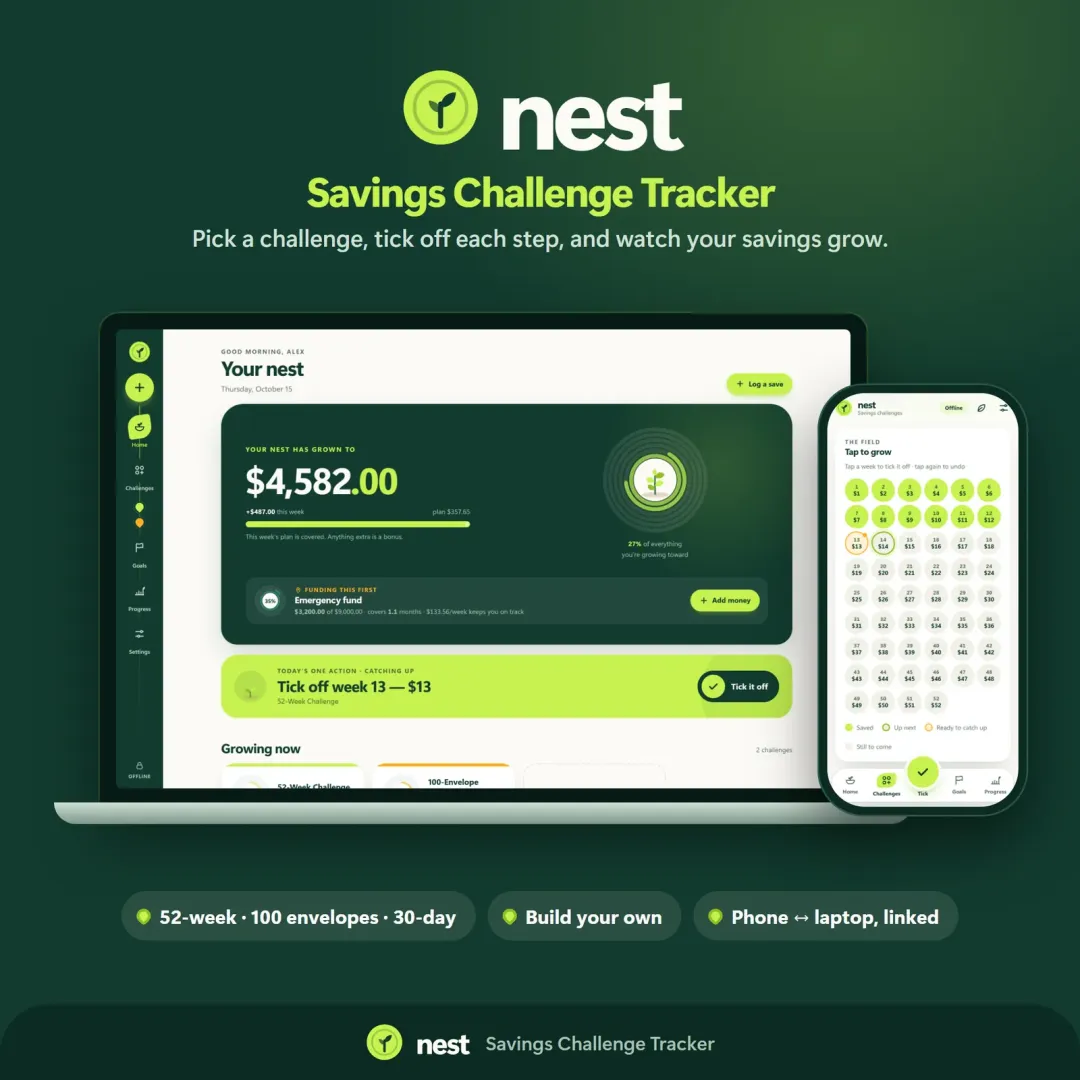
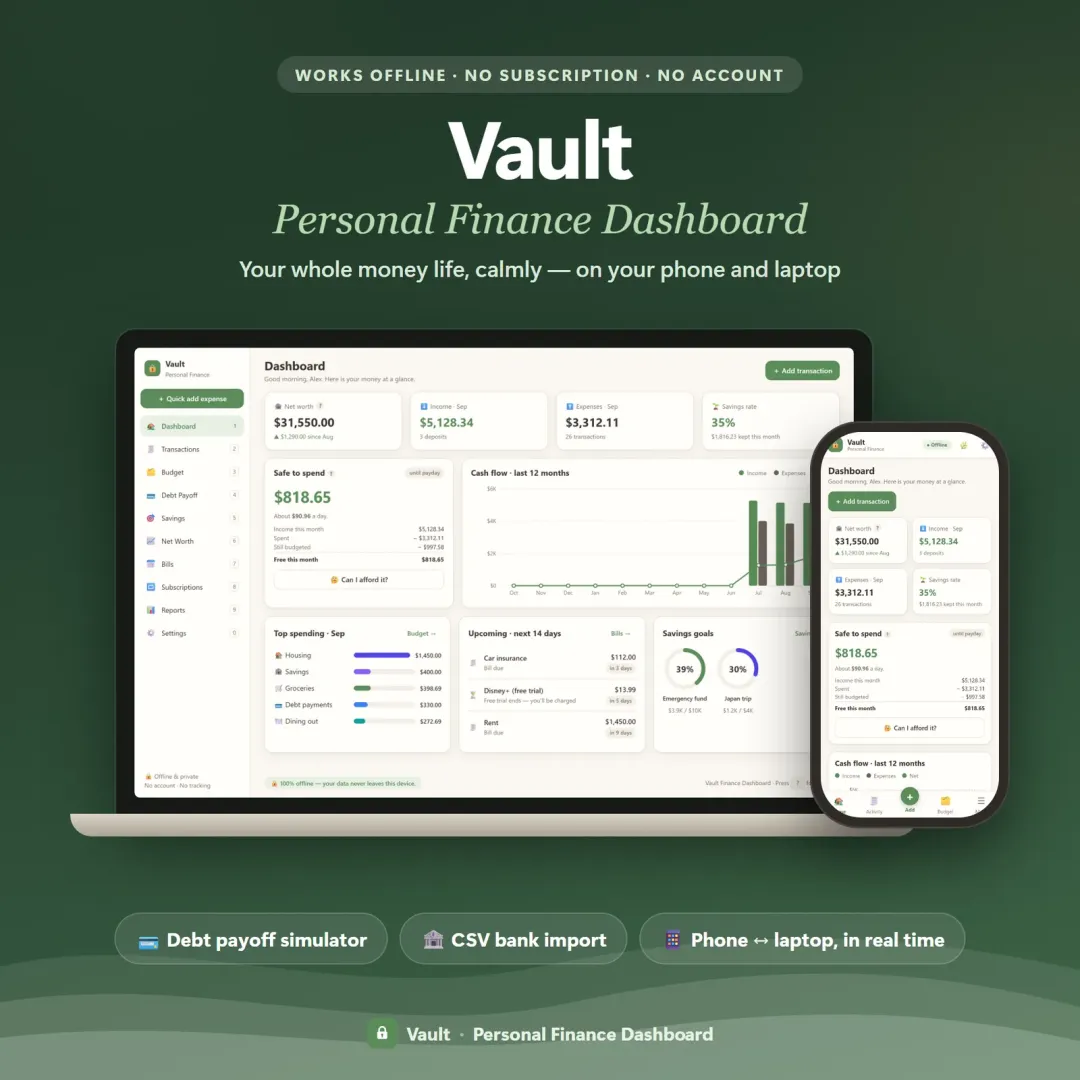
Nest, the VaultlyApps savings challenge tracker, turns a big number like $10,000 into small weekly steps you tick off — with a progress view that keeps you going. For the full picture of budget, bills and savings together, try Vault. Read our guide on how much emergency fund you need for more detail and worked examples.
Frequently asked questions
How much should I have in my emergency fund?
Should I save 3 months or 6 months?
What expenses count for an emergency fund?
Where should I keep my emergency fund?
Should I pay off debt or build an emergency fund first?
Can I save, print or download my emergency fund plan?
Is my information saved or sent anywhere?
Key terms
Written by
Finance Specialist & Editor, VaultlyApps
Emma Whitfield writes and edits the VaultlyApps money guides and free calculators. Her focus is US household finance — budgeting on a real paycheck, paying down credit card and student debt, emergency funds and savings goals, renting — and the money side of freelancing and small-business income, from pricing and profit margins to self-employment tax. Every guide is researched against primary sources such as IRS publications and the CFPB, every number is checked in our tested calculators, and tax content is reviewed each year when new IRS figures come out. Emma is not a licensed financial adviser or tax preparer; her work is general education, not personal advice.
Researched against primary US sources, checked against independent calculators and reviewed by a finance expert on our team. Written for US readers — general education, not financial, tax or legal advice. Editorial policy · Disclaimer