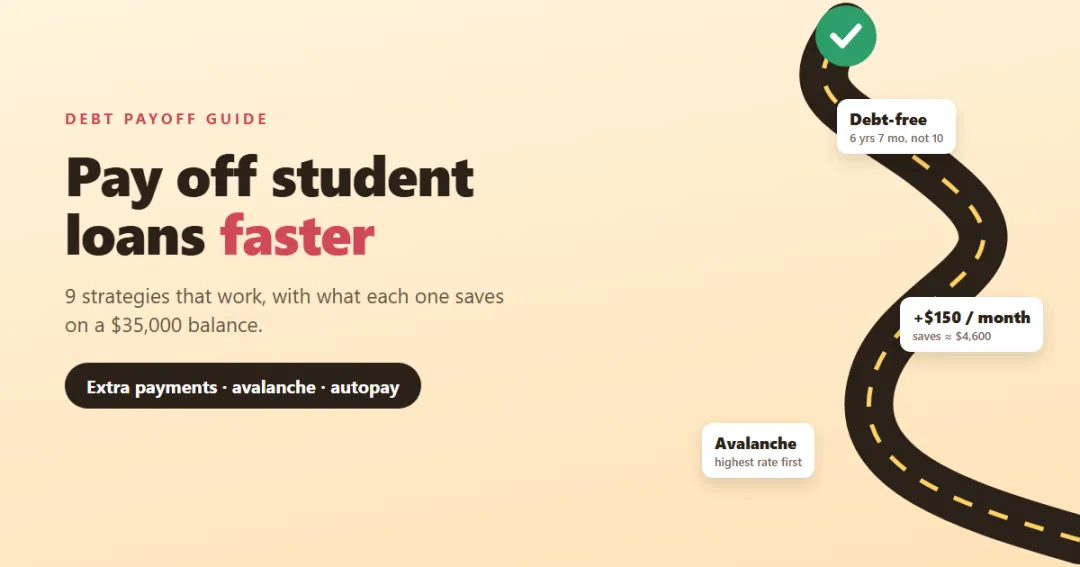
How to Pay Off Student Loans Faster: 9 Strategies That Actually Work (With the Math)
Small extra payments, the right loan to target, autopay discounts, windfalls and refinancing can take years off your student loans. Here's what each strategy really saves on a $35,000 balance, when paying faster isn't the smart move, and how to build a plan you'll stick to.
In this article
- First: should you pay faster at all?
- 1. Pay a little extra every month
- 2. Target the highest-rate loan (the avalanche)
- 3. Tell your servicer where the money goes
- 4. Turn on autopay
- 5. Use windfalls
- 6. Pay biweekly (only if it adds money)
- 7. Send every raise to the loan
- 8. Refinance, carefully
- 9. Find the money in your budget
- What not to do
- Putting it together: a realistic plan
- Make it stick
- The short version
Student loans have a way of hanging around. The standard plan is ten years, and plenty of people take far longer. The good news: you don't need a big raise or a lottery win to get out sooner. A few deliberate habits, applied to the right loan, can take years off your payoff date and thousands off the interest.
This guide walks through nine strategies that actually work, with the math for each on a typical balance: $35,000 at 6.5%, paying the standard $397 a month. On that plan you'd be debt-free in about 10 years and pay about $12,700 in interest. Let's see how far we can bring that down.
You can follow along with your own numbers in the free student loan payoff calculator.
First: should you pay faster at all?
Paying off student loans early is a great goal, but it isn't always the best first goal. Before you send extra money, check these:
- Emergency fund. Without savings, the next car repair or vet bill goes on a credit card at 25%. Build at least a starter fund first; the emergency fund calculator helps you set the number.
- Employer 401(k) match. A 50% or 100% match is an instant return no loan payoff can beat.
- Higher-interest debt. A credit card at 24% should go before a student loan at 6.5%.
- Forgiveness. If you work in public service or are on an income-driven plan heading toward forgiveness, extra payments may only shrink the amount that would be forgiven.
If those are covered, here's how to go faster.
1. Pay a little extra every month
This is the strategy that does the most. Every extra dollar goes straight to principal, and interest stops building on it for the rest of the loan.
| Extra each month | Debt-free in | Interest saved |
|---|---|---|
| $0 | 10 years 1 month | — |
| $50 | 8 years 7 months | about $2,046 |
| $100 | 7 years 5 months | about $3,514 |
| $150 | 6 years 7 months | about $4,621 |
| $300 | 4 years 11 months | about $6,751 |
Even $50 a month, less than $2 a day, takes a year and a half off. Set it up as an automatic payment so it happens without a decision every month.
2. Target the highest-rate loan (the avalanche)
Most borrowers have several loans with different rates. Pay the minimum on all of them and put every extra dollar on the highest-rate loan. When it's gone, roll its payment into the next highest. This is the avalanche method, and it saves the most interest.
Say your $35,000 is three loans: $12,000 at 7.5%, $15,000 at 5.5% and $8,000 at 4.5%, with minimums of $395 in total. Adding $150 a month with the avalanche clears all three in about 6 years and 5 months, paying about $6,800 in interest.
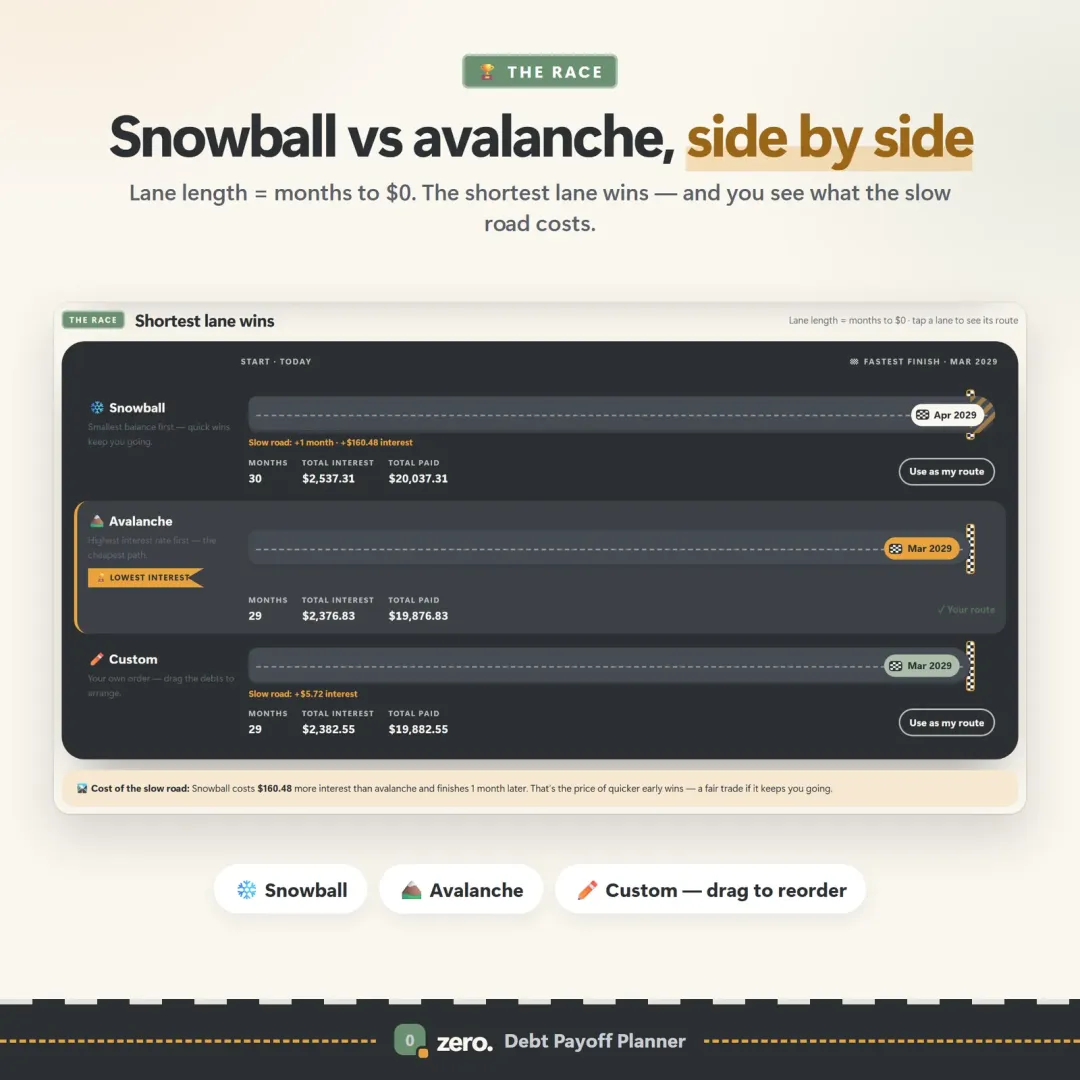
Prefer quick wins? The snowball method pays the smallest balance first, which costs a little more interest but gives you an early victory. Our guide to debt snowball vs debt avalanche compares the two, and the debt payoff calculator runs both on your real loans.
3. Tell your servicer where the money goes
This sounds minor, but it matters. Some servicers treat extra money as an early payment of next month's bill, which saves almost nothing. In your online account or in writing, ask them to:
- apply extra payments to principal,
- put them on the specific loan you're targeting, and
- not advance your due date.
Then check your next statement to make sure it happened.
4. Turn on autopay
Most federal servicers and many private lenders give a 0.25% interest-rate discount for automatic payments. On our example, dropping from 6.5% to 6.25% saves about $740 and two months, for clicking one button. It also means you never miss a payment.
5. Use windfalls
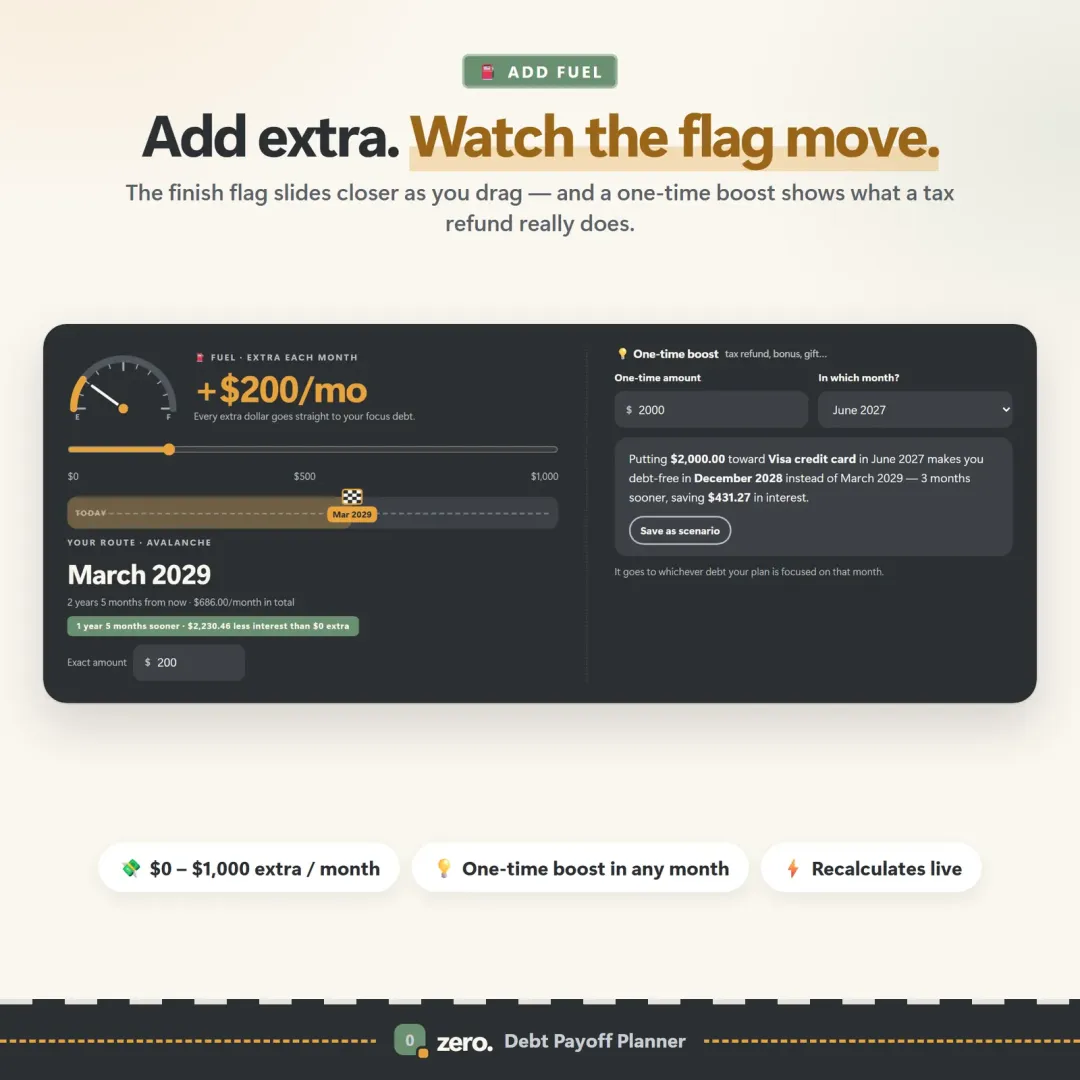
Tax refunds, bonuses, birthday money, a side-gig month that went well: put a chunk toward the loan the week it arrives, before it disappears into everyday spending. A single $2,000 payment at the start of the loan saves about $1,740 in interest and ten months of payments. The earlier in the loan, the bigger the effect.
A simple rule that works for many people: half of any windfall to debt, half to something fun.
6. Pay biweekly (only if it adds money)
Paying half your payment every two weeks gives you 26 half-payments, which is 13 full payments a year instead of 12. On our example that saves about $1,400 and a year of payments. You get exactly the same result by adding one-twelfth of your payment, about $33, to each monthly payment, with no extra admin.
7. Send every raise to the loan
When your pay goes up, raise your loan payment by half the raise before you get used to the bigger paycheck. A $3,000 raise is roughly $170 a month after tax; sending $85 of it to the loan is close to the $100 row in the table above, worth more than two years off the loan if you start early.
The salary calculator shows what a raise really means per paycheck.
8. Refinance, carefully
Refinancing replaces your loans with a new private loan, ideally at a lower rate. Keeping the same $397 payment, refinancing our $35,000 from 6.5% to 5% saves about $4,000 and ten months.
But refinancing federal loans into a private loan is permanent, and you give up:
- income-driven repayment plans,
- deferment and forbearance options,
- Public Service Loan Forgiveness and other forgiveness programs.
Refinancing usually makes sense for private loans, or for federal borrowers with very stable income, strong credit and an emergency fund. Compare offers by APR, including any fees; the personal loan calculator shows the real APR of an offer with an origination fee.
9. Find the money in your budget
The extra payment has to come from somewhere. The fastest places to look:
- Subscriptions: the average household pays for several it rarely uses. Run them through the subscription cost calculator.
- The big three: housing, transportation and food are where real money is. A cheaper phone plan saves $20; a roommate or a cheaper car can free up hundreds.
- A written plan: list every expense in the monthly budget calculator and give the leftover a job.
What not to do
- Don't stop saving entirely. Without an emergency fund, one surprise sends you back into debt.
- Don't skip the 401(k) match to pay a 5% loan.
- Don't use credit cards to pay student loans.
- Don't pay extra on loans headed for forgiveness without checking the rules.
- Don't refinance federal loans just for a small rate cut if you might need income-driven repayment.
Putting it together: a realistic plan
Here's what combining a few strategies looks like on our $35,000 example:
- Turn on autopay (6.25% instead of 6.5%).
- Add $100 a month extra, aimed at the highest-rate loan.
- Put half of every tax refund toward the loan.
- Raise the extra by half of each raise.
That combination realistically brings a 10-year payoff down to around six years, saving several thousand dollars, without a drastic lifestyle change. Your own numbers will differ; plug them into the student loan payoff calculator and try a few extra amounts.
Make it stick
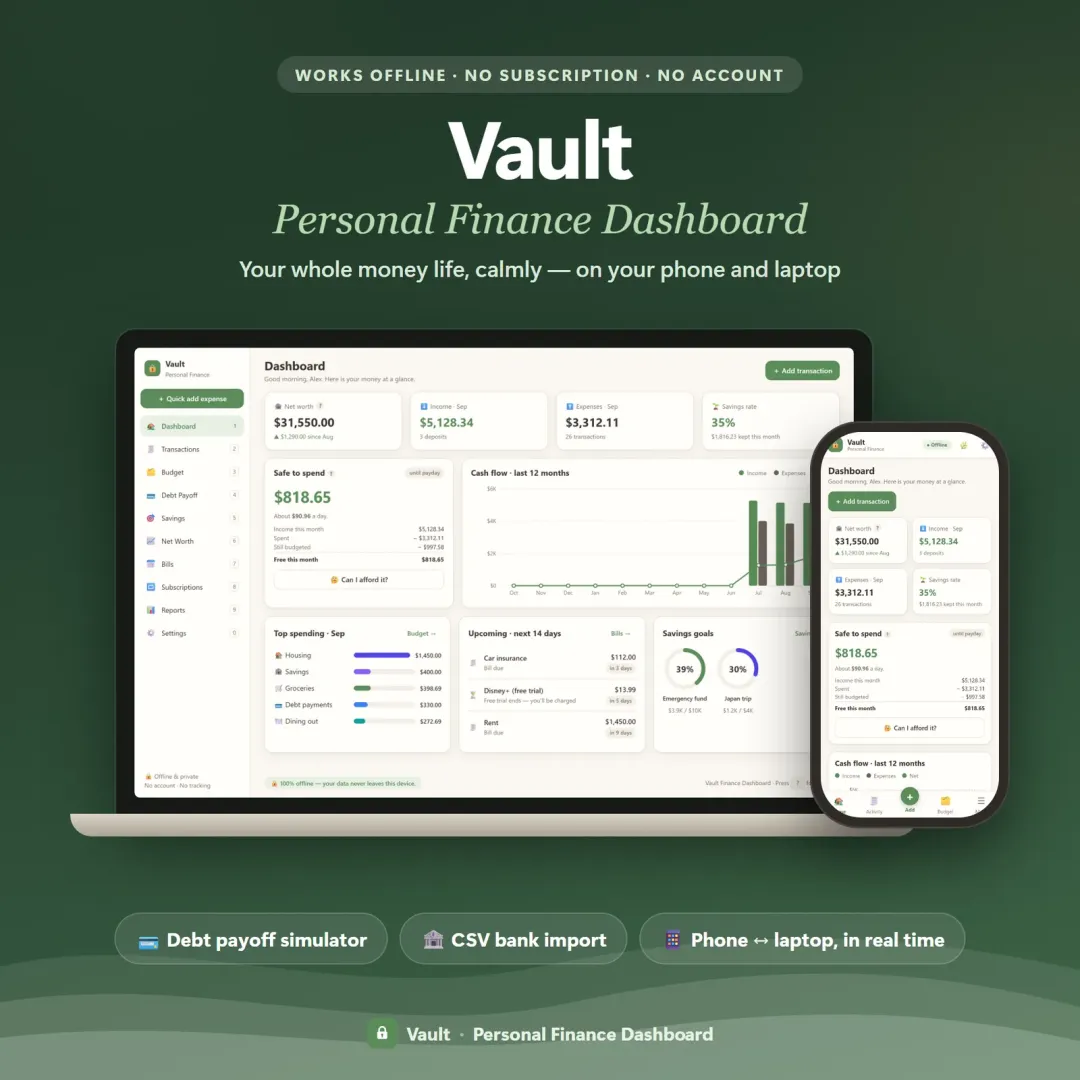
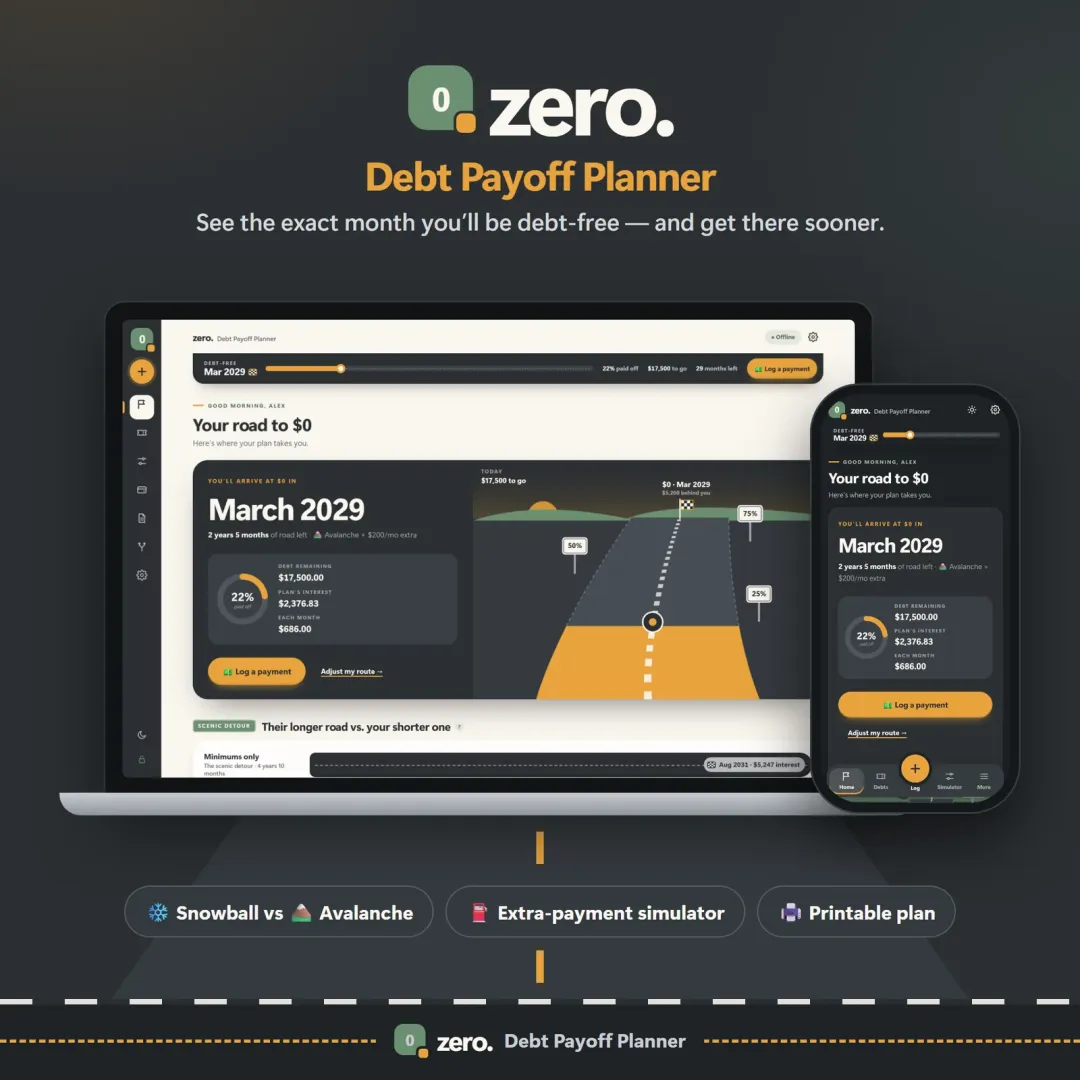
The hardest part of paying off debt isn't the math; it's keeping going for years. Seeing progress helps. Zero is a debt payoff planner that turns your loans into a road trip to your debt-free date, with snowball or avalanche ordering and a progress bar that moves every time you pay. Vault keeps your budget, bills and goals on one dashboard, and Flow tells you what's safe to spend until payday so the extra payment never leaves you short. Each has a free demo with sample data you can open in your browser.
The short version
- Cover the basics first: emergency fund, 401(k) match, high-interest debt.
- Pay extra every month, even $50, and point it at the highest-rate loan.
- Make sure extra payments go to principal.
- Use autopay, windfalls and raises.
- Refinance private loans if the rate is clearly lower; think hard before refinancing federal loans.
- Check the plan in the student loan payoff calculator.
Frequently asked questions
What is the fastest way to pay off student loans?
Should I pay off student loans or invest?
Does paying biweekly help with student loans?
Is refinancing student loans worth it?
Should I pay extra if I'm going for loan forgiveness?
How do I make sure extra payments go to principal?
Can I pay off student loans with a credit card or personal loan?
Written by
Finance Specialist & Editor, VaultlyApps
Emma Whitfield writes and edits the VaultlyApps money guides and free calculators. Her focus is US household finance — budgeting on a real paycheck, paying down credit card and student debt, emergency funds and savings goals, renting — and the money side of freelancing and small-business income, from pricing and profit margins to self-employment tax. Every guide is researched against primary sources such as IRS publications and the CFPB, every number is checked in our tested calculators, and tax content is reviewed each year when new IRS figures come out. Emma is not a licensed financial adviser or tax preparer; her work is general education, not personal advice.
Researched against primary US sources, checked with our calculators and reviewed by a finance expert on our team. Written for US readers — general education, not financial, tax or legal advice. Editorial policy · Disclaimer