
How to use the monthly budget calculator
- Add your monthly take-home income: paychecks, a partner's income, side income.
- List your spending and saving categories with a monthly amount. Mark each one as a need, a want or savings / debt.
- Read what's left to assign, your savings rate and the need / want / savings split against the 50/30/20 guide.
Change any line and everything updates. Save the budget in your browser, copy a link to it, or download it as a PDF or CSV.
A sample monthly budget
Take-home income: $4,700 ($3,800 paycheck + $900 side income).
| Category | Type | Per month |
|---|---|---|
| Rent or mortgage | Need | $1,450 |
| Groceries | Need | $560 |
| Transportation | Need | $380 |
| Utilities & phone | Need | $260 |
| Insurance & health | Need | $220 |
| Dining out & fun | Want | $320 |
| Shopping & personal | Want | $180 |
| Subscriptions | Want | $65 |
| Savings | Savings | $500 |
| Extra debt payments | Savings / debt | $250 |
Needs take $2,870 (61%), wants $565 (12%) and savings and debt $750 (16%), with $515 still unassigned. Putting that $515 toward savings would raise the savings rate to about 27%.
Fixed, variable and irregular expenses
- Fixed: the same every month (rent, insurance, loan payments, subscriptions).
- Variable: change month to month (groceries, gas, utilities). Use an average of the last three months.
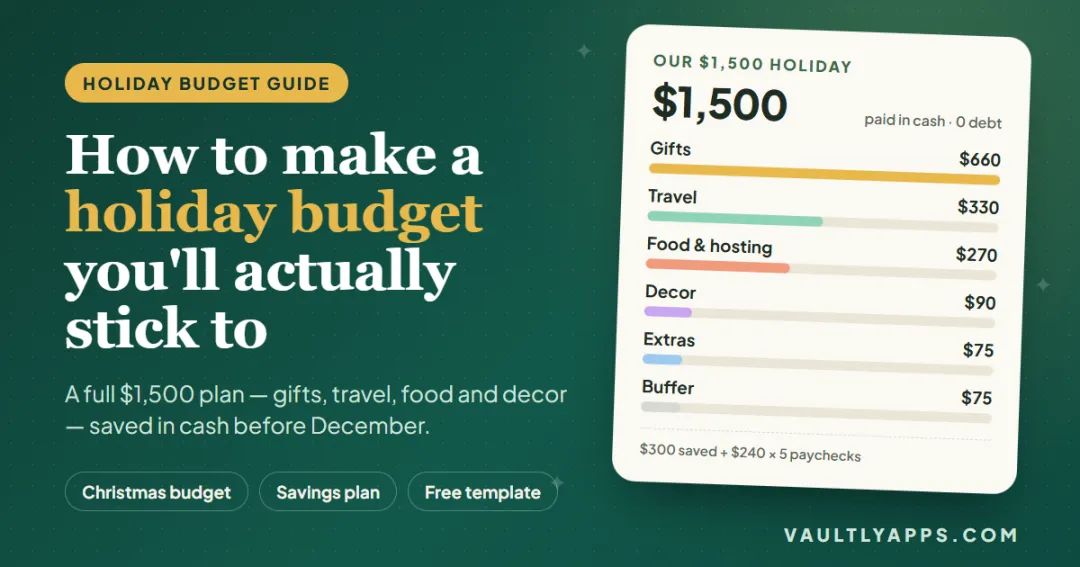
- Irregular: once or twice a year (car registration, gifts, annual subscriptions, holidays). Divide the yearly cost by 12 and budget that every month so they never catch you out. Our holiday budget guide shows how.
Subscriptions are the easiest place to find money; run yours through the subscription cost calculator and see our guide on how to track subscriptions.
The 50/30/20 check
The 50/30/20 guide is a quick health check, not a rule:
- Needs over 50%? Housing is usually the reason. It may be fine for now, but avoid adding fixed costs.
- Wants over 30%? Set a weekly spending amount for fun and shopping.
- Savings under 20%? Start with an emergency fund, then retirement. The emergency fund calculator sets the first target.
For a quick three-number version, use the 50/30/20 budget calculator.
From budget to daily decisions
A budget works when you know what you can spend today without breaking it. That number, money left after bills and savings until the next payday, is explained in our guide to what is safe to spend. Don't know your monthly take-home pay yet? The salary calculator converts hourly or yearly pay into a monthly figure.
Keep the budget alive
A budget written once and forgotten doesn't change anything. Check it at the start of each month, compare it with what you actually spent, and adjust.
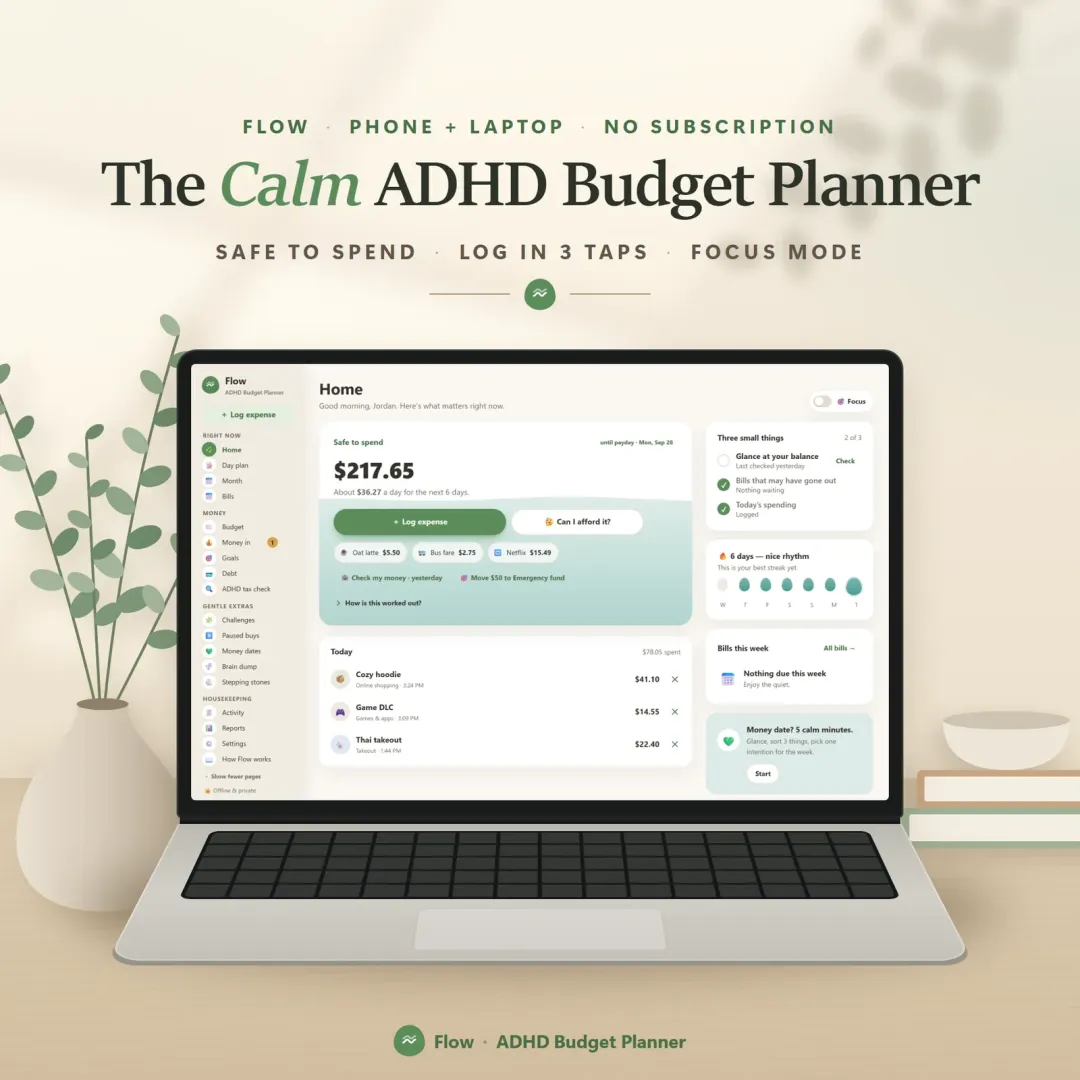
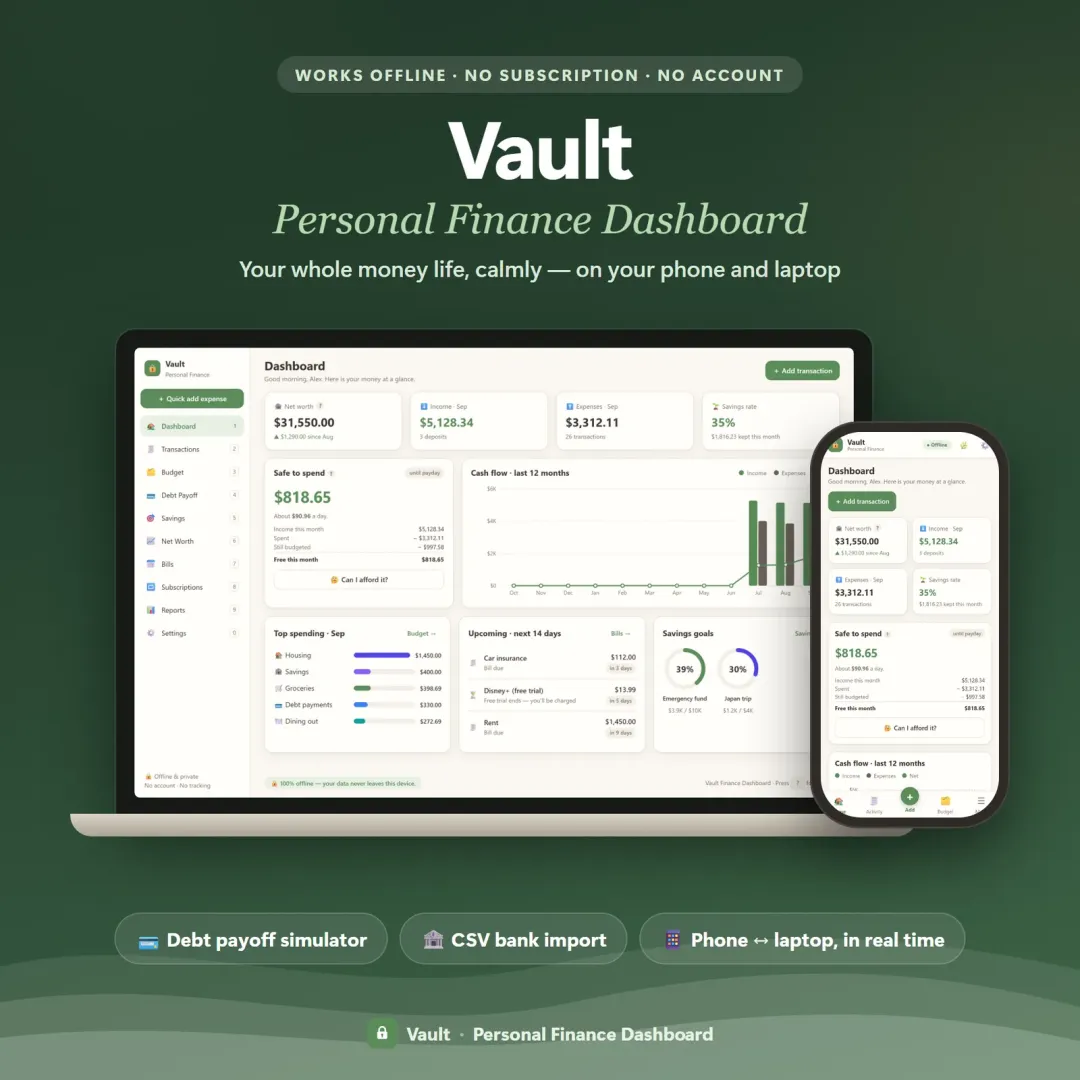
Flow is a budget planner built around paydays and a "safe to spend" number; Vault is a personal finance dashboard with budget, bills and goals together; Pulse tracks every bill and subscription so nothing renews by surprise. Each has a free demo with sample data you can open in your browser.
Frequently asked questions
How do I make a monthly budget?
What is a good monthly budget breakdown?
Should I budget with gross or take-home pay?
What is a good savings rate?
What if my budget doesn't balance?
How is this different from the 50/30/20 calculator?
Written by
Finance Specialist & Editor, VaultlyApps
Emma Whitfield writes and edits the VaultlyApps money guides and free calculators. Her focus is US household finance — budgeting on a real paycheck, paying down credit card and student debt, emergency funds and savings goals, renting — and the money side of freelancing and small-business income, from pricing and profit margins to self-employment tax. Every guide is researched against primary sources such as IRS publications and the CFPB, every number is checked in our tested calculators, and tax content is reviewed each year when new IRS figures come out. Emma is not a licensed financial adviser or tax preparer; her work is general education, not personal advice.
Researched against primary US sources, checked against independent calculators and reviewed by a finance expert on our team. Written for US readers — general education, not financial, tax or legal advice. Editorial policy · Disclaimer