
How to use the savings calculator
- Enter your starting balance and monthly deposit.
- Enter the account's APY and the number of years.
- Optionally, raise your deposits by a percentage each year.
- Set a savings goal to see when you'll reach it, and an APY to compare with, such as a typical big-bank rate.
How deposits and rate add up
$500 a month for 3 years at 4% APY grows to about $19,071, of which $18,000 is your own deposits and about $1,071 is interest. Over short periods, how much you save matters far more than the rate. Over long periods, compounding takes over, which is why retirement money belongs in investments: see the compound interest calculator and the 401(k) calculator.
Why the account matters
Big banks often pay well under 1% on savings, while online banks and credit unions frequently pay several percentage points more. On a $20,000 emergency fund, the difference between 0.4% and 3.8% is about $680 a year. Moving your savings is one of the easiest money wins there is. Compare accounts by APY, check they're FDIC or NCUA insured, and watch for minimum balances or monthly fees.
Savings goals that work
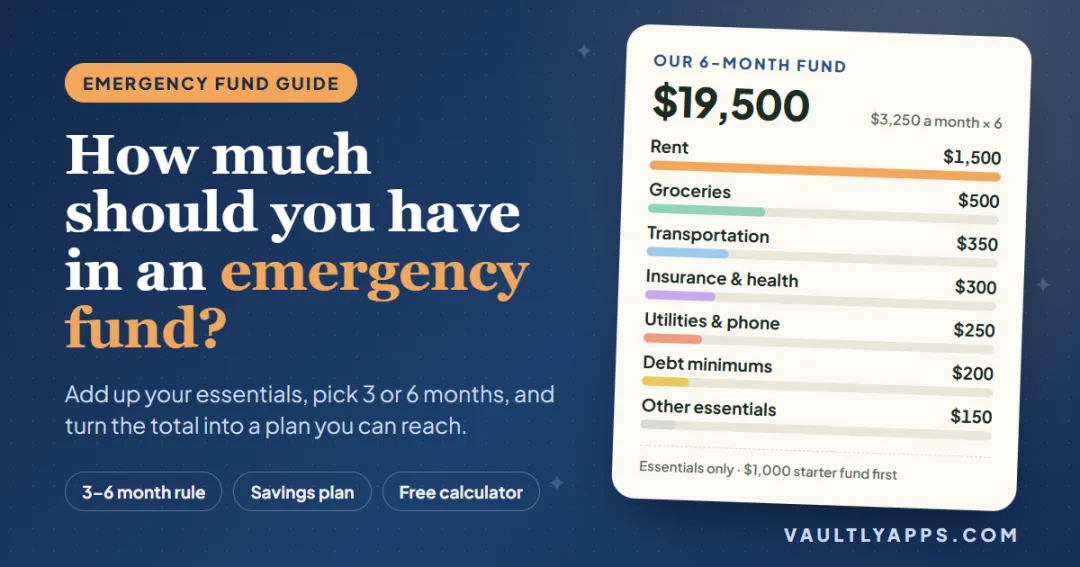
- Emergency fund first. Three to six months of essential expenses. The emergency fund calculator sets the target, and our guide on how much emergency fund you need explains the trade-offs.
- One goal, one bucket. Separate savings for a car, a vacation and the holidays stops one goal from eating another.
- Pay yourself first. Automate the transfer on payday instead of saving what's left.
- Raise it with every raise. The "raise deposits each year" input shows the effect.
To work backwards from a target amount and date, use the savings goal calculator. If you like a challenge, the 52-week savings challenge saves $1,378 in a year in small steps.
Savings account or CD?
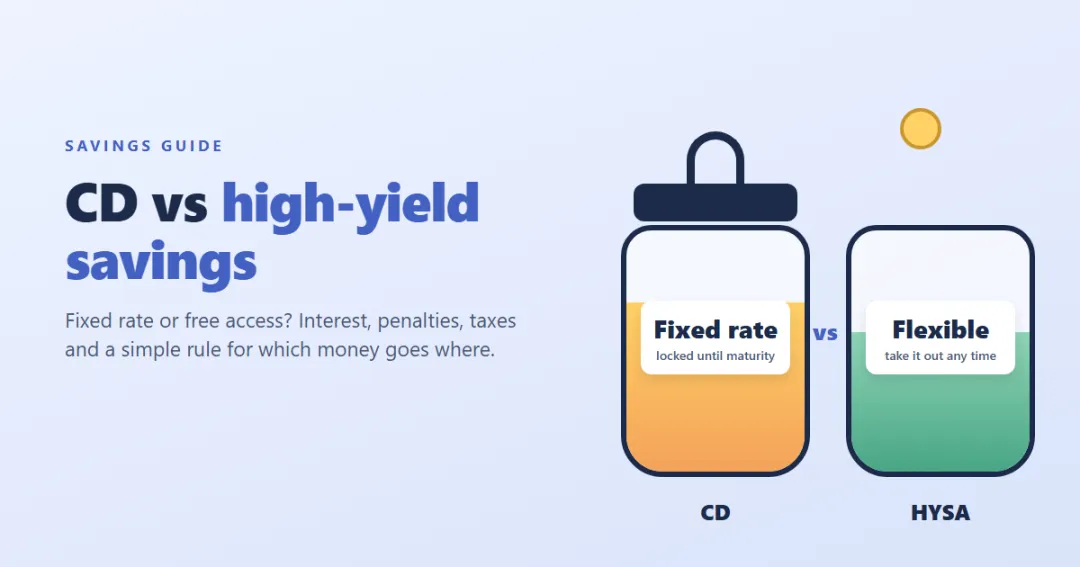
A high-yield savings account keeps your money available any day; a CD locks in a rate for a set term. Money for a known future date can earn a guaranteed rate in a CD; your emergency fund should stay reachable. The CD calculator and our guide to CD vs high-yield savings help you decide.
Watch it grow
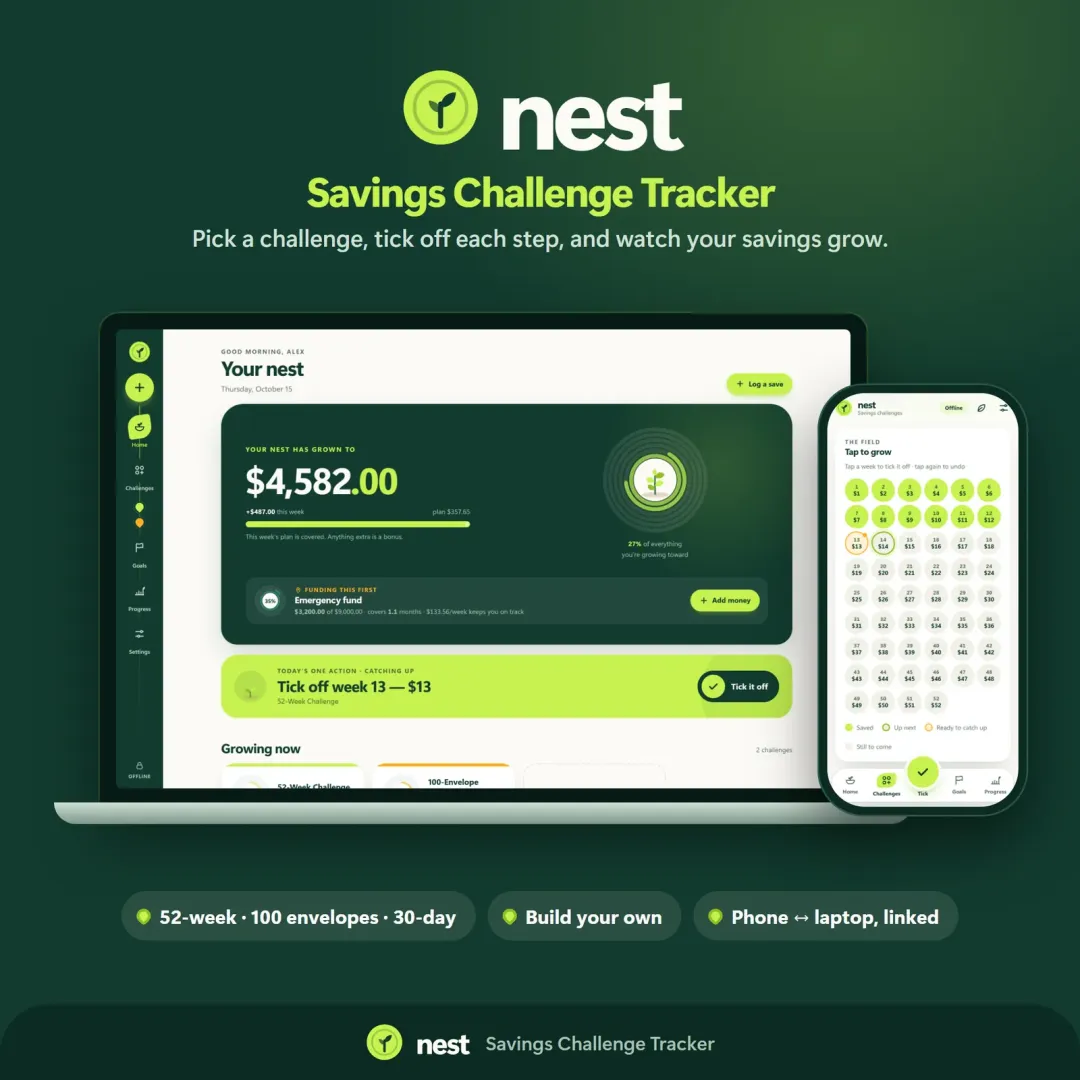
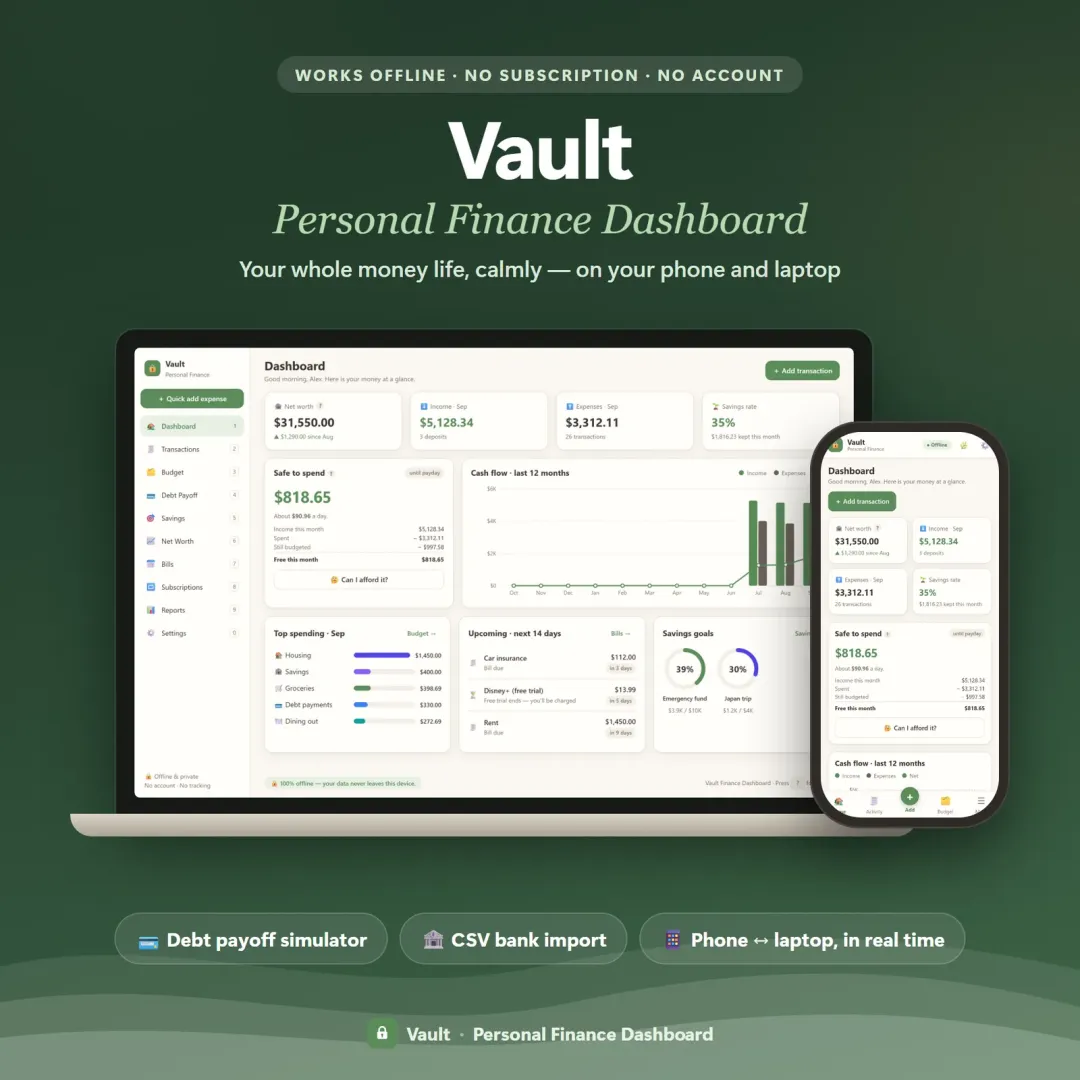
Saving is easier when you can see progress. Nest is a savings tracker with goals, target dates and a challenge board where every deposit fills in; Vault keeps your savings next to your budget and bills. Both have a free demo with sample data you can open in your browser.
Estimates assume the APY stays the same, deposits at the end of each month and no withdrawals. Savings rates are variable.
Frequently asked questions
How much will I have if I save $300 a month?
How is savings interest calculated?
How long will it take to save $15,000?
What's the difference between this and the compound interest calculator?
Is a high-yield savings account safe?
Is savings interest taxable?
Written by
Finance Specialist & Editor, VaultlyApps
Emma Whitfield writes and edits the VaultlyApps money guides and free calculators. Her focus is US household finance — budgeting on a real paycheck, paying down credit card and student debt, emergency funds and savings goals, renting — and the money side of freelancing and small-business income, from pricing and profit margins to self-employment tax. Every guide is researched against primary sources such as IRS publications and the CFPB, every number is checked in our tested calculators, and tax content is reviewed each year when new IRS figures come out. Emma is not a licensed financial adviser or tax preparer; her work is general education, not personal advice.
Researched against primary US sources, checked against independent calculators and reviewed by a finance expert on our team. Written for US readers — general education, not financial, tax or legal advice. Editorial policy · Disclaimer