
How to use the 401(k) calculator
- Enter your age, the age you want to retire and your current 401(k) balance.
- Enter your salary, the percentage you contribute and your expected yearly raise.
- Add your employer match: for example 50% up to 6% of pay.
- Choose an annual return and inflation rate.
The calculator adds your contributions and your employer's every year, caps them at the IRS limit for your age, grows the balance and shows the result at retirement, also in today's dollars.
2026 401(k) limits
| Limit | 2026 |
|---|---|
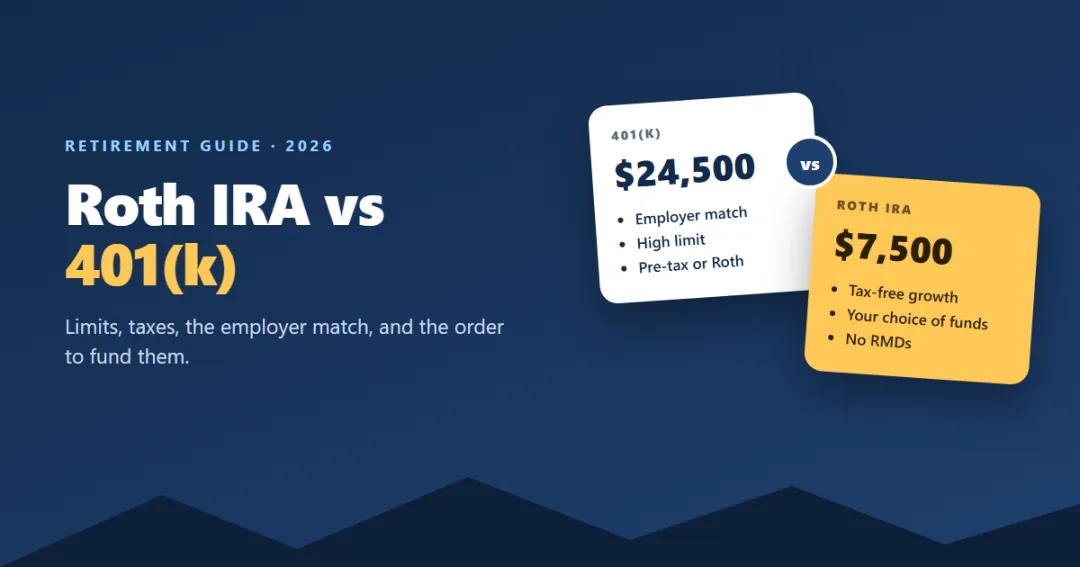
| Your contributions (under 50) | $24,500 |
| Catch-up, age 50+ | + $8,000 (total $32,500) |
| Super catch-up, ages 60–63 | + $11,250 instead (total $35,750) |
| You + employer, overall | $72,000 (plus catch-up) |
From 2026, people who earned over a set amount of FICA wages the year before must make catch-up contributions as Roth. Check with your plan.
The employer match is free money
Take the example above. Contributing 6% brings in $1,950 of match in the first year. Drop to 3% and the match halves to $975, and the gap compounds for decades. Over a full career, someone starting at 25 on $50,000 with a 50% match up to 6% would have roughly:
- $636,000 at 65 contributing 3%
- $1.27 million at 65 contributing 6%
Doubling the contribution doubles the result, because the match doubles with it. If the calculator shows "free match you miss", raising your rate to the match limit is usually the first move.
How much difference starting later makes
Someone who starts at 40 with $60,000 saved, a $80,000 salary, 10% contributions and a 100% match up to 4% would reach about $1.25 million by 65, about $672,000 in today's dollars. It's still a solid result, but it takes a higher savings rate to make up for the lost years. The compound interest calculator shows the same effect for any investment.
Turning the balance into income
A balance is only half the story; what matters is the income it can pay. The 4% rule turns the example's $1.49 million into about $59,700 a year. Test other withdrawal rates and market returns with the how long will my money last calculator.
Contributions also change your paycheck: traditional 401(k) money comes out before income tax, so a 6% contribution reduces your take-home pay by less than 6%. The take-home pay calculator shows the exact effect.
Before you max out your 401(k)
Get the full match first, then make sure you have an emergency fund and no high-interest debt. Money you might need in the next few years belongs somewhere safer and reachable, such as a high-yield savings account or a CD.
See your whole financial picture
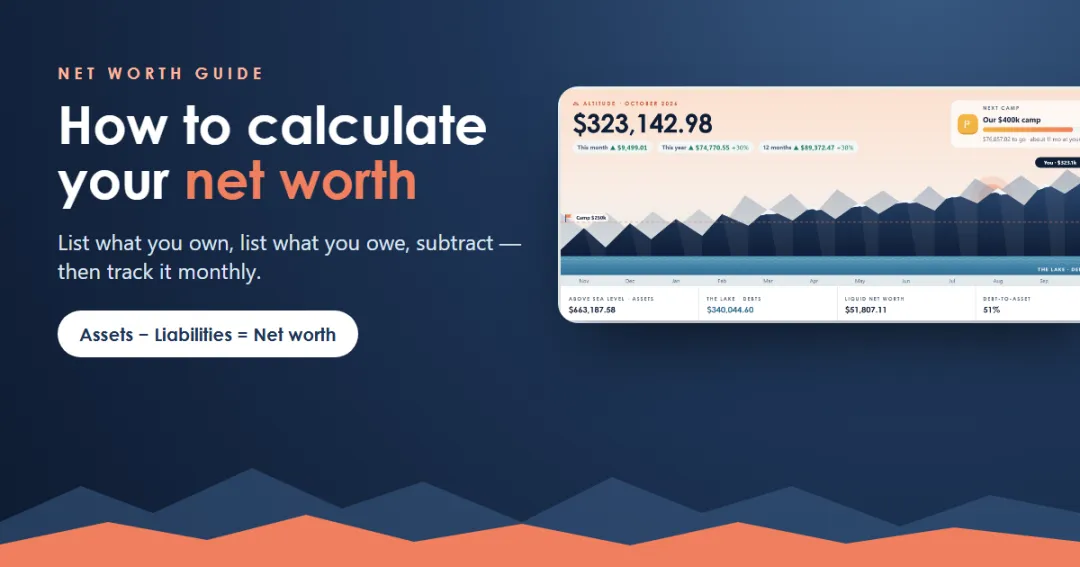
Your 401(k) is often your biggest asset. Summit is a net worth tracker that keeps your retirement accounts, savings and debts in one place and charts your progress month by month; Nest helps you build the savings goals around it. Both have a free demo with sample data.
Projections are estimates, not investment advice. Returns are not guaranteed and markets go down as well as up.
Frequently asked questions
What is the 401(k) contribution limit for 2026?
How does an employer 401(k) match work?
How much should I contribute to my 401(k)?
What return should I assume?
Why show the balance in today's dollars?
How much income will my 401(k) give me in retirement?
Should I choose a Roth or traditional 401(k)?
Written by
Finance Specialist & Editor, VaultlyApps
Emma Whitfield writes and edits the VaultlyApps money guides and free calculators. Her focus is US household finance — budgeting on a real paycheck, paying down credit card and student debt, emergency funds and savings goals, renting — and the money side of freelancing and small-business income, from pricing and profit margins to self-employment tax. Every guide is researched against primary sources such as IRS publications and the CFPB, every number is checked in our tested calculators, and tax content is reviewed each year when new IRS figures come out. Emma is not a licensed financial adviser or tax preparer; her work is general education, not personal advice.
Researched against primary US sources, checked against independent calculators and reviewed by a finance expert on our team. Written for US readers — general education, not financial, tax or legal advice. Editorial policy · Disclaimer