The FIRE Movement Explained: How Financial Independence, Retire Early Actually Works
FIRE — financial independence, retire early — is built on one idea: save a big share of your income, invest it, and live off the returns once you have about 25 times your yearly spending. Here's how the math works, the different types of FIRE, realistic timelines by savings rate, the risks, and how to start even if early retirement isn't your goal.
In this article
The FIRE movement — Financial Independence, Retire Early — has grown from a niche online community into something millions of people talk about. The headline promise sounds too good: stop working in your 30s or 40s. The reality is less dramatic and more useful: FIRE is a set of simple math and habits that give you choices much earlier than a traditional retirement plan.
This guide explains how FIRE works, the numbers behind it, the different types, realistic timelines and the risks, and how to start even if you never plan to stop working. Use the free FIRE calculator to find your own number.
The core idea in one paragraph
Spend less than you earn, invest the difference in low-cost diversified funds, and keep doing it until your investments are large enough that a safe yearly withdrawal covers your spending. At that point you're financially independent: work becomes optional.
The FIRE number: 25× your spending
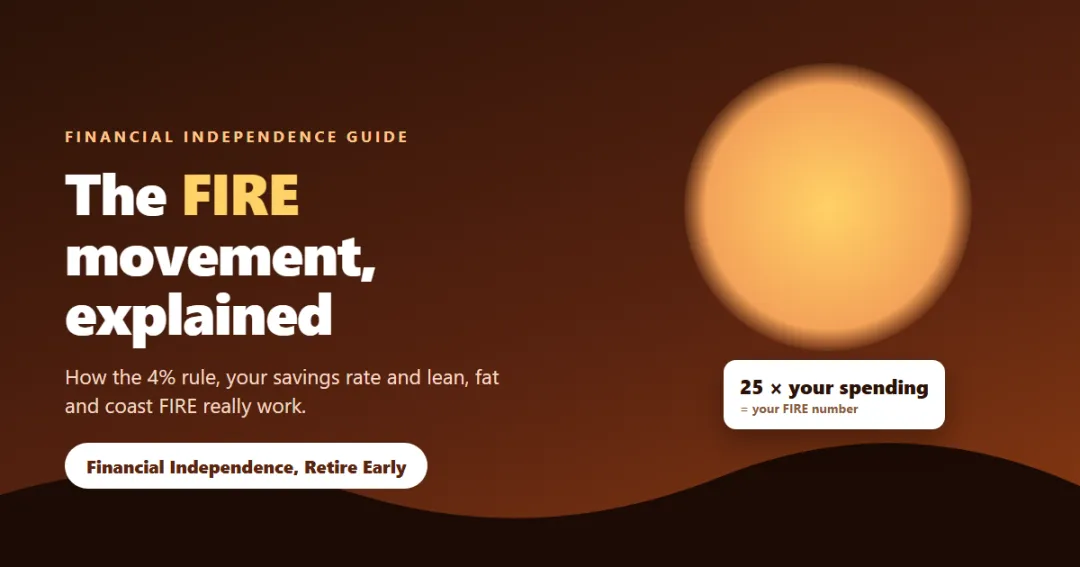
The most common target comes from the 4% rule: historically, withdrawing 4% of a diversified portfolio in the first year, then adjusting for inflation, has usually lasted at least 30 years. If 4% of your portfolio covers a year of spending, you need 25 times your yearly spending.
| Yearly spending | FIRE number (25×) | Cautious (≈28.5×, 3.5%) |
|---|---|---|
| $30,000 | $750,000 | $857,000 |
| $45,000 | $1,125,000 | $1,286,000 |
| $60,000 | $1,500,000 | $1,714,000 |
Notice that the number depends on spending, not income. That's the key insight of FIRE: every dollar you don't need to spend in retirement shrinks the target by $25.
Your savings rate decides the timeline
The single biggest lever is the share of your take-home pay you save. Saving more grows your investments faster and lowers the spending you have to replace. Starting from zero with a 5% real (after-inflation) return:
| Savings rate | Roughly years to FIRE |
|---|---|
| 10% | 51 |
| 25% | 32 |
| 40% | 22 |
| 50% | 17 |
| 65% | 11 |
| 75% | 7 |
A typical worker saving 10% is on a path to a normal retirement age. Someone saving half their income could be independent in under two decades.
A worked example
Age 30, $60,000 already invested, saving $25,000 a year, spending $45,000 a year, 5% real return.
- FIRE number: $45,000 × 25 = $1,125,000
- Years to FIRE: about 22, around age 52
- Lean FIRE (spending 75% of that): about 18 years
- Fat FIRE (150%): about 28 years
Run your own version in the FIRE calculator.
The different flavors of FIRE
- Lean FIRE: a frugal retirement budget, often well under the national average.
- Fat FIRE: retiring with a comfortable or generous budget, which needs a much bigger portfolio.
- Barista FIRE: leave full-time work early and cover part of your costs with a part-time or lower-stress job, often one with health insurance.
- Coast FIRE: invest enough early that growth alone will reach a normal retirement number by 60 or 65; after that you only need to earn today's costs. See the Coast FIRE calculator.
Many people end up mixing them: reach Coast FIRE in their 30s, switch to work they enjoy, and let the portfolio do the rest.
How FIRE followers get there
1. Cut the big three, not the lattes. Housing, transportation and food make up most of a budget. A smaller home, a paid-off reliable car or a roommate can free up far more than skipping coffee.
2. Grow income. Raises, job changes, side businesses. Every raise saved instead of spent pushes your savings rate up; the pay raise calculator shows what a raise really adds per paycheck.
3. Use tax-advantaged accounts first. A 401(k) up to the employer match, then a Roth IRA, then back to the 401(k). Our guide to Roth IRA vs 401(k) explains the order. Early retirees use strategies such as Roth conversion ladders and the rule of 55 to reach that money before 59½.
4. Invest simply. Most of the community favors low-cost, broad index funds held for decades. Some prefer dividend stocks; the dividend calculator models that approach.
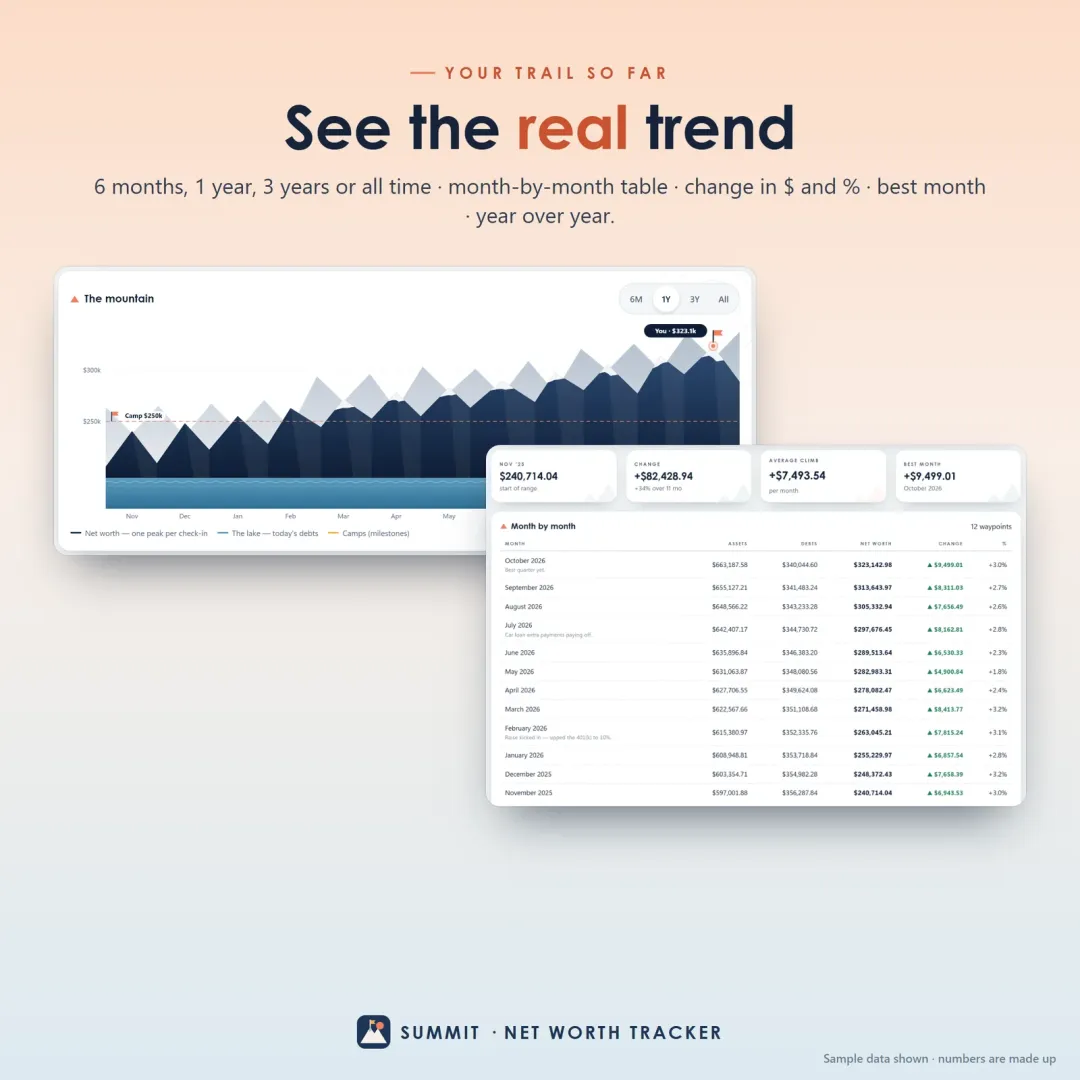
5. Track net worth monthly. It's the scoreboard. Our guide on how to calculate your net worth shows how.
The risks and criticisms
FIRE isn't risk-free, and honest followers plan for the downsides:
- Sequence of returns: a market crash early in retirement does more damage than one later. A lower withdrawal rate, a cash buffer or flexible spending reduces the risk.
- Longer retirements: the 4% rule was tested on 30 years. Retiring at 40 may mean 50 years; many use 3.25–3.5%.
- Health insurance: before Medicare at 65 it can cost thousands a year. Budget for it.
- Underestimating spending: kids, home repairs, helping family, travel.
- Burnout from extreme frugality: a plan you hate won't last. Many people aim for a high savings rate they can enjoy living with.
The best FIRE plans keep flexibility: the ability to earn a little, spend a little less after bad years, or delay a few months.
FIRE without retiring early
You don't need to want to quit work to benefit. The same habits give you:
- a big emergency fund and less money stress,
- the freedom to change careers, take a sabbatical or work part-time,
- a bigger cushion if you're laid off,
- a much more comfortable traditional retirement.
Reaching Coast FIRE or even "half FIRE" changes how work feels, because you're no longer dependent on every paycheck.
How to start this month
- Know your spending. List every expense for a month; the monthly budget calculator helps.
- Find your FIRE number: yearly spending × 25.
- Work out your savings rate: money saved ÷ take-home pay.
- Raise it by a few points: cut one big expense or redirect your next raise.
- Automate investing on payday into retirement accounts and index funds.
- Track your net worth monthly and recheck your plan once a year.
Track the journey
FIRE is a long game, and seeing progress keeps you on it. Summit is a net worth tracker with monthly check-ins, a history chart and a forecast of when you'll reach your number. Nest helps you build savings goals and challenges along the way, and Vault keeps spending and bills in check. Each has a free demo with sample data you can open in your browser.
The short version
- FIRE = invest enough that about 4% a year covers your spending (25× spending).
- Savings rate decides how fast you get there.
- Choose your flavor: lean, fat, barista or coast.
- Plan for health insurance, bad markets and long retirements.
- Even if you never retire early, FIRE habits buy freedom and security.
- Find your number in the FIRE calculator.
General education, not investment advice. Returns aren't guaranteed.
Frequently asked questions
What does FIRE stand for?
How much money do you need for FIRE?
What savings rate do you need to retire early?
What are lean FIRE, fat FIRE, barista FIRE and coast FIRE?
Is the 4% rule safe for early retirement?
How do early retirees get health insurance?
Written by
Finance Specialist & Editor, VaultlyApps
Emma Whitfield writes and edits the VaultlyApps money guides and free calculators. Her focus is US household finance — budgeting on a real paycheck, paying down credit card and student debt, emergency funds and savings goals, renting — and the money side of freelancing and small-business income, from pricing and profit margins to self-employment tax. Every guide is researched against primary sources such as IRS publications and the CFPB, every number is checked in our tested calculators, and tax content is reviewed each year when new IRS figures come out. Emma is not a licensed financial adviser or tax preparer; her work is general education, not personal advice.
Researched against primary US sources, checked with our calculators and reviewed by a finance expert on our team. Written for US readers — general education, not financial, tax or legal advice. Editorial policy · Disclaimer