
How to use the FIRE calculator
- Enter your age and the yearly spending you'll need in retirement (include health insurance and taxes).
- Enter what you have invested now, your take-home income and how much you save per year.
- Choose a real return (after inflation) and a withdrawal rate.
FIRE numbers at a glance
| Yearly spending | FIRE number at 4% | at 3.5% |
|---|---|---|
| $30,000 | $750,000 | $857,000 |
| $45,000 | $1,125,000 | $1,286,000 |
| $60,000 | $1,500,000 | $1,714,000 |
| $80,000 | $2,000,000 | $2,286,000 |
Lean, regular and fat FIRE
Same starting point (age 30, $60,000 invested, saving $25,000 a year, 5% real return):
| Goal | Target | Years |
|---|---|---|
| Lean FIRE (75% of spending) | $843,750 | about 18 |
| Your FIRE | $1,125,000 | about 22 |
| Fat FIRE (150%) | $1,687,500 | about 28 |
Your savings rate is the lever
Your savings rate drives the timeline more than your return. Saving more does two things at once: it grows your investments faster and lowers the spending you need to replace. In the example the savings rate is about 29% of take-home pay. Raising it is the fastest way to bring FIRE closer: cut a big expense, send raises straight to investments, or earn more.
Choosing a withdrawal rate
- 4%: the classic rule, based on 30-year retirements.
- 3.5%: more cautious, common for people retiring in their 40s or earlier.
- 3%: very cautious, for very long retirements or uncertain markets.
A lower rate means a bigger FIRE number but a safer plan.
Don't want to save hard until the end?
Coast FIRE means investing enough early that growth alone reaches your FIRE number by a normal retirement age; after that, work only has to cover today's bills. Find your coast number with the Coast FIRE calculator.
Accounts that get you there
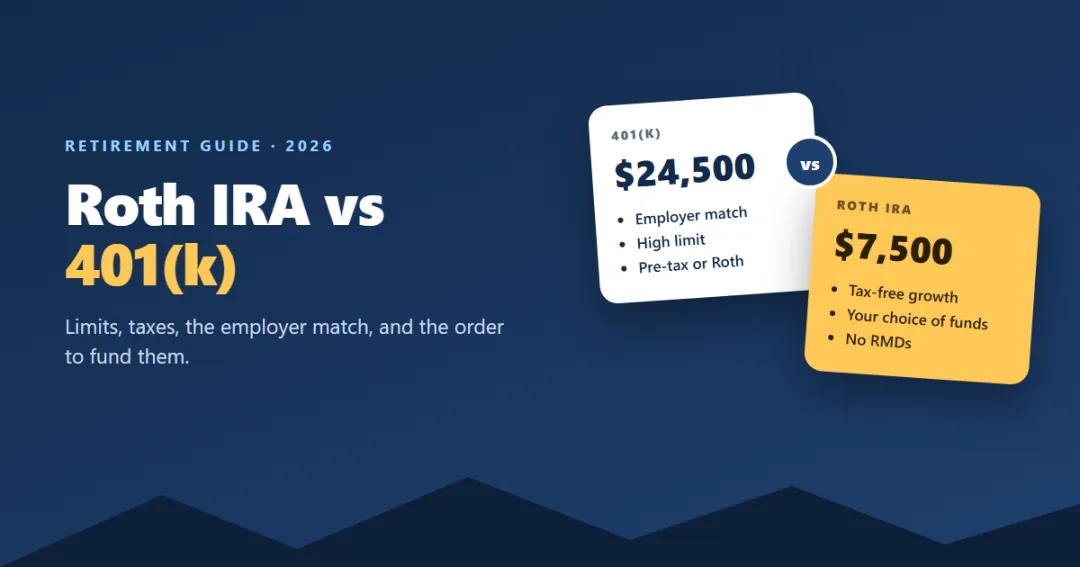
Use tax-advantaged accounts first: a 401(k) with the employer match, then a Roth IRA. Our guide to Roth IRA vs 401(k) explains the order, and the 401(k) calculator shows the effect of the match. Dividend investors can model income with the dividend calculator, and the how long will my money last calculator stress-tests withdrawals.
Track the climb
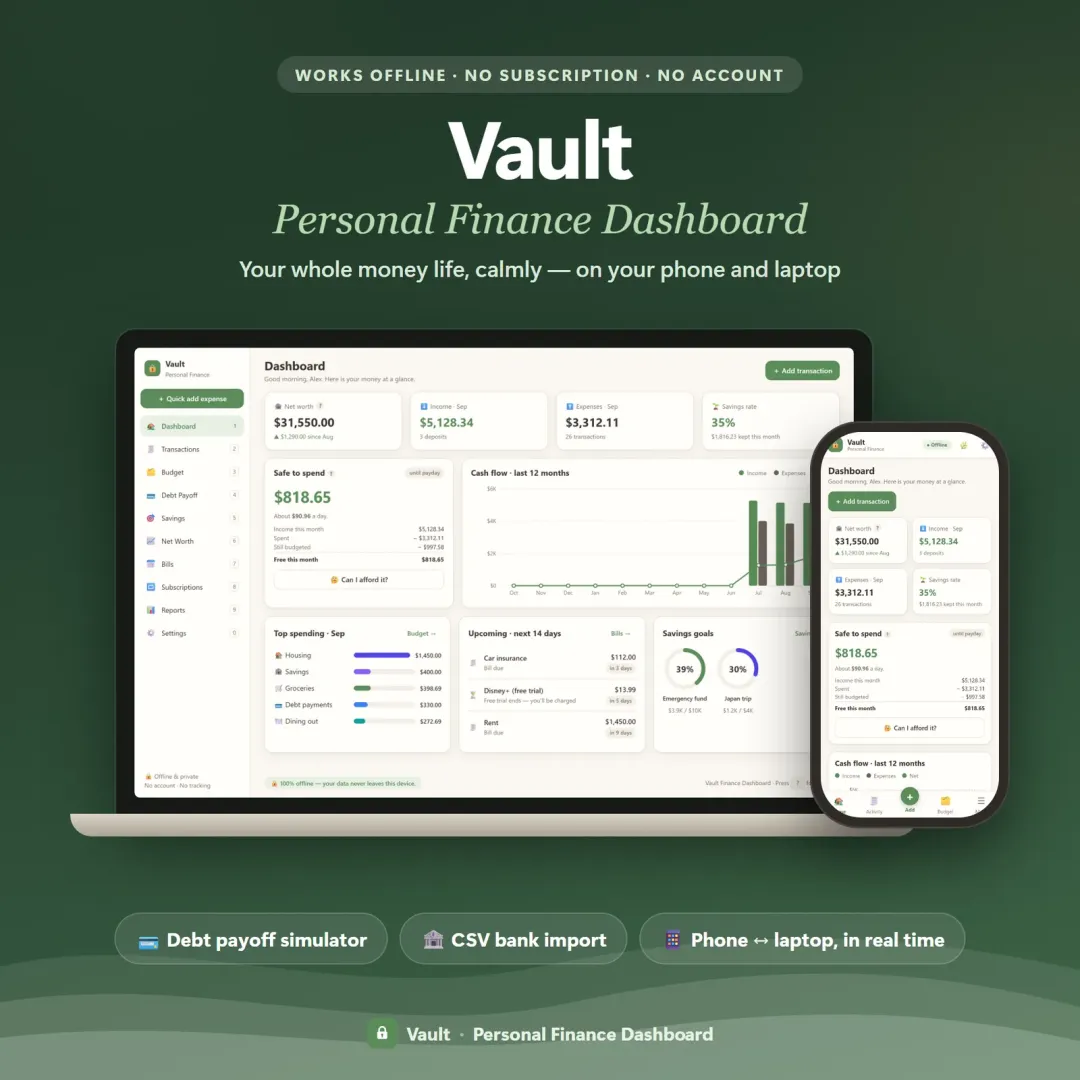
FIRE is a long road, and seeing the number move keeps you going. Summit is a net worth tracker with monthly check-ins, a history chart and a forecast of when you'll hit your target; Nest builds the saving habit, and Vault keeps spending in check. Each has a free demo with sample data.
Projections use a constant real return; markets don't. Not investment advice.
Frequently asked questions
What is a FIRE number?
How long does it take to reach FIRE?
What is the 4% rule?
What are lean FIRE and fat FIRE?
Why use a real return?
What about health insurance and taxes?
Written by
Finance Specialist & Editor, VaultlyApps
Emma Whitfield writes and edits the VaultlyApps money guides and free calculators. Her focus is US household finance — budgeting on a real paycheck, paying down credit card and student debt, emergency funds and savings goals, renting — and the money side of freelancing and small-business income, from pricing and profit margins to self-employment tax. Every guide is researched against primary sources such as IRS publications and the CFPB, every number is checked in our tested calculators, and tax content is reviewed each year when new IRS figures come out. Emma is not a licensed financial adviser or tax preparer; her work is general education, not personal advice.
Researched against primary US sources, checked against independent calculators and reviewed by a finance expert on our team. Written for US readers — general education, not financial, tax or legal advice. Editorial policy · Disclaimer