How to Start Reselling in 2026: A Beginner's Guide (Plus the Best Things to Resell)
Reselling can start with $100 and a phone. Here's a step-by-step plan for beginners: where to source, the best things to resell for profit, how to price after fees, which platforms to list on, how to ship, and how to track real profit and taxes from the first sale.
In this article
- Step 1: Start with what you know
- Step 2: The best things to resell
- Step 3: Where to source
- Step 4: Price for profit, not just a sale
- Step 5: Choose your platforms
- Step 6: Photos and listings that sell
- Step 7: Ship it right
- Step 8: Track real profit from the first sale
- Step 9: Handle taxes from day one
- Step 10: Grow carefully
- Beginner mistakes to avoid
- Track every flip
- The short version
Reselling — buying things cheaply and selling them for more online — is one of the easiest businesses to start. You don't need a website, a warehouse or a big budget. A thrift-store jacket bought for $12 can sell for $40, and that difference, minus fees and shipping, is your profit.
This guide walks you through starting from zero: what to sell, where to find it, how to price it so fees don't eat your profit, which platforms to use, how to ship, and how to track real profit and taxes from day one.
Step 1: Start with what you know
The fastest way to learn is to start with a category you already understand: clothes you'd wear, games you play, tools you use, books you read. You'll spot good brands, fakes and damage more easily. Start by selling a few things from your own home; it teaches you photos, listings and shipping without any risk.
Step 2: The best things to resell
The best items are easy to check, ship cheaply, and sell steadily. Good beginner categories:
- Brand-name clothing and shoes: outdoor brands, athletic wear, premium denim, workwear.
- Vintage: graphic tees, band shirts, older denim and jackets.
- Books and media: textbooks, niche non-fiction, vinyl records, video games.
- Small electronics: calculators, cameras, accessories (test them first).
- Kitchenware and home: cast iron, quality cookware, small appliances, vintage glassware.
- Toys and collectibles: complete sets, trading cards, discontinued toys.
- Tools: name-brand hand and power tools.
Avoid at first: bulky or fragile items, things that are hard to authenticate, and anything that needs testing you can't do.
Step 3: Where to source
- Thrift stores: visit the same stores regularly and learn their sale days.
- Garage, yard and estate sales: often the lowest prices, especially late in the day.
- Flea markets and swap meets.
- Clearance racks at retail stores.
- Online marketplaces: local listings, sometimes bundles and lots.
- Liquidation pallets: higher risk; better once you know your categories.
Use your phone in the store: look up sold listings for the item before you buy.
Step 4: Price for profit, not just a sale
Every platform takes fees, and shipping isn't free. Before you buy, estimate:
Profit = sale price + shipping charged − platform fees − shipping cost − what you paid
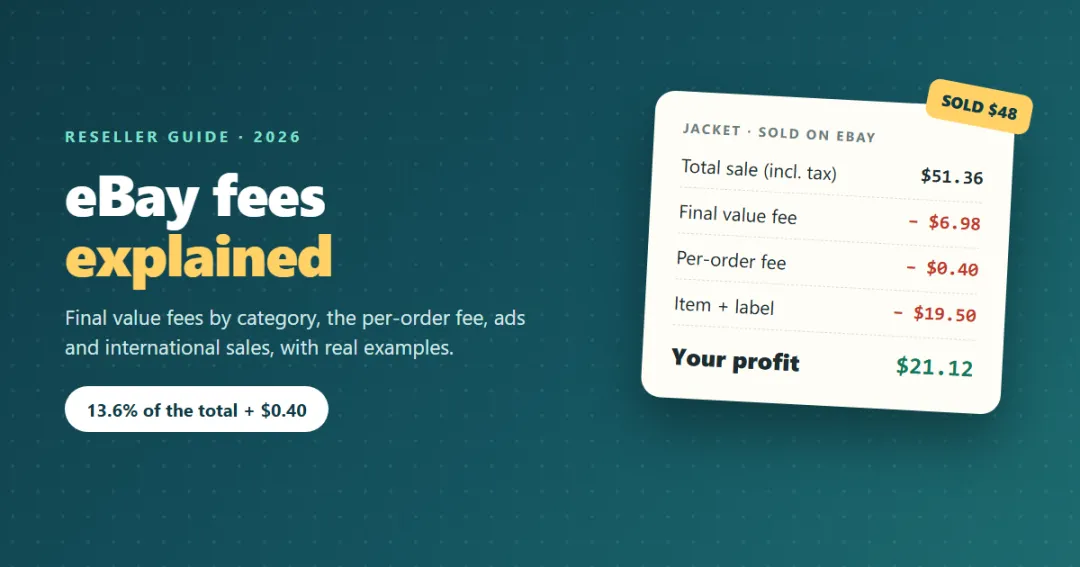
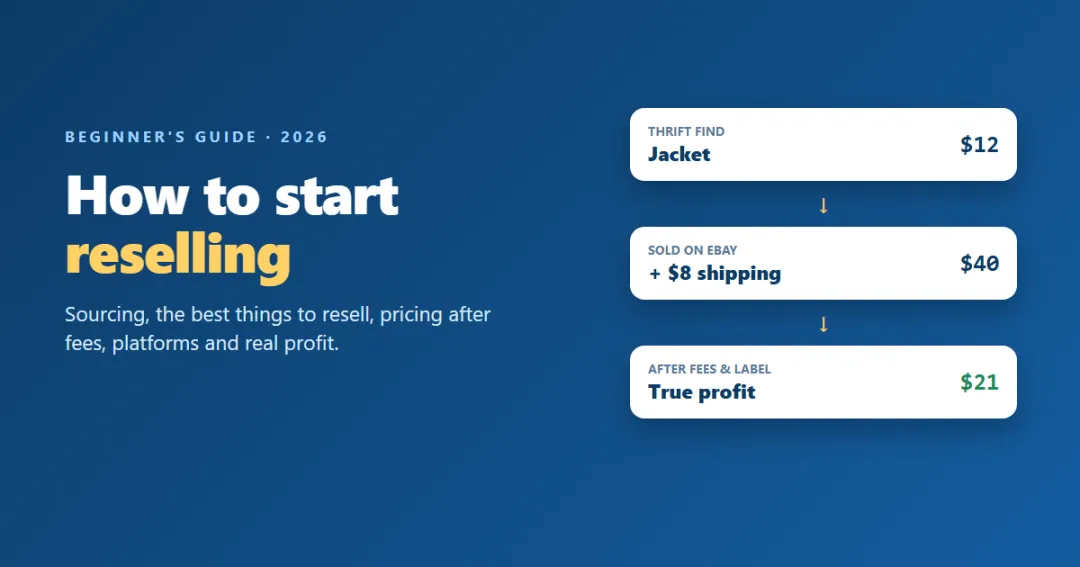
A common rule is to buy only items that sell for at least three times what you pay, so fees and shipping still leave real profit. A $12 jacket that sells for $40 with $8 shipping earns about $21 on eBay after $7.38 of fees and a $7.50 label. Our eBay fees guide explains exactly how fees are charged.
Compare the same item on every platform with the reseller fee calculator, and set a minimum markup with the markup calculator.
Step 5: Choose your platforms
| Platform | Best for | Seller fees (2026, US) |
|---|---|---|
| eBay | Almost anything, most buyers | About 13.6% + $0.40 |
| Poshmark | Clothing, shoes, bags | 20% ($2.95 under $15) |
| Mercari | Mixed categories | 10% |
| Depop | Vintage, streetwear | 3.3% + $0.45 |
| Etsy | Vintage (20+ years) and handmade | About 10% |
| Facebook Marketplace | Local, bulky items | Free locally; ~10% shipped |
| Whatnot | Live selling, collectibles | 8% + processing |
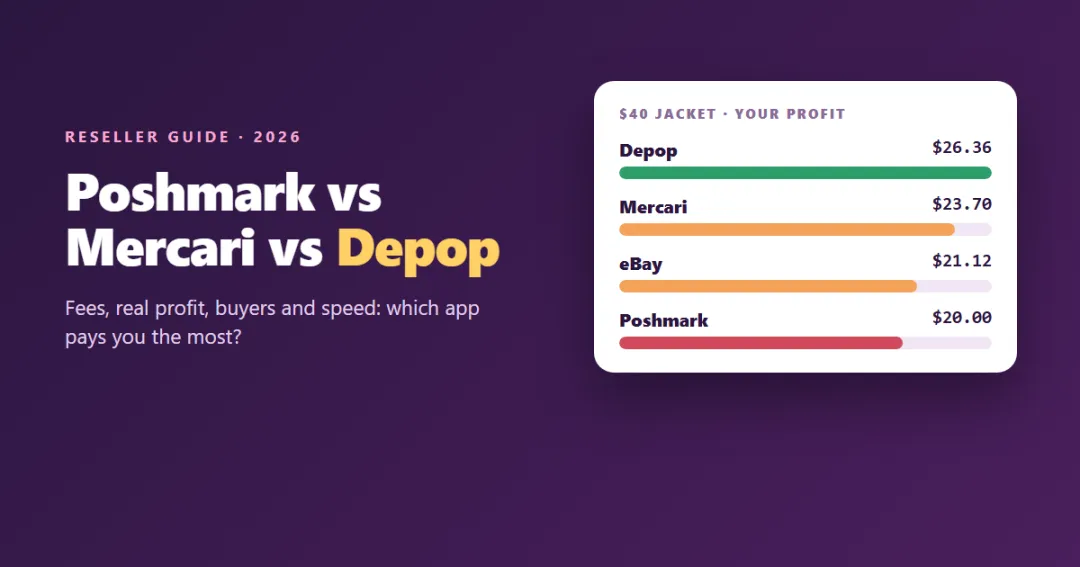
Our comparison of Poshmark vs Mercari vs Depop shows what you keep on each. Start with one or two; cross-list later once you have a system.
Step 6: Photos and listings that sell
- Natural light, a plain background, and 6–12 photos: front, back, tags, details, flaws.
- Titles with keywords buyers search: brand, item type, size, color, style.
- Honest descriptions: measurements and any flaws. Honest listings mean fewer returns.
- Price with room for offers on platforms where buyers make them.
Step 7: Ship it right
- Buy mailers, tape and a scale; a thermal label printer saves time later.
- Weigh items before listing so shipping charges are right.
- Ship within a day or two and upload tracking. Fast shipping protects your seller ratings.
- Compare label prices; small, light items are cheapest to ship.
Step 8: Track real profit from the first sale
It's easy to confuse sales with profit. To know if reselling is worth your time, track for each item: what you paid, where it sold, the fees, the shipping, and the profit. Then each month, subtract supplies, mileage and subscriptions.
Two numbers matter most:
- True profit per item and per month: our guide on how to calculate reseller profit shows the method.
- Sell-through rate: how much of your inventory actually sells; check it with the sell-through rate calculator.
Step 9: Handle taxes from day one
If you buy items to resell, it's a business. Profit is taxable income and subject to self-employment tax. Keep receipts for what you pay, platform statements and mileage. Set aside a percentage of each month's profit; our guide to quarterly estimated taxes explains when and how to pay. If you form an LLC, the LLC tax calculator estimates the bill.
Step 10: Grow carefully
- Reinvest profits into more inventory, not lifestyle, at first.
- Learn your best categories and sources, and drop the ones that don't sell.
- Set a schedule: sourcing, listing and shipping days.
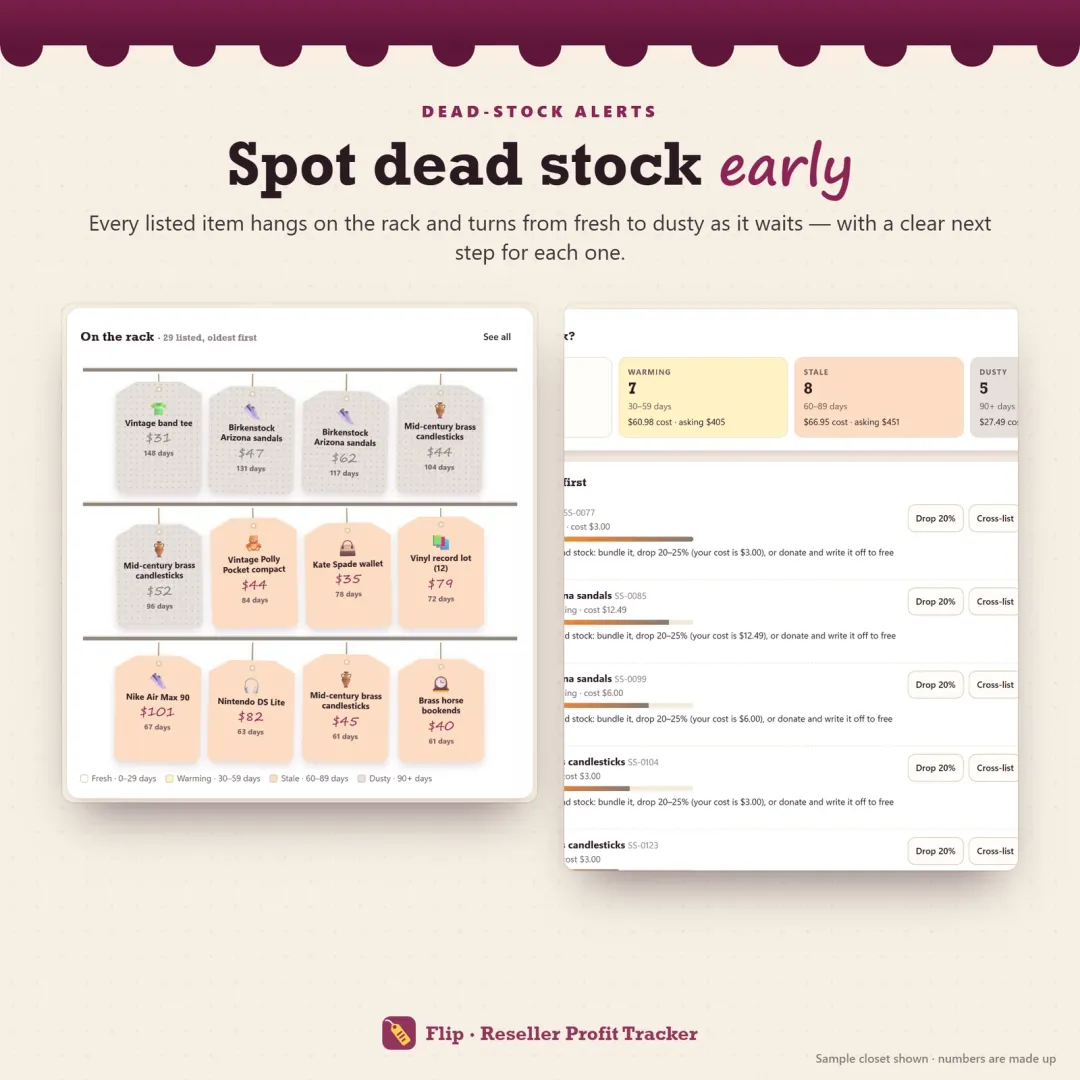
- Lower prices on stale items before they become dead stock.
Beginner mistakes to avoid
- Buying lots of inventory before you've sold anything.
- Pricing without counting fees and shipping.
- Ignoring sold prices and buying on hope.
- Letting unsold items pile up.
- Mixing business and personal money, then panicking at tax time.
Track every flip
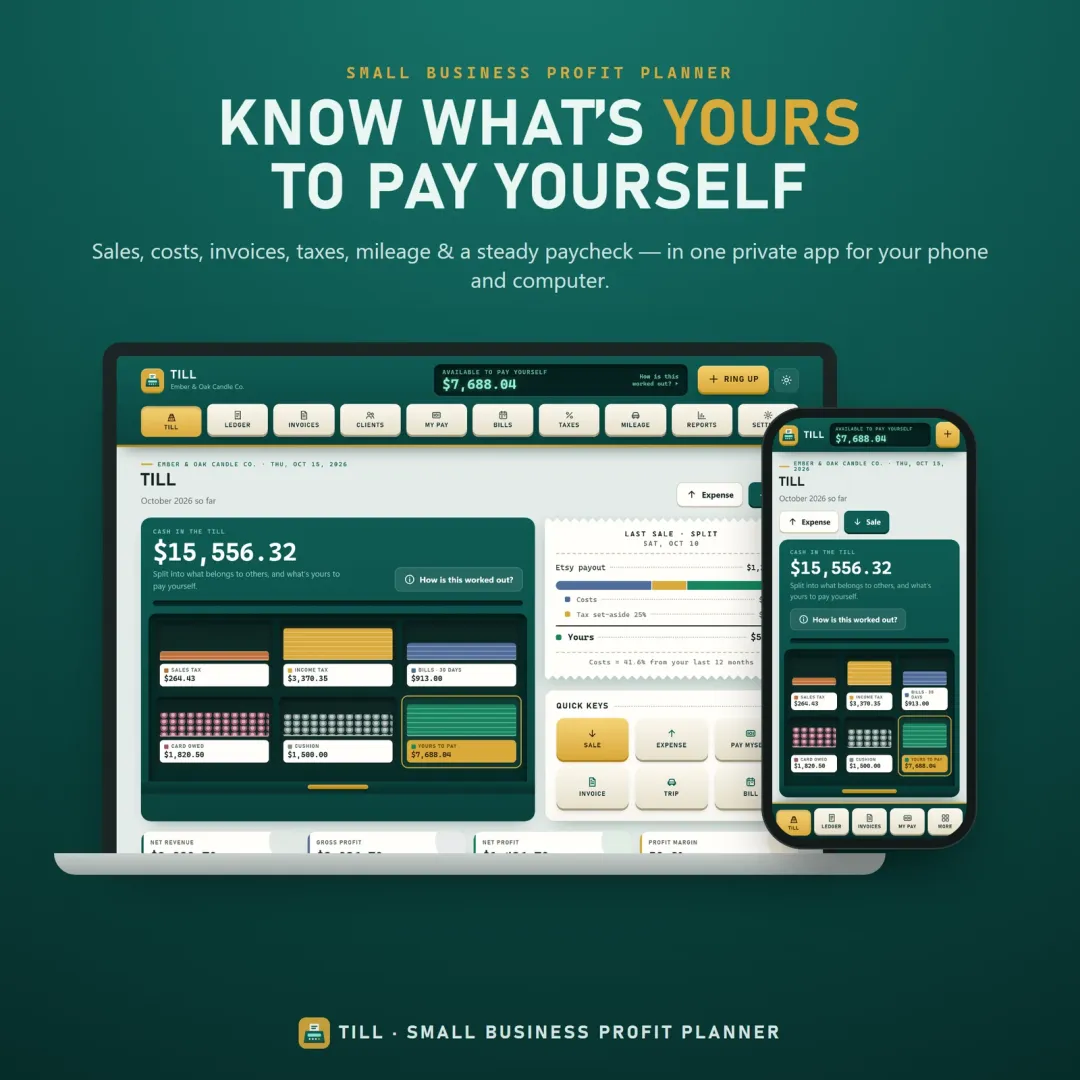
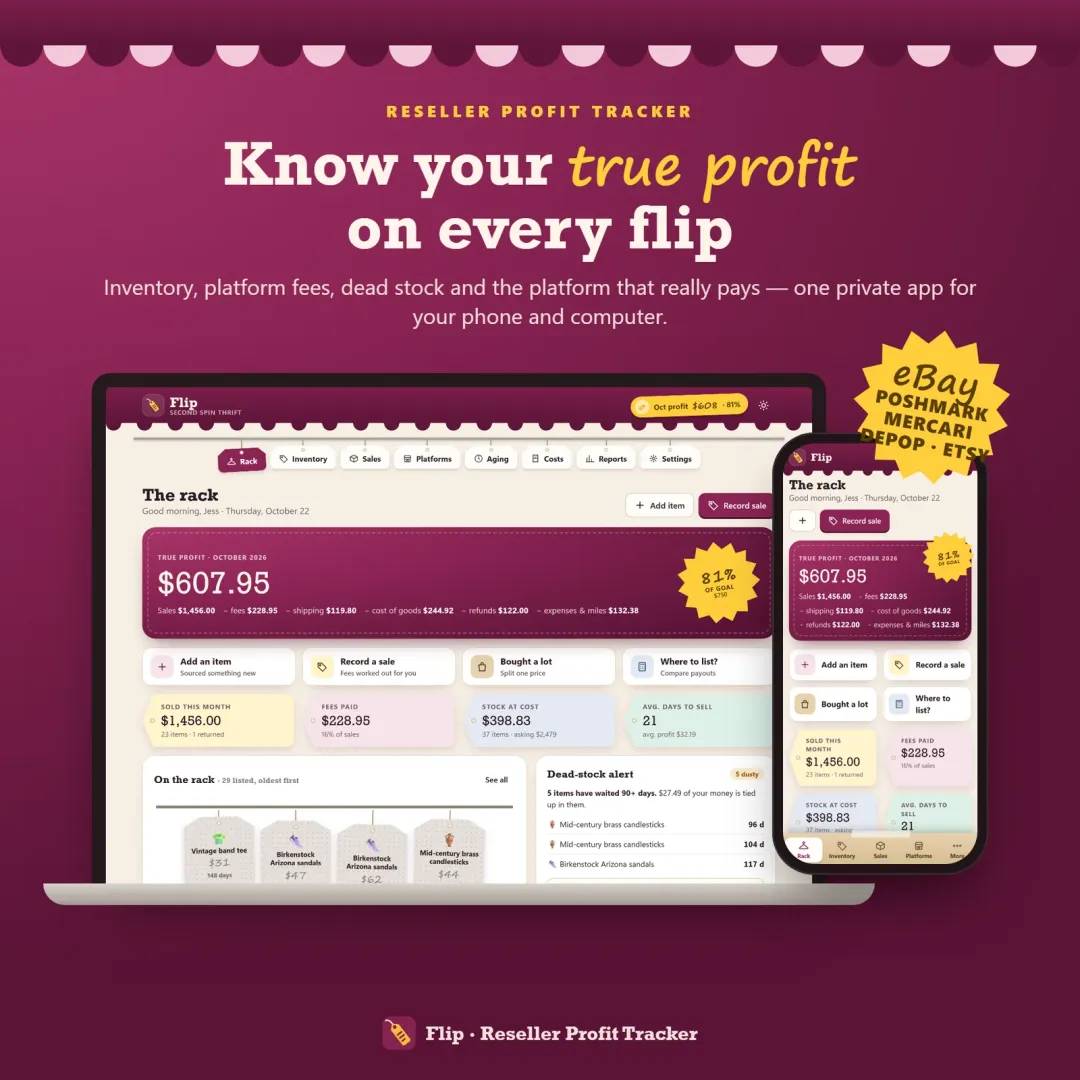
Flip is a reseller profit tracker that records each item from purchase to payout, works out fees for eBay, Poshmark, Mercari, Depop and Etsy, shows true profit by platform and flags dead stock. When your reselling grows into a full business, Till plans monthly profit and owner's pay. Both have a free demo with sample data you can open in your browser.
The short version
- Start with what you know, selling things from home first.
- Focus on items that are easy to check and cheap to ship.
- Check sold listings and buy at a third of the sale price or less.
- Price after fees and shipping; compare platforms.
- Ship fast, track real profit and sell-through, and set aside taxes.
Run your first find through the reseller fee calculator.
Frequently asked questions
How much money do I need to start reselling?
What are the best things to resell for beginners?
Where do resellers find items?
Which platform should I start on?
How do I know if an item will sell?
Do I have to pay taxes on reselling?
Written by
Finance Specialist & Editor, VaultlyApps
Emma Whitfield writes and edits the VaultlyApps money guides and free calculators. Her focus is US household finance — budgeting on a real paycheck, paying down credit card and student debt, emergency funds and savings goals, renting — and the money side of freelancing and small-business income, from pricing and profit margins to self-employment tax. Every guide is researched against primary sources such as IRS publications and the CFPB, every number is checked in our tested calculators, and tax content is reviewed each year when new IRS figures come out. Emma is not a licensed financial adviser or tax preparer; her work is general education, not personal advice.
Researched against primary US sources, checked with our calculators and reviewed by a finance expert on our team. Written for US readers — general education, not financial, tax or legal advice. Editorial policy · Disclaimer