Sinking Funds: What They Are, Examples and How to Start (With a Simple Plan)
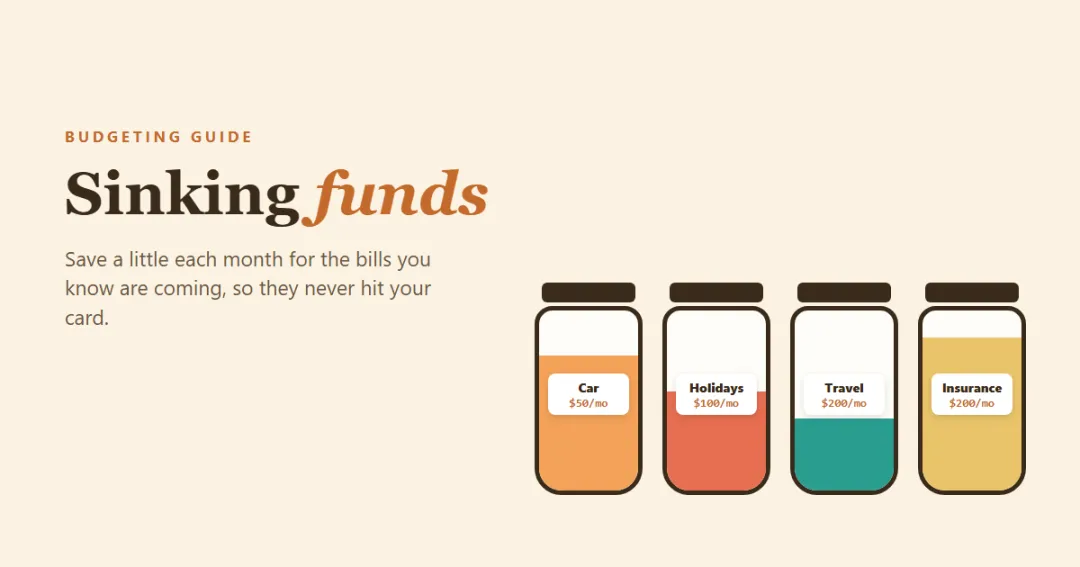
A sinking fund is money you set aside a little at a time for an expense you know is coming — car repairs, holidays, insurance, a vacation — so it never lands on a credit card. Here's how sinking funds work, a list of the most useful ones, how to calculate the monthly amount, and where to keep the money.
In this article
Some expenses only show up once or twice a year — car insurance, holiday gifts, the vet, the annual software subscription — and when they do, they wreck the month. Sinking funds fix that. You save a little every month for each known expense, so when the bill arrives, the money is already waiting.
This guide explains what sinking funds are, the most useful categories, how to work out the monthly amount, where to keep the money and how to get started this month.
What a sinking fund is
A sinking fund is money set aside gradually for a specific, expected expense. Instead of one $1,200 hit, you save $100 a month for a year. The term comes from business finance, where companies set aside money over time to repay a debt.
Sinking funds turn irregular expenses into regular, predictable monthly amounts, which makes a budget actually work.
Sinking funds vs emergency fund
| Sinking fund | Emergency fund | |
|---|---|---|
| For | Expenses you know are coming | Surprises you can't predict |
| Examples | Car insurance, holidays, vacation, repairs | Job loss, medical emergency |
| Amount | Expected cost of each item | 3–6 months of essential expenses |
| Spending it | Planned, and you rebuild it | Only in a real emergency |
Without sinking funds, predictable costs eat your emergency fund, or end up on a credit card. Build both: the emergency fund calculator sets the cushion; sinking funds handle the rest.
The most useful sinking funds
- Car: repairs, tires, oil changes, registration, insurance if paid yearly.
- Holidays and gifts: birthdays, the holiday season, weddings.
- Travel: vacations and trips home.
- Home: repairs, appliances, furniture.
- Medical and dental: deductibles, glasses, copays.
- Annual bills: subscriptions, memberships, insurance renewals. The subscription cost calculator finds yearly ones you may have forgotten.
- Kids: back-to-school, activities, camps.
- Pets: vet visits, grooming, boarding.
- Big purchases: a new phone, laptop, car down payment.
How to calculate the monthly amount
Monthly amount = expected cost ÷ months until you need it
| Sinking fund | Cost | Months away | Per month |
|---|---|---|---|
| Car insurance | $1,200 | 6 | $200 |
| Holidays | $900 | 9 | $100 |
| Car maintenance | $600 | 12 | $50 |
| Vacation | $2,400 | 12 | $200 |
| Annual subscriptions | $240 | 12 | $20 |
| Total | $570 |
For expenses with a date, the savings goal calculator gives the exact monthly amount, including interest. If you already have something saved, subtract it first.
How to start sinking funds this month
- List your irregular expenses from the past year. Bank and card statements help.
- Pick the top three to five by cost.
- Estimate each cost and due date.
- Work out the monthly amount for each.
- Add them to your budget as fixed lines. The monthly budget calculator lets you list each one.
- Automate the transfer on payday.
- Spend from the fund when the bill comes, then start rebuilding.
Where to keep sinking funds
- High-yield savings account: the best default. Many online banks let you create several named buckets in one account, so each fund has its own balance.
- Separate accounts: if your bank doesn't offer buckets, a second savings account just for sinking funds keeps them away from spending money.
- Spreadsheet or app: if all the money sits in one account, track each fund's balance separately.
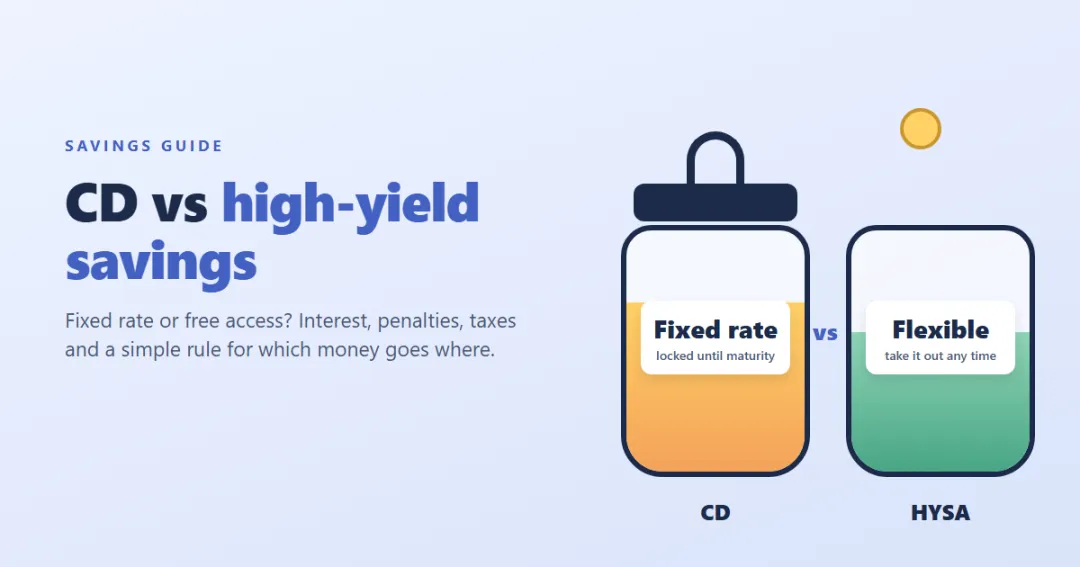
- CD: for a large fund with a fixed date more than six months away; see CD vs high-yield savings.
Tips that make sinking funds work
- Start small. Even $10 a month in each fund is better than nothing.
- Round up. Costs rise; save a little more than you expect to need.
- Don't raid one fund for another unless you rebuild it.
- Review every few months and adjust the amounts.
- Use windfalls. Tax refunds and bonuses can top up funds in one go.
A fun way to kick-start them: the 100 envelope challenge saves $5,050, and our guide to the holiday budget shows a sinking fund for the most expensive season.
Sinking funds and a calmer budget
Once your irregular costs have their own money, the monthly budget becomes steady: no more months where the car registration and a wedding gift blow everything up. That makes it much easier to know what's truly safe to spend; our guide to what is safe to spend explains that number.
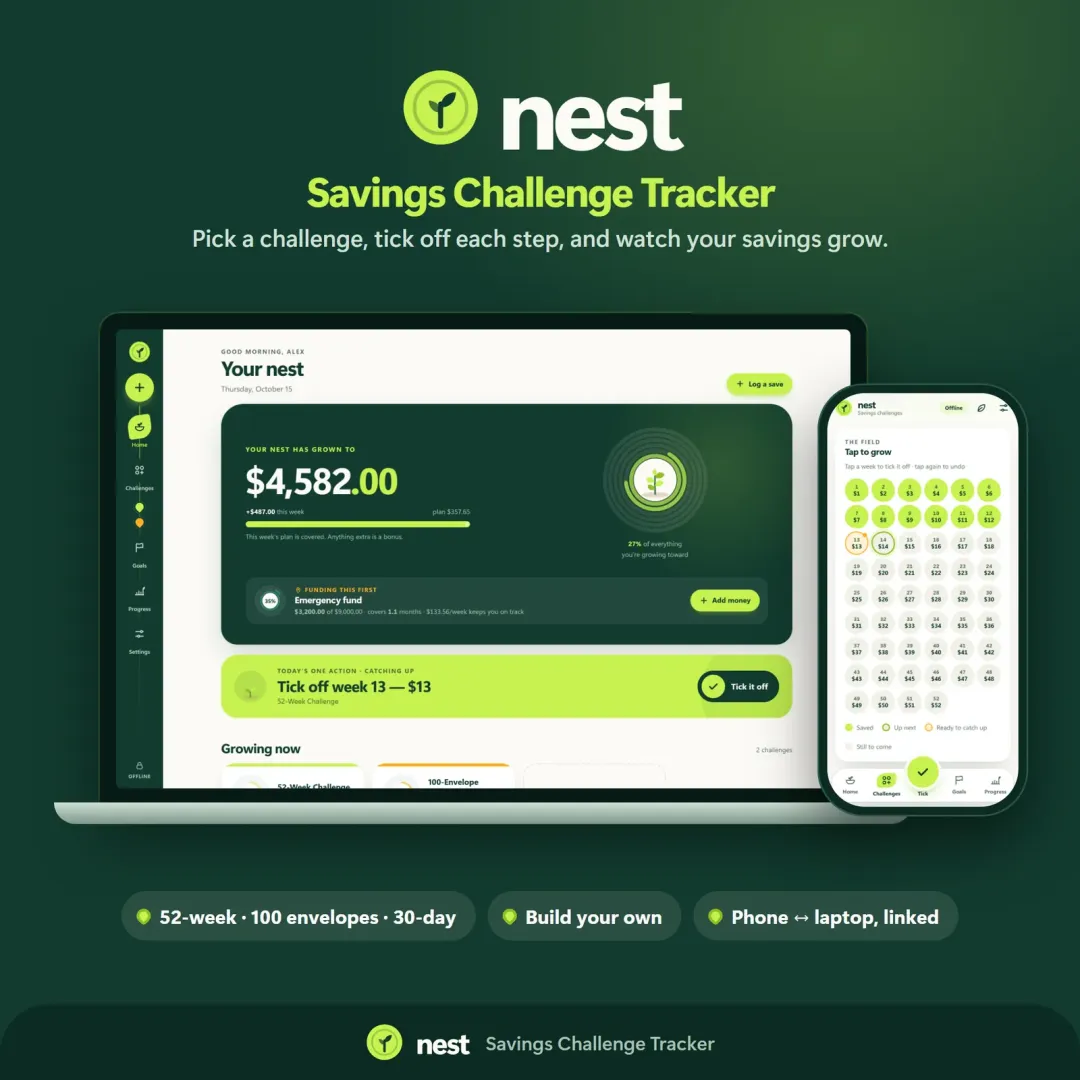
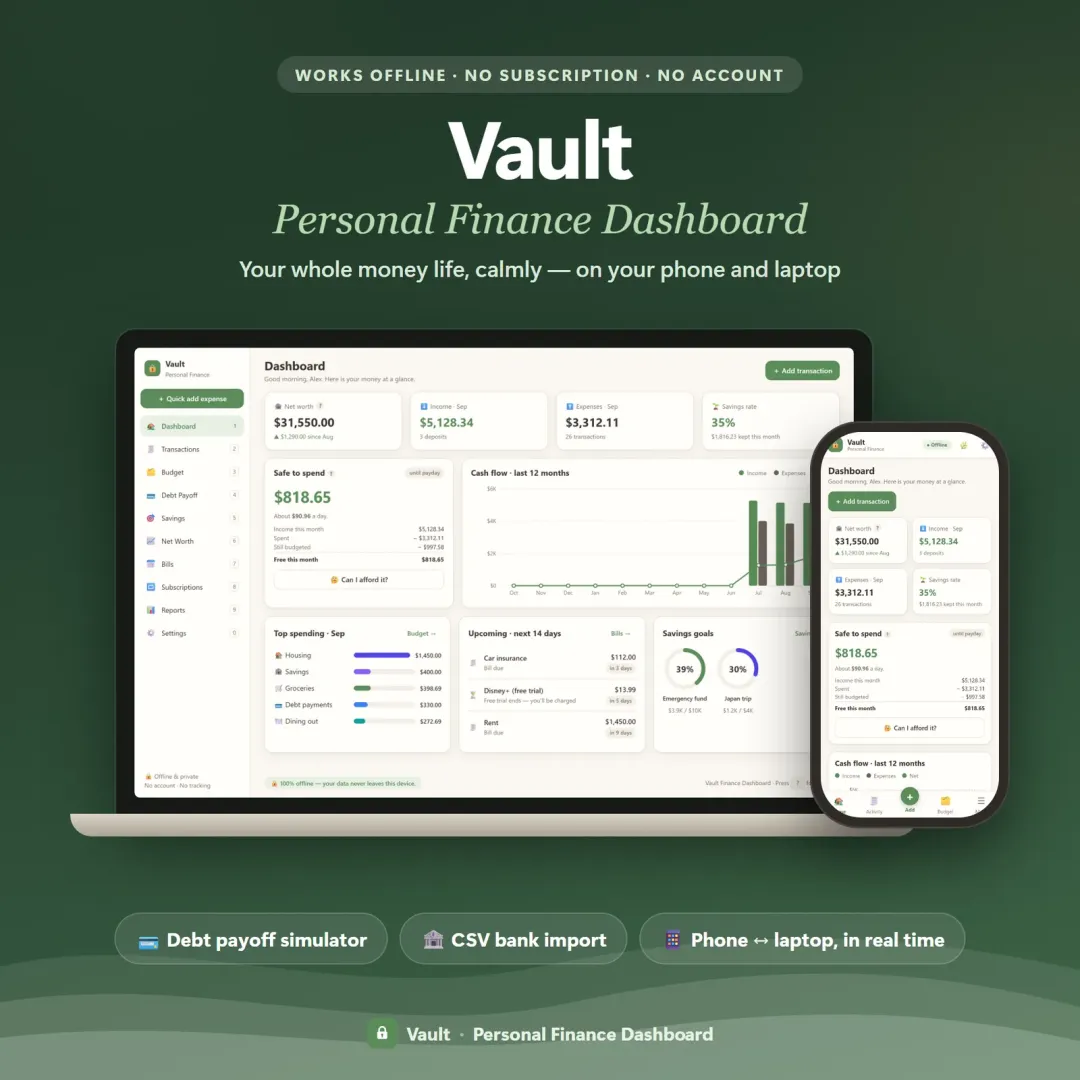
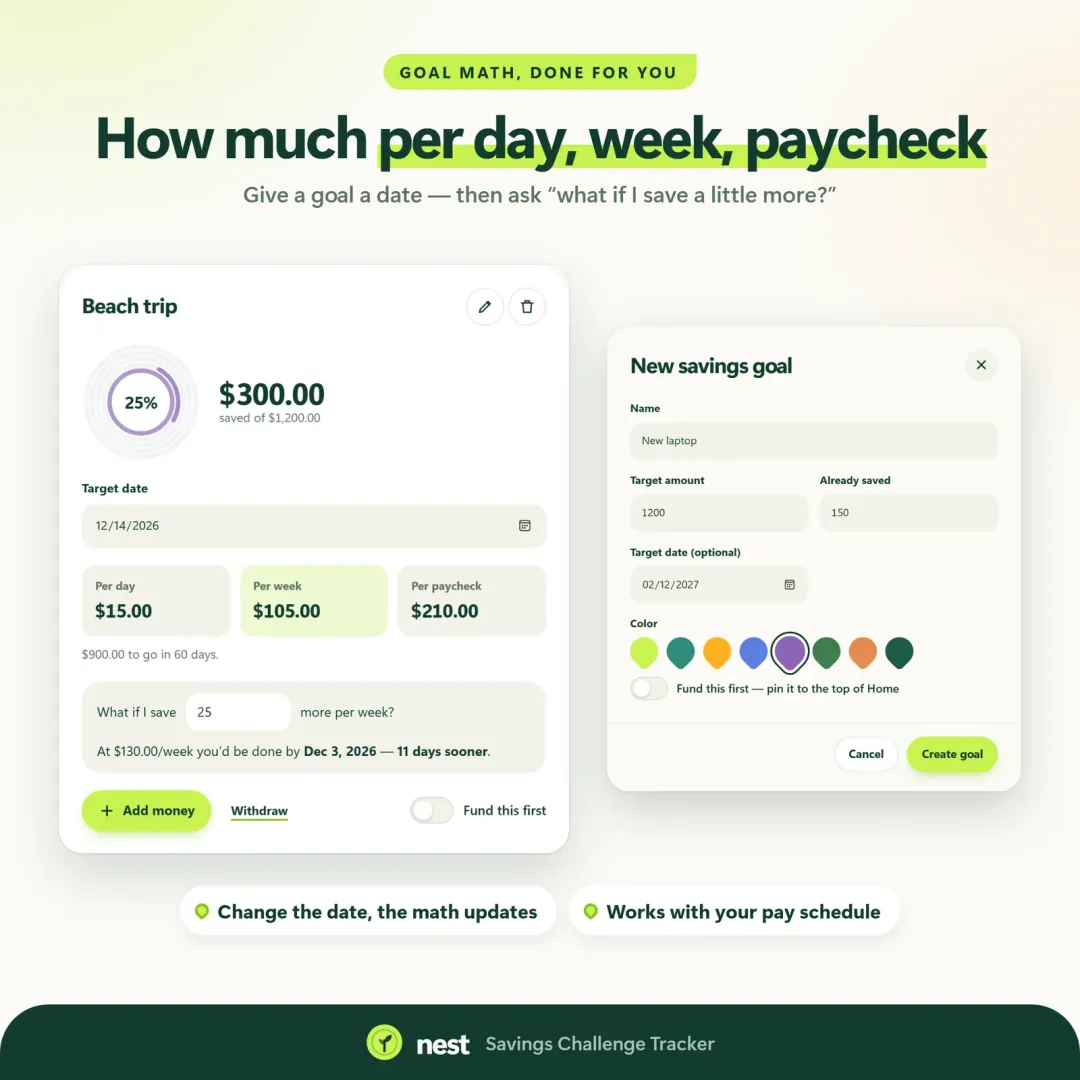
Nest is a savings tracker built for this: each sinking fund becomes a goal with a target date and a weekly amount, with challenges to keep it fun. Vault keeps sinking funds next to your budget and bills, and Flow shows what's safe to spend after they're covered. Each has a free demo with sample data.
The short version
- A sinking fund saves gradually for a known, irregular expense.
- Monthly amount = cost ÷ months left.
- Start with three to five funds, automate them on payday, and keep them in a high-yield savings account.
- Keep them separate from your emergency fund.
- Work out each amount with the savings goal calculator.
Frequently asked questions
What is a sinking fund?
How is a sinking fund different from an emergency fund?
How do I calculate how much to put in a sinking fund?
What are common sinking funds?
Where should I keep sinking funds?
How many sinking funds should I have?
Written by
Finance Specialist & Editor, VaultlyApps
Emma Whitfield writes and edits the VaultlyApps money guides and free calculators. Her focus is US household finance — budgeting on a real paycheck, paying down credit card and student debt, emergency funds and savings goals, renting — and the money side of freelancing and small-business income, from pricing and profit margins to self-employment tax. Every guide is researched against primary sources such as IRS publications and the CFPB, every number is checked in our tested calculators, and tax content is reviewed each year when new IRS figures come out. Emma is not a licensed financial adviser or tax preparer; her work is general education, not personal advice.
Researched against primary US sources, checked with our calculators and reviewed by a finance expert on our team. Written for US readers — general education, not financial, tax or legal advice. Editorial policy · Disclaimer