Is Selling on Etsy Worth It in 2026? Real Costs, Profit and How to Price Handmade Items
Etsy gives handmade and vintage sellers millions of buyers, but fees, ads, competition and your time decide whether it's worth it. Here's an honest look at what an Etsy shop really earns, a pricing formula for handmade items that pays you for your time, and the signs your shop is — or isn't — worth the effort.
In this article
Etsy is the first stop for most makers and vintage sellers, and for good reason: it brings buyers who are already looking for handmade, vintage and unique items. But "I sold something on Etsy" and "Etsy is worth it" aren't the same thing. Between fees, ads, materials, shipping and the hours each piece takes, plenty of shops are busy and barely profitable.
This guide gives you an honest way to decide: what Etsy really costs, how to work out what your shop earns per hour, a pricing formula for handmade items that pays you properly, and the signs that a shop is worth the effort.
What Etsy costs in 2026
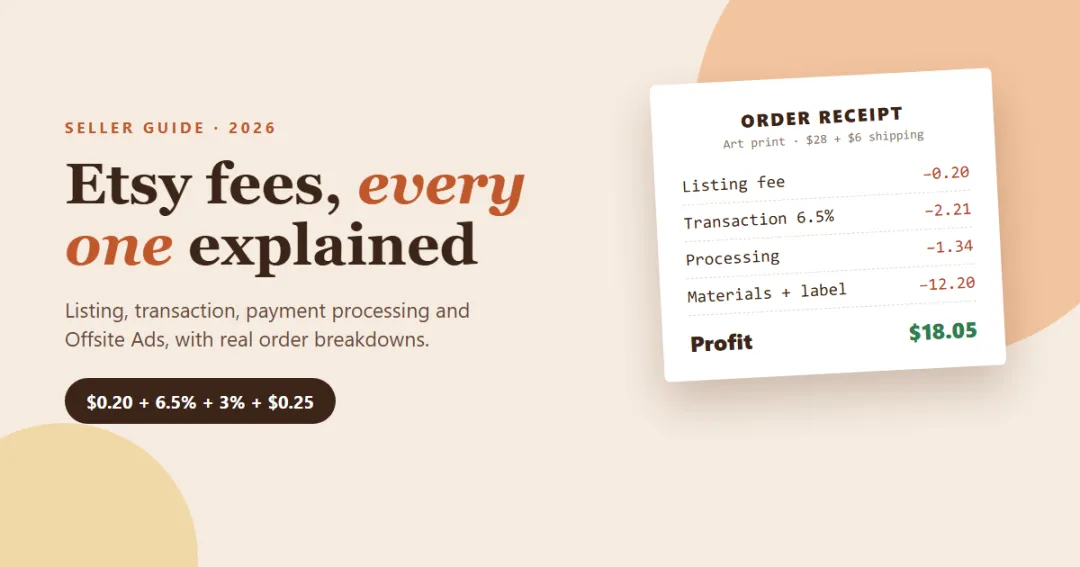
For US sellers, every order pays:
- $0.20 listing fee,
- 6.5% transaction fee on the item price and shipping,
- 3% + $0.25 payment processing on the order total.
That's about 10–12% of a normal order. Sales from Offsite Ads add 12–15% (capped at $100). Optional costs include Etsy Ads, Etsy Plus and shipping labels. Our guide to Etsy fees in 2026 breaks every fee down, and the Etsy fee calculator works out any order.
The question that matters: profit per hour
Sales don't tell you if Etsy is worth it. Profit per hour does.
Example: an art print sells for $28 + $6 shipping. Etsy's fees are about $3.75, materials and packaging $7, the label $5.20. Profit: $18.05. If making, listing, packing and messages take 30 minutes per print, that's about $36 an hour: worth it. If each takes 90 minutes, it's $12 an hour, less than many jobs.
Track your time for a few weeks, even roughly. It's the number that decides whether to keep going, raise prices or change products.
How to price handmade items
A simple, proven formula:
- Materials: everything that goes into one item, including packaging.
- Labor: hours per item × the hourly wage you want (be fair to yourself, e.g. $20–$30).
- Overhead per item: tools, software, studio space, Etsy subscription, divided by items sold per month.
- Cost = materials + labor + overhead.
- Price: add profit on top, then check the margin after Etsy fees.
| Item | Amount |
|---|---|
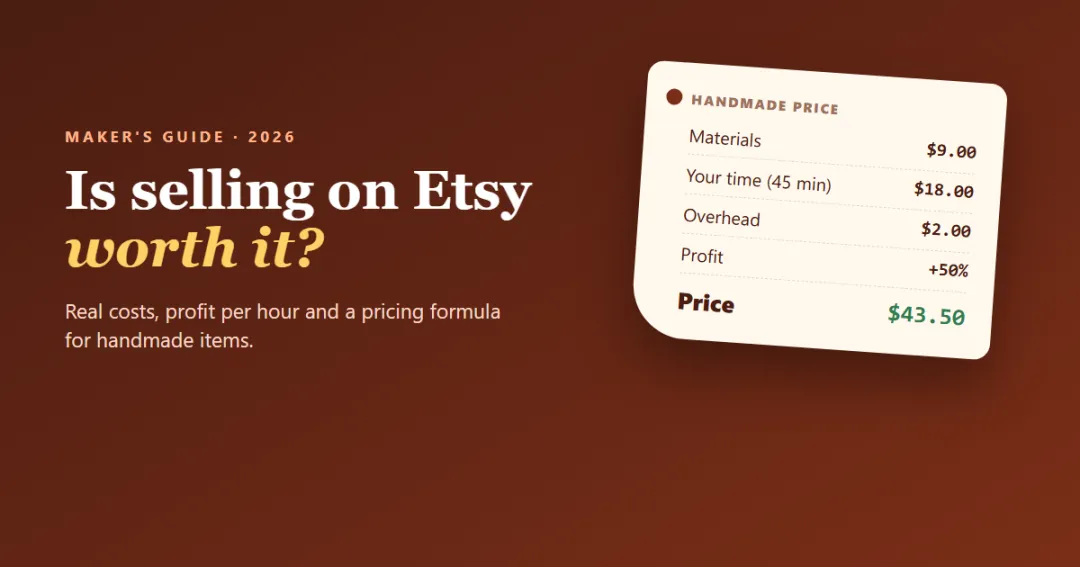
| Materials & packaging | $9.00 |
| Labor: 45 minutes at $24/hour | $18.00 |
| Overhead per item | $2.00 |
| Cost | $29.00 |
| Price at a 1.5× markup | $43.50 |
At $43.50, Etsy's fees are about $4.60, leaving about $10 of profit on top of your wage. The markup calculator and profit margin calculator make this quick, and the Etsy fee calculator shows the price for a target margin after fees.
Common pricing mistakes
- Pricing to compete with the cheapest shops instead of covering costs.
- Forgetting your time, so your "profit" is really a very low wage.
- Ignoring fees and ads when setting prices.
- Undercharging shipping: you pay the 6.5% fee on shipping either way.
- Never raising prices as materials and skills grow.
Signs Etsy is worth it for you
- Your profit per hour beats your alternatives, or you're happy with it as a creative side income.
- You have a clear niche and products people search for.
- You can make or source items consistently.
- Your photos and listings look professional.
- Repeat customers and reviews are growing.
Signs it might not be (yet)
- You're busy but the profit per hour is tiny.
- Fees and ads take more than 20% of every order.
- You compete only on price.
- Most of your time goes to custom requests that don't scale.
Often the fix isn't leaving Etsy but changing the business: raising prices, dropping low-profit items, bundling, or adding digital products, which have no materials or shipping.
Make the business side easy
- Separate money: a business bank account for Etsy deposits and costs.
- Know your break-even: how many sales a month cover your fixed costs; use the break-even calculator.
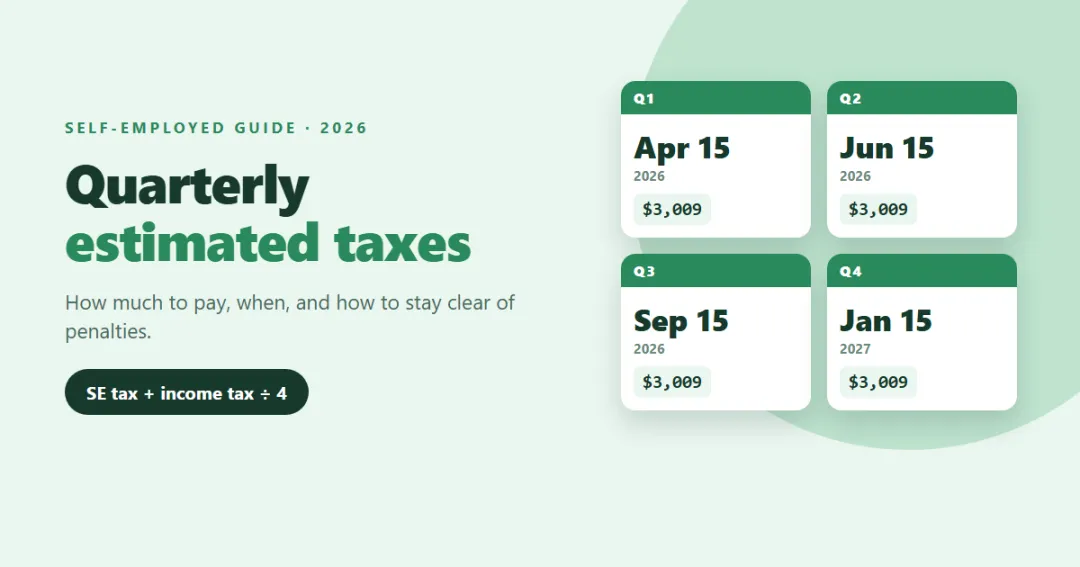
- Set aside taxes from every deposit; profit is taxable and subject to self-employment tax. Our guide to quarterly estimated taxes explains how to pay.
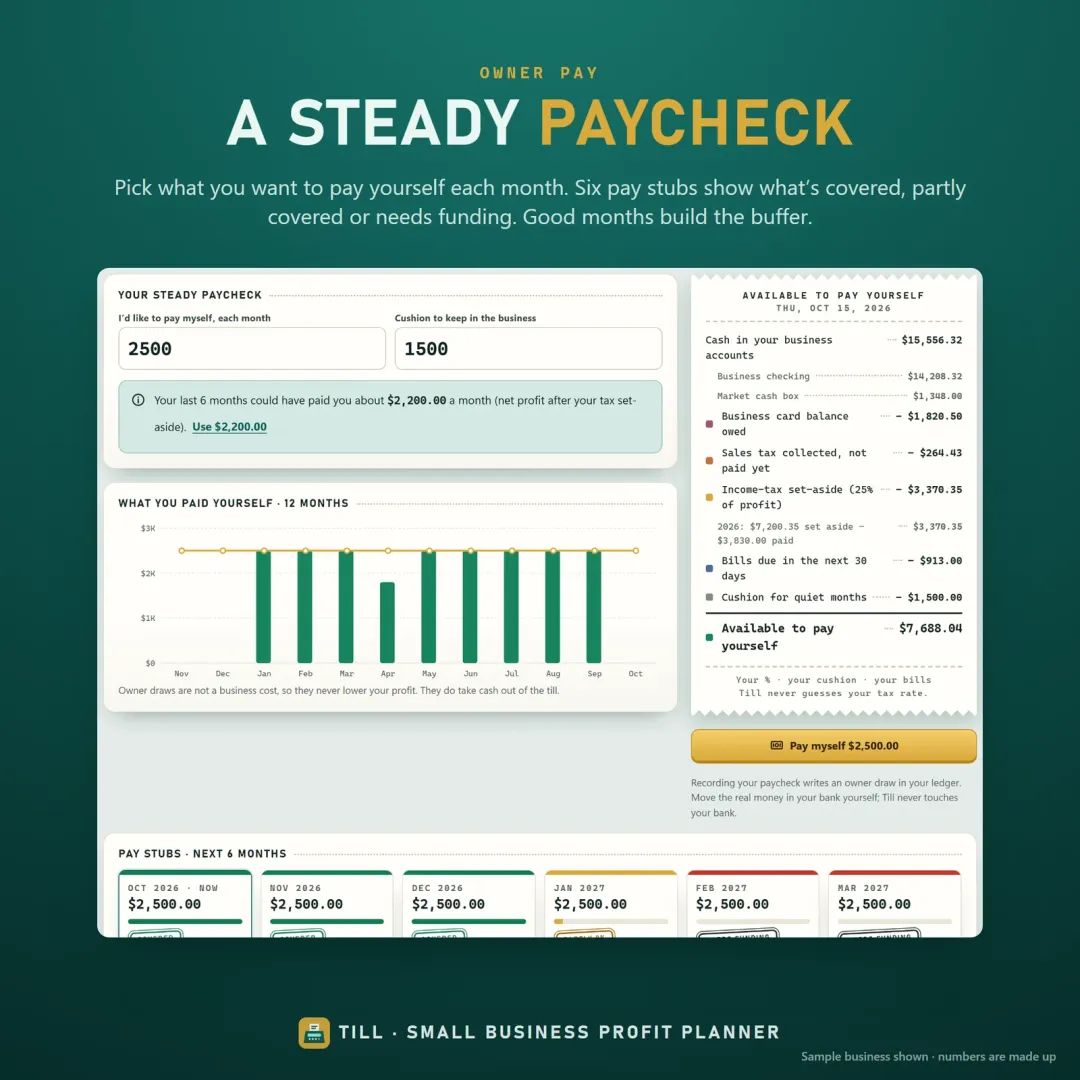
- Pay yourself on purpose: see how to pay yourself as a small business owner.
Etsy vs other platforms
Etsy is strongest for handmade, vintage (20+ years old) and digital goods. For general resale, eBay, Poshmark, Mercari or Depop may fit better; compare payouts in the reseller fee calculator. Many sellers use Etsy plus their own website to keep repeat customers fee-free.
See if your shop is really profitable
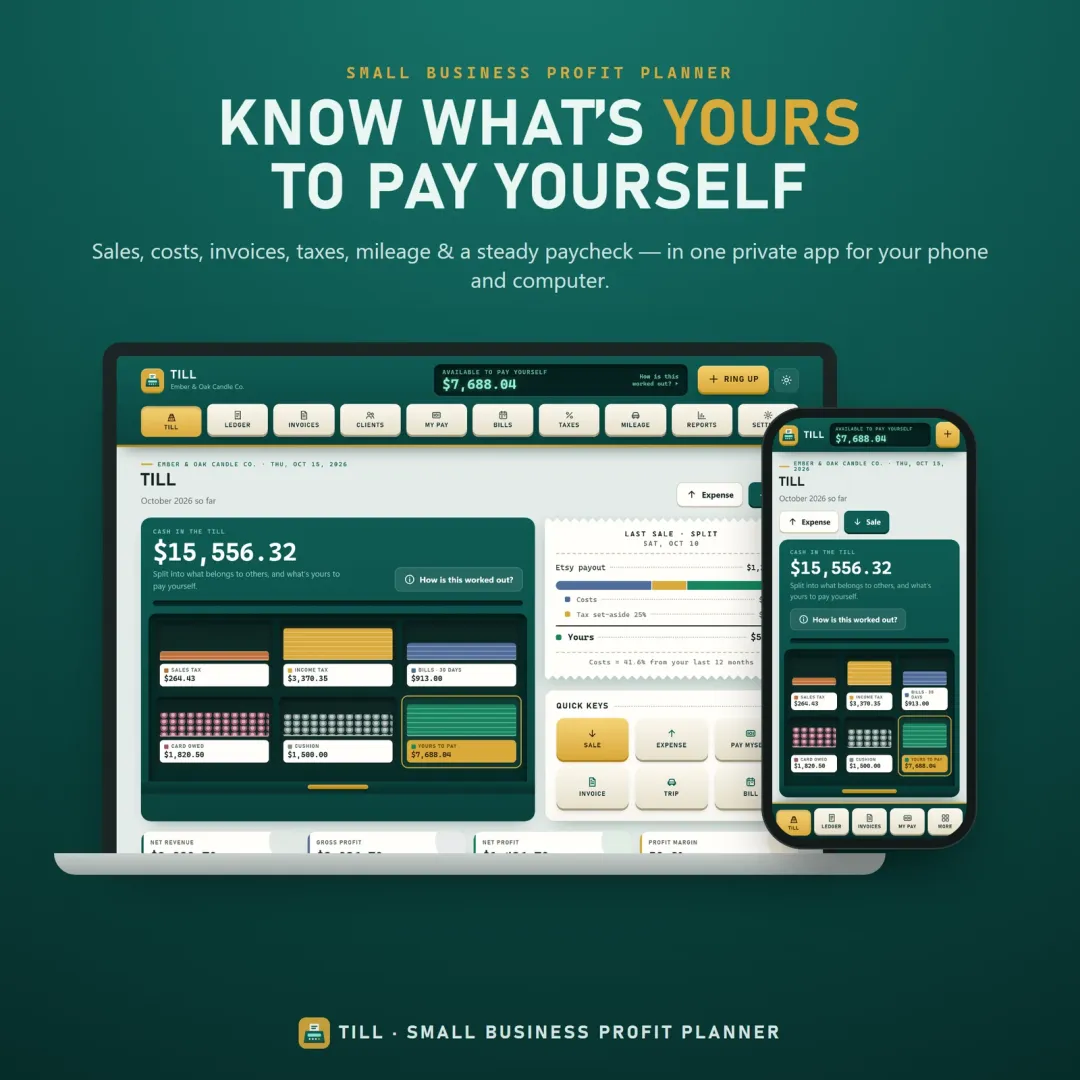
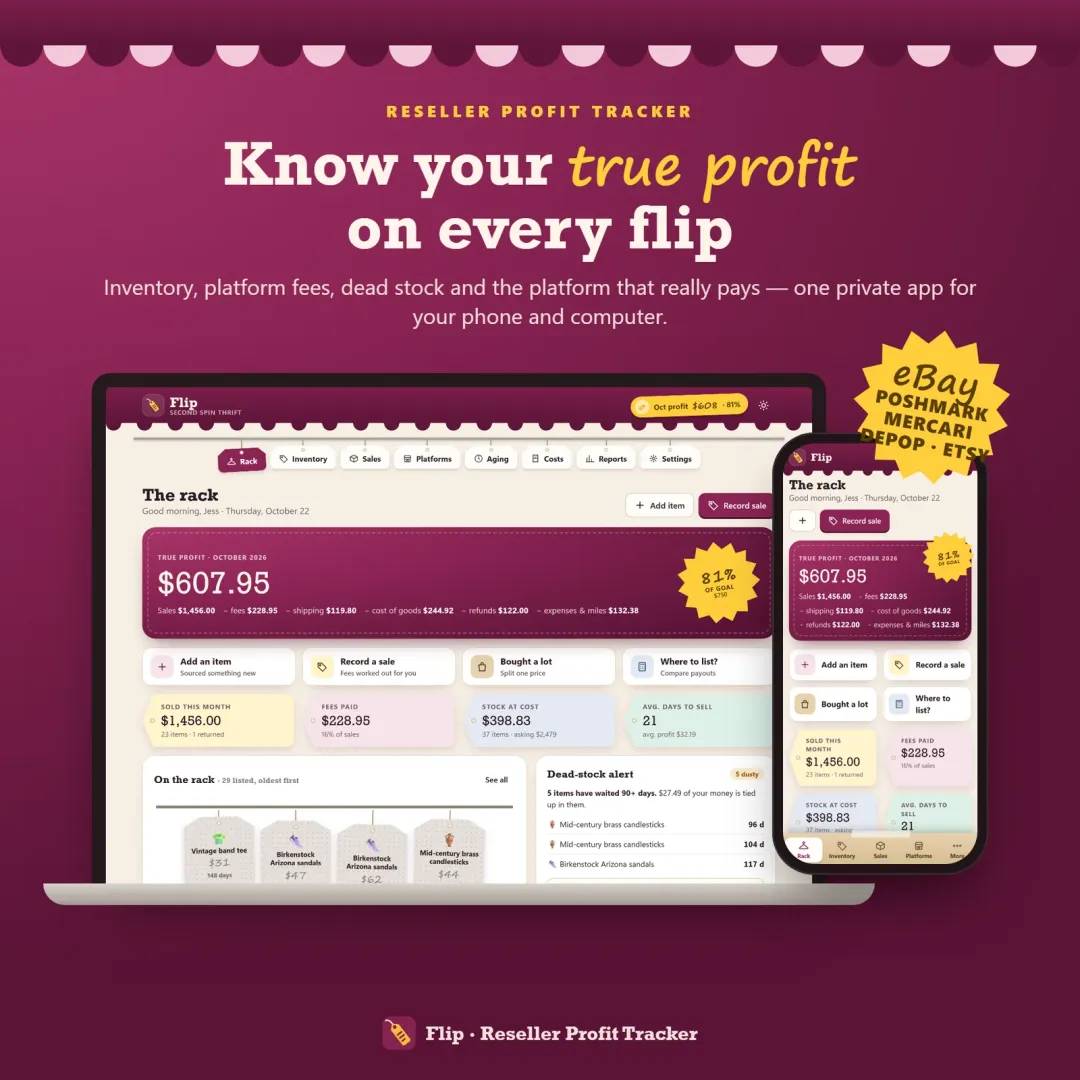
Till is a small business profit planner for makers and small shops: it splits every sale into costs, a tax set-aside and your own pay, and shows what you can safely pay yourself each month. If you also resell vintage across platforms, Flip tracks each item's fees and profit. Both have a free demo with sample data.
The short version
- Etsy takes about 10–12% of a normal order, more with Offsite Ads.
- Judge your shop by profit per hour, not sales.
- Price = materials + your labor + overhead + profit, then check the margin after fees.
- Raise prices, drop weak products and add digital items before giving up.
- Work out any order with the Etsy fee calculator.
Frequently asked questions
Is it still worth selling on Etsy in 2026?
How much does Etsy take from each sale?
How should I price handmade items?
How much do Etsy sellers make?
Do I need a business license to sell on Etsy?
Do I have to pay taxes on Etsy sales?
Written by
Finance Specialist & Editor, VaultlyApps
Emma Whitfield writes and edits the VaultlyApps money guides and free calculators. Her focus is US household finance — budgeting on a real paycheck, paying down credit card and student debt, emergency funds and savings goals, renting — and the money side of freelancing and small-business income, from pricing and profit margins to self-employment tax. Every guide is researched against primary sources such as IRS publications and the CFPB, every number is checked in our tested calculators, and tax content is reviewed each year when new IRS figures come out. Emma is not a licensed financial adviser or tax preparer; her work is general education, not personal advice.
Researched against primary US sources, checked with our calculators and reviewed by a finance expert on our team. Written for US readers — general education, not financial, tax or legal advice. Editorial policy · Disclaimer