
How to use the 1099 tax calculator
- Enter your expected 1099 or self-employment profit for 2026: income minus business expenses.
- Add any W-2 wages and the federal tax withheld from them.
- Choose your filing status and state tax rate, and whether you'll take the QBI deduction.
- Optionally, enter last year's total federal tax to see the safe-harbor minimum.
You'll see your self-employment tax, federal income tax, the quarterly estimated payment, the safe-harbor minimum, how much to set aside each month and the 2026 due dates.
1099 taxes at different profits (2026, single, federal only)
| 1099 profit | SE tax | Income tax | Total | Each quarter |
|---|---|---|---|---|
| $30,000 | $4,239 | $942 | $5,181 | $1,295 |
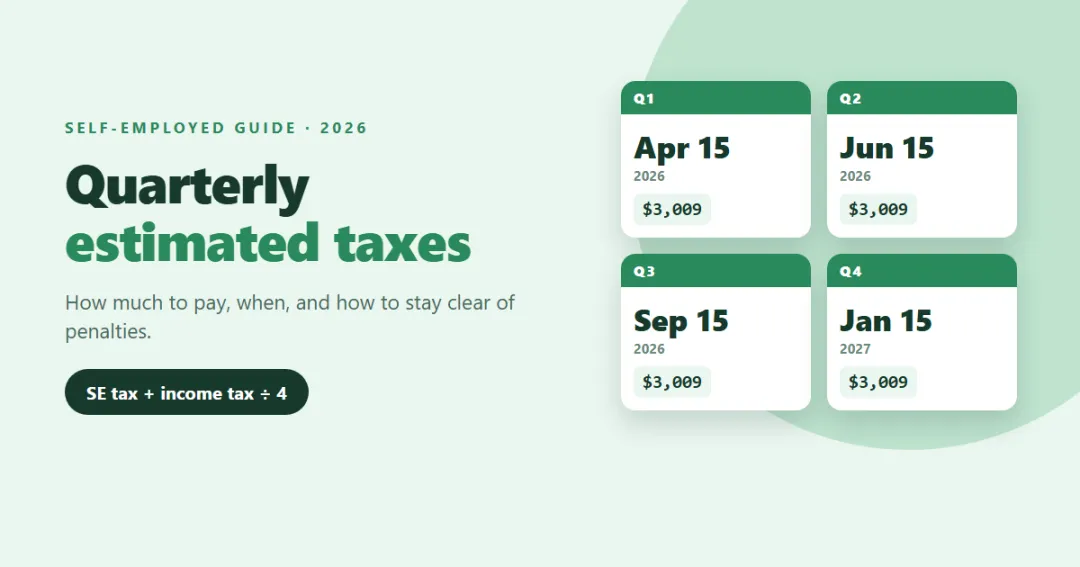
| $60,000 | $8,478 | $3,559 | $12,037 | $3,009 |
| $100,000 | $14,130 | $8,235 | $22,365 | $5,591 |
Add your state's income tax on top. Self-employment tax is the part that surprises new freelancers: as an employee your employer paid half of Social Security and Medicare; now you pay both halves.
How the calculation works
- Self-employment tax = 15.3% × 92.35% of profit (12.4% Social Security up to the 2026 wage base of $184,500, combined with any W-2 wages, plus 2.9% Medicare and 0.9% extra above $200,000 single / $250,000 joint).
- Adjusted gross income = W-2 wages + profit − half of SE tax.
- Taxable income = AGI − 2026 standard deduction ($16,100 single, $32,200 married filing jointly, $24,150 head of household) − QBI deduction (20% of profit after half of SE tax, capped at 20% of taxable income).
- Income tax from the 2026 brackets.
- Quarterly payment = (income tax + SE tax − withholding) ÷ 4.
The estimate doesn't include itemized deductions, credits, retirement contributions such as a SEP-IRA or self-employed health insurance, all of which can lower your bill.
Avoiding the underpayment penalty
The IRS charges a penalty if you don't pay enough during the year. You're safe if your withholding plus estimated payments cover the smaller of:
- 90% of this year's tax, or
- 100% of last year's total tax (110% if last year's AGI was over $150,000).
Paying based on last year's tax is the easy route when income is growing: you can't be penalized even if you owe more at filing. Just set the difference aside.
Have a W-2 job too?
If you have a paycheck as well as 1099 income, you can increase your W-4 withholding instead of making quarterly payments. Withholding counts as if it were paid evenly through the year, which can also fix a late-year shortfall. The take-home pay calculator shows what a change in withholding does to each paycheck.
Lower your 1099 tax legally
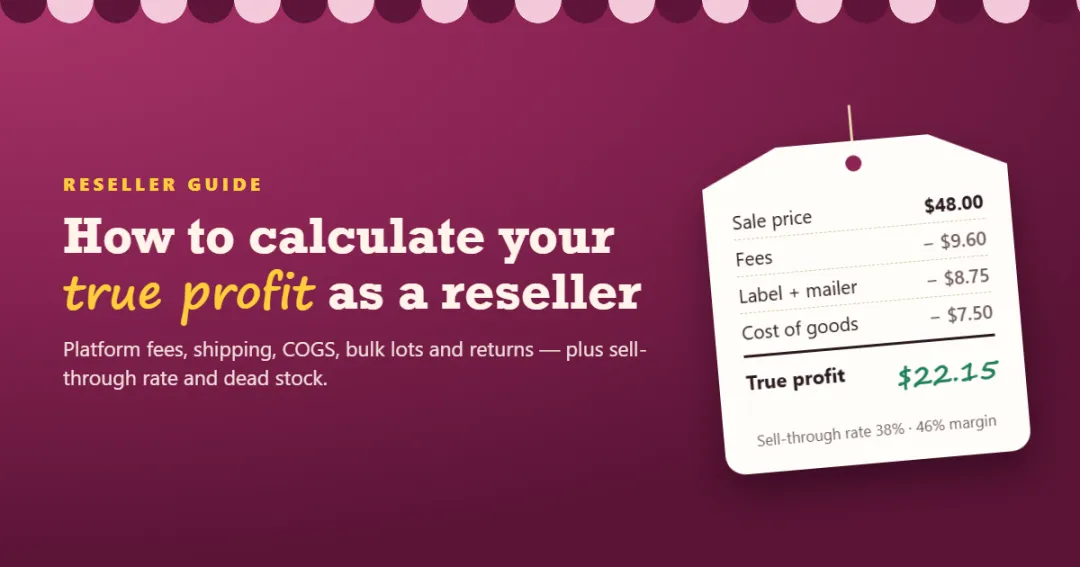
- Track every business expense: supplies, software, a share of your phone and internet, mileage, marketplace fees. For sellers, the eBay and Etsy fee guides show what platform fees add up to.
- Retirement contributions: a SEP-IRA or solo 401(k) can shelter a large share of profit.
- Self-employed health insurance premiums are deductible.
- Home office deduction if you use part of your home only for work.
Make taxes a monthly habit
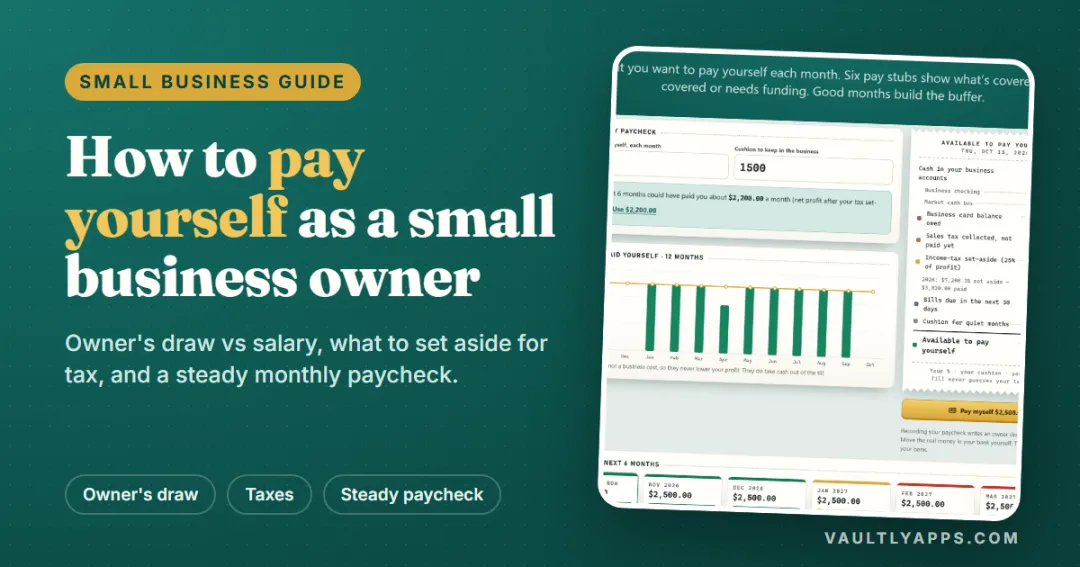
The easiest way to never be short: move a fixed percentage of every payment into a separate tax savings account the day it arrives, then pay the quarterly amount from there. Our guide on how to pay yourself as a small business owner shows how to split income into tax, costs and your own pay, and the self-employment tax calculator gives a quick SE-tax-only view.
Till is a small business profit planner that splits every sale into costs, a tax set-aside and your share, so the quarterly payment is already waiting when it's due. Flip does the same for resellers, item by item. Both have a free demo with sample data.
Estimates using 2026 federal figures. Not tax advice; your situation may include deductions and credits not shown here.
Frequently asked questions
How much tax do I pay on 1099 income?
When are quarterly estimated taxes due in 2026?
Do I have to pay quarterly taxes?
What is the safe harbor for estimated taxes?
What is the QBI deduction?
How much should I set aside from each payment?
What's the difference between this and the self-employment tax calculator?
Written by
Finance Specialist & Editor, VaultlyApps
Emma Whitfield writes and edits the VaultlyApps money guides and free calculators. Her focus is US household finance — budgeting on a real paycheck, paying down credit card and student debt, emergency funds and savings goals, renting — and the money side of freelancing and small-business income, from pricing and profit margins to self-employment tax. Every guide is researched against primary sources such as IRS publications and the CFPB, every number is checked in our tested calculators, and tax content is reviewed each year when new IRS figures come out. Emma is not a licensed financial adviser or tax preparer; her work is general education, not personal advice.
Researched against primary US sources, checked against independent calculators and reviewed by a finance expert on our team. Written for US readers — general education, not financial, tax or legal advice. Editorial policy · Disclaimer