
VaultlyApps logo VaultlyApps

Free calculator

Rent Split Calculator: Divide Rent Fairly Between Roommates

Enter the total rent, shared utilities and each roommate. Split the rent equally, by room size — with extra for a private bathroom — or by income, and see what each person pays every month.

By Updated Private — runs in your browser Free, no sign-up Save, print, PDF & CSV — with a QR code to reopen it

Split equally.

Split the rent

Roommates

An equal split would be of rent each. Agree on the method in writing before you move in.

For readers in the United States. Estimates for planning only — not financial, investment, tax or legal advice. Disclaimer · How we check our numbers

Pulse app icon

Want these numbers to update by themselves?

Pulse — Bill & Subscription Tracker — keeps this plan current as you log real payments. Try the free demo, no sign-up.

How to use the rent split calculator

  1. Enter the total monthly rent and the shared utilities.
  2. Choose how to split the rent: equally, by room size or by income.
  3. Add each roommate with their room size (and tick a private bathroom) or their income.

Each person's rent share and total, utilities included, appear on the right.

Example: three roommates, $2,400 rent + $240 utilities

Roommate By size (bath +15%) By income Equally
Alex — 160 sq ft, private bath, $60k $1,121.51 $1,040.00 $880.00
Sam — 130 sq ft, $48k $815.85 $848.00 $880.00
Jordan — 110 sq ft, $42k $702.64 $752.00 $880.00

Totals include an equal $80 share of utilities. By size, Alex pays about 43% of the rent for the biggest room and a private bathroom.

Which method is fairest?

  • Equal split: simple and fair when rooms are about the same.
  • By room size: fair when one room is clearly bigger, has a private bathroom, a balcony or more closet space. You can also adjust for features by adding a few percent.
  • By income: common for couples and close friends with very different incomes, so the lower earner isn't stretched.

There's no right answer; the right method is the one everyone agrees to before signing the lease.

Put it in writing

A simple roommate agreement prevents most arguments. Include:

  • each person's rent share and the method used;
  • how utilities, internet and streaming are split;
  • who pays the landlord and by when;
  • how the security deposit is split and returned;
  • what happens if someone moves out early.

Make sure the rent fits your budget

Your share should fit comfortably in your own budget: many people aim for housing under 30% of take-home pay. Check with the rent affordability calculator, and plan the rest of your month with the monthly budget calculator. Shared subscriptions add up too; the subscription cost calculator shows the yearly total.

Keep shared bills on track

Pulse is a bill and subscription tracker that shows every due date, so rent, utilities and shared subscriptions never sneak up on you. Flow helps each roommate know what's safe to spend until payday, and Vault keeps the whole budget in view. Each has a free demo with sample data.

Frequently asked questions

What is the fairest way to split rent?

It depends on the rooms. If they're similar, split equally. If one room is bigger or has a private bathroom, splitting by room size (with a premium for the bathroom) is usually seen as fairest. Couples or friends with very different incomes sometimes split by income.

How do you split rent by room size?

Add up the square footage of the private rooms, then each person pays their room's share of the rent. In the example, rooms of 160 (with a private bathroom, counted 15% larger), 130 and 110 sq ft split $2,400 into about $1,042, $736 and $623, plus utilities.

How do you split rent by income?

Each person pays the share of rent equal to their share of the combined income. With incomes of $60,000, $48,000 and $42,000 (total $150,000), the shares are 40%, 32% and 28%.

Should utilities be split by room size too?

Usually utilities are split equally, because everyone uses the kitchen, heat, internet and electricity. The calculator splits them equally.

How much more should a room with a private bathroom pay?

There's no fixed rule; many households add 10–20%. The calculator counts a private bathroom as 15% more room.

How do we avoid arguments about rent?

Agree on the method before you sign the lease, write it down with how utilities, deposits and late payments work, and use one shared tracker for bills.

Written by

Emma Whitfield

Finance Specialist & Editor, VaultlyApps

Emma Whitfield writes and edits the VaultlyApps money guides and free calculators. Her focus is US household finance — budgeting on a real paycheck, paying down credit card and student debt, emergency funds and savings goals, renting — and the money side of freelancing and small-business income, from pricing and profit margins to self-employment tax. Every guide is researched against primary sources such as IRS publications and the CFPB, every number is checked in our tested calculators, and tax content is reviewed each year when new IRS figures come out. Emma is not a licensed financial adviser or tax preparer; her work is general education, not personal advice.

Researched against primary US sources, checked against independent calculators and reviewed by a finance expert on our team. Written for US readers — general education, not financial, tax or legal advice. Editorial policy · Disclaimer

From VaultlyApps

Apps that do this for you

Each one has a free live demo with sample data — open it in your browser, nothing to install.

Pulse bill tracker with the 30-day horizon of bill flags and the Penny mascot Live
Pulse app icon

Pulse

Bill & Subscription Tracker

Every bill and subscription in one calm place — a 30-day horizon of due dates, free-trial countdowns and a simulator that shows what cancelling would save.

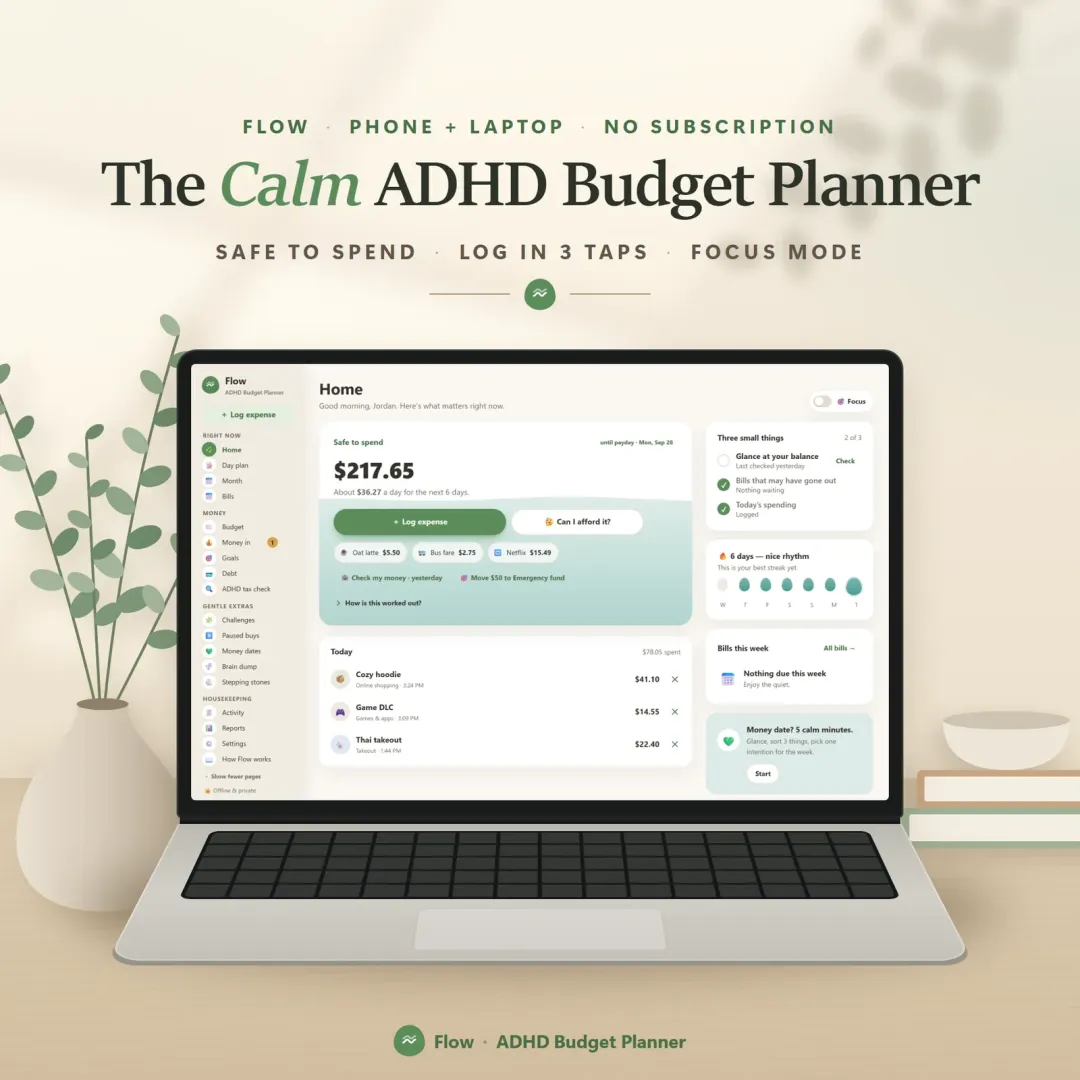
Flow ADHD budget planner showing a calm Safe to Spend screen Live
Flow app icon

Flow

ADHD Budget Planner

A calm budget planner designed for ADHD brains — one Safe to Spend number, 3-tap logging, focus mode and kind overspend fixes instead of red warnings.

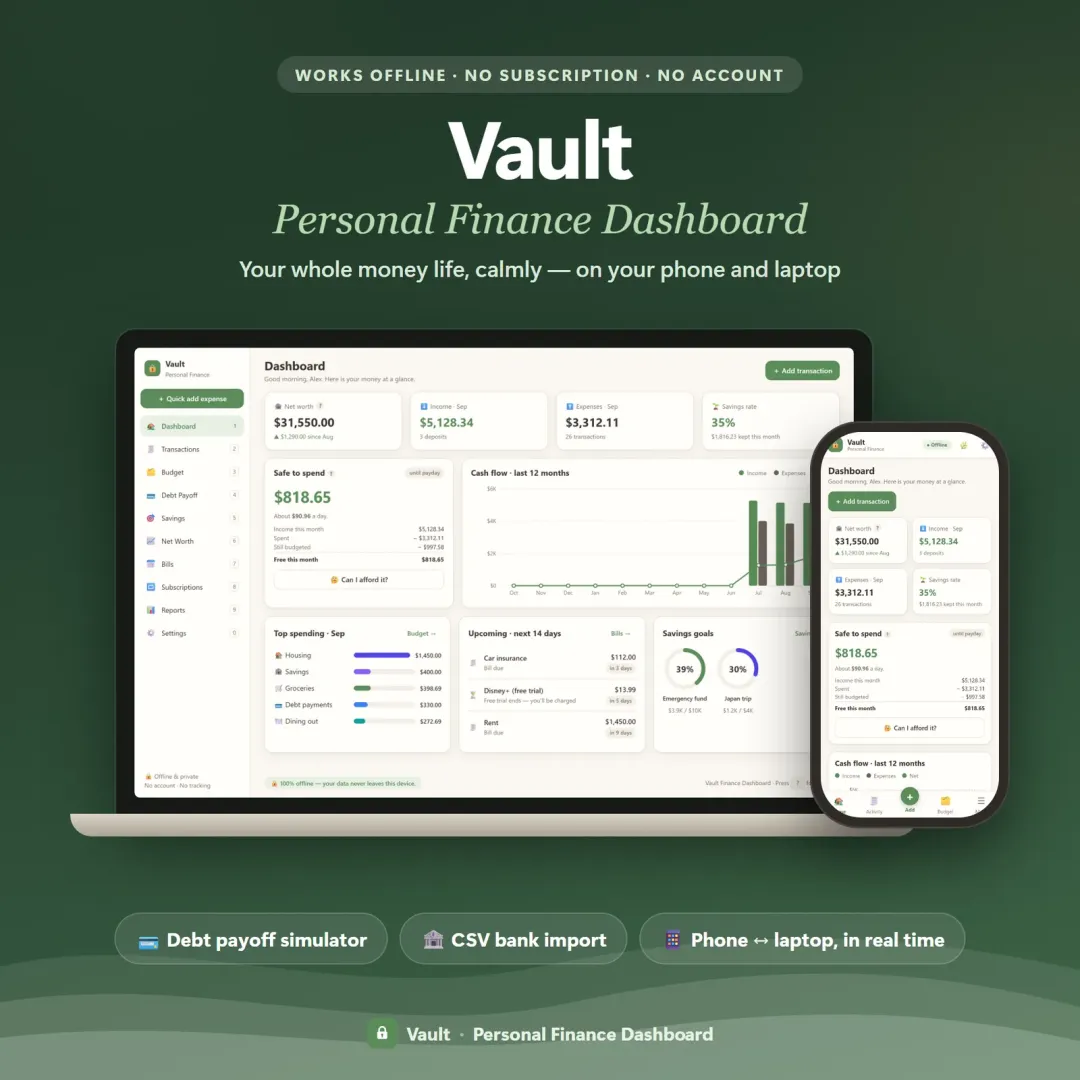
Vault personal finance dashboard shown on a laptop and a phone, with the safe-to-spend number and cash-flow charts Live
Vault app icon

Vault

Personal Finance Dashboard

Your whole money picture on one private dashboard — safe-to-spend, budgets, bills, goals, debt payoff and net worth, on your phone and laptop.

Keep planning

Related calculators

All calculators

Further reading

Guides on this topic

All articles
What Is a Safe-to-Spend Number (and How Do You Calculate It)?

Personal Finance

What Is a Safe-to-Spend Number (and How Do You Calculate It)?

Your bank balance isn't what you can spend. A safe-to-spend number subtracts bills, savings and planned spending first — here's the formula, worked examples for monthly, weekly and irregular pay, and the mistakes to avoid.

11 min read
How to Track Subscriptions and Stop Paying for Ones You Forgot

Personal Finance

How to Track Subscriptions and Stop Paying for Ones You Forgot

Subscriptions are designed to be forgotten. A simple four-step audit — find, convert to yearly cost, decide, and set reminders — puts every recurring charge back under your control. Includes a worked audit and a cancellation checklist.

10 min read

Try Pulse free in your browser

Every bill and subscription in one calm place — a 30-day horizon of due dates, free-trial countdowns and a simulator that shows what cancelling would save. The live demo uses sample data — nothing to install, no sign-up.

We use optional cookies for anonymous analytics. Nothing optional is set until you choose. Cookie policy