
VaultlyApps logo VaultlyApps

Free calculator

How Much Car Can I Afford? Car Affordability Calculator

Enter your income, insurance and running costs, down payment and loan terms. See the most car you can comfortably afford, the monthly payment, the loan amount and how longer loans change the price and the interest you pay.

By Updated Private — runs in your browser Free, no sign-up Save, print, PDF & CSV — with a QR code to reopen it

Spend on the car (all costs)

Car price you can afford


Monthly payment


All car costs


Insurance and running costs already use up this budget. Raise the share of income, lower those costs or save a bigger down payment.

Same payment, longer loans
TermCar priceInterest paid

The 20/4/10 rule: at least 20% down, a loan of no more than 4 years, and total car costs under 10% of gross income. Longer loans let you buy more car, but cost more interest and can leave you owing more than the car is worth.

For readers in the United States. Estimates for planning only — not financial, investment, tax or legal advice. Disclaimer · How we check our numbers

Vault app icon

Want these numbers to update by themselves?

Vault — Personal Finance Dashboard — keeps this plan current as you log real payments. Try the free demo, no sign-up.

How to use the car affordability calculator

  1. Enter your gross income per year.
  2. Choose how much of your income all car costs can take: 10% (the 20/4/10 rule), 15% or 20% at most.
  3. Enter insurance and gas & maintenance per month.
  4. Add your down payment, trade-in value, the APR, the loan term and your sales tax.

The 20/4/10 rule

  • 20% down so you don't owe more than the car is worth on day one.
  • 4 years (48 months) at most, so you pay less interest and own the car sooner.
  • 10% of gross income for all car costs, so the car doesn't crowd out saving.

It's a conservative rule. Many people stretch to 15% of income, which the calculator lets you test, but more than that usually means less saving and more stress.

How the loan term changes the price

Same $313 payment and $5,000 down at 7.5%:

Term Car price Interest paid
36 months about $14,200 about $1,200
48 months about $16,900 about $2,100
60 months about $19,500 about $3,200
72 months about $21,800 about $4,400

Longer loans let you buy more car with the same payment, but you pay much more interest and stay underwater longer. If you need 72 months to afford a car, it's usually a sign to look at a cheaper one.

The hidden costs of a car

  • Insurance: can vary by hundreds a month between models and drivers.
  • Gas or charging, maintenance and tires.
  • Registration and taxes, often yearly.
  • Depreciation: the value you lose every year you own it.

Total cost of ownership matters more than the sticker price or the payment.

Before you buy

  • Get pre-approved for a loan at your bank or credit union.
  • Negotiate the price, not the monthly payment.
  • Check your budget: put the full car cost into the monthly budget calculator.
  • Watch your debt-to-income ratio: a big car payment can reduce how much house you can borrow later; see the debt-to-income calculator.
  • Compare loan offers with the personal loan calculator, which shows the real APR including fees.

Keep the car from wrecking the budget

Vault is a personal finance dashboard with a "can I afford it" check that tests a purchase against your bills, savings goals and safe-to-spend money. If you already have a car loan you'd like gone sooner, Zero turns your debts into a payoff plan with a debt-free date. Both have a free demo with sample data.

An estimate. Rates, insurance and prices vary; this isn't a loan offer.

Frequently asked questions

How much car can I afford on $70,000 a year?

Using the 20/4/10 rule — total car costs under 10% of gross income — about $583 a month. With $150 insurance and $120 of gas and maintenance, that leaves about $313 for the payment: roughly a $16,900 car with $5,000 down on a 48-month loan at 7.5%.

What is the 20/4/10 rule for buying a car?

Put at least 20% down, finance for no more than 4 years, and keep total car costs — payment, insurance, gas and maintenance — under 10% of your gross income. It's conservative on purpose, so the car doesn't crowd out saving.

Is a 72-month car loan a bad idea?

It lowers the payment but raises the interest and makes it likely you'll owe more than the car is worth for years. In the example, stretching from 48 to 72 months lets you buy about $4,900 more car but more than doubles the interest.

Should I include insurance and gas?

Yes. A cheaper car with low insurance can cost less every month than a newer one with a lower payment. Get an insurance quote before you buy, especially for young drivers or sporty models.

New or used?

A new car loses a large share of its value in the first few years. A reliable two- to four-year-old used car often gives the best value, while new cars may come with lower promotional APRs. Compare the total cost, not just the payment.

What APR should I expect on a car loan?

It depends on your credit score, the lender and whether the car is new or used. Get pre-approved by a bank or credit union before you visit the dealer so you have a rate to compare.

Written by

Emma Whitfield

Finance Specialist & Editor, VaultlyApps

Emma Whitfield writes and edits the VaultlyApps money guides and free calculators. Her focus is US household finance — budgeting on a real paycheck, paying down credit card and student debt, emergency funds and savings goals, renting — and the money side of freelancing and small-business income, from pricing and profit margins to self-employment tax. Every guide is researched against primary sources such as IRS publications and the CFPB, every number is checked in our tested calculators, and tax content is reviewed each year when new IRS figures come out. Emma is not a licensed financial adviser or tax preparer; her work is general education, not personal advice.

Researched against primary US sources, checked against independent calculators and reviewed by a finance expert on our team. Written for US readers — general education, not financial, tax or legal advice. Editorial policy · Disclaimer
From VaultlyApps

Apps that do this for you

Each one has a free live demo with sample data — open it in your browser, nothing to install.

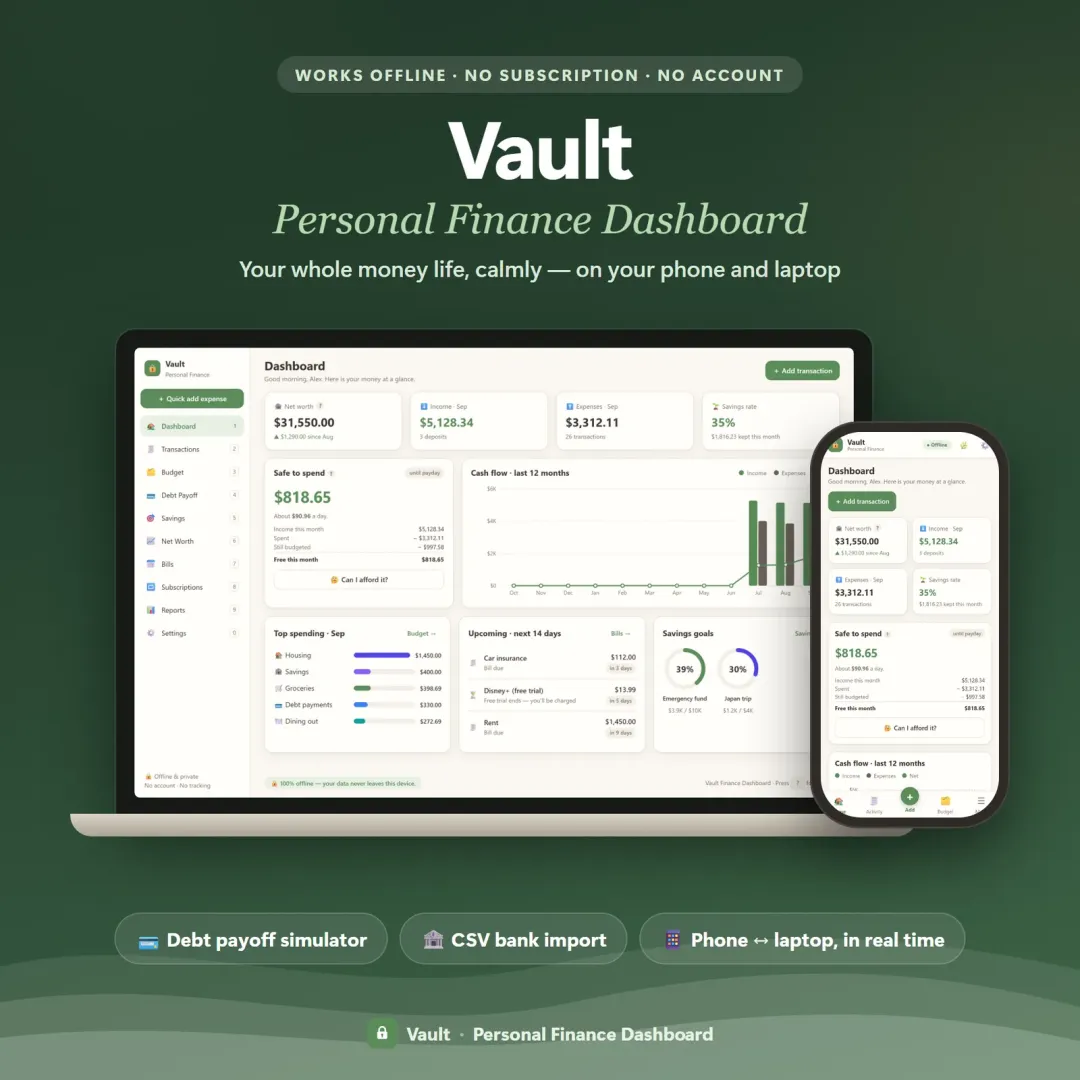
Vault personal finance dashboard shown on a laptop and a phone, with the safe-to-spend number and cash-flow charts Live
Vault app icon

Vault

Personal Finance Dashboard

Your whole money picture on one private dashboard — safe-to-spend, budgets, bills, goals, debt payoff and net worth, on your phone and laptop.

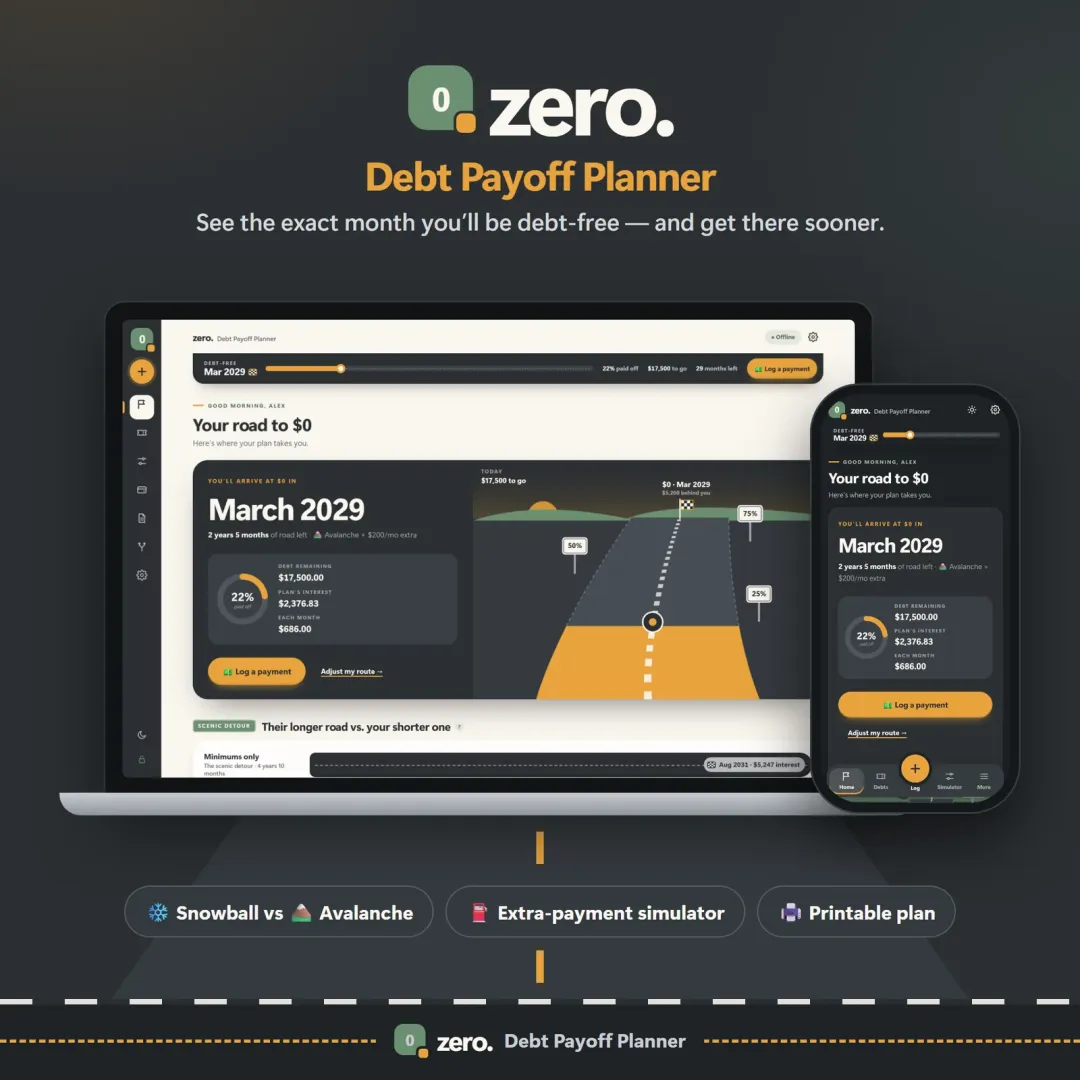
Zero debt payoff planner with a road leading to a $0 finish flag and the projected debt-free date Live
Zero app icon

Zero

Debt Payoff Planner

See your debt-free date, compare the snowball and avalanche methods side by side, and watch extra payments pull the finish line closer.

Keep planning

Related calculators

All calculators

Further reading

Guides on this topic

All articles
What Is a Safe-to-Spend Number (and How Do You Calculate It)?

Personal Finance

What Is a Safe-to-Spend Number (and How Do You Calculate It)?

Your bank balance isn't what you can spend. A safe-to-spend number subtracts bills, savings and planned spending first — here's the formula, worked examples for monthly, weekly and irregular pay, and the mistakes to avoid.

11 min read
Debt Snowball vs Debt Avalanche: Which Pays Off Debt Faster?

Personal Finance

Debt Snowball vs Debt Avalanche: Which Pays Off Debt Faster?

The snowball method pays the smallest balance first; the avalanche method pays the highest interest rate first. Here's how they compare on the same debts, with real numbers — plus the hybrid method and how to choose.

11 min read

Try Vault free in your browser

Your whole money picture on one private dashboard — safe-to-spend, budgets, bills, goals, debt payoff and net worth, on your phone and laptop. The live demo uses sample data — nothing to install, no sign-up.

We use optional cookies for anonymous analytics. Nothing optional is set until you choose. Cookie policy