
VaultlyApps logo VaultlyApps

Free calculator

Lease vs Buy Car Calculator: Which Costs Less?

Enter the car price, your loan terms and the lease offer. See what leasing costs over the lease term, what buying really costs once you count the car's value and the loan balance, and which one leaves you better off.

By Updated Private — runs in your browser Free, no sign-up Save, print, PDF & CSV — with a QR code to reopen it
Buy with a loan
Lease

Disposition, extra miles, wear.

15–20% a year is typical for the first years.

Cheaper over the lease term


Cost of leasing


Cost of buying


Loan payment


Your equity at the end


Buying usually wins if you keep the car for years after the loan is paid off; leasing can win if you want a new car every 3 years and drive within the mileage limit. Insurance and maintenance are left out because they’re similar either way.

For readers in the United States. Estimates for planning only — not financial, investment, tax or legal advice. Disclaimer · How we check our numbers

Vault app icon

Want these numbers to update by themselves?

Vault — Personal Finance Dashboard — keeps this plan current as you log real payments. Try the free demo, no sign-up.

How to use the lease vs buy calculator

  1. Enter the car price and sales tax.
  2. Under Buy, enter your down payment, the loan APR and the number of months.
  3. Under Lease, enter the monthly payment, the amount due at signing, the lease length and expected fees at the end.
  4. Set how much value the car loses each year.

The calculator compares both over the lease term: the lease cost, and the cost of buying after subtracting what you'd own (the car's value minus the loan balance).

The example in detail

Lease Buy
Up front $3,000 due at signing $3,000 down
Monthly $420 × 36 $667.21 × 36 (60-month loan)
End $400 fees Car worth about $21,500, loan left about $15,000
Cost over 36 months $18,520 $20,503

Leasing looks cheaper here, but at the end of the lease you have nothing, while the buyer owns about $6,500 of equity and keeps driving. If the buyer keeps the car another 3–5 years after the loan is paid off, buying usually ends up far cheaper.

When leasing makes sense

  • You want a new car every 2–3 years with warranty coverage.
  • You drive within the mileage limit (often 10,000–12,000 miles a year).
  • You want a lower monthly payment and accept never owning the car.
  • You use the car for a business where lease payments may be partly deductible.

When buying makes sense

  • You keep cars 5+ years.
  • You drive a lot of miles.
  • You want to customize the car or not worry about wear.
  • You want no payment at all once the loan is paid off.

Before you sign either

  • Know the price, not just the payment. Negotiate the car's price (the "capitalized cost" in a lease) first.
  • Compare the lease's money factor (× 2,400 ≈ APR) with your loan APR.
  • Check the mileage limit and per-mile charge.
  • Make sure the payment fits: the how much car can I afford calculator uses the 20/4/10 rule. For a loan offer with fees, see the real APR with the personal loan calculator.

Keep the car payment in check

Vault is a personal finance dashboard with a "can I afford it" check that tests a new payment against your bills and goals. If you finance, Zero puts the car loan into a payoff plan with a debt-free date. Both have a free demo with sample data.

An estimate. Car values, interest and lease terms vary; read the contract before you sign.

Frequently asked questions

Is it better to lease or buy a car?

Buying usually costs less over time if you keep the car several years after the loan is paid off. Leasing can cost less over a short period, gives lower payments and a new car every few years, but you never own anything and must stay within mileage limits.

How do you compare a lease with a loan?

Compare the cost over the same period. For the lease: due at signing + all monthly payments + end-of-lease fees. For buying: down payment + loan payments made − (what the car is worth − what you still owe). The calculator does both.

Why is a lease payment lower than a loan payment?

A lease only pays for the car's expected loss in value during the lease, plus interest (the money factor) and fees, not the whole price.

What extra costs come with a lease?

Due at signing (first payment, fees, sometimes a down payment), a disposition fee at the end, charges for miles over the limit (often $0.15–$0.25 a mile) and excess wear.

Can I buy my leased car at the end?

Usually yes, at the residual value in the lease contract. That can be a good deal if the car is worth more than the residual.

Does leasing make sense for a business?

Sometimes. Business use may make part of the lease payment deductible. Ask a tax professional how it applies to you.

Written by

Emma Whitfield

Finance Specialist & Editor, VaultlyApps

Emma Whitfield writes and edits the VaultlyApps money guides and free calculators. Her focus is US household finance — budgeting on a real paycheck, paying down credit card and student debt, emergency funds and savings goals, renting — and the money side of freelancing and small-business income, from pricing and profit margins to self-employment tax. Every guide is researched against primary sources such as IRS publications and the CFPB, every number is checked in our tested calculators, and tax content is reviewed each year when new IRS figures come out. Emma is not a licensed financial adviser or tax preparer; her work is general education, not personal advice.

Researched against primary US sources, checked against independent calculators and reviewed by a finance expert on our team. Written for US readers — general education, not financial, tax or legal advice. Editorial policy · Disclaimer
From VaultlyApps

Apps that do this for you

Each one has a free live demo with sample data — open it in your browser, nothing to install.

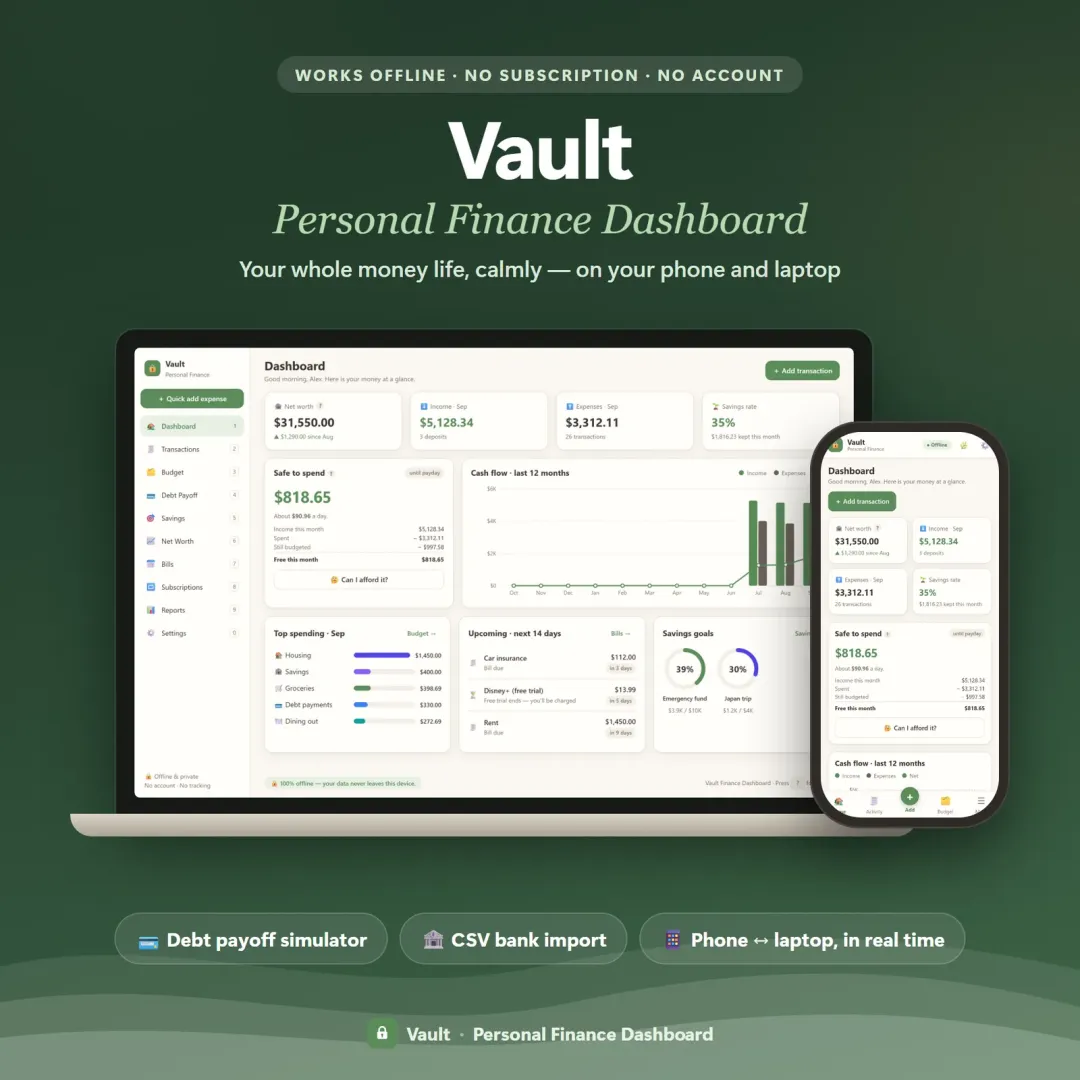
Vault personal finance dashboard shown on a laptop and a phone, with the safe-to-spend number and cash-flow charts Live
Vault app icon

Vault

Personal Finance Dashboard

Your whole money picture on one private dashboard — safe-to-spend, budgets, bills, goals, debt payoff and net worth, on your phone and laptop.

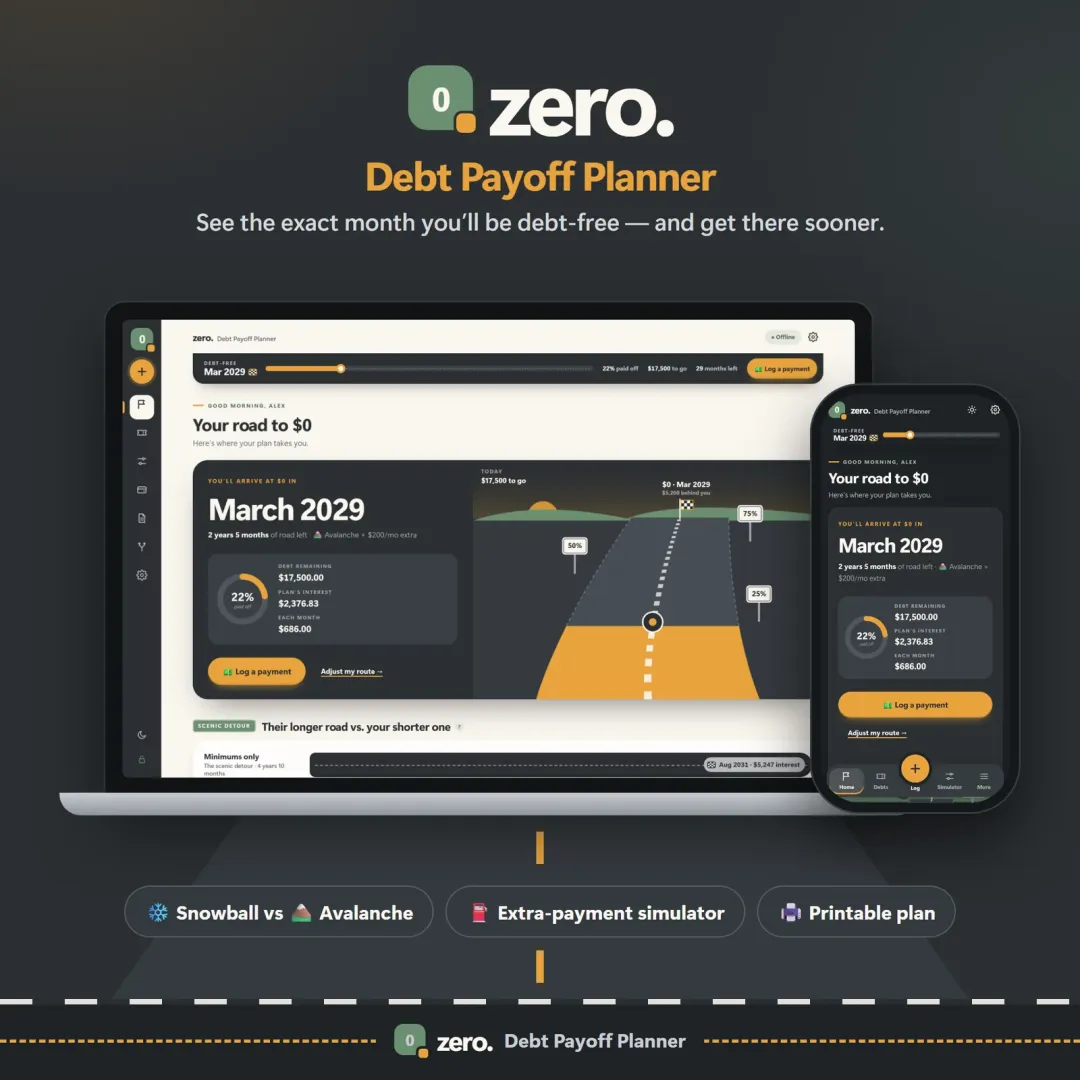
Zero debt payoff planner with a road leading to a $0 finish flag and the projected debt-free date Live
Zero app icon

Zero

Debt Payoff Planner

See your debt-free date, compare the snowball and avalanche methods side by side, and watch extra payments pull the finish line closer.

Keep planning

Related calculators

All calculators

Further reading

Guides on this topic

All articles
What Is a Safe-to-Spend Number (and How Do You Calculate It)?

Personal Finance

What Is a Safe-to-Spend Number (and How Do You Calculate It)?

Your bank balance isn't what you can spend. A safe-to-spend number subtracts bills, savings and planned spending first — here's the formula, worked examples for monthly, weekly and irregular pay, and the mistakes to avoid.

11 min read
Debt Snowball vs Debt Avalanche: Which Pays Off Debt Faster?

Personal Finance

Debt Snowball vs Debt Avalanche: Which Pays Off Debt Faster?

The snowball method pays the smallest balance first; the avalanche method pays the highest interest rate first. Here's how they compare on the same debts, with real numbers — plus the hybrid method and how to choose.

11 min read

Try Vault free in your browser

Your whole money picture on one private dashboard — safe-to-spend, budgets, bills, goals, debt payoff and net worth, on your phone and laptop. The live demo uses sample data — nothing to install, no sign-up.

We use optional cookies for anonymous analytics. Nothing optional is set until you choose. Cookie policy