
VaultlyApps logo VaultlyApps

Free calculator

Bonus Tax Calculator: How Much of Your Bonus You'll Take Home

Enter your bonus and salary to see how much is withheld and what lands in your account. Compare the 22% flat method with a bonus added to a regular paycheck, and see the federal tax you'll really owe on the bonus, so you know whether to expect a refund or a bill.

By Updated Private — runs in your browser Free, no sign-up Save, print, PDF & CSV — with a QR code to reopen it

Without the bonus.

How your employer withholds

Many states have a flat bonus rate.

Lowers federal and state tax.

Your bonus take-home


Federal withheld


Tax you really owe


About more than you owe is withheld; you should get it back when you file. About less than you owe is withheld; set it aside for tax time.

Where the bonus goes
Bonus
Take-home
The two withholding methods

2026 federal rules: bonuses are withheld at a flat 22% (37% above $1 million), or with the aggregate method as if the paycheck were your normal pay all year. Social Security stops at the $184,500 wage base. Your real tax is settled on your return.

For readers in the United States. Estimates for planning only — not financial, investment, tax or legal advice. Uses 2026 federal figures; state and local rules vary. Disclaimer · How we check our numbers

Flow app icon

Want these numbers to update by themselves?

Flow — ADHD Budget Planner — keeps this plan current as you log real payments. Try the free demo, no sign-up.

How to use the bonus tax calculator

  1. Enter your bonus and your yearly salary without the bonus.
  2. Choose how your employer pays it: as a separate check (22% flat withholding) or added to a regular paycheck (aggregate method). Ask payroll if you're not sure; separate bonus checks almost always use 22%.
  3. Pick your filing status, pay frequency, your state's tax rate on bonuses, and any 401(k) percentage taken from the bonus.

How bonuses are taxed in 2026

Item Rate
Federal withholding (flat method) 22% (37% above $1 million)
Social Security 6.2% up to the $184,500 wage base
Medicare 1.45% (+0.9% on wages above $200,000)
State Your state's bonus or income tax rate

Withholding is only a prepayment. When you file, the bonus is added to your other income and taxed at your normal brackets.

Bonus take-home examples

Single filer, 4% state tax, flat 22% method:

Bonus Salary Take-home Federal tax really owed
$1,000 $50,000 $663.50 $120 (refund of about $100)
$5,000 $70,000 $3,317.50 $1,100 (about even)
$10,000 $70,000 $6,635.00 $2,200 (about even)
$20,000 $120,000 $13,270.00 $4,764 (owe about $364)

Someone in the 12% bracket gets money back; someone in the 24% bracket or higher owes a little at tax time. The calculator shows which one applies to you.

Flat 22% vs the aggregate method

With the aggregate method, payroll adds the bonus to your regular paycheck and withholds as if you earned that much every pay period. For a $5,000 bonus on a $70,000 salary paid every two weeks, that's about $1,160 of federal withholding instead of $1,100. Paid monthly, about $1,114. Either way, the extra comes back on your tax return; it's not extra tax.

Ways to keep more of your bonus

  • Defer it to your 401(k). Many plans let you set a separate percentage for bonuses. Up to the 2026 limit of $24,500, every dollar deferred skips federal income tax now. See the growth with the 401(k) calculator.
  • Fund an HSA or a Roth IRA. An HSA lowers tax; a Roth grows tax-free. Our guide to Roth IRA vs 401(k) explains which first.
  • Adjust your W-4 if a big bonus will push withholding far from what you owe.

Spend your bonus on purpose

Decide before it arrives. A common split is half to goals (emergency fund, debt, retirement) and half to enjoy. If you don't have three months of expenses saved, start there; see how much emergency fund you need. For a raise rather than a one-time bonus, the pay raise calculator shows the change per paycheck, and the take-home pay calculator shows a normal paycheck.

Give every bonus dollar a job

Vault keeps your income, savings goals, debt and bills on one dashboard, so a bonus goes where it matters. Flow plans each paycheck and shows what's safe to spend. Both have a free demo with sample data.

2026 federal estimate; not tax advice.

Frequently asked questions

How much tax is taken out of a bonus?

Federal income tax is usually withheld at a flat 22% (37% on bonus amounts above $1 million in a year), plus 6.2% Social Security, 1.45% Medicare and your state tax. On a $5,000 bonus with a 4% state rate, about $1,682 is withheld and you take home $3,317.50.

Are bonuses taxed more than regular pay?

No. Bonuses are often withheld at a higher rate, but they're taxed as ordinary income at your normal brackets when you file. If 22% is more than your top bracket, you get the difference back as a refund.

What is the aggregate method?

When the bonus is paid together with a regular paycheck, the employer calculates withholding as if that whole paycheck were your normal pay every pay period. That pushes it into a higher bracket for that one paycheck, so withholding can look high; it evens out on your tax return.

How can I pay less tax on my bonus?

Put part of it into your 401(k) or HSA if your plan allows bonus deferrals: that lowers federal and most state income tax. Social Security and Medicare still apply.

Will I get a refund on my bonus tax?

If your top federal bracket is 10% or 12%, the flat 22% withholding takes too much and you'll likely get some back. With a $50,000 salary, a $1,000 bonus has $220 withheld but owes about $120 federal tax.

Do states tax bonuses differently?

Many states have a flat supplemental rate for bonuses, often between 4% and 10%; nine states have no income tax on wages. Enter your state's bonus rate in the calculator.

Written by

Emma Whitfield

Finance Specialist & Editor, VaultlyApps

Emma Whitfield writes and edits the VaultlyApps money guides and free calculators. Her focus is US household finance — budgeting on a real paycheck, paying down credit card and student debt, emergency funds and savings goals, renting — and the money side of freelancing and small-business income, from pricing and profit margins to self-employment tax. Every guide is researched against primary sources such as IRS publications and the CFPB, every number is checked in our tested calculators, and tax content is reviewed each year when new IRS figures come out. Emma is not a licensed financial adviser or tax preparer; her work is general education, not personal advice.

Researched against primary US sources, checked against independent calculators and reviewed by a finance expert on our team. Written for US readers — general education, not financial, tax or legal advice. Editorial policy · Disclaimer
From VaultlyApps

Apps that do this for you

Each one has a free live demo with sample data — open it in your browser, nothing to install.

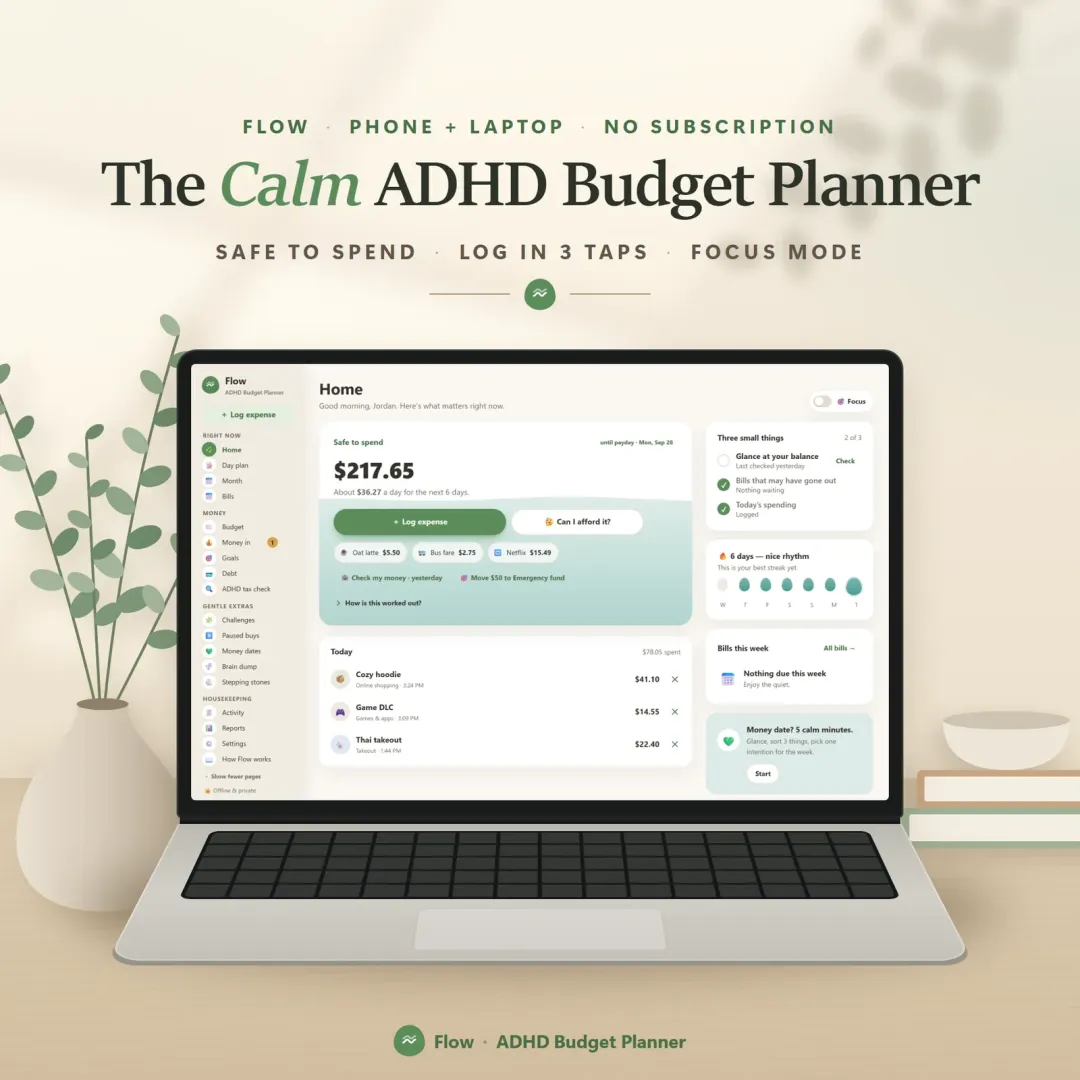
Flow ADHD budget planner showing a calm Safe to Spend screen Live
Flow app icon

Flow

ADHD Budget Planner

A calm budget planner designed for ADHD brains — one Safe to Spend number, 3-tap logging, focus mode and kind overspend fixes instead of red warnings.

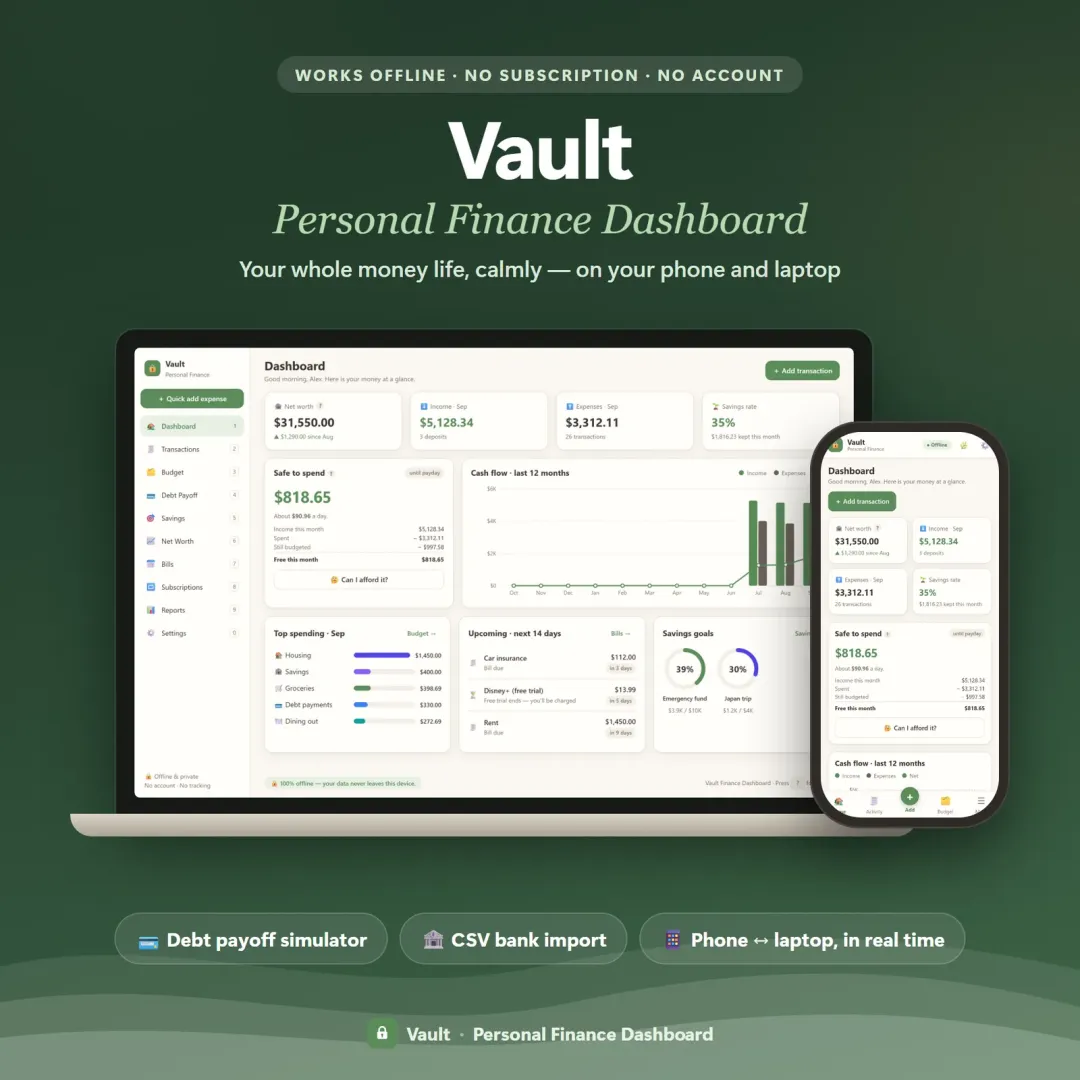
Vault personal finance dashboard shown on a laptop and a phone, with the safe-to-spend number and cash-flow charts Live
Vault app icon

Vault

Personal Finance Dashboard

Your whole money picture on one private dashboard — safe-to-spend, budgets, bills, goals, debt payoff and net worth, on your phone and laptop.

Keep planning

Related calculators

All calculators

Take-Home Pay Calculator

Your paycheck after federal tax, FICA, state tax, 401(k) and benefits — 2026 estimate.

Open calculator

Pay Raise Calculator

New salary, extra take-home per paycheck and your real raise after inflation.

Open calculator

Further reading

Guides on this topic

All articles
What Is a Safe-to-Spend Number (and How Do You Calculate It)?

Personal Finance

What Is a Safe-to-Spend Number (and How Do You Calculate It)?

Your bank balance isn't what you can spend. A safe-to-spend number subtracts bills, savings and planned spending first — here's the formula, worked examples for monthly, weekly and irregular pay, and the mistakes to avoid.

11 min read
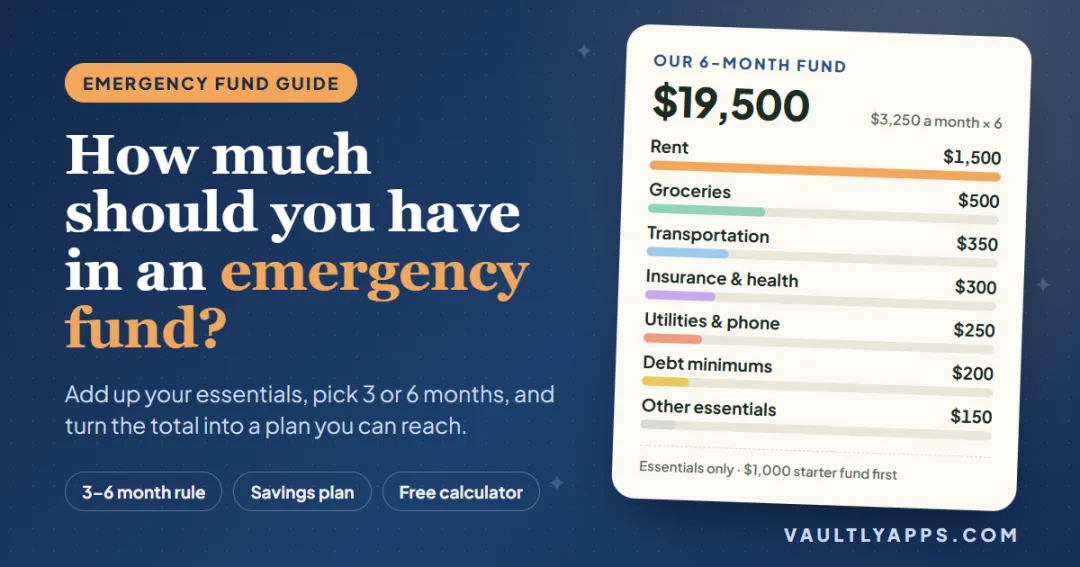
How much should you have in an emergency fund — a $19,500 six-month fund built from $3,250 of monthly essentials

Personal Finance

How Much Should You Have in an Emergency Fund?

How much emergency savings you really need, worked out step by step: add up your essentials, choose three, six or more months, and turn the total into a monthly plan you can actually reach.

7 min read
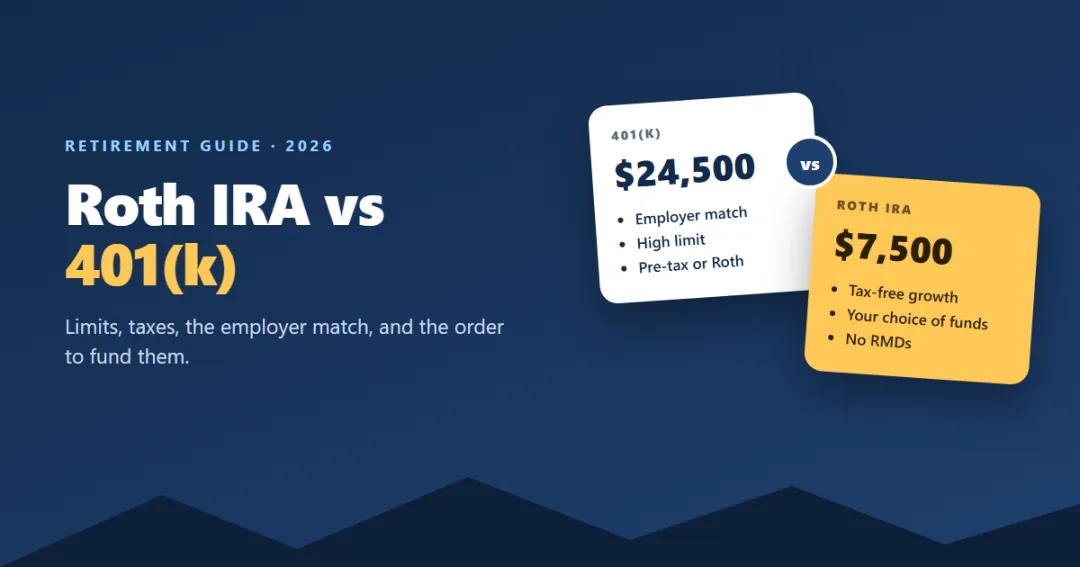
Roth IRA vs 401(k) — two paths up a mountain to retirement, one with an employer match and one tax-free

Personal Finance

Roth IRA vs 401(k): Which Should You Fund First in 2026?

A 401(k) has higher limits and often a free employer match; a Roth IRA gives tax-free growth and more control. Here's how they compare in 2026 — limits, taxes, access and fees — with the math on Roth vs traditional, and a simple order for where each retirement dollar should go.

8 min read

Try Flow free in your browser

A calm budget planner designed for ADHD brains — one Safe to Spend number, 3-tap logging, focus mode and kind overspend fixes instead of red warnings. The live demo uses sample data — nothing to install, no sign-up.

We use optional cookies for anonymous analytics. Nothing optional is set until you choose. Cookie policy