Fixed vs Variable Expenses: Examples, Budget Categories and How to Track Them
The difference between fixed and variable expenses, 40+ examples of each, where irregular and discretionary costs fit, a full budget categories list, and how to budget and track every kind of expense.

In this article
- Fixed vs variable expenses at a glance
- What are fixed expenses?
- Fixed expense examples
- What are variable expenses?
- Variable expense examples
- Two more types: irregular and discretionary expenses
- Irregular (periodic) expenses
- Discretionary expenses
- Fixed, variable and the 50/30/20 rule
- Budget categories list
- How to track your expenses
- 1. Pull the last 2 to 3 months of statements
- 2. Separate fixed, variable and irregular
- 3. Choose how to track going forward
- 4. Log as you go, review weekly
- 5. Watch your subscriptions
- How to budget fixed and variable expenses
- Fixed expenses: plan the exact amount, by due date
- Variable expenses: average plus a cushion
- Irregular expenses: monthly sinking funds
- How to lower fixed and variable expenses
- Why the split matters
- Track every expense in a simple budget app
Every budget starts with one question: where does the money go? The fastest way to answer it is to split your costs into fixed expenses and variable expenses. Fixed costs are predictable and hard to change quickly. Variable costs move around every month, and that's where you can make changes today.
This guide explains fixed vs variable expenses with more than 40 examples, shows where irregular and discretionary costs fit, gives you a complete budget categories list, and walks through how to budget and track your expenses so the numbers stay real.
Fixed vs variable expenses at a glance
| Fixed expenses | Variable expenses | |
|---|---|---|
| Amount | The same every time | Changes month to month |
| Timing | Usually a set due date | Spread through the month |
| Examples | Rent, insurance, car payment, subscriptions | Groceries, gas, utilities, eating out |
| Easy to predict? | Yes | Roughly, using an average |
| Easy to cut quickly? | No: contracts, leases, loans | Yes: often this month |
| How to budget | Use the exact amount | Use a 3-month average plus a cushion |
Both kinds can be needs (rent, groceries) or wants (a streaming subscription, eating out). "Fixed vs variable" describes how the amount behaves; "needs vs wants" describes how essential it is. A good budget uses both labels.
What are fixed expenses?
A fixed expense costs the same amount every time you pay it, usually on a schedule. You can predict it to the dollar, which makes it easy to plan. The downside: fixed costs are usually locked in by a lease, a loan or a contract, so you can't cut them overnight.
Fixed expense examples
- Rent or mortgage payment
- HOA fees
- Renters or homeowners insurance
- Car insurance
- Health, dental and vision insurance premiums
- Life insurance
- Car loan or lease payment
- Student loan payment (on a standard plan)
- Personal loan payment
- Minimum credit card payments (these change a little with the balance, but most people treat them as fixed)
- Phone plan
- Internet
- Streaming services and other subscriptions
- Gym membership
- Childcare or tuition
- Child support or alimony
- Retirement contributions and automatic savings transfers
- Storage unit
- Property tax (when paid monthly through escrow)
Retirement contributions and automatic transfers to savings are worth listing as fixed expenses even though they're not "spending". Treating them like a bill is the core of the pay yourself first approach.
What are variable expenses?
A variable expense changes from month to month, depending on how much you use, the season or your choices. You can't predict it exactly, but you can estimate it from the last few months, and you have much more control over it.
Variable expense examples
- Groceries
- Gas and EV charging
- Public transit and rideshares
- Electricity
- Natural gas or heating oil
- Water and sewer
- Eating out, takeout and coffee
- Household supplies
- Toiletries and personal care
- Haircuts
- Clothing and shoes
- Medical copays and prescriptions
- Pet food and vet visits
- Entertainment and going out
- Hobbies
- Gifts
- Travel
- Home and car repairs
- Kids' activities
- Online shopping
Groceries are the biggest variable cost for most households. Our grocery budget calculator estimates a realistic amount for your household, and how to save money on groceries has ways to bring it down.
Two more types: irregular and discretionary expenses
Irregular (periodic) expenses
Irregular expenses are costs that don't come every month but are completely predictable: you know they're coming, you just forget about them until the bill arrives. They cause more budget surprises than anything else.
- Car registration and inspection
- Car insurance paid every six months
- Annual subscriptions and memberships (Amazon Prime, Costco, software)
- Holiday gifts and birthdays
- Back-to-school shopping
- Annual checkups and dental cleanings
- Tax preparation
- Home maintenance (gutters, HVAC service)
- Vacations
The fix is simple: add up the yearly cost and divide by 12. Set that amount aside every month in a sinking fund, and the bill is already covered when it arrives. Our sinking funds guide shows how, and the holiday budget guide applies it to the most expensive month of the year.
Discretionary expenses
Discretionary expenses are costs you choose: eating out, entertainment, shopping, hobbies, travel and most subscriptions. They can be fixed (a $15 streaming plan) or variable (takeout). When money is tight, discretionary costs are the first place to look, and they're also what makes a budget livable, so don't cut them to zero.
Fixed, variable and the 50/30/20 rule
The 50/30/20 rule splits take-home pay into 50% needs, 30% wants and 20% savings and extra debt payments. Here's how the two systems overlap:
| Needs (50%) | Wants (30%) | |
|---|---|---|
| Fixed | Rent, insurance, car payment, minimum debt payments | Streaming, gym, phone upgrade plan |
| Variable | Groceries, gas, utilities, medical | Eating out, shopping, entertainment, travel |
If fixed needs alone take more than 50% of your take-home pay, your budget will feel tight every month no matter how careful you are with variable costs. That's a signal to look at the big fixed lines (housing, car, insurance) over the next year. Test your split with the 50/30/20 budget calculator.
Budget categories list
Use this budget categories list as a starting point. Most people need 15 to 20 lines, not all of these; merge the small ones.
| Category | Typical lines | Usually |
|---|---|---|
| Housing | Rent or mortgage, HOA, property tax, renters or home insurance, repairs | Fixed |
| Utilities | Electric, gas, water, trash, internet, phone | Variable (phone and internet fixed) |
| Food | Groceries, eating out, coffee, work lunches | Variable |
| Transportation | Car payment, car insurance, gas, transit, parking, maintenance, registration | Mixed |
| Insurance & health | Health premiums, copays, prescriptions, dental, vision, life insurance | Mixed |
| Debt | Credit cards, student loans, personal loans, medical bills | Fixed minimums |
| Savings | Emergency fund, retirement, sinking funds, goals | Fixed (if automatic) |
| Personal | Toiletries, haircuts, clothing, gym | Variable |
| Household | Cleaning supplies, furniture, small appliances | Variable |
| Kids | Childcare, school costs, activities, allowance | Mixed |
| Pets | Food, vet, insurance, grooming | Variable |
| Subscriptions | Streaming, apps, memberships, cloud storage | Fixed |
| Fun | Entertainment, hobbies, going out | Variable |
| Giving | Gifts, holidays, donations | Irregular |
| Travel | Trips, holidays away | Irregular |
According to the U.S. Bureau of Labor Statistics' Consumer Expenditure Survey, housing is by far the largest share of the average household's spending (roughly a third), followed by transportation and food. Those three categories are where the biggest savings usually are.
How to track your expenses
You can't budget variable expenses until you know what they really are. Here's how to track expenses without it becoming a second job.
1. Pull the last 2 to 3 months of statements
Download your bank and credit card statements. Go through them once and put every transaction into a category from the list above. It's tedious the first time, but it shows exactly where the money goes.
2. Separate fixed, variable and irregular
Mark each category fixed, variable or irregular. For fixed costs, note the amount and due date. For variable costs, take the average of the months you pulled. For irregular costs, add up a full year and divide by 12. The free expense calculator does the weekly, quarterly and yearly conversions for you and shows your fixed vs variable split.
3. Choose how to track going forward
- Pen and paper: a spending log in a notebook. Slow, but you notice every purchase.
- Spreadsheet: once a week, copy transactions from your bank. Good for detail, easy to fall behind.
- Budget app: log each spend as it happens. The fastest option if logging takes two taps.
4. Log as you go, review weekly
The habit that matters most is logging spending within a day, then a 10-minute check once a week: which variable lines are running ahead, which bills are still to come, and whether anything irregular is due next month.

5. Watch your subscriptions
Subscriptions are fixed expenses that are easy to forget: a free trial that turned paid, an app you stopped using. Add them up with the subscription cost calculator, and see how to track subscriptions for a simple monthly check.
How to budget fixed and variable expenses
Fixed expenses: plan the exact amount, by due date
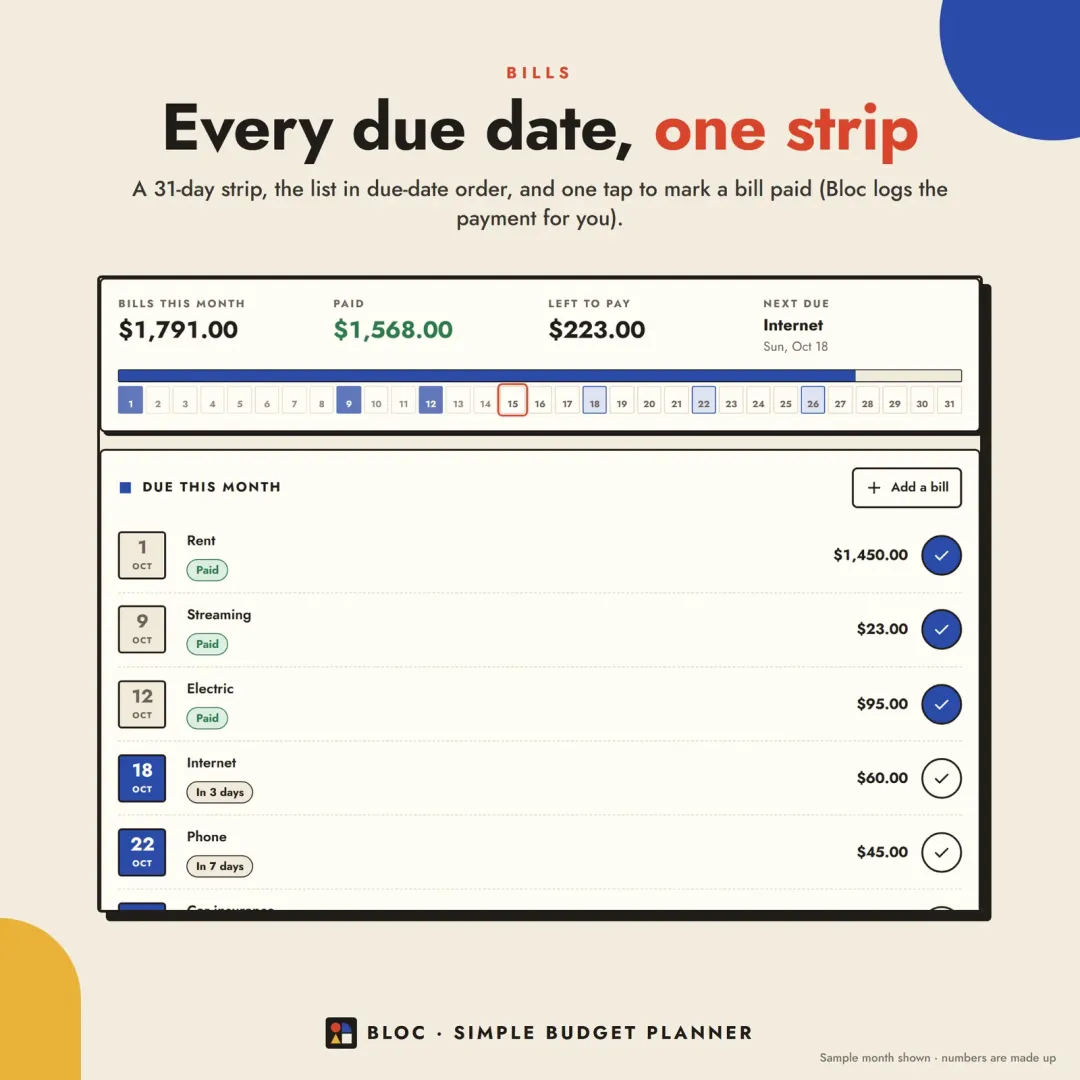
Put each fixed bill in your budget with its exact amount and due day. Knowing that rent, the car payment and insurance all hit in the first week of the month tells you how much cash you need on hand early. If one paycheck has to carry most of the bills, plan for that.
Variable expenses: average plus a cushion
Plan variable lines at your 3-month average plus 5 to 10%. Then track them during the month. When a line runs out, move money from another variable line rather than going over the total. That's how a zero-based budget stays balanced.
Irregular expenses: monthly sinking funds
Every irregular cost gets a monthly line: car registration $25, holiday gifts $100, annual subscriptions $15. Move the money to a separate savings account each month.
How to lower fixed and variable expenses
Fixed expenses (bigger impact, slower):
- Shop your car and home insurance every year; raise deductibles if you have an emergency fund.
- Call your internet and phone providers and ask for current promotions.
- Cancel subscriptions you haven't used in 30 days.
- Refinance high-interest debt when your credit improves.
- At your next lease renewal or move, look at housing costs first: it's usually the biggest line.
Variable expenses (smaller, but this month):
- Meal plan and shop with a list; it's the biggest variable lever for most households.
- Set a weekly amount for eating out and fun instead of a monthly one.
- Use a 24-hour wait rule for non-essential purchases; our guide on how to stop impulse buying has more ideas.
- Try a short no spend challenge to reset habits.
Why the split matters
Your fixed share (fixed expenses ÷ take-home pay) tells you how flexible your budget is. If 70% of your income is locked into fixed costs, a lost shift or a big repair has nowhere to go. If it's closer to 50%, you can absorb surprises by trimming variable spending for a month. Watching that one number over time, and aiming to lower it, is one of the most useful things a budget can do. Pair it with an emergency fund sized by the emergency fund calculator.
Track every expense in a simple budget app
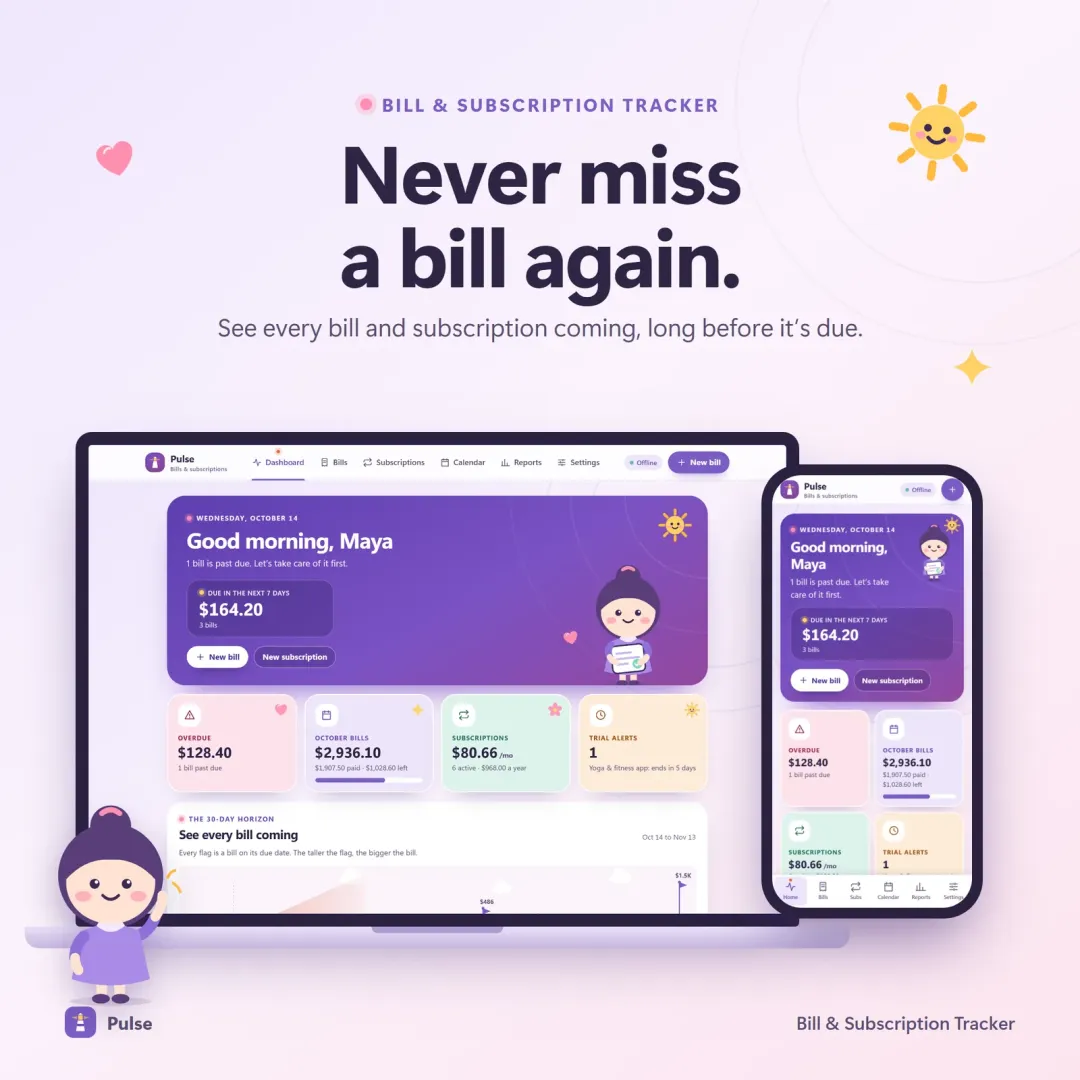
Bloc is a simple budget planner app that keeps fixed and variable expenses in one monthly plan. Bills have their own group with due days and a 31-day strip, spending is logged in two taps against its block, and every block fills up as you spend, so you see at a glance which variable lines are running ahead. If your fixed costs are mostly bills and subscriptions, Pulse is our bill and subscription tracker that shows what's due and what renews next. Both have a free demo with sample data you can open in your browser.
Frequently asked questions
What is the difference between fixed and variable expenses?
Are utilities fixed or variable expenses?
Are groceries a fixed or variable expense?
Is a car payment a fixed expense?
Which expenses are easiest to cut?
What are periodic or irregular expenses?
Key terms
Written by
Finance Specialist & Editor, VaultlyApps
Emma Whitfield writes and edits the VaultlyApps money guides and free calculators. Her focus is US household finance — budgeting on a real paycheck, paying down credit card and student debt, emergency funds and savings goals, renting — and the money side of freelancing and small-business income, from pricing and profit margins to self-employment tax. Every guide is researched against primary sources such as IRS publications and the CFPB, every number is checked in our tested calculators, and tax content is reviewed each year when new IRS figures come out. Emma is not a licensed financial adviser or tax preparer; her work is general education, not personal advice.
Researched against primary US sources, checked with our calculators and reviewed by a finance expert on our team. Written for US readers — general education, not financial, tax or legal advice. Editorial policy · Disclaimer