No Spend Challenge: Rules, a 30-Day Plan and 40 Free Things to Do
How a no spend challenge works, the rules to set before you start, a 30-day no-spend month plan, how to track it, 40 free things to do instead of shopping, and what to do with the money you save.
In this article
- How a no spend challenge works
- Pick your length
- The rules: write them down first
- What's usually allowed
- What's usually off-limits
- The gray areas: decide now
- A 30-day no spend month plan
- Before you start (the week before)
- Week 1: notice everything
- Week 2: find your triggers
- Week 3: replace, don't just resist
- Week 4: finish and plan what's next
- How to track your no spend challenge
- 40 free things to do instead of shopping
- At home
- Outside
- With friends and family
- Small habits that make it easier
- No spend weekend ideas
- What to do with the money you save
- Why no spend challenges work (and why some fail)
- After the challenge: keep what worked
- Track your no-spend days in a cute budget app
A no spend challenge is one of the simplest ways to reset your spending: for a set time you buy only the essentials you agreed on in advance, and nothing else. No takeout, no "just one thing" from Target, no late-night online shopping. It sounds strict, but most people who try it say the same thing afterwards: they didn't miss most of what they used to buy.
This guide covers how a no spend challenge works, the rules to set before you start, a full 30-day no spend month plan, how to track it, 40 free things to do instead of shopping, and what to do with the money you save.
How a no spend challenge works
The idea is simple: you pick a period, write a list of what you're allowed to pay for, and everything that isn't on the list waits until the challenge is over.
- Essentials keep getting paid. Rent, utilities, insurance, minimum debt payments, groceries and gas aren't paused.
- Wants stop. Eating out, coffee runs, clothes, beauty, decor, hobbies, entertainment and impulse buys.
- The money you'd have spent goes somewhere on purpose, usually savings or a debt.
It works because most overspending isn't one big purchase. It's dozens of small, automatic ones. Taking the option away for a while shows you which of those purchases you actually value and which were just habit.
Pick your length
| Challenge | Good for | Difficulty |
|---|---|---|
| No-spend weekend | Your first try; breaking a weekend shopping habit | Easy |
| No-spend week | Finding your triggers; a quick boost to savings | Medium |
| No-spend month | A real reset; saving for a goal or paying down debt | Hard |
| No-spend days (e.g. 3 a week) | Building the habit slowly | Easy to medium |
| No-spend year (on one category) | Clothes, books, takeout or decor | Medium |
If you've never done one, start with a no-spend weekend. Weekends are when most impulse spending happens, and two days is short enough to finish. A full no spend month is the classic version and the one that changes habits.
The rules: write them down first
The challenge succeeds or fails on the rules you set before day one. Vague rules ("I'll just spend less") turn into exceptions by day three.
What's usually allowed
- Rent or mortgage, utilities, phone and internet
- Insurance, minimum debt payments and childcare
- Groceries, from a list and within a set budget
- Gas, transit and parking for work
- Medicine and essential toiletries when you run out
- Bills and subscriptions you've decided to keep
What's usually off-limits
- Restaurants, takeout, delivery and coffee shops
- Clothes, shoes, accessories and beauty products
- Home decor, gadgets and "upgrades"
- Hobbies, books, games and in-app purchases
- Online shopping, including "it was on sale"
- New subscriptions and free trials
The gray areas: decide now
- Birthdays and gifts. Allow planned gifts with a set budget, or give something homemade.
- Social plans. Suggest a free plan, or set a small "people" budget for one dinner.
- Things that run out. Replace essentials only when they're actually empty.
- Emergencies. A real emergency (car repair, a vet bill) is always allowed. That's what an emergency fund is for.
- Gift cards and points. Decide whether they count. Most people say yes, they're still spending.
Write your list on paper or in your notes app, and stick it somewhere you'll see it when you're about to buy.
A 30-day no spend month plan
Before you start (the week before)
- Pick the month. Avoid a month with a wedding, a holiday trip or a big birthday.
- Look at last month. Add up takeout, coffee, shopping and entertainment. That's your target savings.
- Do one stock-up grocery shop from a meal plan, so the pantry and freezer carry you.
- Unsubscribe from store emails and delete shopping apps from your phone for the month.
- Log out of saved cards on Amazon and your favorite stores.
- Tell the people you live with and anyone you usually eat out with.
- Decide where the money goes: a savings goal, an emergency fund or a debt.
Week 1: notice everything
The first week is the hardest because you notice every automatic purchase you used to make. Each time you want to buy something, write it down with the price instead. Don't judge it, just record it. Cook from the pantry and use up what you have.
Week 2: find your triggers
Look at your list from week 1. Was it boredom, stress, a particular store, a time of day, scrolling? Plan around the big one: a different route home, a walk instead of the mall, a phone app timer at night. This is the week the challenge starts to feel normal.
Week 3: replace, don't just resist
Fill the time and the feeling that shopping used to fill. Pick something from the free ideas list below for each weekend. Cook a "fakeaway" version of your favorite takeout. Use what's in your closet in new combinations.
Week 4: finish and plan what's next
Add up what you didn't spend and move it to your goal. Read your "wanted" list from week 1: most people find they no longer want half of it. Decide which spending you'll bring back on purpose and which you'll leave out for good.
How to track your no spend challenge
Tracking is what turns a vague intention into a streak you don't want to break.
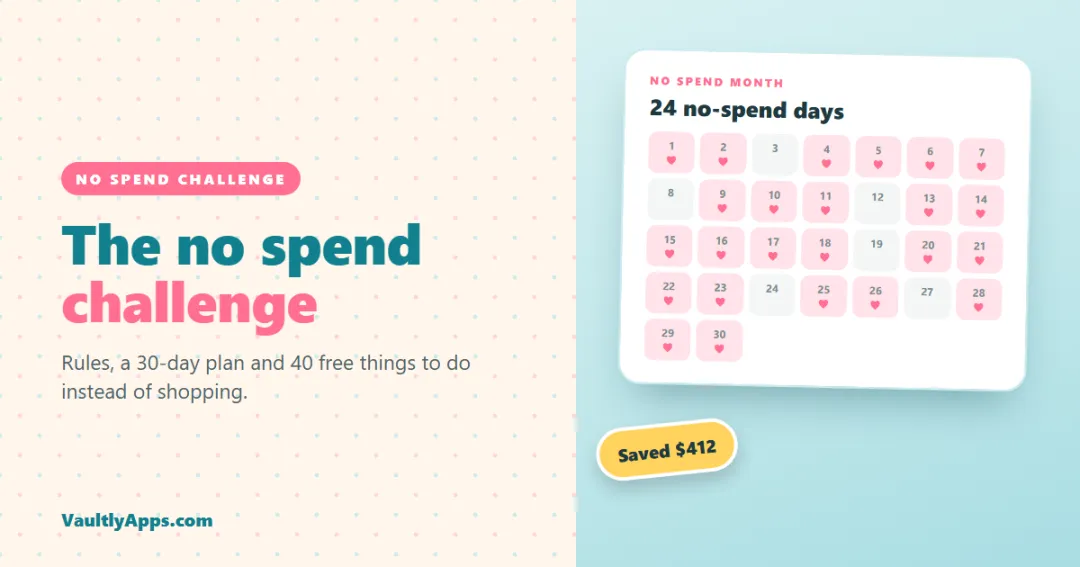
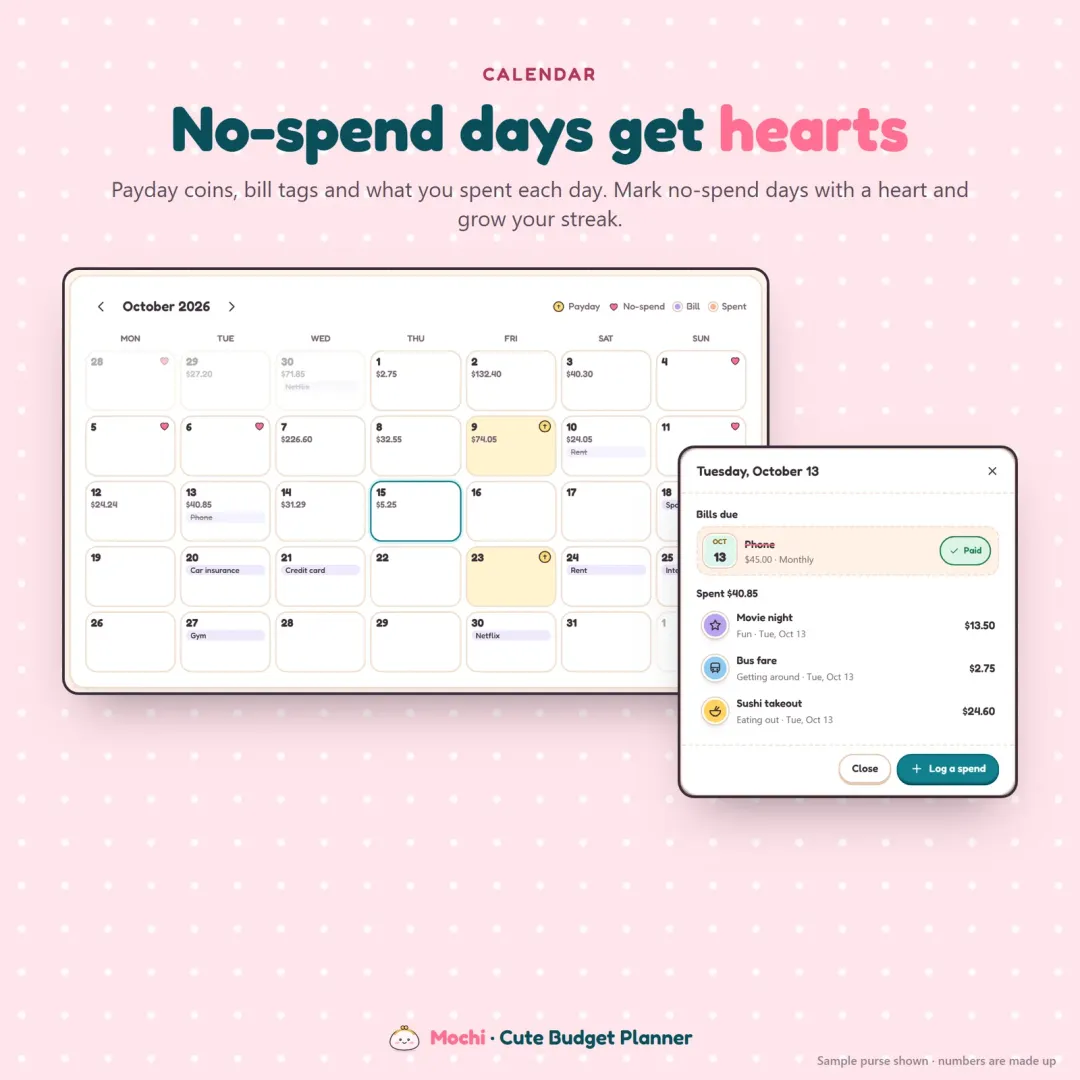
- A calendar. Mark every day with no spending with a heart, a sticker or a cross. Seeing a row of filled days is surprisingly motivating.
- A "didn't buy" list. Write each thing you skipped and its price. At the end of the month, that list is your savings, in black and white.
- A running total. Move the skipped amount to savings the same day if you can, so the money doesn't quietly get spent elsewhere.
- A no spend tracker printable. Print a 30-square chart and colour one in for each no-spend day. You can make one in a minute with our printable savings tracker: set 30 squares and your target savings.
- A no spend tracker app. A budget app with a calendar can mark no-spend days for you from the spending you log.
40 free things to do instead of shopping
At home
- Cook a "fakeaway" version of your favorite takeout
- Have a pantry challenge: make dinner from what's already there
- Bake bread or cookies from scratch
- Have a movie marathon with films you own or stream already
- Rearrange a room
- Declutter one drawer, shelf or closet a day
- Sell what you've decluttered
- Start a journal
- Do a puzzle or play a board game you already own
- Have a spa night with what's in the bathroom cabinet
- Learn something from a free online course or YouTube
- Organize your photos into albums
- Try a free workout video
- Read the books already on your shelf
Outside
- Go for a long walk or a hike
- Visit a park you've never been to
- Have a picnic with food from home
- Go to the library (books, movies, games, often classes)
- Check free museum days in your city
- Go to a free outdoor concert or festival
- Watch the sunset somewhere with a view
- Ride your bike
- Go to a farmers' market just to look
- Volunteer for a morning
- Try geocaching
- Find free community events on your city's website
With friends and family
- Host a potluck instead of eating out
- Have a game night
- Swap clothes with friends
- Swap books
- Start a walking club
- Have a backyard or balcony movie night
- Cook a new recipe together
- Do a free tour of your own city
- Call someone you haven't talked to in a while
Small habits that make it easier
- Unfollow shopping accounts on social media
- Unsubscribe from store emails
- Leave your cards at home when you go for a walk
- Use a 48-hour wait list for anything you want
- Keep a "free fun" list on your phone for bored moments
No spend weekend ideas
A weekend is where most challenges are won or lost. A simple plan helps: one outdoor thing, one at-home thing and one thing with people. For example: a Saturday morning hike, a homemade pizza night with friends who bring a topping each, and a Sunday library trip and slow afternoon of reading. Plan it on Thursday, before the urge to "just pop out" kicks in.
What to do with the money you save
The challenge is only half the win. The other half is making sure the money you didn't spend doesn't vanish into next month.
- Build your emergency fund first if you don't have $1,000 set aside.
- Pay down high-interest debt. A month of saved takeout can make a real dent; compare the debt snowball vs debt avalanche.
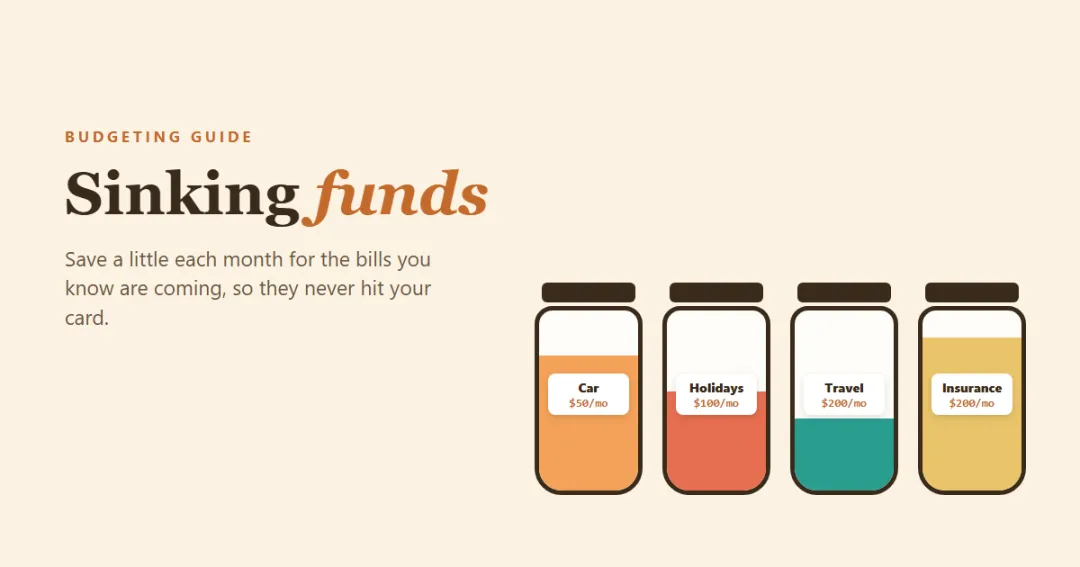
- Start a sinking fund for a big yearly cost like car insurance or the holidays. See our guide to sinking funds.
- Fund a savings goal you'll enjoy, like a trip, and watch it fill up.
- Start a savings challenge with the momentum. Our guide to savings challenges compares the popular ones.
Why no spend challenges work (and why some fail)
They work because they turn hundreds of small decisions into one big one. You don't have to argue with yourself at the checkout; the answer is already "not this month." They also show you, quickly, where your money really goes.
They fail for three reasons:
- The rules were too vague, so every purchase became an exception.
- Nothing replaced the habit, so boredom and stress won.
- It was too long, too soon. A month is a lot as a first try. Start with a weekend.
And if your spending is mostly emotional, read our guide on how to stop impulse buying: the strategies there make any no spend challenge easier.
After the challenge: keep what worked
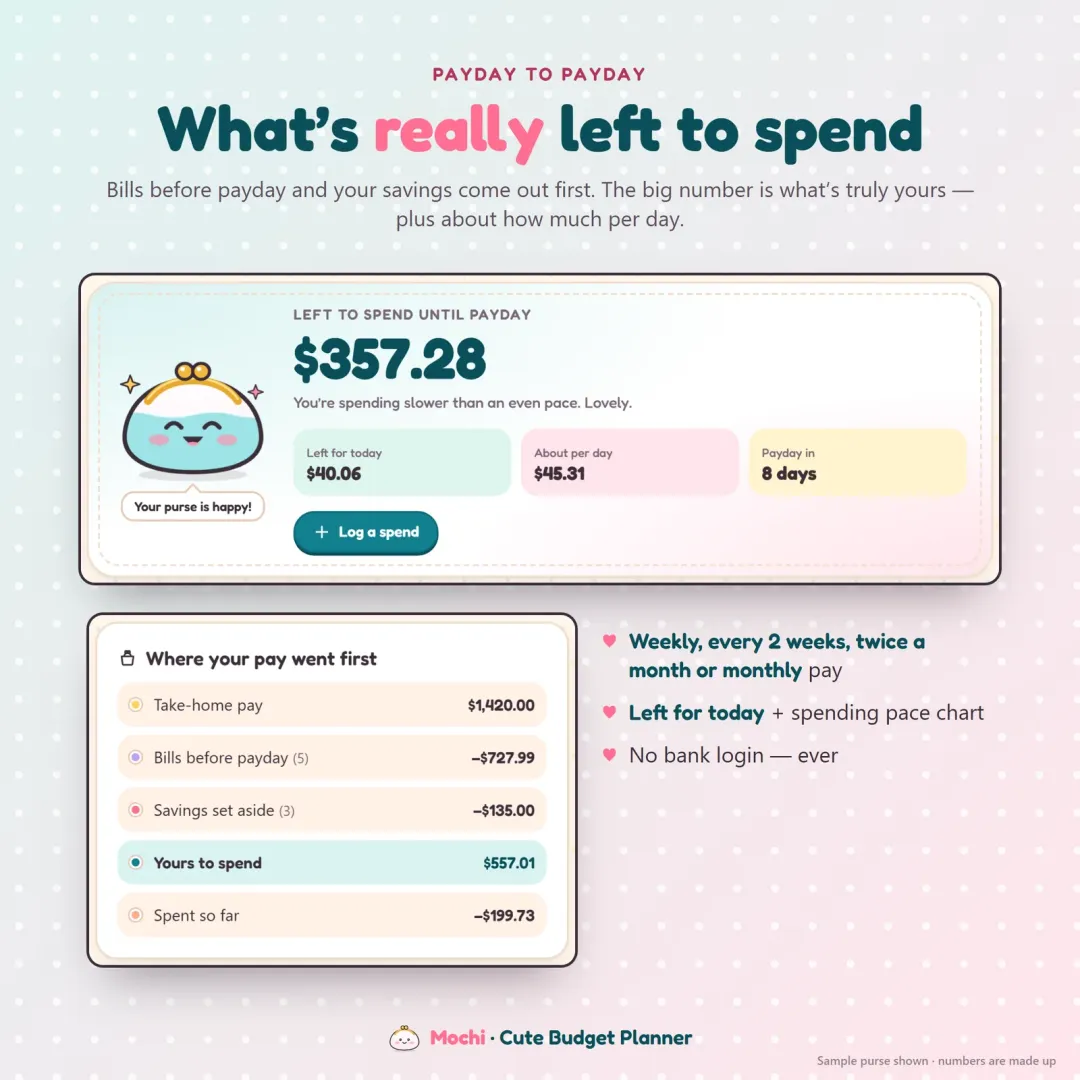
Don't go straight back to old habits on day 31. Look at your "didn't buy" list and pick the spending you'll bring back on purpose, with a budget. Keep one or two no-spend days a week, or a no-spend weekend every month. Many people find a safe-to-spend number helps after the challenge: one figure that tells you what's really free to spend until payday. Here's how a safe-to-spend number works.
Track your no-spend days in a cute budget app
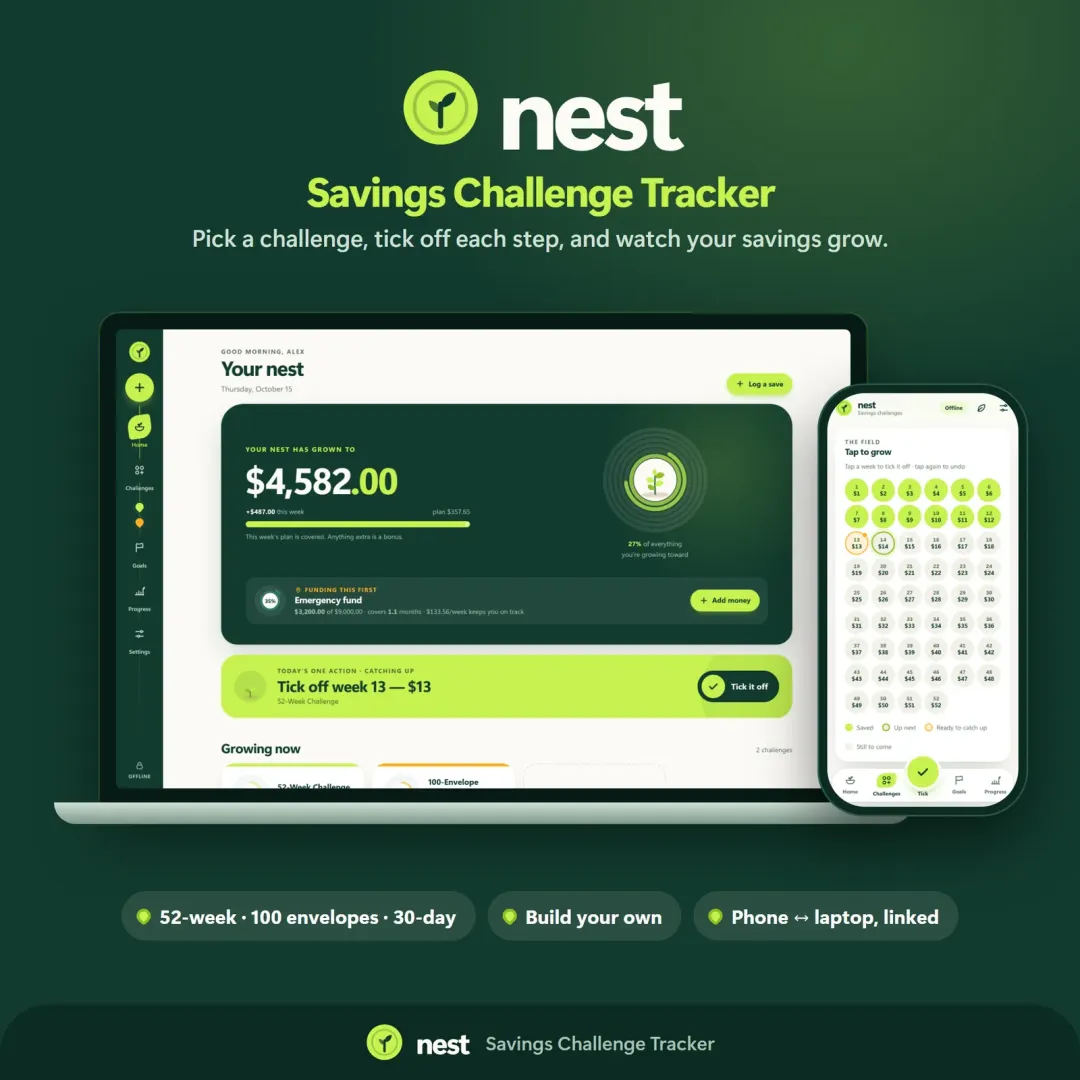
Mochi is a cute budget planner app with a calendar that puts a heart on every no-spend day and counts your streak, next to your paydays, bills and daily spending. It shows what's left to spend until payday, logs a spend in two taps, and turns the money you save into a colour-in savings picture. If saving challenges are your main goal, Nest is a savings challenge tracker with a no-spend challenge, the 52-week challenge and more. Both have a free demo with sample data you can open in your browser.
Frequently asked questions
What is a no spend challenge?
What are the rules of a no spend challenge?
How much can you save with a no spend month?
Can you buy groceries on a no spend challenge?
What if I break the no spend challenge?
How do I track a no spend challenge?
Written by
Finance Specialist & Editor, VaultlyApps
Emma Whitfield writes and edits the VaultlyApps money guides and free calculators. Her focus is US household finance — budgeting on a real paycheck, paying down credit card and student debt, emergency funds and savings goals, renting — and the money side of freelancing and small-business income, from pricing and profit margins to self-employment tax. Every guide is researched against primary sources such as IRS publications and the CFPB, every number is checked in our tested calculators, and tax content is reviewed each year when new IRS figures come out. Emma is not a licensed financial adviser or tax preparer; her work is general education, not personal advice.
Researched against primary US sources, checked with our calculators and reviewed by a finance expert on our team. Written for US readers — general education, not financial, tax or legal advice. Editorial policy · Disclaimer