How to Stop Impulse Buying: 15 Ways to Curb Emotional Spending (Without Banning Fun)
Why we impulse buy, how emotional spending works, and 15 practical ways to stop — from the 72-hour rule and a want list to joy money and tagging purchases with feelings — plus a 30-day plan.
In this article
- What is impulse buying?
- Why we impulse buy
- Emotional spending: the loop
- 15 ways to stop impulse buying
- 1. Use the 72-hour rule
- 2. Keep a want list instead of a cart
- 3. Delete saved cards and shopping apps
- 4. Unsubscribe and unfollow
- 5. Name the feeling
- 6. Tag purchases with how you felt
- 7. Give yourself joy money
- 8. Set aside first, then spend what's left
- 9. Shop with a list and a limit
- 10. Use cash or a separate card for fun money
- 11. Be careful with buy now, pay later
- 12. Calculate the price in hours
- 13. Replace the reward
- 14. Give savings a name
- 15. Review once a week, kindly
- Impulse buying vs emotional spending vs compulsive buying
- A 30-day plan to stop impulse buying
- A calm way to track spending and feelings
- The bottom line
It starts innocently. A sale email at the end of a long day. A video of a "life-changing" gadget. A little treat because the week was hard. Then the parcels arrive, the card statement lands and the good feeling has long gone.
If you want to know how to stop impulse buying, you're not alone — and the answer isn't more willpower. Impulse spending is mostly about feelings and friction: how you feel when the urge hits, and how easy the shop has made it to say yes. Change those two things and spending gets much calmer.
This guide covers why impulse buying happens, how emotional spending works, 15 practical ways to stop and a simple 30-day plan.
What is impulse buying?
Impulse buying is buying something you didn't plan to buy, decided in the moment. Not every impulse purchase is a problem — a spontaneous coffee with a friend can be lovely. It becomes a problem when it happens often, adds up to more than you can afford, or leaves you feeling worse rather than better.
It's extremely common. Online shopping, one-tap checkout, saved cards and "buy now, pay later" have made the gap between wanting and owning almost zero. That's great for shops — and hard on budgets.
Why we impulse buy
Feelings. Stress, boredom, loneliness, sadness, tiredness, even happiness. Buying something gives a quick lift: anticipation, novelty, a sense of control.
Friction-free shopping. Saved cards, autofill, one-click buttons and apps on your home screen remove every natural pause.
Urgency tricks. "Only 2 left", countdown timers, flash sales and "free shipping if you spend $15 more" are designed to stop you thinking.
Social proof. Influencers, "TikTok made me buy it" videos and friends' hauls make purchases feel normal and urgent.
Small numbers. "Four payments of $24.99" feels smaller than $99.96. Buy now, pay later can hide the true total across many purchases.
ADHD and anxiety. Impulsivity and the pull of novelty can make spending harder to pause for ADHD brains, and spending can be a quick way to calm anxiety. Neither is a character flaw; both benefit from more friction and kinder systems.
Emotional spending: the loop
Emotional spending — buying to change how you feel — often runs in a loop:
- Trigger — a hard day, a lonely evening, a stressful email.
- Urge — "I deserve something nice."
- Purchase — a quick lift.
- Afterwards — guilt, worry about money, maybe hiding the parcel.
- More bad feelings — which make the next urge stronger.
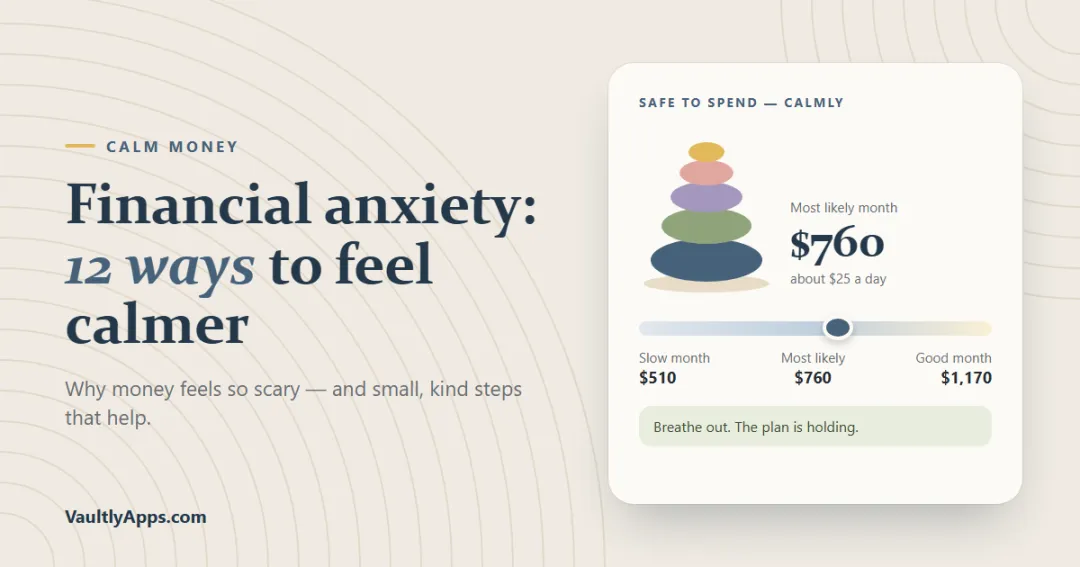
Breaking the loop doesn't mean never buying anything nice. It means noticing the trigger, putting a pause between urge and purchase, and having better ways to meet the feeling underneath. If money worry itself is one of your triggers, our guide to financial anxiety may help too.
15 ways to stop impulse buying
1. Use the 72-hour rule
When you want something you didn't plan for, wait 72 hours. Use 24 hours for small things and 30 days for anything big. If you still want it after the wait and it fits your budget, buy it happily. Most urges fade — that's the point.
2. Keep a want list instead of a cart
Write the item, the price and the date on a want list (a note on your phone is fine). Shopping carts in apps are designed to nudge you back; a list is neutral. Review it once a month and you'll be surprised how many things you no longer want.
3. Delete saved cards and shopping apps
Remove saved payment details from shops and browsers, and take shopping apps off your phone. Having to fetch your card and type the number is a small pause — often small pauses are all you need.
4. Unsubscribe and unfollow
Unsubscribe from sale emails and texts. Mute or unfollow accounts that make you want to buy. You can't be tempted by a sale you never see.
5. Name the feeling
Before you buy, ask: What am I feeling right now? Bored, stressed, tired, lonely, celebrating? Sometimes naming it is enough to take the edge off. A quick check is the HALT question: am I Hungry, Angry, Lonely or Tired?
6. Tag purchases with how you felt
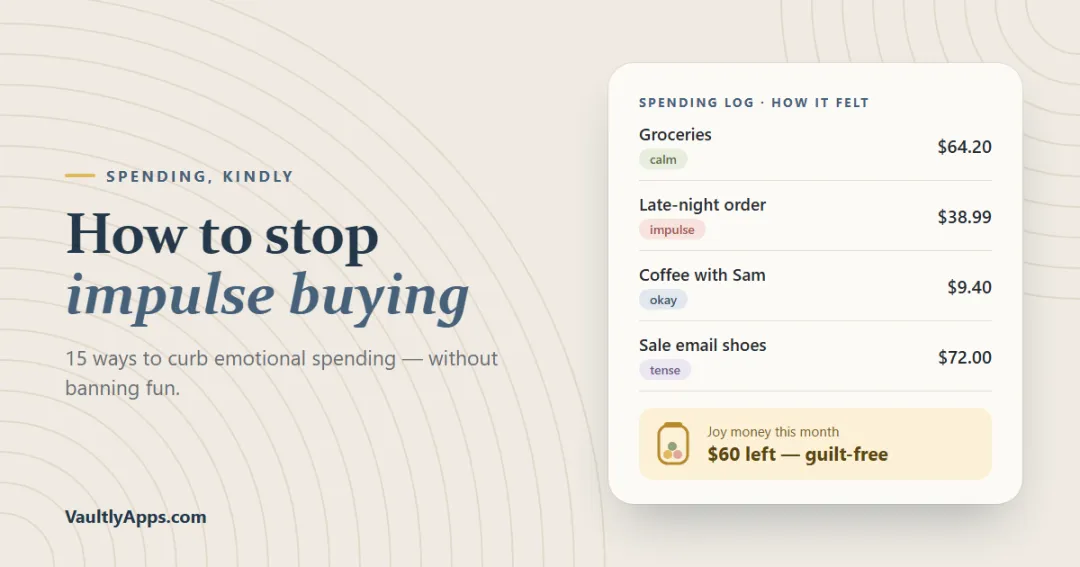
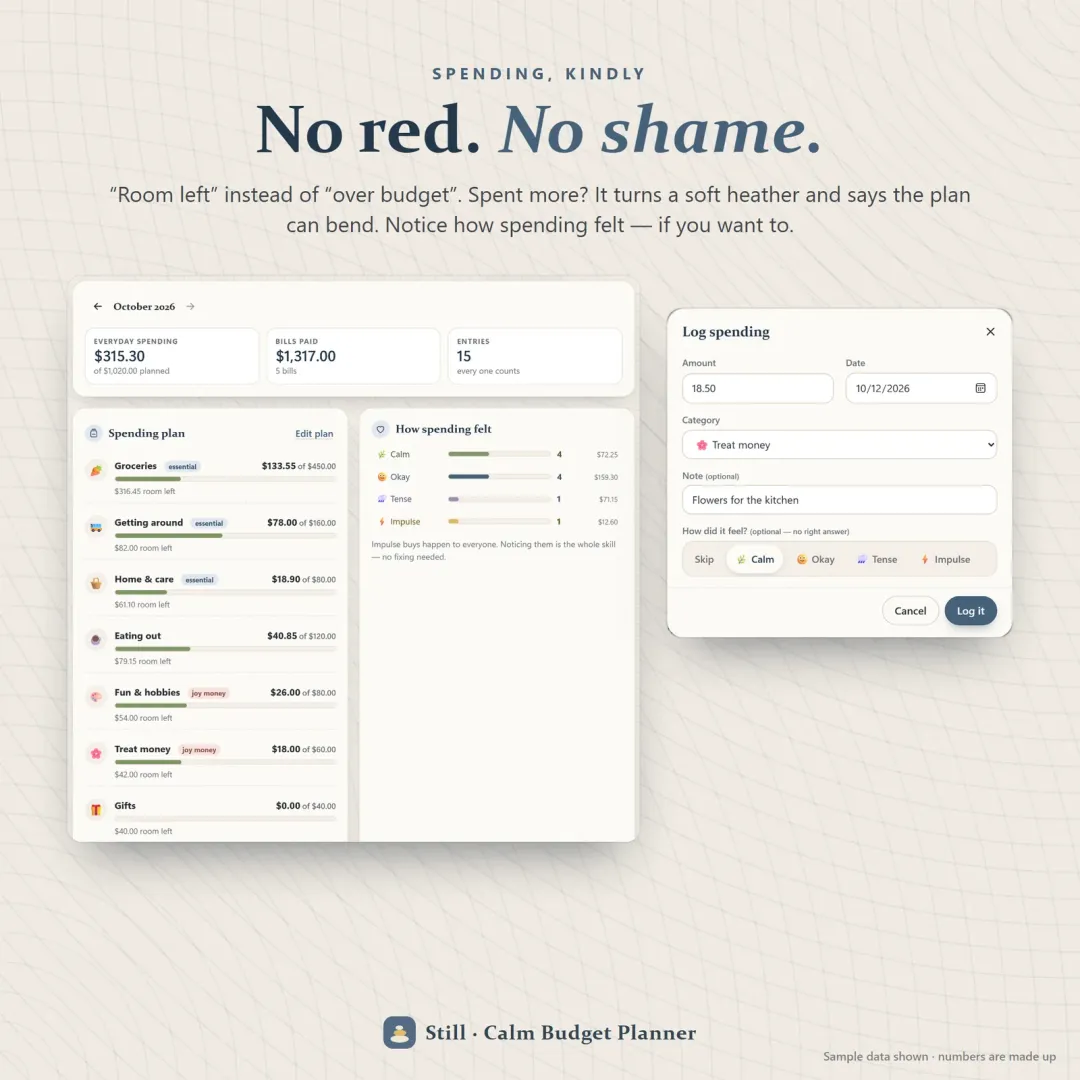
For a month, add a feeling to each purchase: calm, okay, tense or impulse. At the end, look at the tense and impulse ones. You'll usually see clear patterns — late evenings, Sunday nights, after work calls, payday — and patterns can be planned around.
7. Give yourself joy money
Strict bans backfire: deprive yourself for weeks and a big splurge often follows. Instead, plan a monthly joy money amount — $40, $100, whatever fits — that's yours to spend on anything, no guilt. When an urge hits, you can ask "is this worth my joy money?" rather than "am I allowed?".
8. Set aside first, then spend what's left
Impulse buys hurt most when they eat into money meant for bills. On payday, set aside bills, essentials and savings first. What's left is truly free. Our guide to safe to spend shows how.
9. Shop with a list and a limit
For groceries, clothes or gifts, write a list before you go and decide on a limit. Online, shop from the list instead of browsing. Browsing is where impulse buys live.
10. Use cash or a separate card for fun money
Put your joy money on a separate debit card or in an envelope of cash. When it's gone, it's gone — and you'll feel it in a way you don't with a credit card.
11. Be careful with buy now, pay later
BNPL splits a purchase into small payments, which makes it feel cheaper and makes it easy to lose track of how many plans you have going. If you use it, list every plan with its dates — or make a rule to only use it for planned purchases.
12. Calculate the price in hours
Divide the price by what you earn per hour after tax. A $120 jacket at $20 an hour is six hours of work. "Is this worth six hours of my life?" is a surprisingly clarifying question.
13. Replace the reward
If you shop to unwind, have a short menu of other things that give a similar lift: a walk, a call with a friend, a bath, a favourite show, a library haul, rearranging a shelf. Our dopamine menu has dozens of free ideas.
14. Give savings a name
"Savings" is vague; "Lisbon trip, May" isn't. A named goal with a picture and a date makes it easier to say no to small things, because you can see what you're saying yes to. A visible challenge — like the 52-week savings challenge — adds a little fun.
15. Review once a week, kindly
Ten minutes a week: what did I buy, how did I feel, what was worth it, what wasn't? No judgement — just information for next week. Slips are part of changing a habit; what matters is noticing. Our guide on how to break a bad habit explains why.
Impulse buying vs emotional spending vs compulsive buying
| Impulse buying | Emotional spending | Compulsive buying | |
|---|---|---|---|
| What it is | Unplanned purchases decided in the moment | Spending to change how you feel | Repeated, hard-to-control buying that causes real harm |
| How it feels | Spontaneous, often fun | Soothing at first, guilt afterwards | Driven, distressing, hard to stop |
| What helps | Pauses, lists, less temptation | Naming feelings, other ways to cope, joy money | Professional support plus practical limits |
Most people experience the first two now and then. If you feel unable to stop despite serious money problems, hide spending from people close to you, or feel distressed most of the time, it may be compulsive buying — a doctor, therapist or financial therapist can help.
A 30-day plan to stop impulse buying
Week 1 — Notice. Don't change anything yet. Log every purchase with a feeling. Delete saved cards. Unsubscribe from five sale lists.
Week 2 — Pause. Start the 72-hour rule and a want list. Decide your monthly joy money amount.
Week 3 — Replace. Look at your feelings log. For your top trigger (say, "tense on weeknights"), choose one other thing to do when it shows up.
Week 4 — Review. Look back at the month: total impulse spending, what was worth it, what wasn't. Re-read the want list and delete anything you no longer want. Move what you saved to a named goal.
A calm way to track spending and feelings
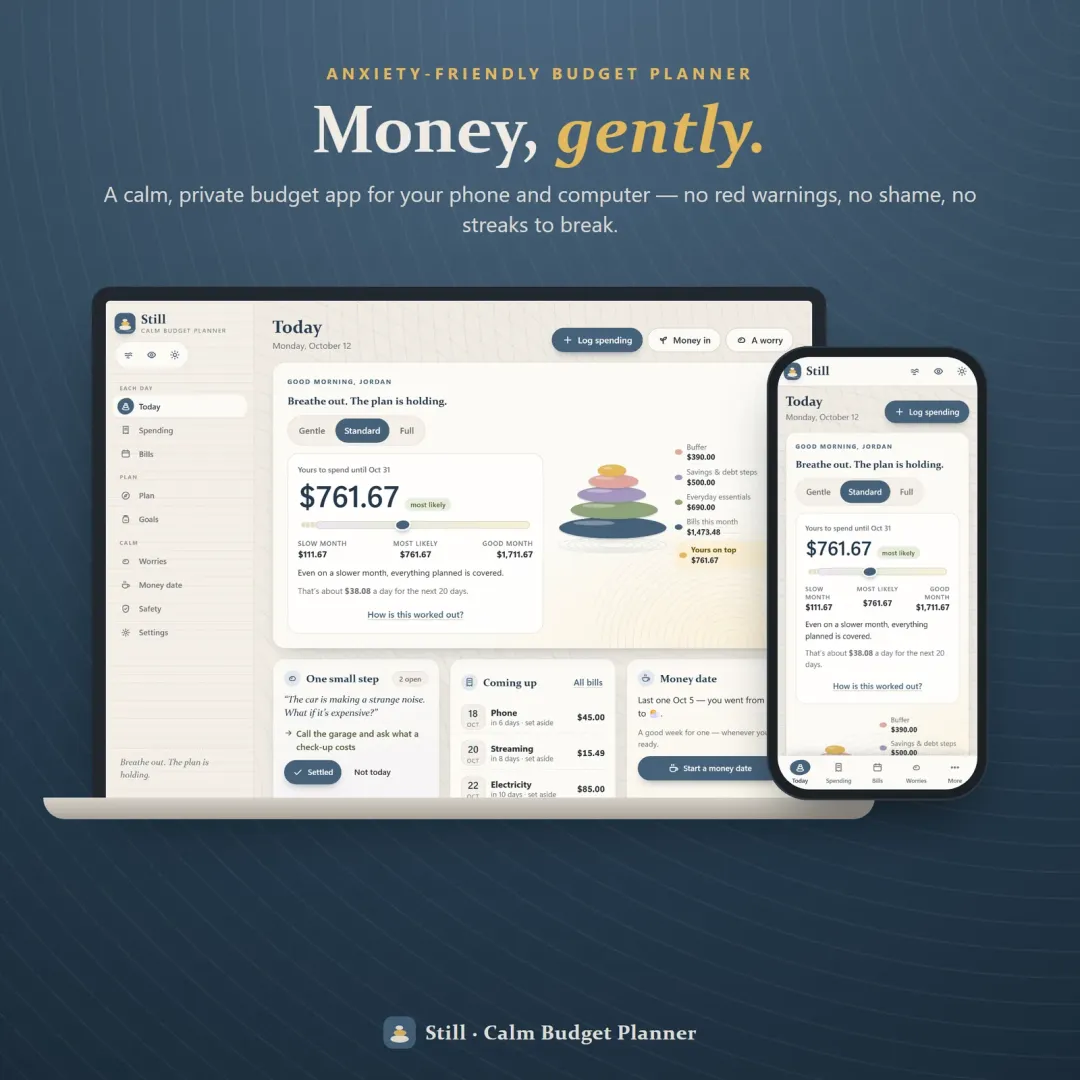
If you'd like one place for this, Still is our calm digital budget planner. Each spending entry can carry a feeling (calm, okay, tense, impulse), and the month shows a feelings summary next to the totals. The spending plan has a joy money switch, so treats are planned rather than forbidden, categories show "room left" instead of red "over budget" warnings, and savings jars fill with pebbles as you add to named goals. There's no bank connection — you add spending yourself, which is itself a small, useful pause.
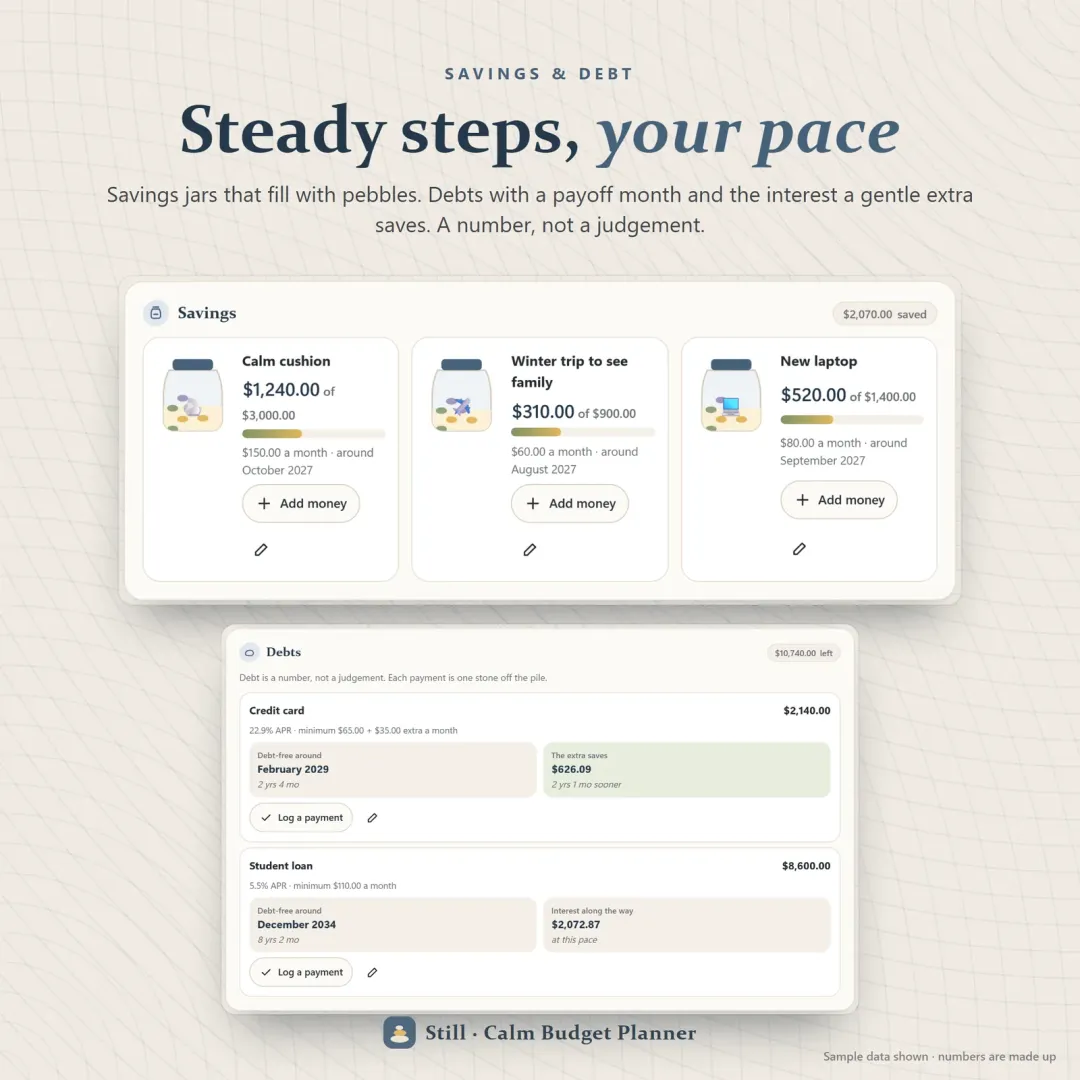
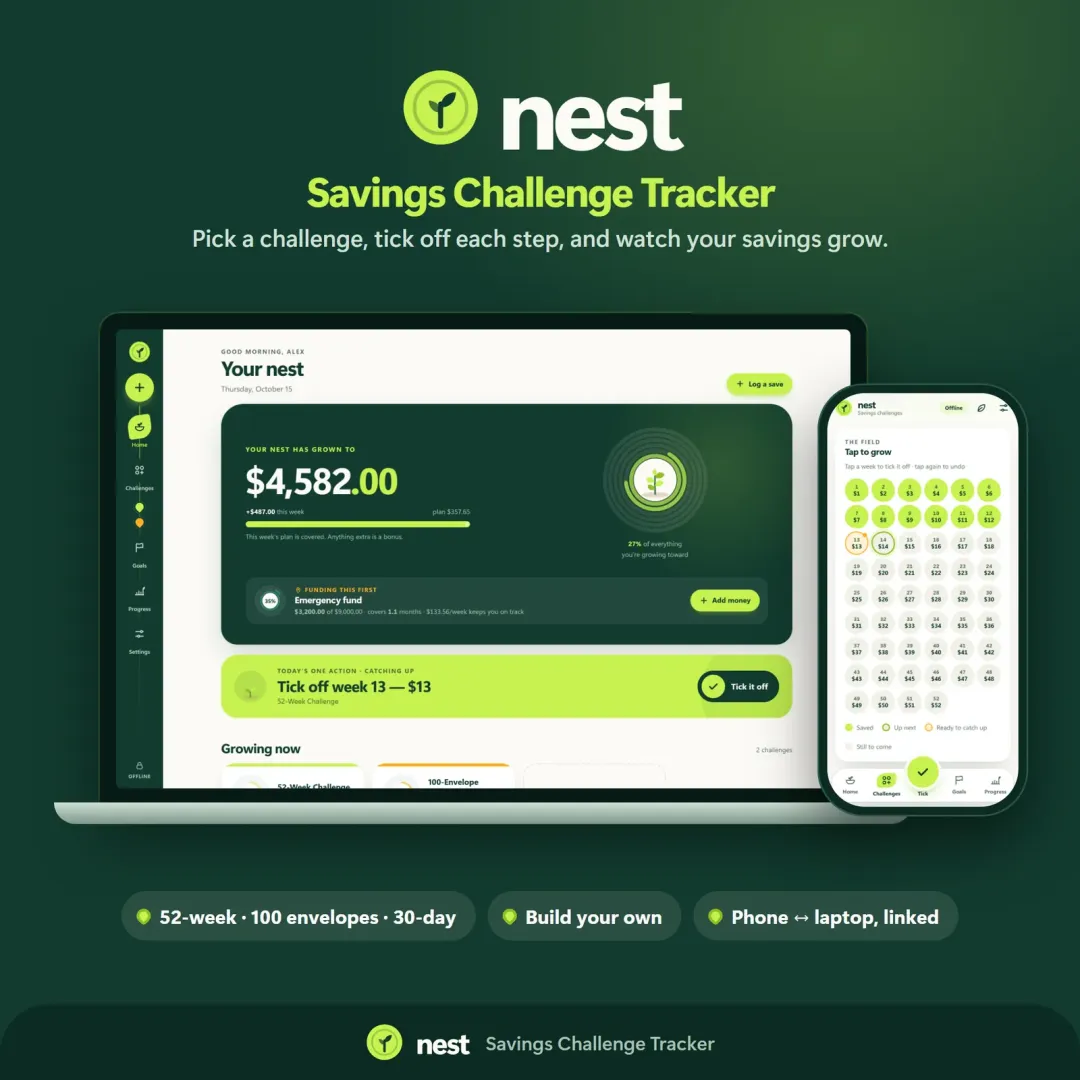
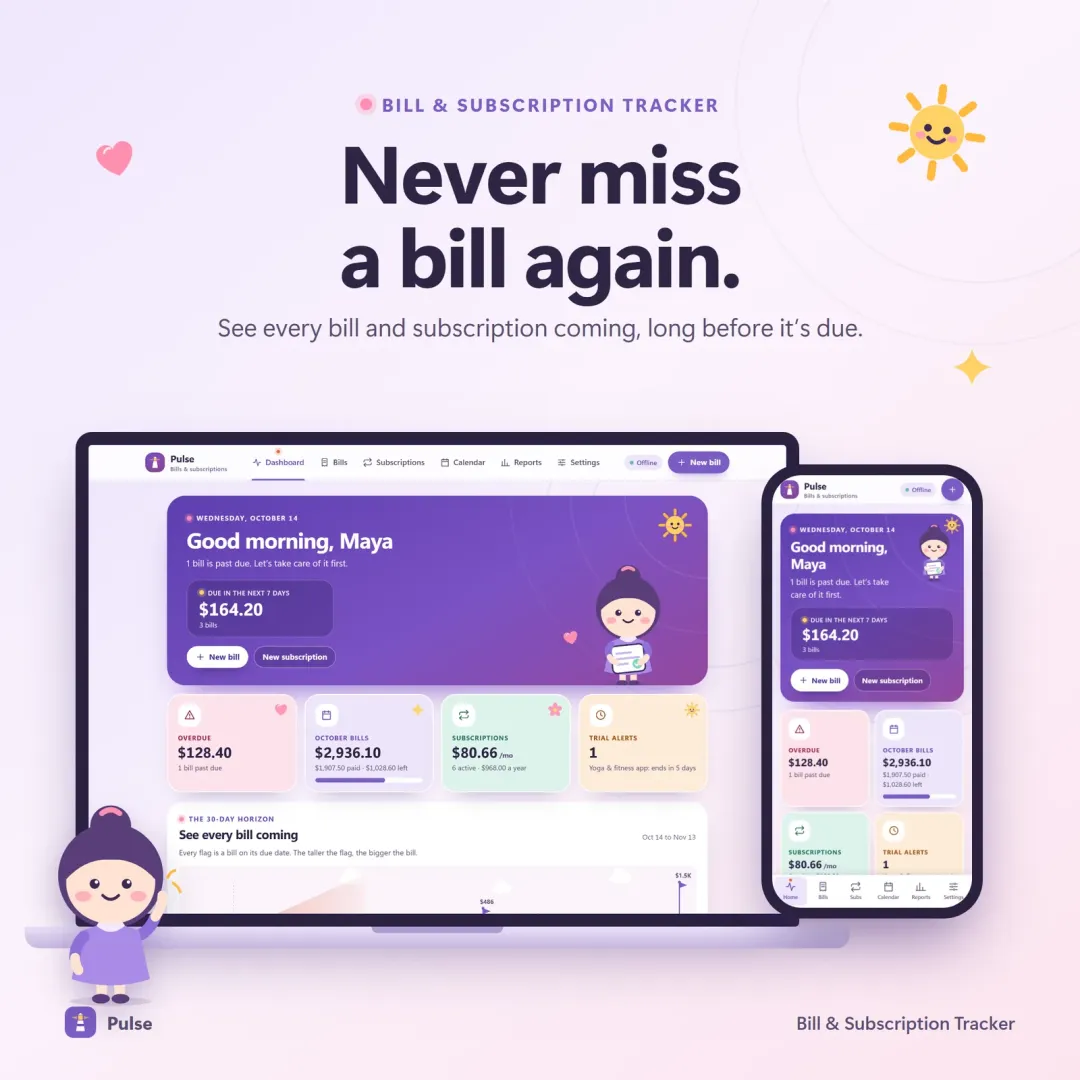
Try the free Still demo in your browser. If forgotten subscriptions are your leak rather than shopping, Pulse and the free subscription cost calculator will find them; for savings challenges, see Nest.
The bottom line
How to stop impulse buying comes down to two things: put a pause between the urge and the purchase, and meet the feeling behind it in another way. Use the 72-hour rule, a want list and fewer temptations; tag spending with feelings to find your triggers; and plan joy money so you never have to ban fun. Expect slips, review kindly and keep going.
This article is general information, not financial, medical or mental-health advice.
Frequently asked questions
How do I stop impulse buying?
What causes impulse spending?
What is emotional spending?
What is the 72-hour rule for shopping?
Is impulse buying a sign of anxiety or ADHD?
Should I cut out all fun spending to stop impulse buying?
How long does it take to stop impulse buying?
Written by
Finance Specialist & Editor, VaultlyApps
Emma Whitfield writes and edits the VaultlyApps money guides and free calculators. Her focus is US household finance — budgeting on a real paycheck, paying down credit card and student debt, emergency funds and savings goals, renting — and the money side of freelancing and small-business income, from pricing and profit margins to self-employment tax. Every guide is researched against primary sources such as IRS publications and the CFPB, every number is checked in our tested calculators, and tax content is reviewed each year when new IRS figures come out. Emma is not a licensed financial adviser or tax preparer; her work is general education, not personal advice.
Researched against primary US sources, checked with our calculators and reviewed by a finance expert on our team. Written for US readers — general education, not financial, tax or legal advice. Editorial policy · Disclaimer