How to Break a Bad Habit: 9 Steps That Work (Without Relying on Willpower)
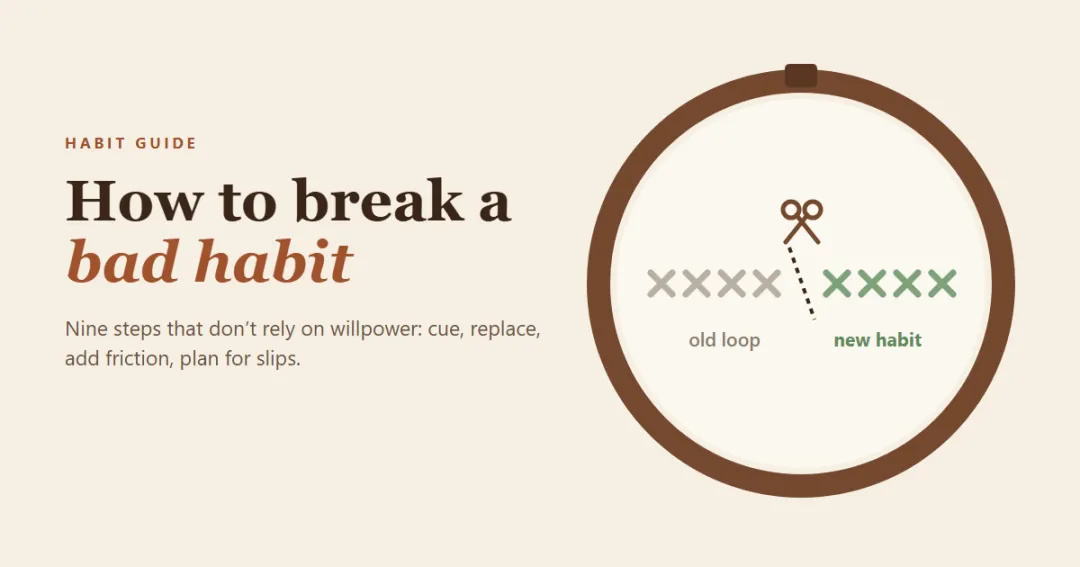
Willpower alone rarely breaks a habit. Here's a 9-step method that does — find the cue, change your environment, replace the habit, add friction, plan for slips — with examples for phone scrolling, snacking, impulse spending, procrastination and more.
In this article
- Why bad habits are so hard to break
- How to break a bad habit in 9 steps
- 1. Pick one habit and name it precisely
- 2. Find the cue
- 3. Name the reward you're really after
- 4. Change your environment
- 5. Replace it, don't just remove it
- 6. Make the new habit easy and obvious
- 7. Use if–then plans for high-risk moments
- 8. Track the days you avoid it
- 9. Plan for slips — and never miss twice
- Examples: how to break common bad habits
- Phone scrolling
- Impulse spending
- Procrastination
- Snacking and soda
- Staying up too late
- A 30-day plan to break a bad habit
- Why this works (and willpower doesn't)
- Track it with Hoop
- The bottom line
Most of us try to break a bad habit the same way: decide to stop, rely on willpower, slip when we're tired or stressed, and conclude we have no self-control. But habits aren't a character flaw — they're automatic loops triggered by cues in your day. That's why willpower is the weakest tool for breaking a habit, and changing the loop is the strongest.
This guide gives you a 9-step method to break a bad habit, examples for the most common ones (phone scrolling, snacking, impulse spending, procrastination, staying up late), and a simple 30-day plan.
Why bad habits are so hard to break
Every habit runs on a loop: a cue (boredom, a notification, the 3 p.m. slump), a routine (scroll, snack, shop) and a reward (relief, a bit of pleasure, distraction). Repeat it enough and your brain runs the loop on autopilot — the cue fires and you're halfway through the habit before you've decided anything.
Two things follow:
- The cue doesn't go away when you decide to stop. You'll still be bored at 9 p.m. and the phone will still be on the couch.
- The need behind the habit is real. If scrolling is how you unwind, removing it without a replacement leaves a gap the old habit rushes back to fill.
So the method is: change the cues, meet the need another way, and make the old habit harder.
How to break a bad habit in 9 steps
1. Pick one habit and name it precisely
"Stop wasting time" is too vague. "Stop scrolling social media in bed" is specific enough to act on. Pick one habit at a time — each takes attention for several weeks.
2. Find the cue
For three to five days, notice every time the habit happens and jot down:
- When? Time of day.
- Where? Place.
- How did I feel? Bored, tired, stressed, lonely?
- Who was around?
- What happened just before?
Patterns appear fast: "every evening on the couch after the kids are in bed", "when an email stresses me out", "on payday".
3. Name the reward you're really after
Ask what the habit gives you. Scrolling might be rest or connection. Snacking might be a break or comfort. Impulse shopping might be excitement or a reward after a hard week. Knowing the real need tells you what a replacement must do.
4. Change your environment
This is the single most powerful step. Make the cue invisible and the habit difficult:
- Phone charges in the kitchen, not the bedroom.
- No chips or soda in the house — buy single portions when you want them.
- Log out of shopping apps and delete saved cards.
- Put the TV remote in a drawer, or unplug the console after use.
- Block distracting sites during work hours.
Every bit of friction gives your thinking brain a few seconds to catch up with your autopilot.
5. Replace it, don't just remove it
Keep the cue and the reward, change the routine:
| Bad habit | Cue | Replacement |
|---|---|---|
| Scrolling in bed | Lying down at night | Read a paper book; phone outside the room |
| Afternoon snacking | 3 p.m. slump | Short walk, water, a planned snack |
| Impulse online shopping | Stress, boredom, payday | 48-hour wait list; move the money to savings |
| Procrastination | A big, unclear task | Write the first tiny step; work 10 minutes |
| Soda | Lunch, afternoon | Sparkling water or iced tea |
| Staying up late | "Me time" at night | Earlier wind-down that still feels like me time |
| Nail biting | Stress, screens | Fidget item, nails kept short |
6. Make the new habit easy and obvious
Put the book on your pillow. Keep sparkling water in the fridge. Leave your walking shoes by the door. The replacement has to be at least as easy as the old habit, or the old one wins. A habit stack helps: "After I put the kids to bed, I'll make tea and read."
7. Use if–then plans for high-risk moments
Decide in advance what you'll do when the urge hits:
- If I feel like scrolling in bed, then I'll read one page.
- If I'm stressed after a meeting, then I'll walk around the block before opening anything.
- If I want to buy something non-essential, then I'll add it to a wait list and check in 48 hours.
Psychologists call these implementation intentions, and they work because the decision is made before you're tired or stressed.
8. Track the days you avoid it
Count avoid days: days without soda, days without scrolling in bed, no-spend days. A growing count is motivating, and it makes you think twice before breaking it. Track the wins, not the failures.
9. Plan for slips — and never miss twice
You will slip. Everyone does. What matters is the next day. A slip is information: what was the cue? Were you tired, hungry, stressed? Adjust the plan and carry on. The rule that works: never miss twice — one slip is an accident, two in a row is the old habit coming back.
Examples: how to break common bad habits
Phone scrolling
Turn off non-essential notifications, move social apps off your home screen, set app limits, charge the phone outside the bedroom, and replace evening scrolling with a book, a podcast or a call. A weekly digital detox evening resets the baseline.
Impulse spending
Unsubscribe from store emails, delete saved cards, shop with a list, and use a 48-hour rule for anything non-essential. Give yourself a guilt-free "fun money" amount each month. When you skip a purchase, move that amount into savings so the win feels real. Reviewing subscriptions with a subscription tracker catches the spending that happens on autopilot.
Procrastination
Break the task into a first step that takes five minutes, start with a 10-minute timer, remove distractions, and work at the same time each day. Often the habit isn't laziness — it's an unclear or scary first step.
Snacking and soda
Don't keep it at home, keep healthy options visible, drink water first, and plan snacks instead of grazing. Eat proper meals — many cravings are simple hunger.
Staying up too late
Pick a fixed "lights out" time, start a 30-minute wind-down an hour before, keep screens out of the bedroom, and make mornings rewarding so going to bed feels worth it. Our evening routine ideas can help.
A 30-day plan to break a bad habit
| Days | What to do |
|---|---|
| 1–3 | Observe: log every time the habit happens — time, place, feeling, what came before. |
| 4–5 | Plan: name the reward, choose a replacement, write three if–then plans. |
| 6 | Redesign your environment: remove cues, add friction, set up the replacement. |
| 7–21 | Practise: follow your if–then plans, track avoid days, never miss twice. |
| 22–30 | Review: what triggers remain? Tighten the plan; celebrate the progress. |
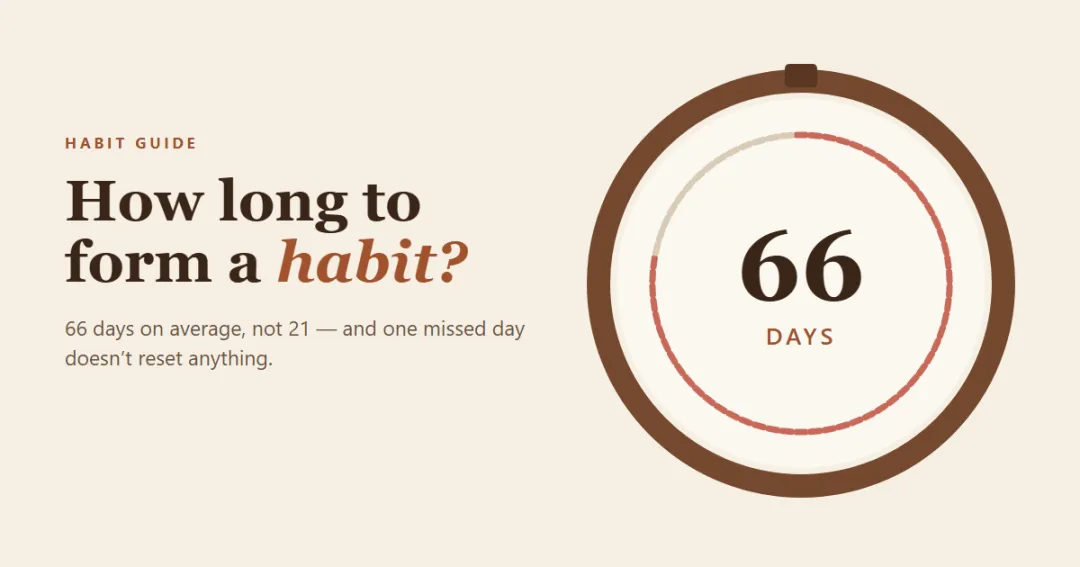
After 30 days, keep going. Breaking a habit usually takes as long as forming one — about two months on average, often longer.
Why this works (and willpower doesn't)
Willpower is limited and lowest exactly when bad habits strike: at night, when tired, when stressed. Environment design, replacements and if–then plans don't depend on how you feel in the moment. This is also the core of James Clear's approach — invert the four laws: make it invisible, unattractive, difficult and unsatisfying. Read our Atomic Habits summary for the full framework.
Track it with Hoop
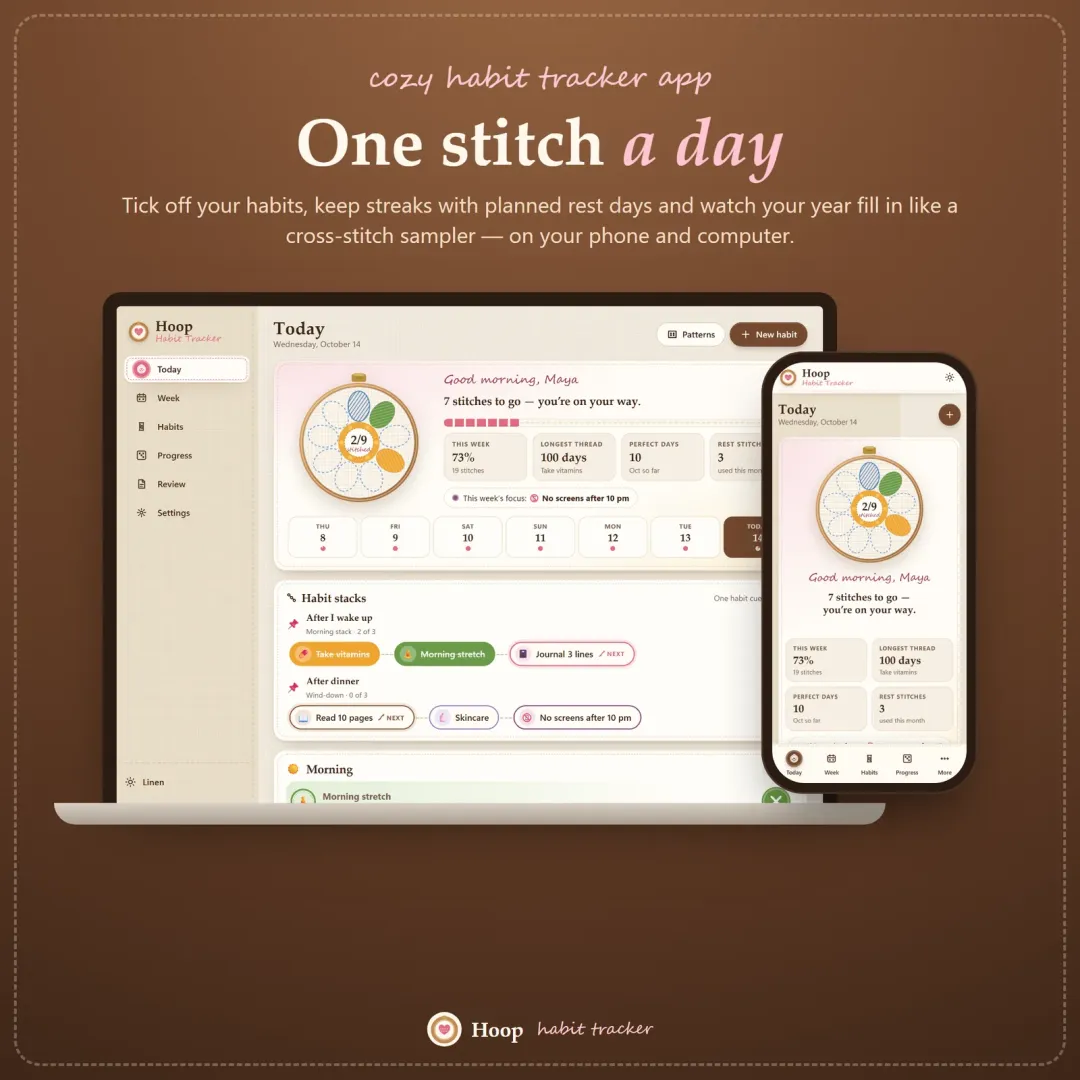
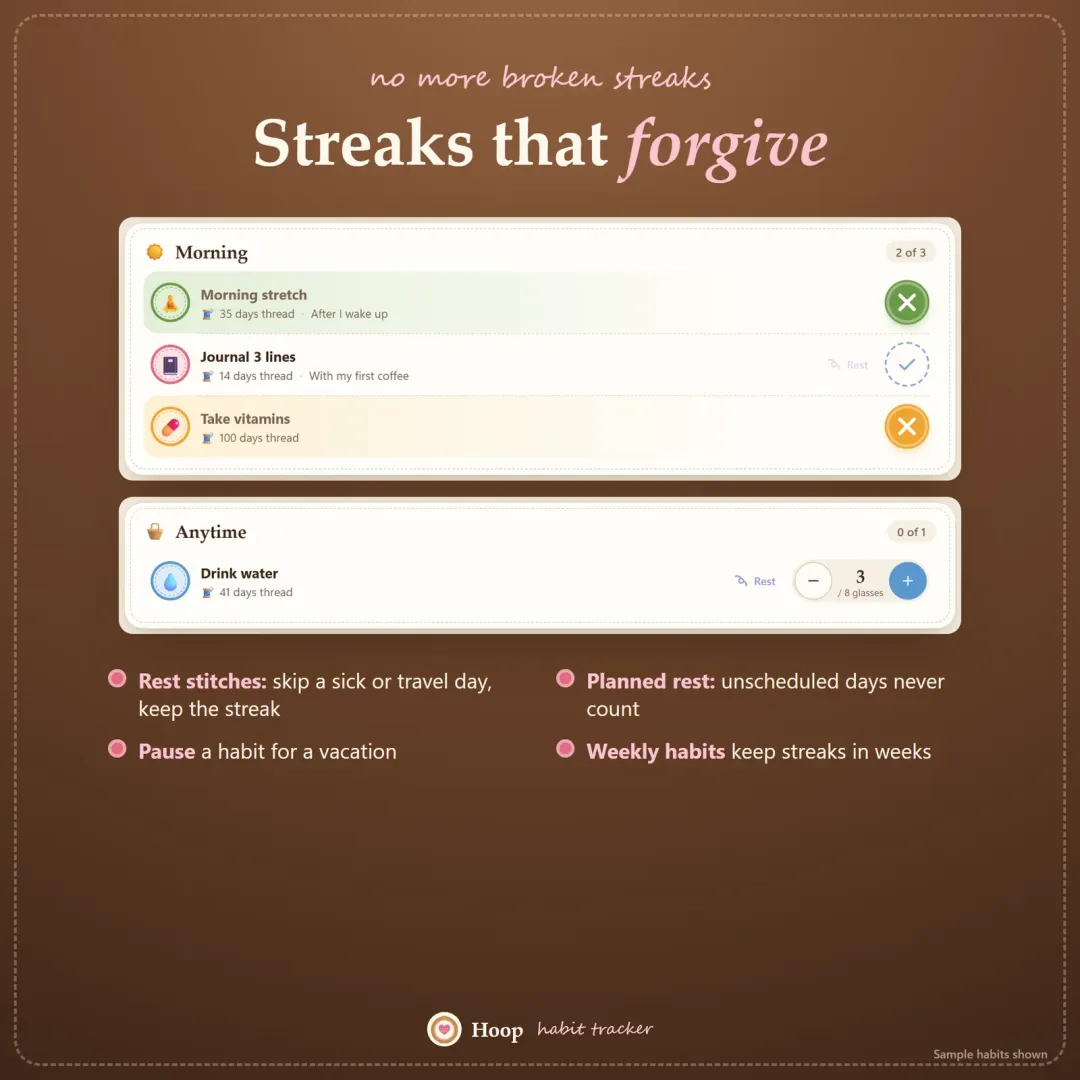
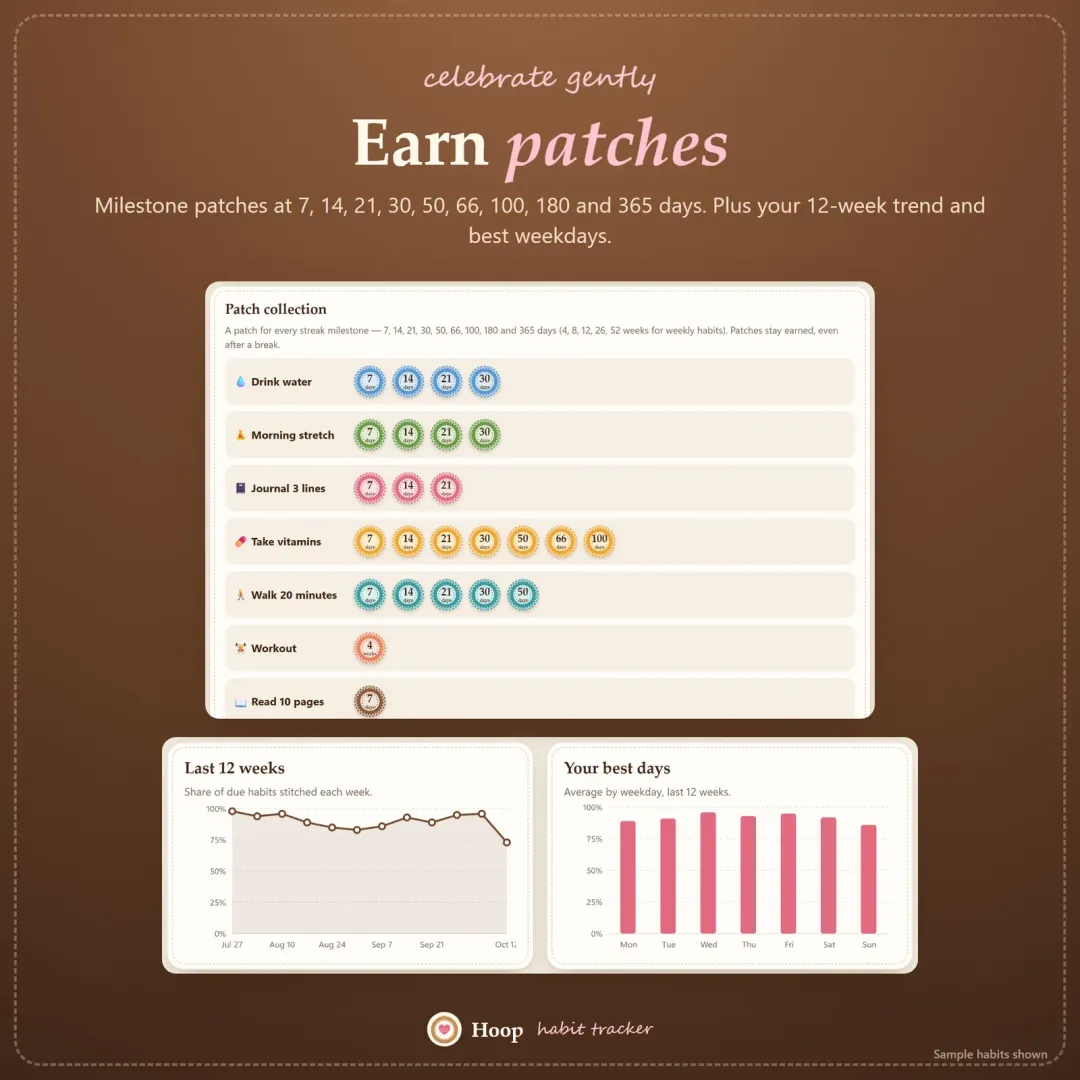
Hoop has a special kind of habit for this: avoid habits — "no soda", "no screens after 10 p.m.", "no impulse buys". Each day you stay clear, you stitch it. Pair it with a replacement habit in a stack, give it a cue and a "why", and watch your avoid days add up in the year sampler. Streaks forgive with rest days, so one slip doesn't erase a month of progress. Milestone patches at 7, 21, 30 and 66 days keep it satisfying.
Try the free Hoop demo in your browser — no sign-up.
The bottom line
Don't fight a bad habit with willpower. Find the cue, name the need, change your environment, replace the habit with something easier, plan your high-risk moments, track your avoid days and never miss twice. Give it at least two months.
For addictions to alcohol, nicotine, gambling or drugs, please talk to a doctor or call the SAMHSA National Helpline at 1-800-662-4357 (free, confidential, 24/7). This article is general information, not medical advice.
Frequently asked questions
How long does it take to break a bad habit?
What's the fastest way to break a bad habit?
Should I quit a bad habit cold turkey or cut back gradually?
Why do I keep going back to bad habits?
Can you replace a bad habit with a good one?
How do I break a bad habit with ADHD?
Does tracking help break a bad habit?
Written by
Finance Specialist & Editor, VaultlyApps
Emma Whitfield writes and edits the VaultlyApps money guides and free calculators. Her focus is US household finance — budgeting on a real paycheck, paying down credit card and student debt, emergency funds and savings goals, renting — and the money side of freelancing and small-business income, from pricing and profit margins to self-employment tax. Every guide is researched against primary sources such as IRS publications and the CFPB, every number is checked in our tested calculators, and tax content is reviewed each year when new IRS figures come out. Emma is not a licensed financial adviser or tax preparer; her work is general education, not personal advice.
Researched against primary US sources, checked with our calculators and reviewed by a finance expert on our team. Written for US readers — general education, not financial, tax or legal advice. Editorial policy · Disclaimer