How to Make Money in College: 30 Side Hustles for College Students
30 realistic ways to make money in college — campus jobs, flexible side hustles, online work and skills that pay more — plus how many hours to work, taxes on student income and how to budget money that comes in unevenly.
In this article
- Before you start: how much work is the right amount?
- Campus jobs (easiest to fit around classes)
- Flexible side hustles for college students
- Online side hustles and remote work
- Sell things you already have — or make
- Which side hustle pays best?
- Taxes on student income
- How to budget money that comes in unevenly
- Make your money go further, too
- Quick plan: from broke to steady in four weeks
Being a broke college student is practically a tradition, but it doesn't have to last the whole semester. A few hours of paid work a week can cover groceries, a phone bill or a spring break fund — and some side hustles for college students teach skills that pay off long after graduation.
This guide covers 30 ways to make money in college, from easy campus jobs to flexible online work, plus how many hours to work, what to know about taxes, and how to budget income that arrives in uneven chunks.
Before you start: how much work is the right amount?
Your degree is the main job. Most advisers suggest 10 to 15 hours a week during a full course load. Moderate hours can actually help — working students often get better at managing their time — but heavy hours (around 20 or more a week) are linked with lower grades and taking longer to finish.
Before you pick a side hustle, ask three questions:
- When am I free? Look at your class timetable and block out study time first.
- How much do I actually need? Work out your weekly shortfall: if your budget is $40 a week short, you need roughly 3 to 4 hours of paid work, not 20.
- Do I want steady or flexible? A campus job gives fixed shifts and a regular paycheck. Gigs pay when you choose to work, but the income is uneven.
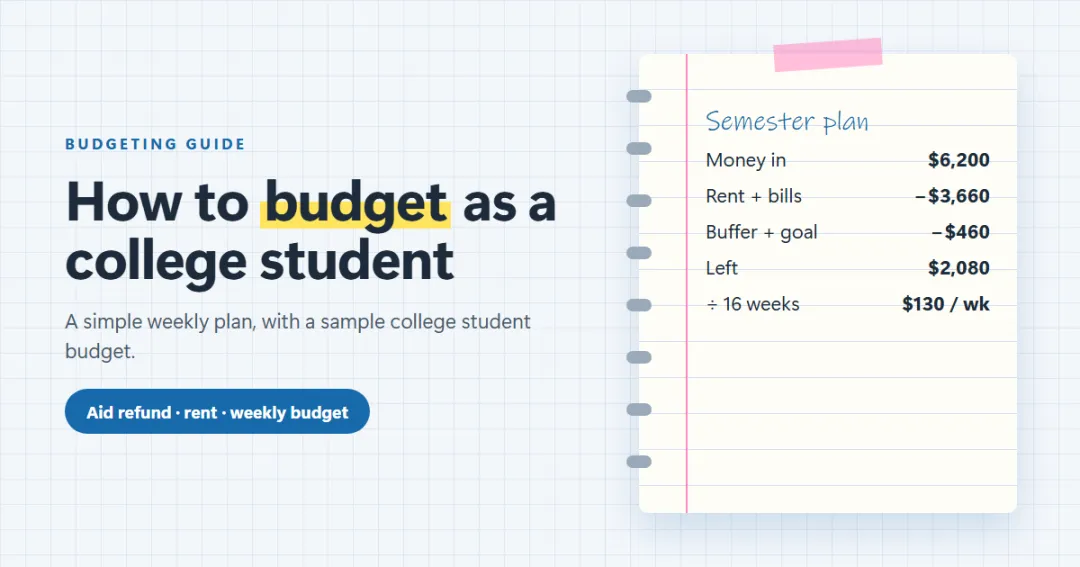
If you haven't set a budget yet, start with our guide on how to budget as a college student — it's much easier to choose how much to work once you know the gap.
Campus jobs (easiest to fit around classes)
On-campus jobs are made for students: they're a short walk away, supervisors expect exams to come first and shifts often fit between classes.
- Library assistant. Shelving, the front desk and helping students find resources — and often quiet time to study when it's slow.
- Dining hall or campus café. Flexible shifts, and some schools include a free meal.
- Rec center or gym staff. Front desk, equipment checkout or lifeguarding if you're certified.
- Resident assistant (RA). Often pays with free or reduced housing and sometimes a meal plan — one of the most valuable campus jobs, though it's a real commitment.
- Research assistant. Help a professor with data entry, lab work or literature reviews. Great for your résumé and for graduate school applications.
- Teaching assistant or grader. For upper-year students who did well in a course.
- Campus tour guide or admissions ambassador. Paid to talk about your school.
- IT help desk. Good if you're comfortable with tech troubleshooting.
- Federal Work-Study. If your financial aid package includes work-study, you can earn it through approved campus (and some community) jobs. Work-study earnings don't count against you on next year's FAFSA the way other wages can.
Ask the career center or student employment office for the job board — many campus jobs fill in the first two weeks of term.
Flexible side hustles for college students
These pay when you choose to work, which suits a schedule that changes every semester.
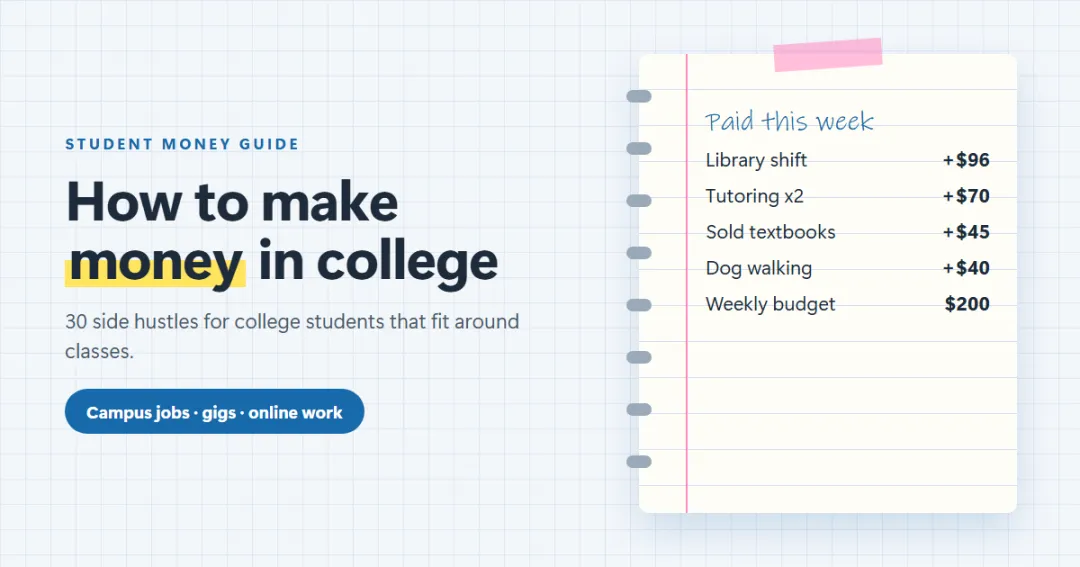
- Tutoring. Tutor a subject you're strong in, in person or online. Private tutoring often pays well above a typical campus wage, and test-prep tutoring pays more.
- Babysitting and nannying. Evenings and weekends fit around classes; regular families mean steady income.
- Pet sitting and dog walking. Apps make it easy to find clients, and holidays bring the most demand.
- Food and grocery delivery. Work in the hours you pick, by bike or car. Track your mileage and costs — they cut into what you really earn.
- Moving help. The start and end of each semester is peak season, and students moving out pay for an extra pair of hands.
- House sitting. Water plants and keep an eye on a home while someone travels.
- Event and catering staff. Weddings, games and conferences need short-term staff, often on weekends.
- Rideshare. Only if you have a suitable car and you've checked the insurance; the costs of fuel and wear add up.
Online side hustles and remote work
Online work is the most flexible of all: you can do it from your dorm, between classes or during a break.
- Freelance writing and editing. Blog posts, product descriptions, proofreading. Start small and build a portfolio.
- Graphic design. Logos, social posts and flyers for small businesses and student organizations.
- Social media help. Many small local businesses would gladly pay a student to post for them a few times a week.
- Web design and coding. Simple websites, fixing bugs or building small tools — one of the best-paid student side hustles once you have a few examples.
- Online tutoring. Teach a subject or a language over video.
- Transcription and captioning. Steady, if repetitive, work you can do in short blocks.
- User testing and online surveys. Small amounts, but no skills required — fine for spare minutes, not a main income.
- Virtual assistant work. Email, scheduling and research for busy business owners.
Sell things you already have — or make
- Sell your textbooks back. At the end of each term, sell books you no longer need, or list them online for more than the buyback desk offers.
- Reselling clothes and shoes. Clear out your closet first, then buy underpriced pieces at thrift stores to resell. Our guide on how to start reselling covers fees, pricing and profit.
- Selling crafts or digital products. Art prints, stickers, planners, templates or notes from your own designs. If you're thinking about an online shop, read is selling on Etsy worth it and our list of Etsy shop ideas first.
- Photography. Graduation photos, headshots and event photos are always in demand on campus.
- Paid studies on campus. Psychology and medical research studies often pay participants. Check your university's research participation board.
Which side hustle pays best?
As a rough guide, the best-paid student side hustles are the ones that use a skill: tutoring a hard subject, coding, design, photography and test prep. Delivery, surveys and general gig work are easy to start but usually pay less per hour once you count costs and waiting time.
A simple way to compare: work out your real hourly rate. Take what you earned in a week, subtract costs (fuel, platform fees, supplies), and divide by every hour you spent — including travel and waiting. A $25-an-hour gig with an hour of unpaid driving can pay less than a $15-an-hour library shift.
Taxes on student income
Most students pay little or no federal income tax, but there are a few rules to know:
- Jobs: tax is taken from your paycheck. If you earned less than the standard deduction for the year, you may get most or all of it back by filing a return.
- Self-employment: if you make $400 or more in a year from gigs, freelancing or reselling at a profit, you need to file a return and may owe self-employment tax (Social Security and Medicare). Set aside a share of every payment.
- Keep records: note what you earn and what you spend to earn it (supplies, mileage, platform fees). Those costs reduce your taxable profit.
If your side hustle grows into a real business, our guide to quarterly estimated taxes explains when you need to pay during the year. This is general information, not tax advice — your school's tax clinic or a tax professional can help with your own situation.
How to budget money that comes in unevenly
The tricky part of a side hustle isn't earning the money — it's budgeting it. A delivery shift, a tutoring session and a paycheck every two weeks all arrive on different days, in different amounts. Three rules help:
- Budget only money that has arrived. Expected money isn't spending money yet.
- Spread it over the weeks ahead. A $300 paycheck isn't $300 to spend this weekend; it's $150 for each of the next two weeks.
- Set some aside first — for taxes if you're self-employed, and a little for savings.
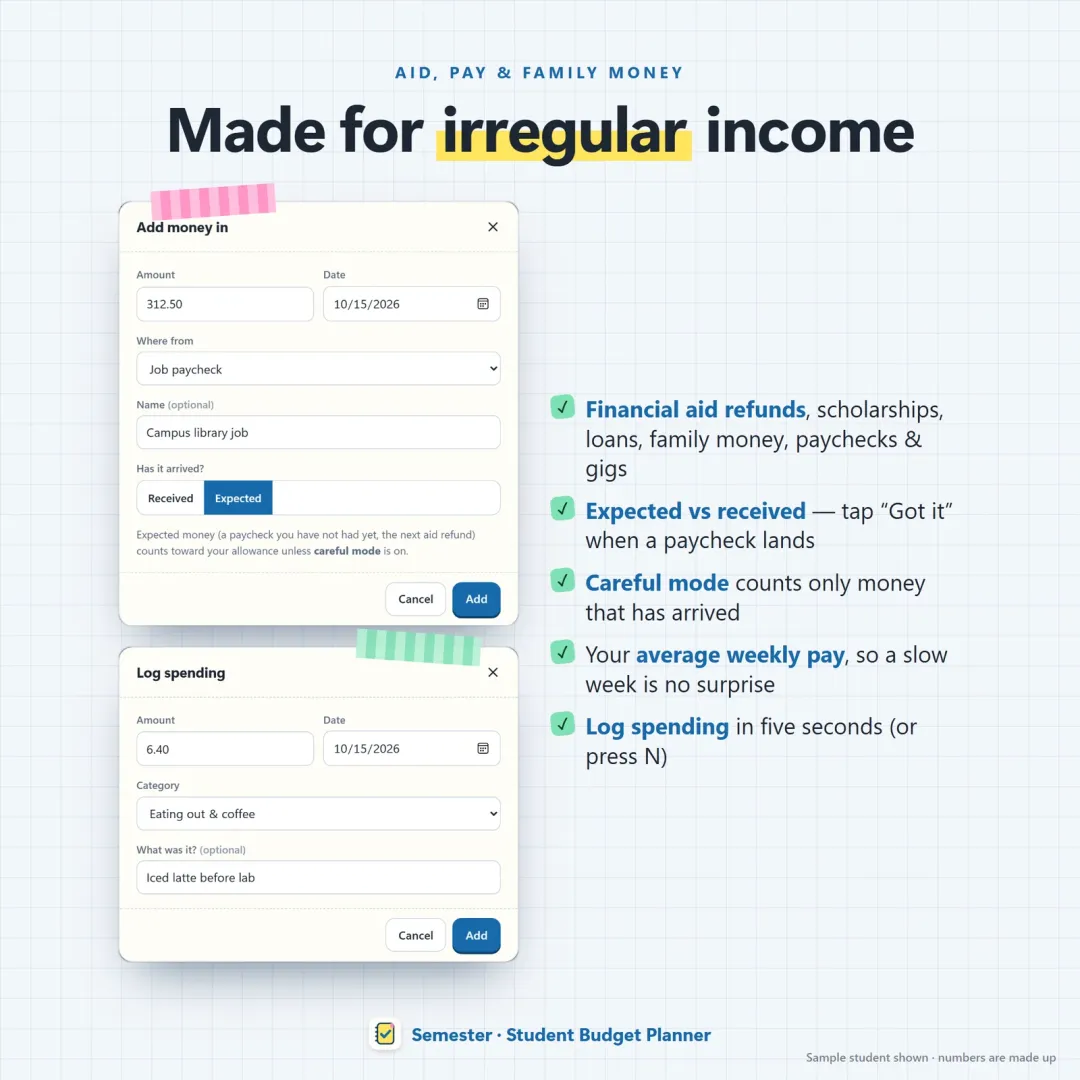
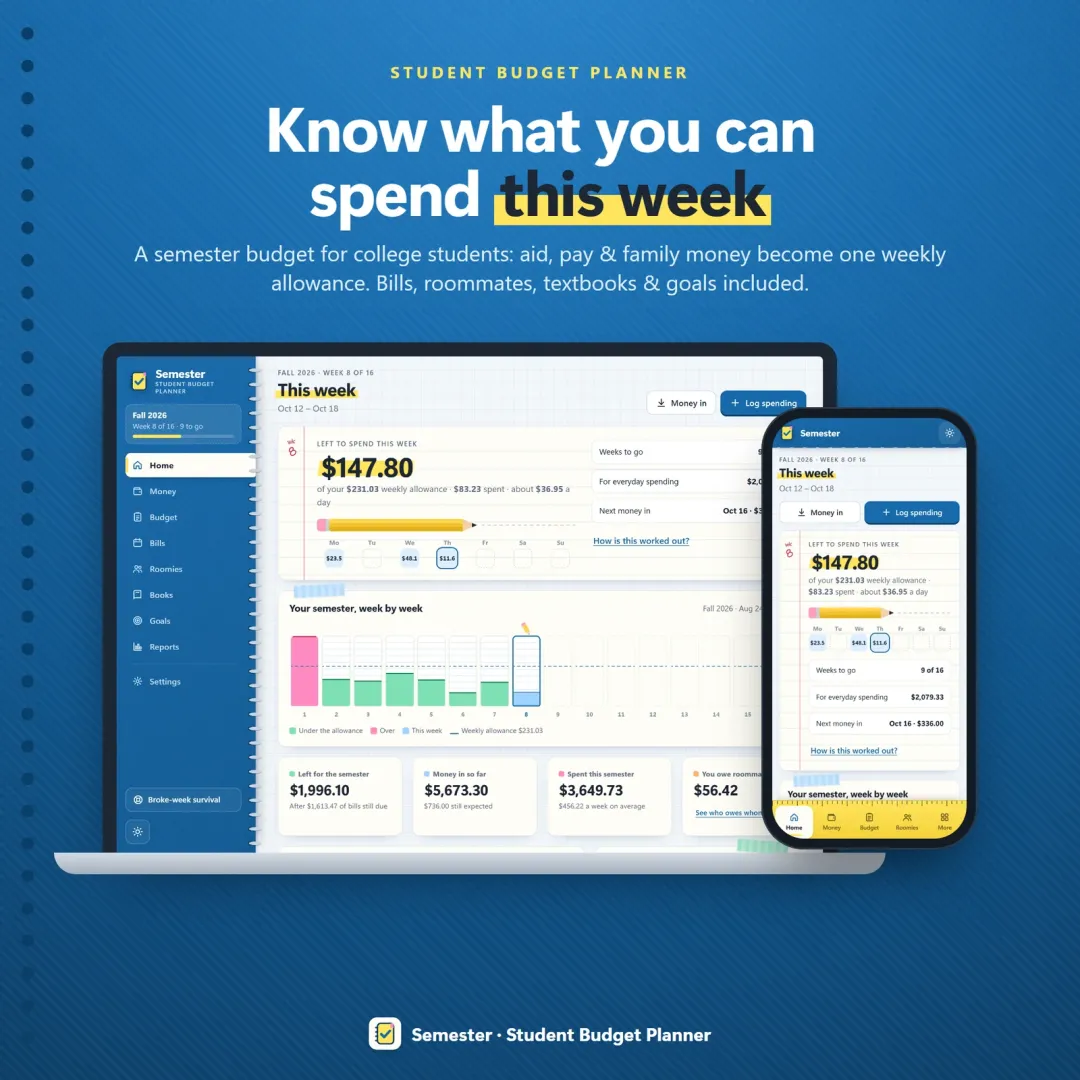
That's exactly how Semester works. You add your financial aid, family money and each paycheck as expected or received, and Semester spreads the money across the weeks left in the semester. Turn on careful mode and it counts only money that has really arrived — so a late paycheck never turns into an overdraft.
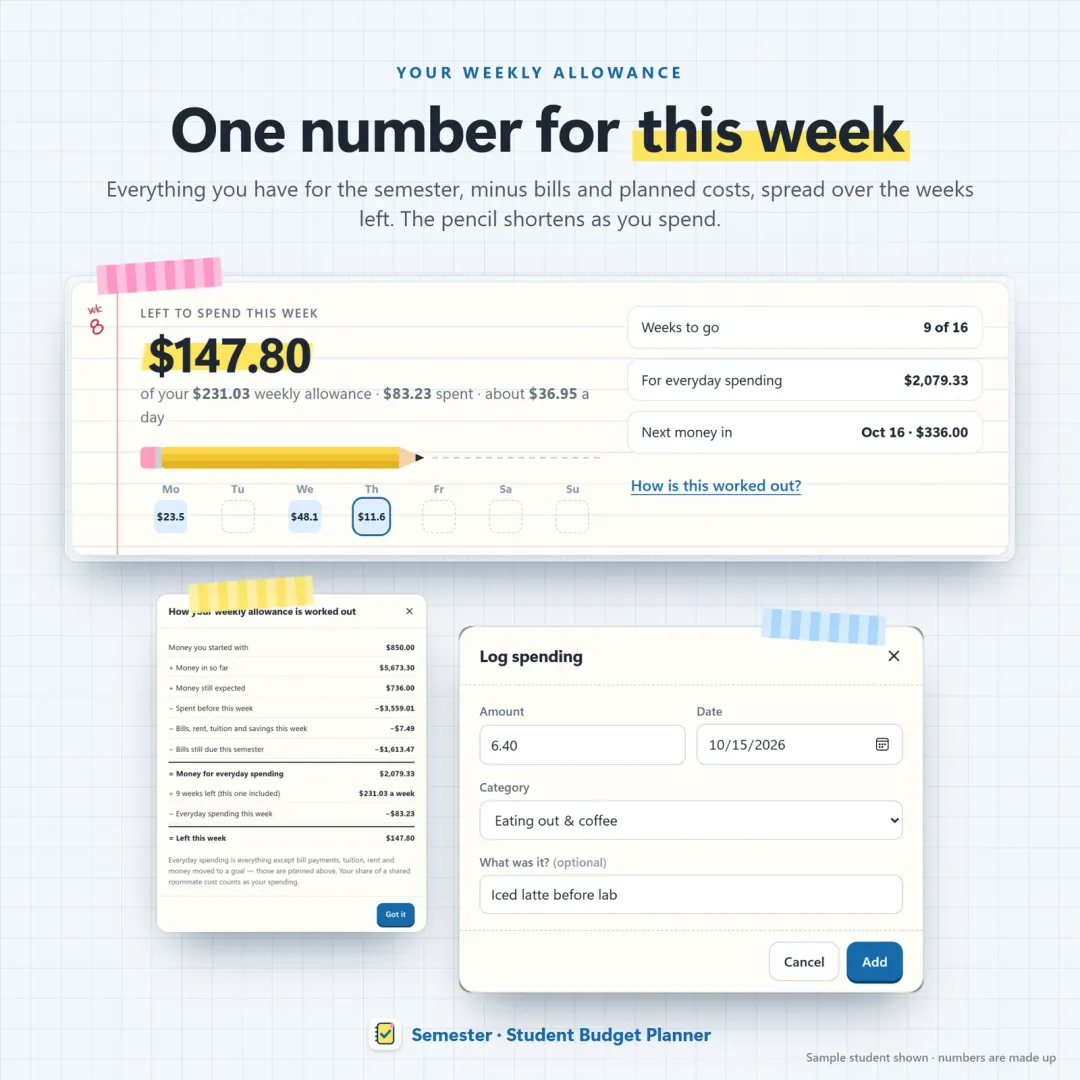
When a payment lands, mark it received and your weekly budget goes up straight away. The semester strip shows every week of the term, so you can see whether extra shifts are really making a difference.
Try the free Semester demo with a sample student — no sign-up.
Make your money go further, too
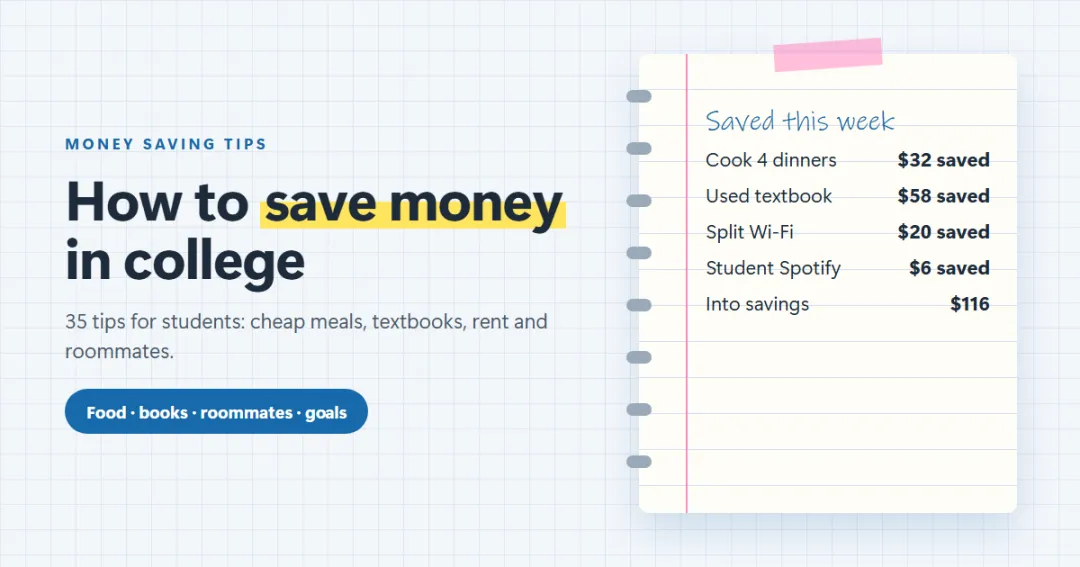
Earning more is only half of the plan. Small savings add up just as fast: cooking more, buying textbooks used, splitting costs fairly with roommates and cancelling the subscriptions you forgot about. Our guide to how to save money in college has dozens of ideas, and the rent split calculator helps you agree on a fair split before you sign a lease.
If you'd like a simple system for the whole term, see Semester, our weekly budget planner for students.
Quick plan: from broke to steady in four weeks
- Week 1: set a weekly budget and find your shortfall.
- Week 2: apply for one campus job and sign up for one flexible side hustle.
- Week 3: sell anything you don't need — last term's textbooks, clothes, a spare gadget.
- Week 4: check your real hourly rate, drop the side hustle that pays least, and put a small amount into savings.
A few hours a week, a clear budget and a habit of saving even $10 from each paycheck is enough to stop being a broke college student — and to finish the semester with something left over.
Frequently asked questions
What is the easiest way to make money in college?
How many hours should a college student work?
What side hustles can college students do online?
Do college students have to pay taxes on side hustle income?
Does work-study count as income on the FAFSA?
How do I budget money from a side hustle?
Written by
Finance Specialist & Editor, VaultlyApps
Emma Whitfield writes and edits the VaultlyApps money guides and free calculators. Her focus is US household finance — budgeting on a real paycheck, paying down credit card and student debt, emergency funds and savings goals, renting — and the money side of freelancing and small-business income, from pricing and profit margins to self-employment tax. Every guide is researched against primary sources such as IRS publications and the CFPB, every number is checked in our tested calculators, and tax content is reviewed each year when new IRS figures come out. Emma is not a licensed financial adviser or tax preparer; her work is general education, not personal advice.
Researched against primary US sources, checked with our calculators and reviewed by a finance expert on our team. Written for US readers — general education, not financial, tax or legal advice. Editorial policy · Disclaimer