100 Habit Tracker Ideas: What to Track (and How to Keep It Going)
100 habit tracker ideas for health, mind, self care, home, work, money and digital detox — plus how to choose what to track, habit journal prompts, 30-day challenge ideas, a weekly review template and tips to keep your streak going.
In this article
- What to track in a habit tracker
- 100 habit tracker ideas
- Health and body
- Mind and mood
- Self care
- Home
- Work and study
- Money
- Digital detox ideas
- Relationships and kindness
- Things to avoid ("don't" habits)
- How to set up your habit tracker
- How to keep a streak going
- Habit journal ideas
- 30-day habit challenge ideas
- A simple weekly review template
- Paper or app?
- Try Hoop
- The bottom line
A habit tracker is only as good as what you put in it. Track too many things and it becomes a chore you abandon by week three; track vague things ("be healthier") and there's nothing to tick off. The right habits are small, specific and tied to something you care about right now.
Below are 100 habit tracker ideas grouped by area, followed by how to choose what to track, habit journal ideas, 30-day challenge ideas, a simple weekly review template, and how to keep a streak going without burning out.
What to track in a habit tracker
Before you pick from the list, run each idea through four quick questions:
- Is it an action, not an outcome? "Walk 20 minutes" is trackable; "lose 5 pounds" is a result.
- Can I do it on a bad day? If not, write down a tiny version too.
- Does it have a natural cue? After breakfast, after work, before bed.
- Does it matter to me right now? A habit you chose for your own reason sticks far better than one copied from someone's feed.
Then choose three to five. You can always add more — research suggests a daily habit takes about 66 days to feel automatic, so it pays to focus.
100 habit tracker ideas
Health and body
- Drink 8 glasses of water
- Walk 7,000 steps
- 10-minute walk after lunch
- Stretch for 5 minutes
- Workout or gym session
- Yoga
- Eat fruit or vegetables with every meal
- Cook dinner at home
- Take vitamins or medication
- In bed by 10:30 pm
- 7+ hours of sleep
- No caffeine after 2 pm
- Floss
- Sunscreen
- Posture check at your desk
Mind and mood
- Meditate 5 minutes
- Journal three lines
- Write one thing you're grateful for
- Read 10 pages
- Learn a language for 10 minutes
- Practise an instrument
- Time outside in daylight
- One minute of slow breathing
- Mood check-in
- Write down one win from the day
- Listen to a podcast or audiobook
- Draw, knit or make something
- Pray or reflect
- Therapy homework or exercises
- Say no to one thing you don't want to do
Self care
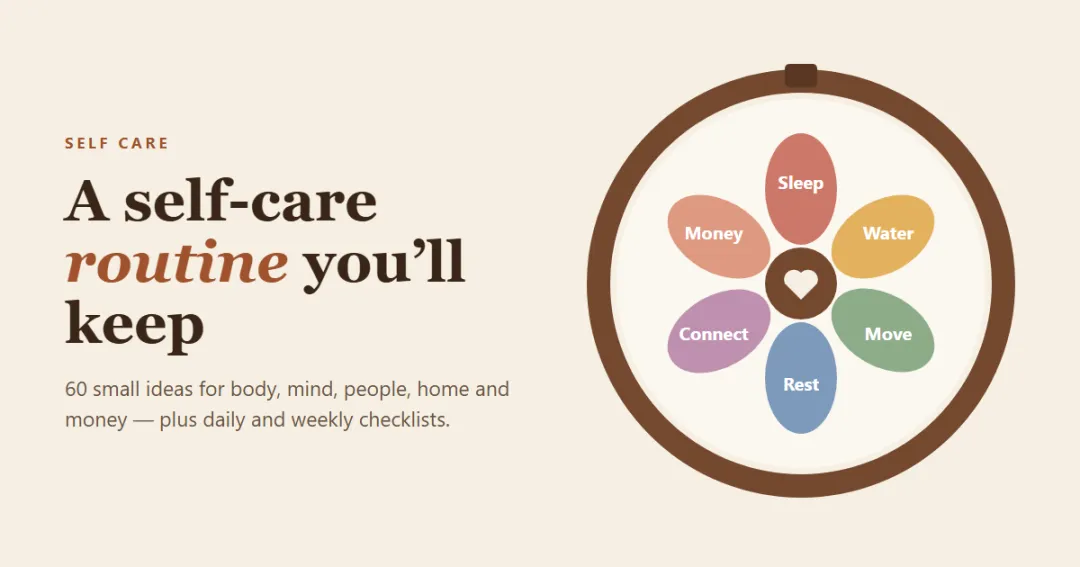
More in our self-care routine guide.
- Skincare morning and night
- Shower and get dressed, even on lazy days
- Take a proper lunch break
- Call or text a friend
- 15 minutes of something just for fun
- Bath or long shower
- Tidy your bedside table
- Hair care routine
- Wear something you like
- Self-care Sunday reset
Home
- Make your bed
- Five-minute tidy
- Dishes done before bed
- One load of laundry
- Wipe kitchen counters
- Water the plants
- Declutter one item a day
- Meal plan for the week
- Take out trash and recycling
- Clean one area of the home a day
Work and study
- Write your top three tasks
- One focus block (25–50 minutes) before email
- Two focus blocks a day
- Inbox under 10
- Review notes from class or meetings
- Study for 30 minutes
- Plan tomorrow before logging off
- No meetings before 10 am
- Work on a side project
- Update your task list
- Learn one skill for 15 minutes
- Stand or move every hour
Money
- Check yesterday's spending
- Log receipts
- No-spend day
- Pack lunch instead of buying
- Make coffee at home
- Move $10 (or any amount) to savings
- Weekly budget check
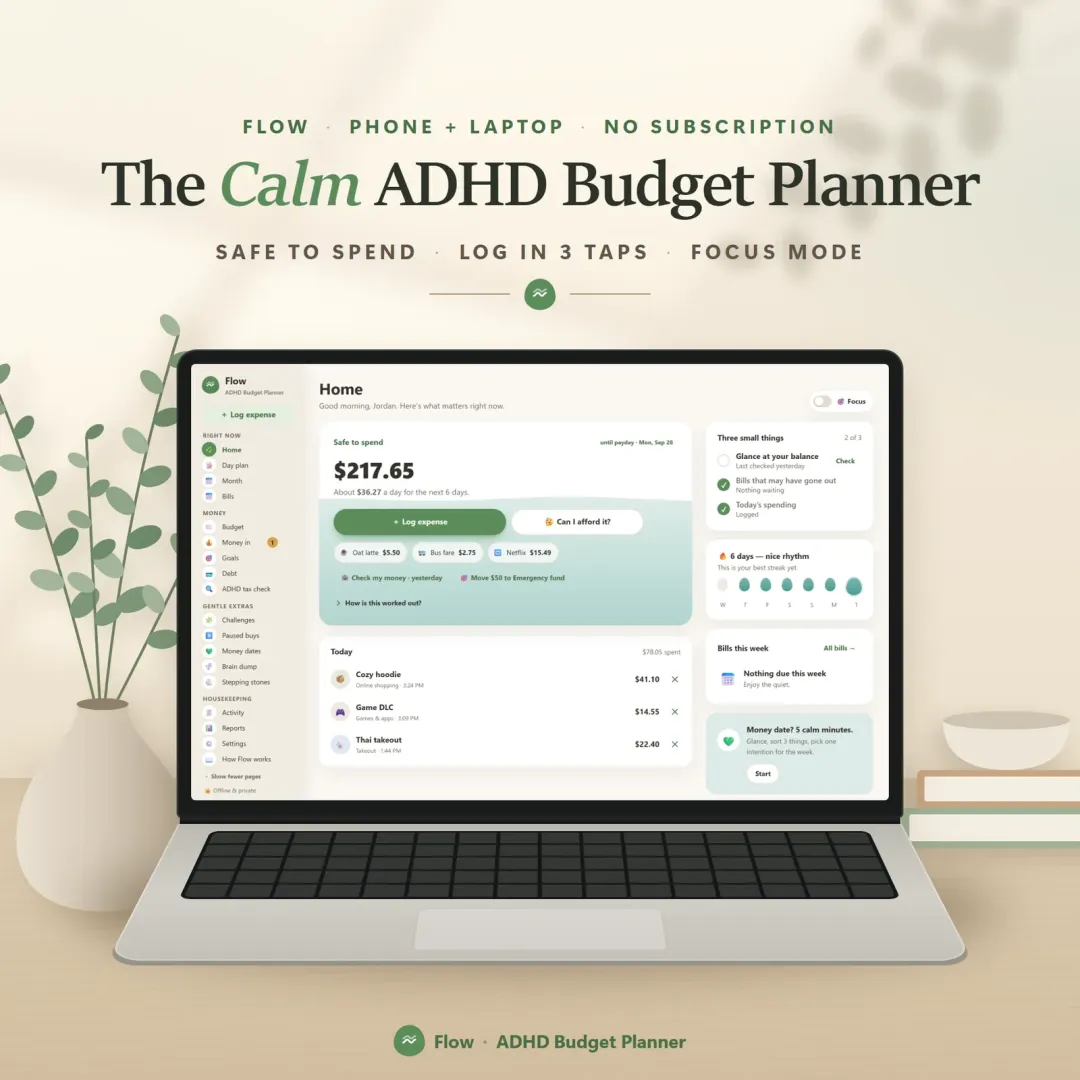
- Check your safe-to-spend number
- Wait 48 hours before non-essential purchases
- Cancel or review one subscription a month
- Extra debt payment on payday
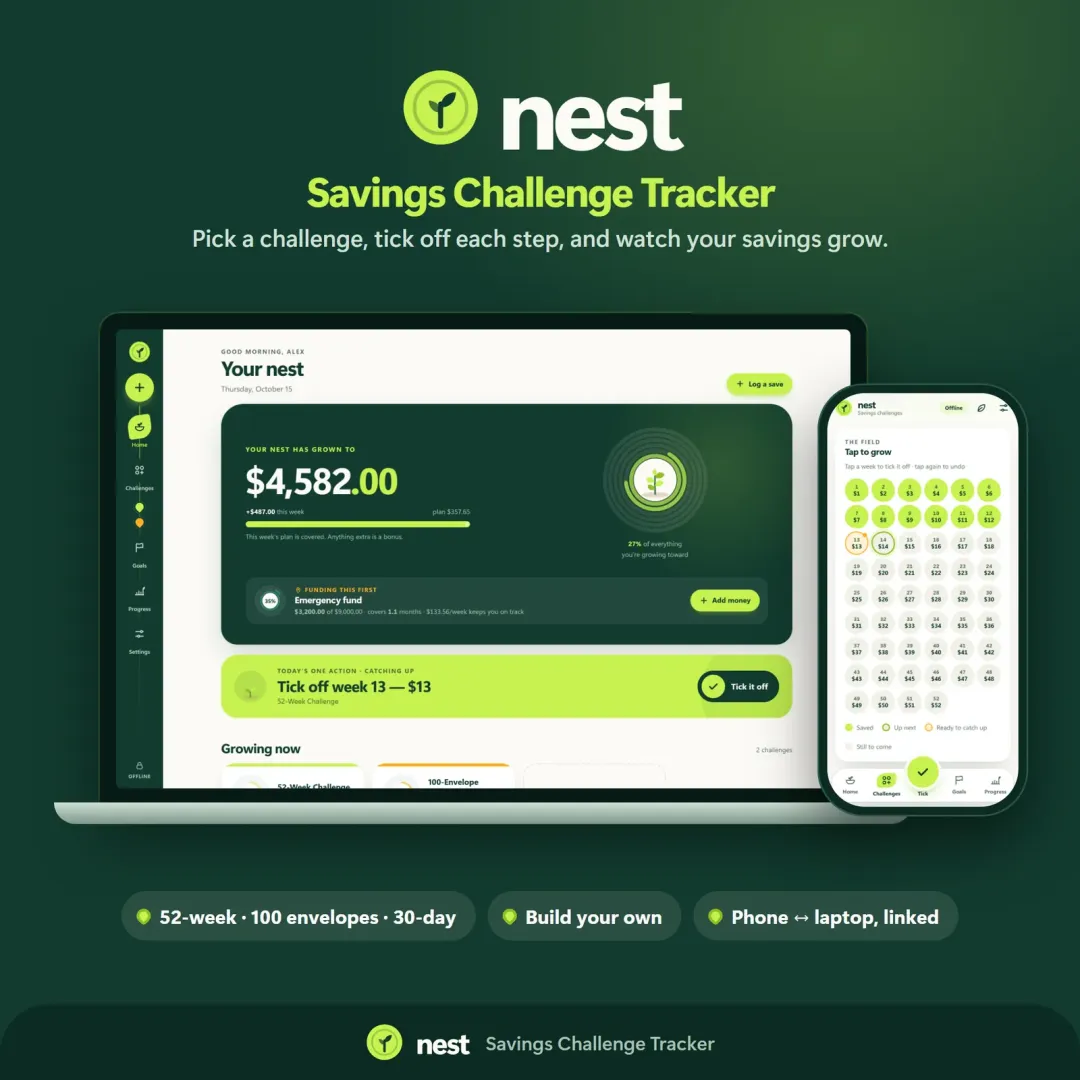
- Follow a 52-week savings challenge
Digital detox ideas
- No phone for the first 30 minutes of the day
- No phone at the dinner table
- Screens off an hour before bed
- Phone charges outside the bedroom
- Social media under 30 minutes
- No scrolling in bed
- One screen-free evening a week
- Notifications off for focus blocks
- Delete one unused app
- Grayscale mode in the evening
Relationships and kindness
- Quality time with your partner or kids
- Family dinner
- Message someone you haven't spoken to in a while
- One kind act
- Write a thank-you note
- Call a parent or grandparent
Things to avoid ("don't" habits)
Turning one of these around? See how to break a bad habit.
- No soda
- No alcohol on weeknights
- No sugary snacks after dinner
- No impulse online shopping
- No smoking or vaping
- No snoozing the alarm
- No takeout on weekdays
- No nail biting
- No complaining for a day
- No news before noon
How to set up your habit tracker
- Give each habit a cue. "After my morning coffee" or "when I get home from work". Linking habits in a chain — habit stacking — makes them far easier to remember.
- Choose the right kind of habit. Some are yes/no (made the bed), some are counts (8 glasses of water), some are things to avoid (no soda).
- Choose the right schedule. Not everything has to be daily. Gym on Monday, Wednesday and Friday, or yoga three times a week, is a better habit than a daily one you can't keep.
- Group them by time of day. Morning, afternoon, evening — so you only see what's relevant now. Our morning routine ideas are a good start for the first group.
How to keep a streak going
Streaks are one of the most motivating parts of a habit tracker — and one of the most fragile. A 40-day streak lost to a stomach bug can feel like a reason to quit everything. Protect yours:
- Make the habit small enough for a bad day. Have a tiny version: one push-up, one page, one glass of water.
- Plan rest days in advance. Days a habit isn't scheduled aren't misses.
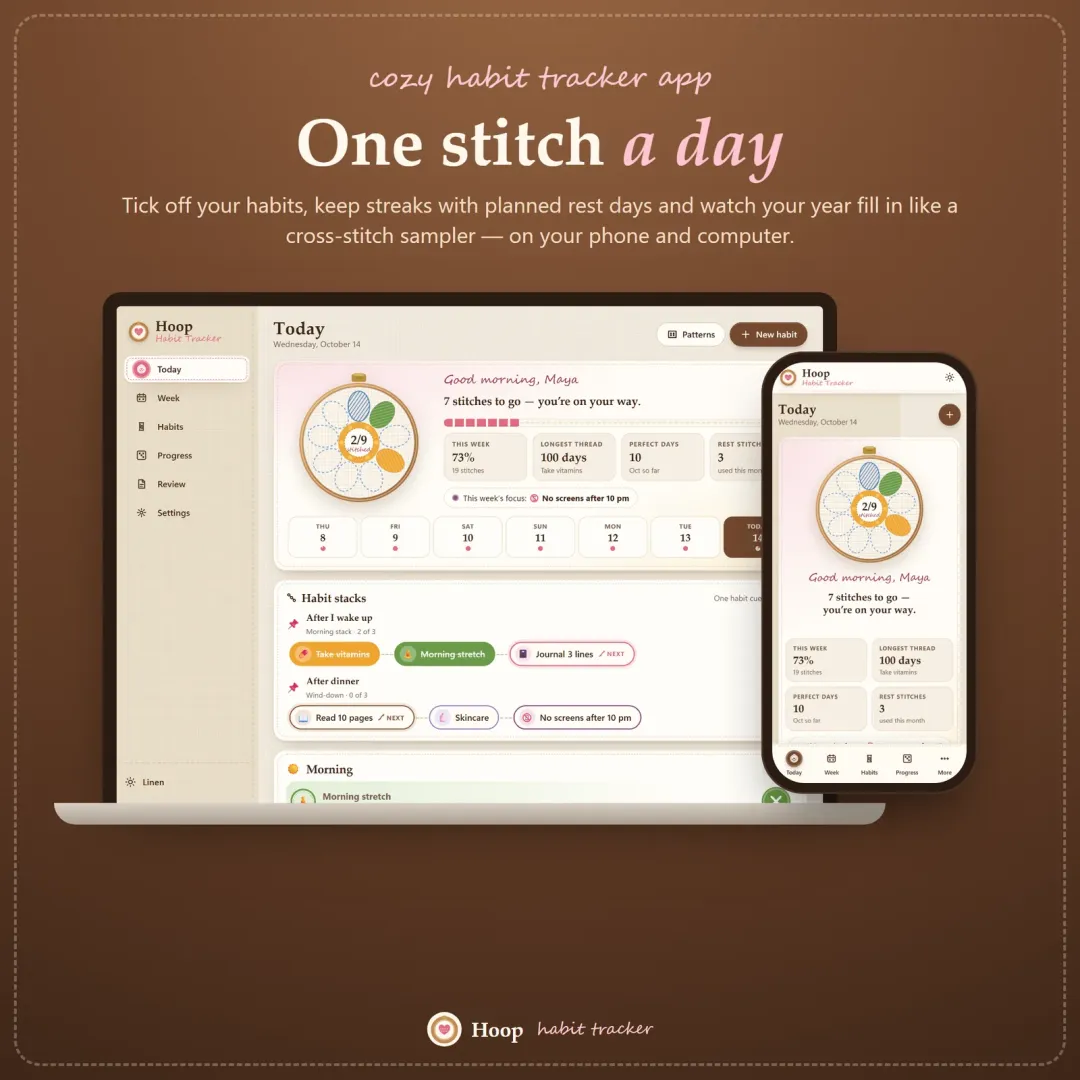
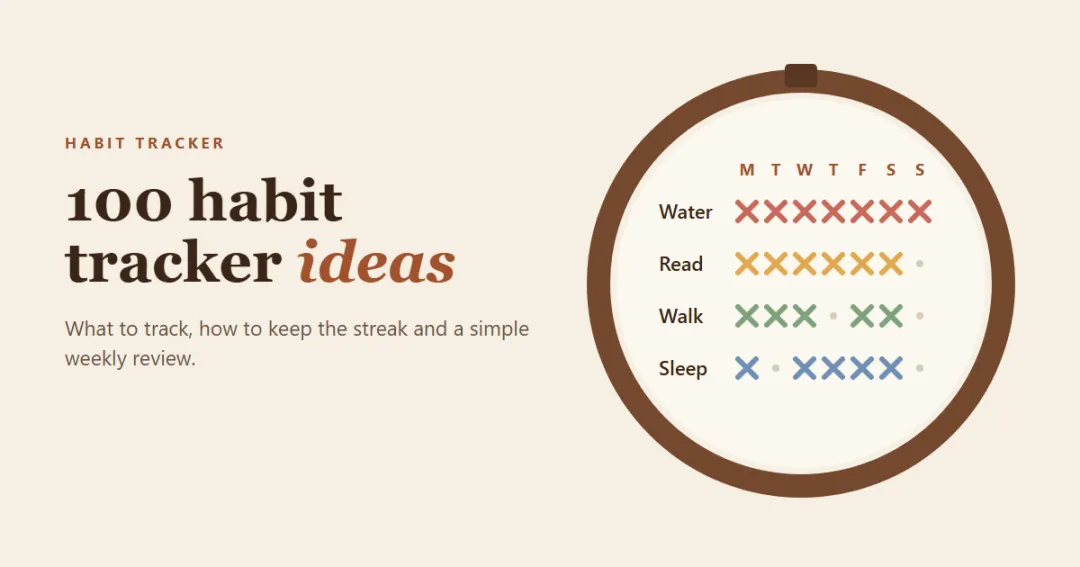
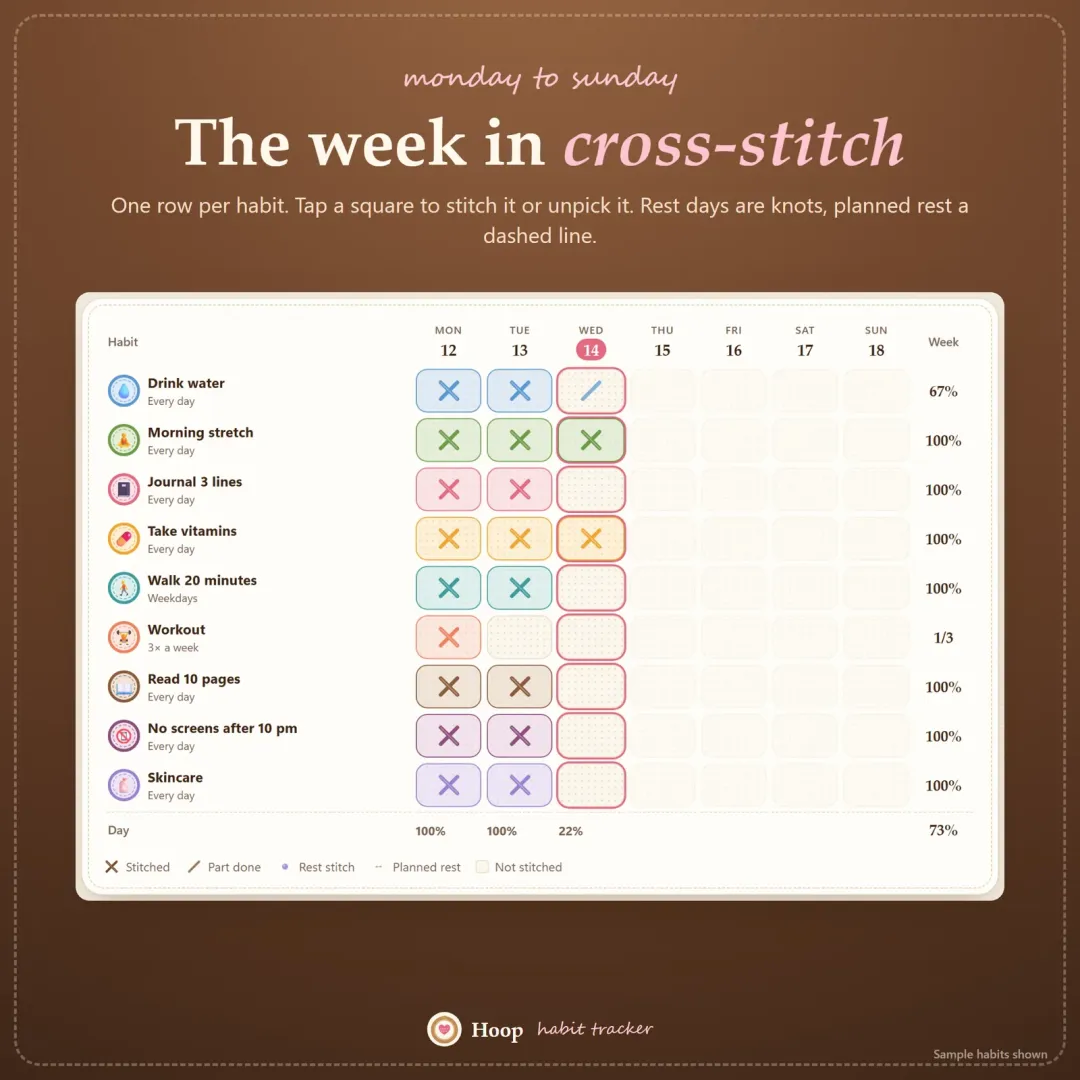
- Allow a few free misses a month. Some trackers call them rest days or freeze days; Hoop calls them rest stitches.
- Pause for vacations. Don't let a trip erase months of progress.
- Never miss twice. One miss is life. Two in a row is the start of a new pattern.
- Look at completion rate, not just the streak. 85% of days over three months is a habit, even with gaps.
Habit journal ideas
A habit journal adds a few lines of reflection to your tracker. It helps you see why some days work and others don't. A few prompts to use daily or weekly:
- How did I feel today, in one word?
- Which habit was easiest today, and why?
- What got in the way?
- What's one thing I'm proud of?
- What did I notice about my energy?
- What would make tomorrow 1% easier?
- Which habit do I most want to keep, and what's my reason?
- What's a tiny version of the habit I keep skipping?
Even a mood and a one-line note each day turns a list of ticks into a story you can learn from.
30-day habit challenge ideas
A 30-day challenge is a great way to test a habit before committing to it for the long run:
- 30-day water challenge — 8 glasses a day.
- 30-day walking challenge — 20 minutes outside daily.
- 30-day reading challenge — 10 pages a night.
- 30-day no-spend challenge — essentials only (or no-spend weekdays).
- 30-day digital detox — no phone for the first and last hour of the day.
- 30-day early-bedtime challenge — lights out by 10:30 pm.
- 30-day gratitude challenge — one line a day.
- 30-day declutter challenge — remove one item a day (or the 1-to-30 version).
- 30-day stretching challenge — 10 minutes each morning.
- 30-day savings challenge — save a small, growing amount every day.
Thirty days won't make most habits automatic — the average is closer to two months — but it's long enough to know whether a habit is worth keeping.
A simple weekly review template
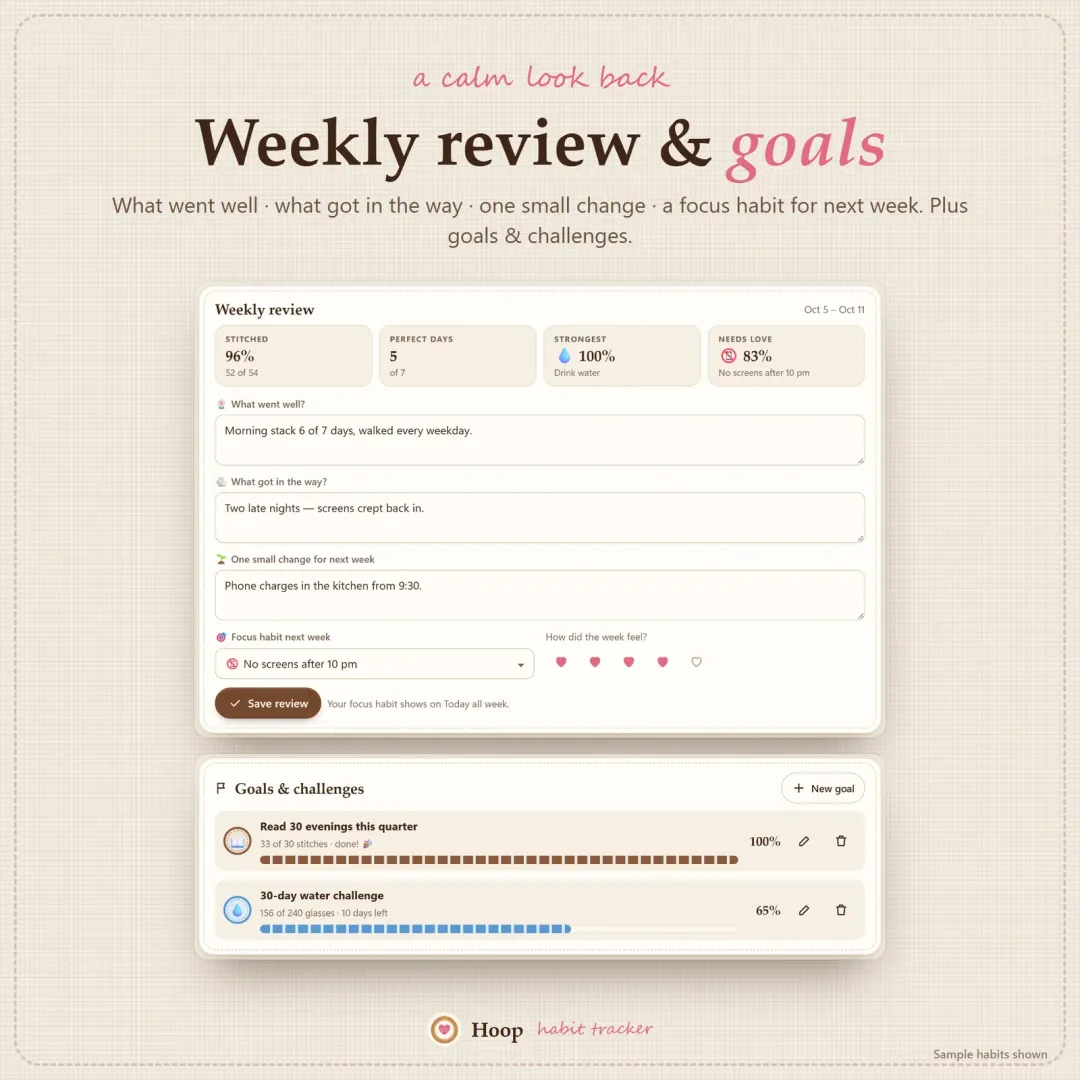
The weekly review is where a habit tracker turns into real progress. Ten minutes on Sunday evening is enough:
- What went well this week? Which habits did you keep, and what helped?
- What got in the way? Busy days, poor sleep, a missing cue?
- One small change for next week. Move a habit to a better time, make it smaller, prepare it the night before.
- Focus habit for next week. The one habit you'll protect above the others.
- Look ahead. Glance at next week's calendar and plan around busy days.
Paper or app?
A paper habit tracker in a bullet journal is lovely for a single month, and many people enjoy drawing it. An app is better at the long view: it keeps your history, works out streaks and completion rates, shows your best and hardest weekdays, and is always in your pocket. Many people use both — an app for daily tracking and a printed sheet on the fridge for the family.
Try Hoop
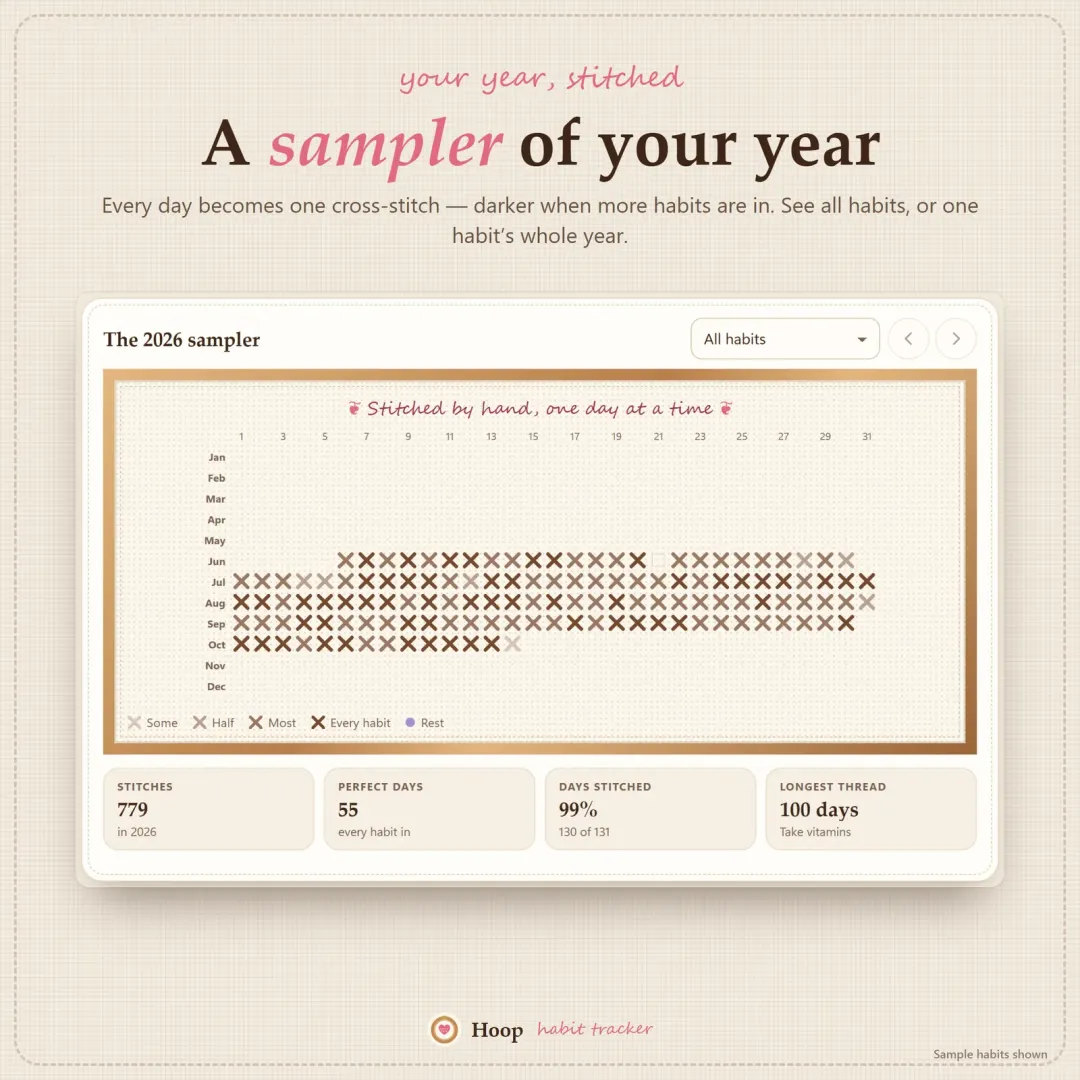
Hoop is the habit tracker we built for exactly these ideas. Habits can be yes/no, counts or things to avoid; due every day, on chosen weekdays or a few times a week; grouped by morning, afternoon and evening; and chained into habit stacks. Streaks forgive, with rest stitches and vacation pauses. There's a week grid, a month calendar for every habit, a year sampler, milestone patches from 7 to 365 days, goals and 30-day challenges, a daily mood and note, and a weekly review. It also prints, and comes with printable habit tracker sheets.
Try the free Hoop demo in your browser with sample habits — no sign-up needed.
The bottom line
Pick three to five ideas from the list that matter to you right now. Make each one specific, give it a cue and a tiny bad-day version, and track it with room for rest days. Review once a week, change one small thing, and add a new habit only when the current ones feel easy. That's how a habit tracker becomes a habit itself.
Frequently asked questions
What should I track in a habit tracker?
How many habits should I track?
What are good habits to start?
Should I track bad habits too?
How do I keep a habit streak going?
What is a habit journal?
How do I do a weekly review?
Written by
Finance Specialist & Editor, VaultlyApps
Emma Whitfield writes and edits the VaultlyApps money guides and free calculators. Her focus is US household finance — budgeting on a real paycheck, paying down credit card and student debt, emergency funds and savings goals, renting — and the money side of freelancing and small-business income, from pricing and profit margins to self-employment tax. Every guide is researched against primary sources such as IRS publications and the CFPB, every number is checked in our tested calculators, and tax content is reviewed each year when new IRS figures come out. Emma is not a licensed financial adviser or tax preparer; her work is general education, not personal advice.
Researched against primary US sources, checked with our calculators and reviewed by a finance expert on our team. Written for US readers — general education, not financial, tax or legal advice. Editorial policy · Disclaimer