What Is Financial Therapy? What a Financial Therapist Does and How to Find One
Financial therapy blends money skills with the emotional side of money. Here's what a financial therapist actually does, who it helps, what it costs, how it differs from a financial planner or a psychologist, and how to find a good one.
In this article
- What is financial therapy?
- What does a financial therapist do?
- Who is financial therapy for?
- Financial therapist vs financial planner vs financial psychologist
- What happens in a financial therapy session?
- How much does financial therapy cost?
- Credentials to look for
- How to find a financial therapist
- Financial therapy tools you can start on your own
- A calm tool for between sessions
- When to get help right away
- The bottom line
Most money advice assumes the problem is information. Spend less than you earn. Build an emergency fund. Pay off high-interest debt first. And yet millions of people who know all of that still avoid opening their bank app, argue about money with their partner, spend to feel better or lie awake worrying about bills they can actually pay.
That gap — between knowing what to do and being able to do it — is where financial therapy comes in. This guide explains what financial therapy is, what a financial therapist actually does, how it differs from a financial planner or a financial psychologist, what it costs and how to find someone good.
What is financial therapy?
Financial therapy is a way of working on money that treats feelings and finances as connected. It draws on ideas from therapy and counselling (understanding emotions, beliefs and relationships) and from financial planning (budgets, debt, saving, goals). The aim isn't just a better spreadsheet; it's a calmer, healthier relationship with money that makes the spreadsheet stick.
The field is young. The Financial Therapy Association, the main professional body in the US, was formed around 2010 by a group of therapists, financial planners and researchers who kept seeing the same thing: clients whose money problems were really about shame, fear, family history or relationship conflict, and clients whose emotional problems were being made worse by money stress. Neither a therapist nor a planner alone could fully help.
You'll sometimes hear it called money therapy. The terms are used loosely; what matters is the approach — working on the why and the how together.
What does a financial therapist do?
A financial therapist helps you understand why you do what you do with money, and then helps you do something different. In practice, sessions often include:
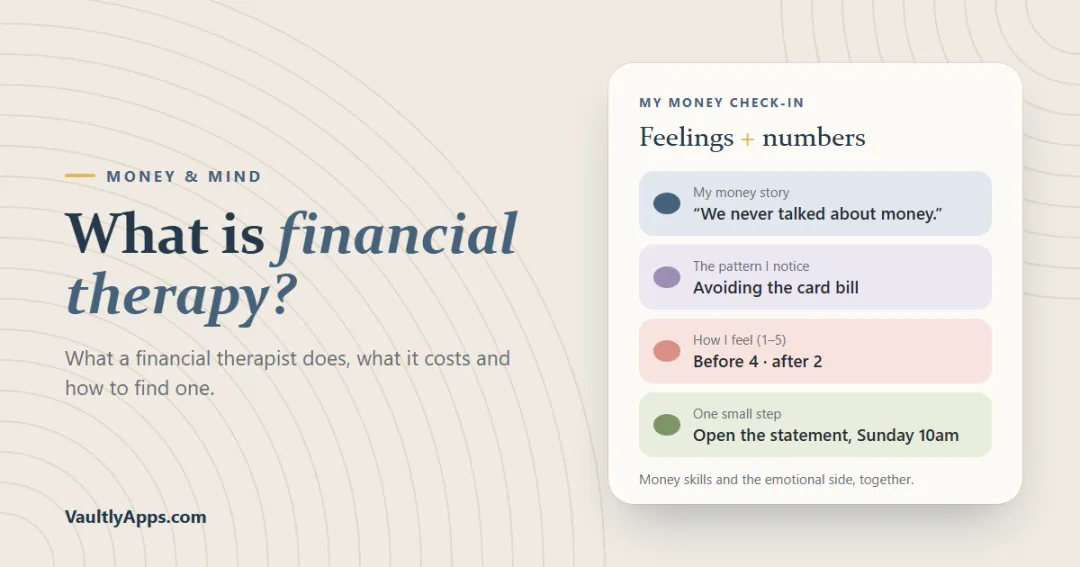
- Your money story. What did money feel like growing up? Was it scarce, secret, a source of fights, a way of showing love? Early experiences shape adult habits more than most people expect.
- Spotting patterns. Avoidance (not opening mail), overspending when stressed, under-spending even when you can afford things, giving money away to keep the peace, or constant checking and worrying.
- Naming your money beliefs. Psychologist Brad Klontz and colleagues described common "money scripts" — unspoken beliefs like money is bad, more money will fix everything, my worth is my net worth or you should always save, never enjoy. Seeing your own scripts written down can be eye-opening.
- Feelings work. Lowering the anxiety, shame or anger that comes up around money, so you can look at your finances without shutting down.
- Practical steps. A simple budget, a plan for debt, a first emergency fund, a script for asking for a raise or a payment plan — sized so they feel doable.
- Couples work. Many financial therapists see couples who fight about money, have very different money personalities or are combining finances for the first time.
A good financial therapist won't hand you a strict budget and send you home. They'll help you build the skills and the emotional safety to keep going when it gets uncomfortable.
Who is financial therapy for?
Financial therapy isn't only for people in crisis or deep in debt. People seek it for:
- Financial anxiety — constant worry, dread or panic about money, even when things are objectively okay. (Our guide to financial anxiety goes deeper.)
- Money avoidance — not opening bills, not checking balances, putting off taxes.
- Emotional or compulsive spending — buying to cope with stress, boredom or sadness. See also how to stop impulse buying.
- Money conflict in relationships — repeated fights, secrecy, very different spending styles.
- Big transitions — divorce, inheritance, a sudden windfall, job loss, starting a business, becoming a parent.
- Financial trauma — growing up in poverty, financial abuse, bankruptcy or a scam.
- High earners who still feel unsafe — when no amount ever feels like enough.
If money is taking up more of your head than it should, or you keep repeating patterns you don't want, financial therapy may help.
Financial therapist vs financial planner vs financial psychologist
These roles overlap, and some people are trained in more than one. The differences:
| Financial therapist | Financial planner | Financial psychologist | |
|---|---|---|---|
| Main focus | Your relationship with money: feelings, beliefs, habits, plus practical steps | Numbers and strategy: investing, retirement, insurance, taxes | Mental health and money behaviour |
| Typical background | Therapist, counsellor, social worker, coach or planner with extra training | Financial planning (for example CFP® certification) | Licensed psychologist (PhD or PsyD) |
| Can diagnose and treat mental health conditions? | Only if separately licensed | No | Yes |
| Gives investment advice? | Usually not | Yes | No |
| Good fit when… | You know what to do but can't make yourself do it | You want a plan for your money | Money stress is tied to anxiety, depression, addiction or trauma |
A financial psychologist is a licensed psychologist who specialises in money. Because they're clinicians, they can diagnose and treat conditions such as anxiety disorders or compulsive buying, and their sessions are more likely to be covered by health insurance.
Many people work with two professionals at once: a planner for the strategy, a therapist for the behaviour. That's often the most effective combination.
What happens in a financial therapy session?
Every practitioner is different, but a typical path looks like this:
- A short intro call (often free) to see if you're a good fit and to talk about fees.
- An intake session — your current situation, your money history, what you want to change. Some therapists ask you to fill in a questionnaire about money beliefs beforehand.
- Regular sessions, often weekly or every other week at first. Some time goes on feelings and patterns, some on concrete tasks.
- Homework between sessions — a spending log, a conversation, a weekly money check-in, a small savings step.
- Tapering off once you feel steadier, with occasional check-ins.
Many people find that six to twelve sessions make a real difference for a specific issue, though longer work is common for deeper patterns or trauma.
How much does financial therapy cost?
Prices vary a lot by location, credentials and format. Many financial therapists charge in the same range as other therapists or coaches — often somewhere around $100 to $250 per session, sometimes more in big cities or for very experienced clinicians. Some offer packages, group programmes or sliding-scale fees.
Insurance usually doesn't cover financial therapy on its own. It may cover sessions with a licensed mental health professional (a psychologist, licensed counsellor or clinical social worker) who is treating a diagnosable condition and is in your network. Always ask the provider and your insurer before you start.
If cost is a barrier, there are lower-cost options:
- Nonprofit credit counselling (look for agencies affiliated with the National Foundation for Credit Counseling) for help with debt and budgeting.
- Employee assistance programmes (EAPs) — many employers offer a few free counselling sessions, sometimes including financial coaching.
- Community mental health centres and university training clinics, which often have sliding scales.
- Group workshops run by financial therapists, which cost less than one-to-one sessions.
Credentials to look for
"Financial therapist" isn't a protected title in most places, so look at the background behind it:
- Certified Financial Therapist (CFT-I™) — a certification from the Financial Therapy Association, which requires education in both mental health and finance, supervised experience and an exam.
- A mental health licence — licensed professional counsellor (LPC), licensed marriage and family therapist (LMFT), licensed clinical social worker (LCSW) or psychologist. Required if you want them to treat anxiety, depression or trauma.
- A financial credential — for example CFP® certification, or the Certified Financial Social Worker (CFSW) credential.
- Training in your specific issue — couples and money, compulsive buying, financial trauma, business owners.
You can check licences on your state licensing board's website.
How to find a financial therapist
- Search the Financial Therapy Association's directory of members and certified financial therapists.
- Search therapist directories for licensed clinicians in your state who list "financial stress", "money" or "compulsive spending" as a speciality. Many work online, which widens your options.
- Ask your financial planner, if you have one — many have a therapist they refer clients to (and vice versa).
- Book two or three short intro calls. Ask:
- What's your background — mental health, finance or both?
- How do you usually work with someone like me?
- What do sessions cost, and do you offer packages or sliding scales?
- Do you work online? How often would we meet?
- Choose the person you feel safe with. Research on therapy in general consistently finds that the relationship matters a great deal. You should feel heard, not judged.
Financial therapy tools you can start on your own
Self-help isn't a replacement for a professional, but many of the tools financial therapists use are simple enough to try today:
Write your money story. Spend 15 minutes answering: What did my family say about money? What did they do? What's my earliest money memory? What do I believe about people who have a lot of money — or very little? You'll often find a belief you've been carrying for decades without examining it.
Do a feelings-only check-in. Before you look at any number, ask: How do I feel about money right now, from 1 to 5? Then look at your accounts. Afterwards, ask again. Over a few weeks, most people notice that looking — gently, regularly — lowers the number.
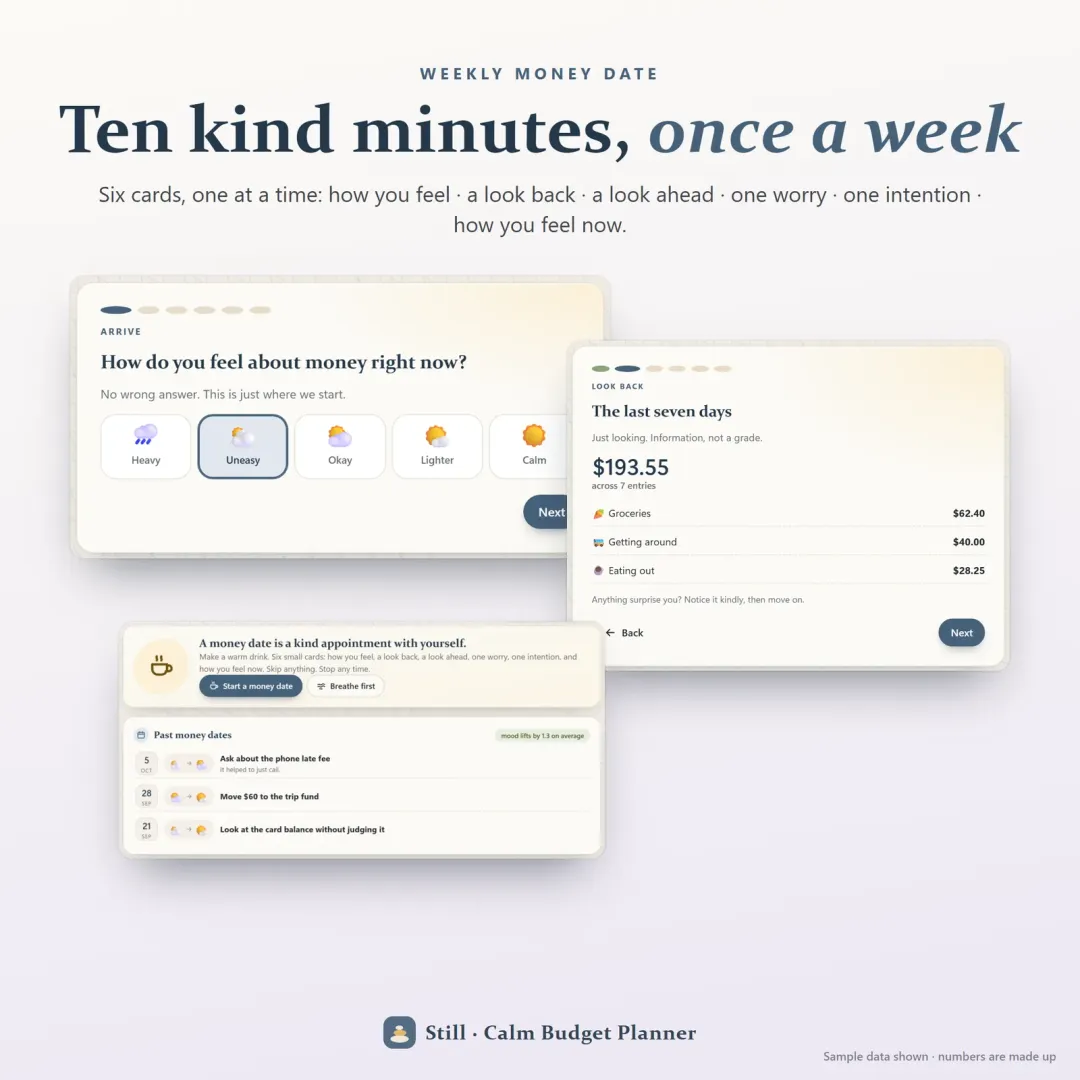
Hold a weekly money date. Ten minutes, same time each week, something nice to drink. Look back at the week, look ahead at what's coming, write down one worry and one intention. Short and predictable beats long and dreaded.
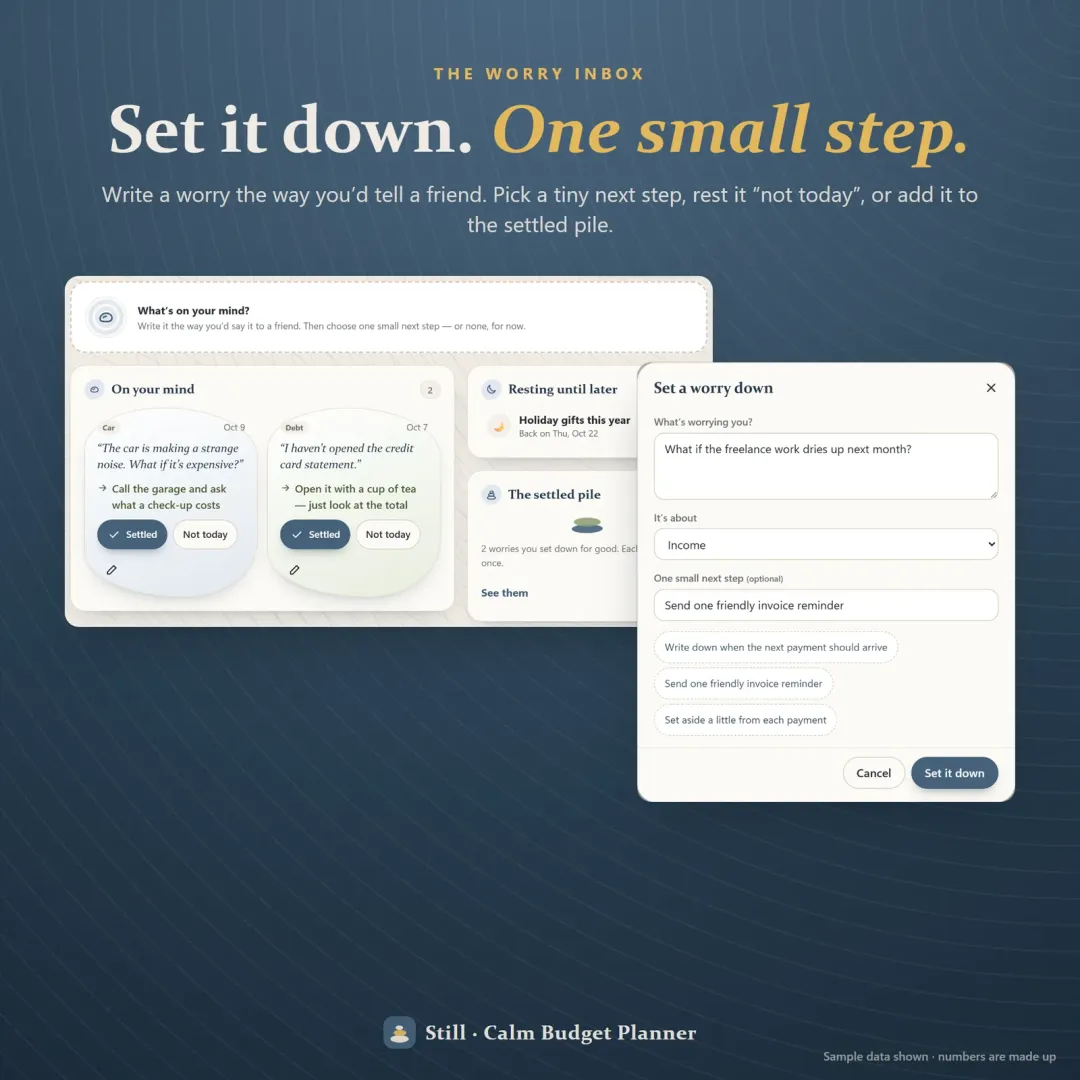
Set worries down. When a money worry spins, write it down in a sentence. Then choose one: a tiny next step you could take this week, "not today" (and a day you'll look at it again), or "settled" if it's already handled.
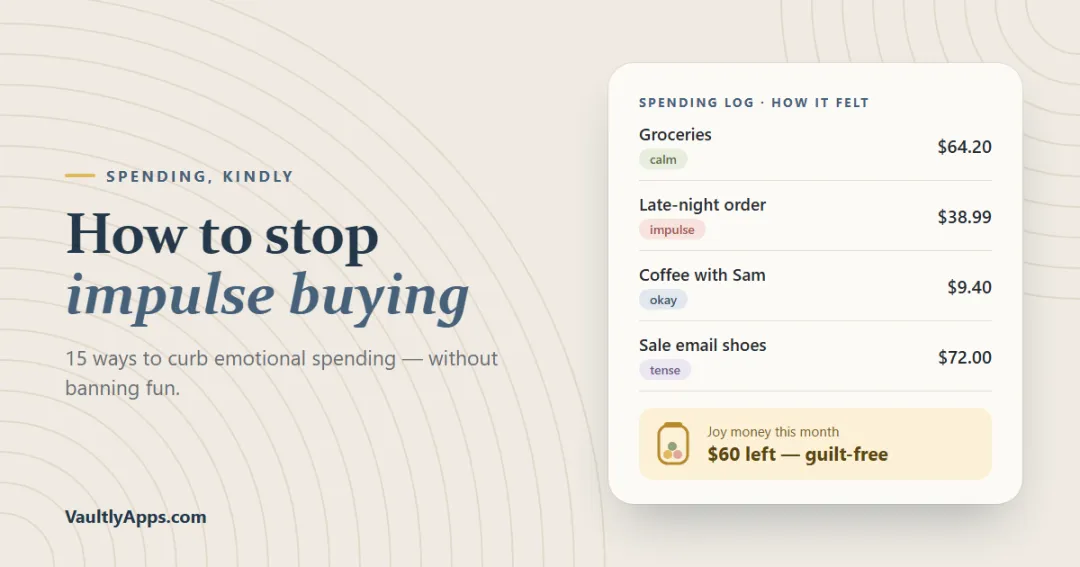
Tag spending with feelings. For a month, note how you felt when you bought something — calm, okay, tense, impulse. Patterns jump out quickly, and they make great material for a therapy session.
Write a financial safety plan on a good day. What must be covered each month, how long your savings would last, the first three things you'd do if income stopped, and who you could call. Having it written calms the "what if" spiral. The free how long will my savings last calculator helps you fill in the numbers.
A calm tool for between sessions
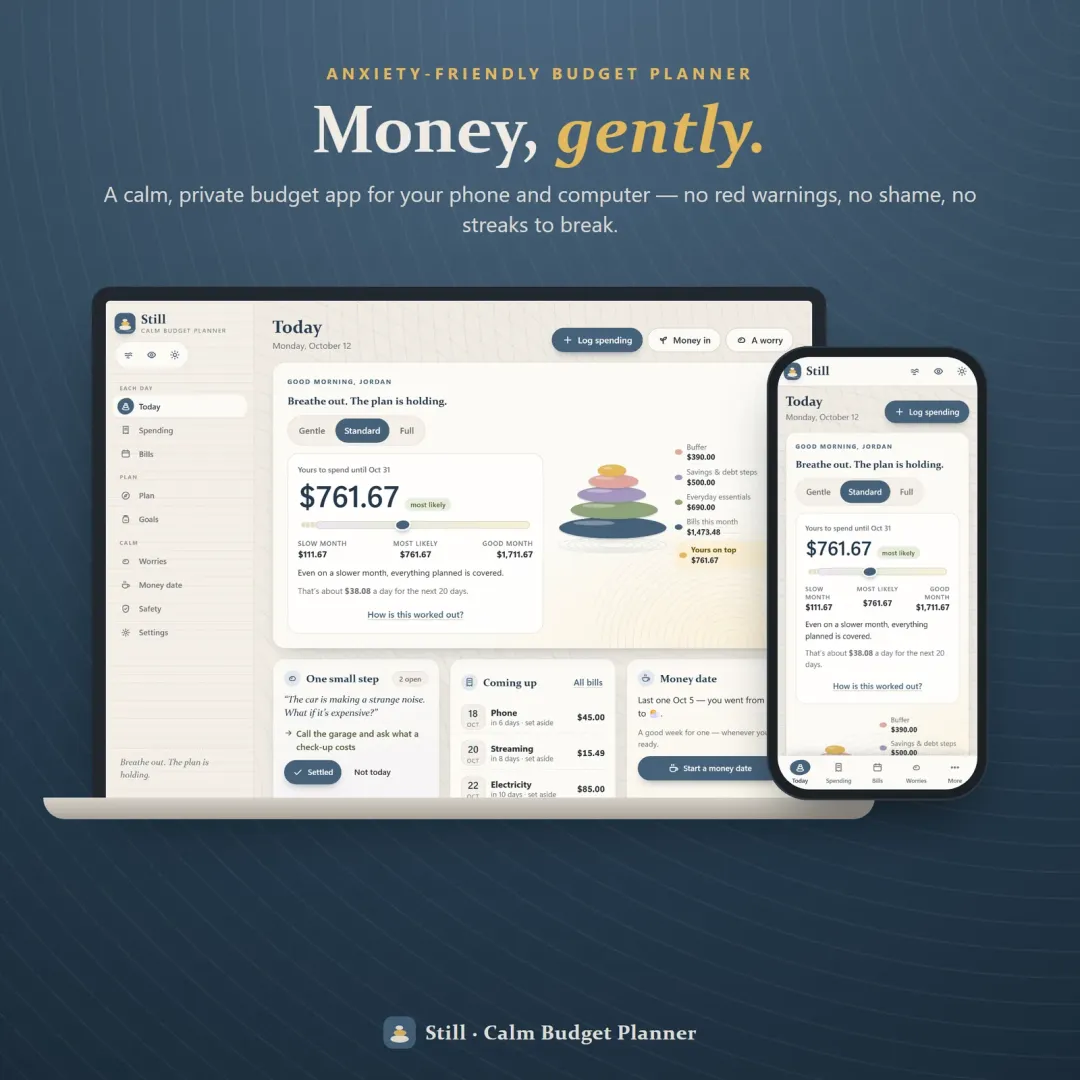
Many financial therapists recommend some kind of simple tracking between sessions — but standard budgeting apps can work against the goal, with red warnings, streaks and a single safe-to-spend number that swings your mood.
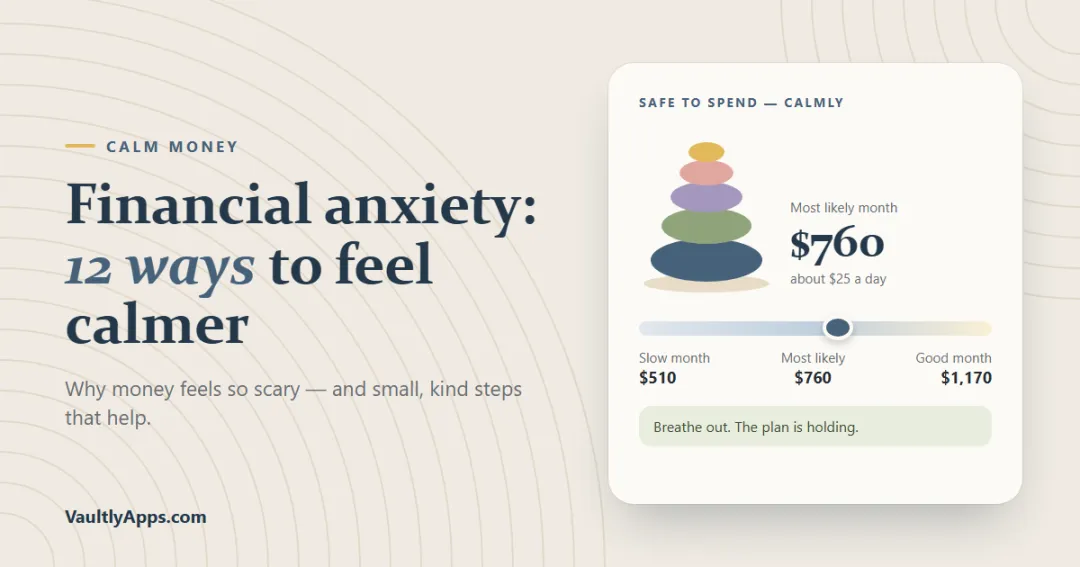
That's why we built Still, a calm digital budget planner for financial anxiety. It shows what's safe to spend as a range (a slow month, the most likely month and a good month), never uses red, and lets you choose how much you see. The worry inbox, weekly money dates, feelings tags on spending and a printable financial safety plan mirror the exercises above, and a Breathe mode hides every number when you need a pause. It never connects to your bank, so nothing appears until you add it. You can try the free Still demo in your browser.
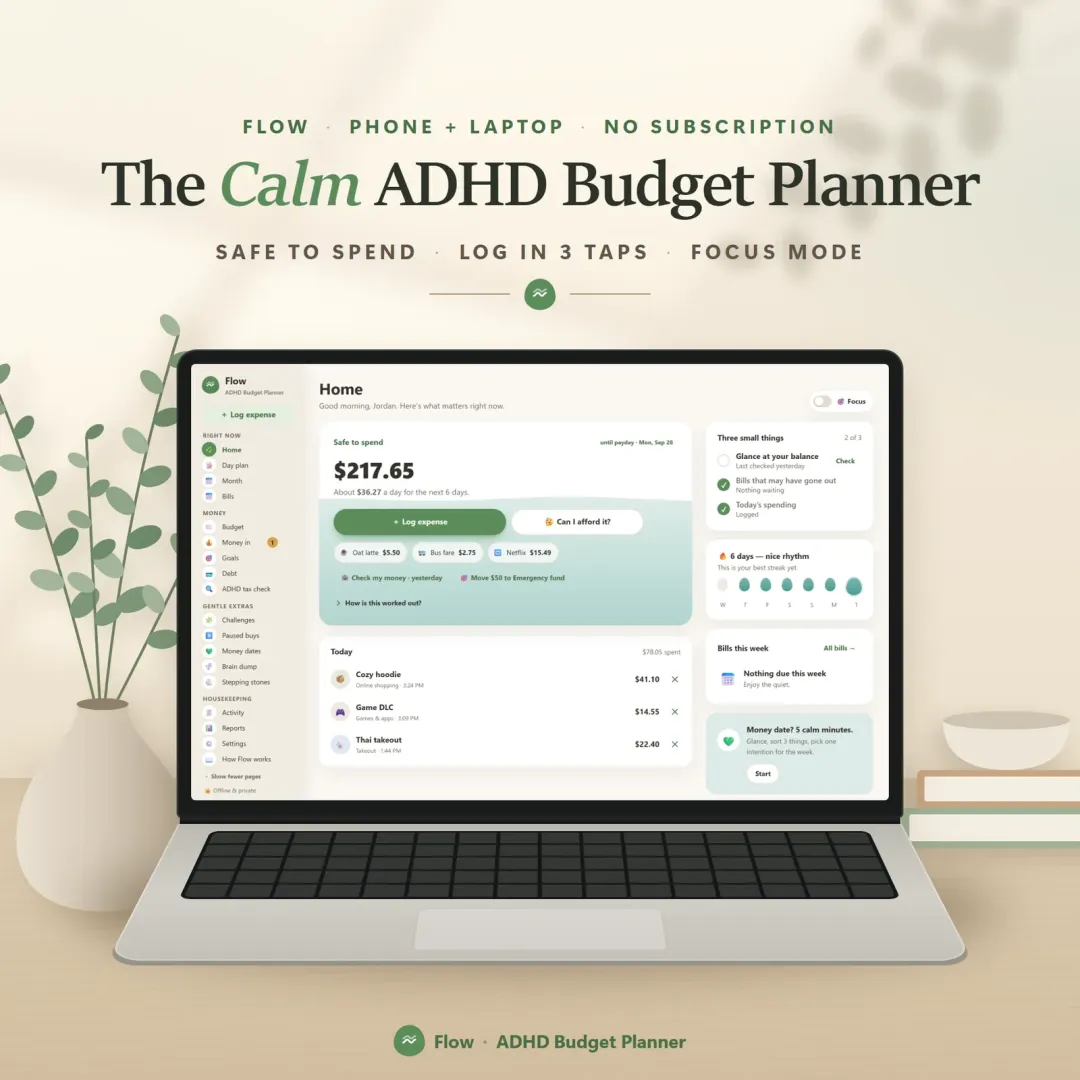
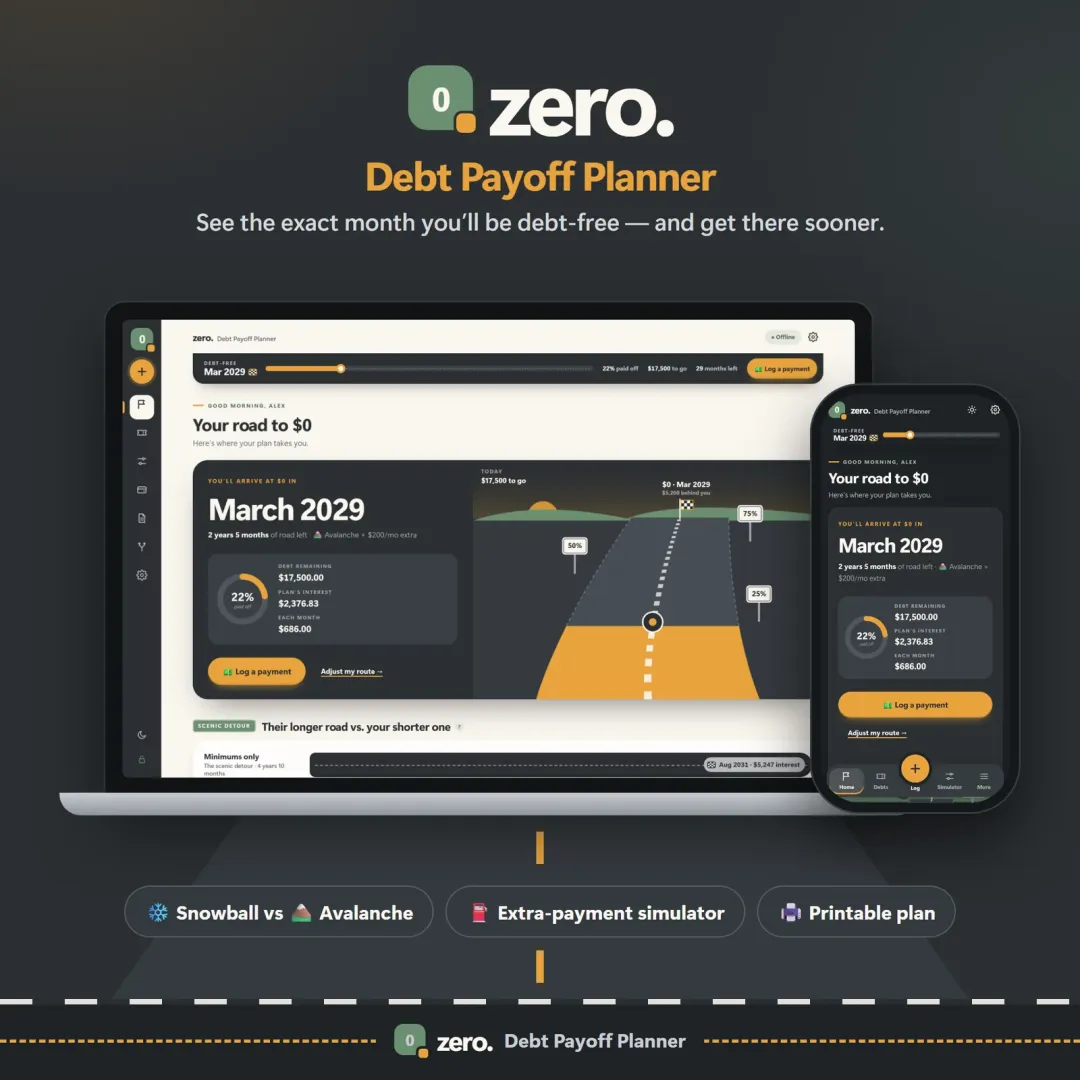
If you're also working through debt, Zero maps your payoff step by step; if your brain needs quick wins, Flow is our ADHD-friendly budget.
When to get help right away
Money stress can become a crisis. If you're having thoughts of harming yourself, call or text 988 (the Suicide & Crisis Lifeline in the US) or your local emergency number. If debt collectors, eviction or utility shut-offs are close, contact a nonprofit credit counsellor or your local legal aid office today — there are often more options than it feels like.
The bottom line
Financial therapy is for anyone whose money problems aren't really about information. A financial therapist helps you understand the feelings and beliefs behind your money habits and then change them, one small, doable step at a time. If cost is a hurdle, start with the free tools above, a nonprofit counsellor or your employer's EAP — and be as kind to yourself about money as you would be to a friend.
This article is general information, not financial, medical or mental-health advice.
Frequently asked questions
What is financial therapy?
What does a financial therapist do?
Is a financial therapist the same as a financial planner?
How much does financial therapy cost?
Does insurance cover financial therapy?
What is a financial psychologist?
How do I find a financial therapist?
Can I do financial therapy on my own?
Written by
Finance Specialist & Editor, VaultlyApps
Emma Whitfield writes and edits the VaultlyApps money guides and free calculators. Her focus is US household finance — budgeting on a real paycheck, paying down credit card and student debt, emergency funds and savings goals, renting — and the money side of freelancing and small-business income, from pricing and profit margins to self-employment tax. Every guide is researched against primary sources such as IRS publications and the CFPB, every number is checked in our tested calculators, and tax content is reviewed each year when new IRS figures come out. Emma is not a licensed financial adviser or tax preparer; her work is general education, not personal advice.
Researched against primary US sources, checked with our calculators and reviewed by a finance expert on our team. Written for US readers — general education, not financial, tax or legal advice. Editorial policy · Disclaimer