
How to use the grocery budget calculator
- Add everyone who eats at home with their age group. Kids' costs change a lot with age, so pick the closest group.
- Choose a USDA food plan. Thrifty is the tightest, Liberal the most generous. Moderate is a sensible middle for most families.
- Optional: add your monthly take-home pay to see the share of your income, and what you spend on groceries now to see which plan you're closest to.
Average grocery bill by household size (2026)
Monthly cost of food at home from the USDA food plans, September 2026 U.S. averages, with the USDA's household-size adjustment applied. Adults are aged 19 to 50; kids are 6 to 8 and 9 to 11.
| Household | Thrifty | Low-cost | Moderate | Liberal |
|---|---|---|---|---|
| 1 adult (woman) | $305 | $332 | $403 | $515 |
| 1 adult (man) | $383 | $381 | $478 | $584 |
| 2 adults | $630 | $653 | $808 | $1,008 |
| 2 adults + 1 child (6–8) | $821 | $899 | $1,091 | $1,337 |
| 2 adults + 2 children | $1,024 | $1,127 | $1,389 | $1,681 |
| 2 adults + 3 children | $1,202 | $1,328 | $1,651 | $1,985 |
The third child in the last row is 9 to 11 as well. Teenagers cost more: a 14 to 18-year-old boy costs about as much as an adult man.
What the four USDA food plans mean
- Thrifty Food Plan. The lowest-cost healthy diet. It's the basis for SNAP (food stamp) benefits and assumes careful shopping, store brands and cooking almost everything from scratch.
- Low-cost plan. A little more room for convenience foods and a wider choice of meat and produce.
- Moderate-cost plan. Close to what a typical middle-income family really spends at the store.
- Liberal plan. More expensive cuts, more prepared foods and more variety.
All four plans assume every meal and snack is made at home. That's why your real bill can look higher: lunches out, coffee and takeout aren't in these numbers.
How much of your income should go to groceries?
There's no fixed rule, but most US households spend between 6% and 12% of take-home pay on groceries. In a 50/30/20 budget, groceries count as a need, along with rent, utilities and insurance. If your grocery bill is well above the Moderate plan for your household, the money usually leaks out through:
- unplanned trips "just for milk" that end with a full cart,
- food that goes bad before anyone eats it,
- buying ingredients for meals that never get cooked,
- takeout on nights when nothing was planned.
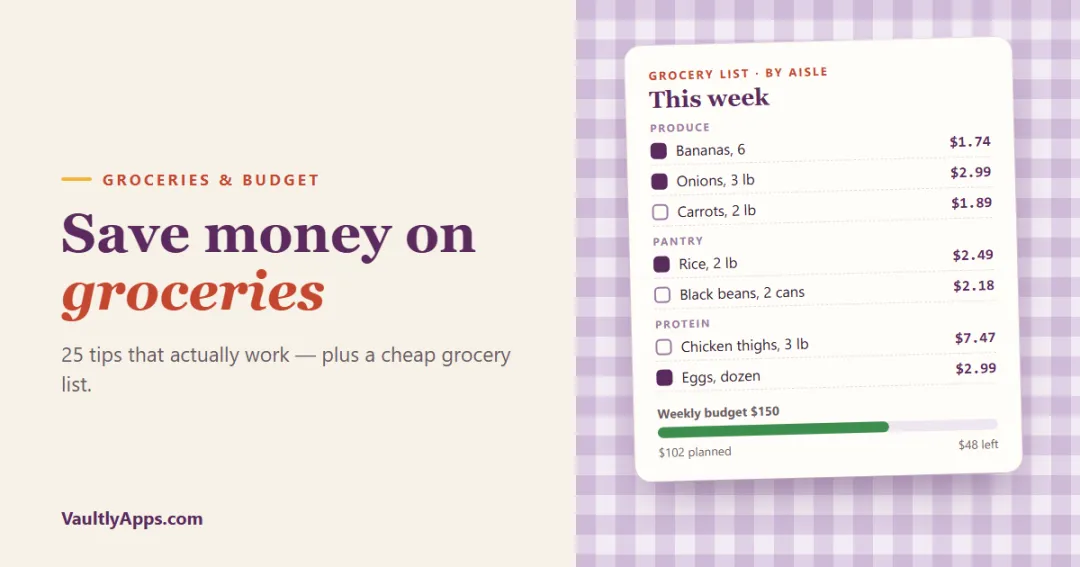
Our guide on how to save money on groceries covers 25 ways to fix those leaks.
Turn the budget into a plan
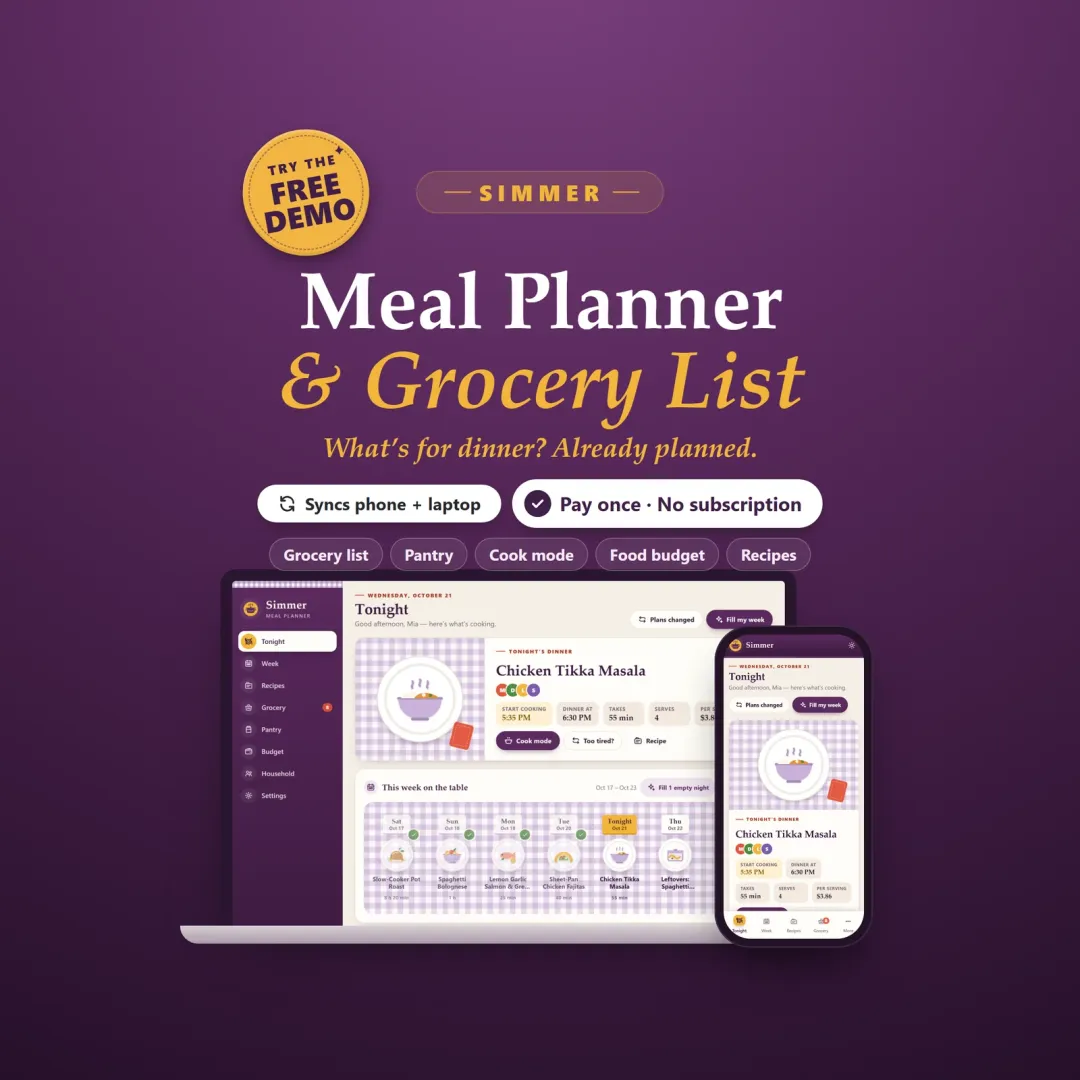
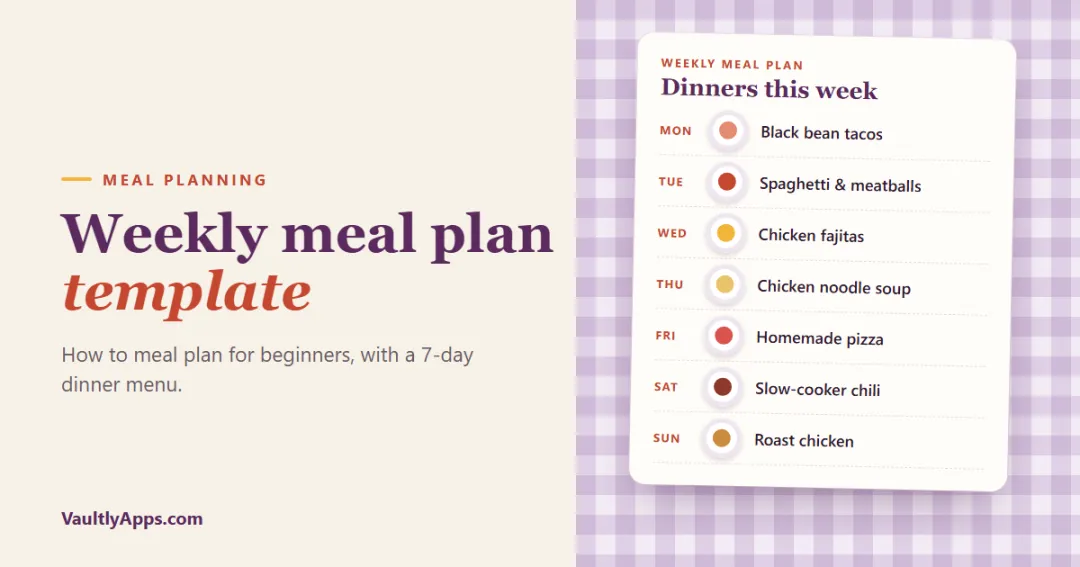
A budget only works if your week is planned around it. A weekly meal plan template gives you a simple way to start. Simmer, our meal planner app, does it for you: plan the week from your own recipes and it builds the grocery list, works out what each meal costs per serving and tracks your food budget, groceries against takeout, week by week. You can try the free demo with a sample family kitchen.
To see what one recipe costs, use the recipe cost calculator. If nobody can decide what's for dinner, the random meal generator picks for you.
Source: USDA Food and Nutrition Service, "Official USDA Food Plans: Cost of Food at Home," U.S. average, September 2026 (issued October 2026). Costs are for individuals in 4-person households; the USDA's suggested household-size adjustments are applied.
Frequently asked questions
How much should I spend on groceries?
What is the average grocery bill for a family of 4?
What are the USDA food plans?
Does the grocery budget include eating out?
What percent of income should go to groceries?
Why does a smaller household cost more per person?
How do I make my grocery budget weekly?
Written by
Finance Specialist & Editor, VaultlyApps
Emma Whitfield writes and edits the VaultlyApps money guides and free calculators. Her focus is US household finance — budgeting on a real paycheck, paying down credit card and student debt, emergency funds and savings goals, renting — and the money side of freelancing and small-business income, from pricing and profit margins to self-employment tax. Every guide is researched against primary sources such as IRS publications and the CFPB, every number is checked in our tested calculators, and tax content is reviewed each year when new IRS figures come out. Emma is not a licensed financial adviser or tax preparer; her work is general education, not personal advice.
Researched against primary US sources, checked against independent calculators and reviewed by a finance expert on our team. Written for US readers — general education, not financial, tax or legal advice. Editorial policy · Disclaimer