How to Save Money on Groceries: 25 Tips That Actually Work (+ a Cheap Grocery List)
25 practical ways to save money on groceries: set a realistic grocery budget, meal plan on a budget, write a better grocery list, shop smarter and waste less. Plus a cheap grocery list and budget meals that use it.
In this article
- First, know your number: a realistic grocery budget
- Plan before you shop
- 1. Set a weekly grocery budget
- 2. Meal plan the week
- 3. Shop your kitchen first
- 4. Plan meals that share ingredients
- 5. Cook once, eat twice
- 6. Go meatless two or three nights a week
- 7. Know what your meals cost
- Write a better grocery list
- 8. Build the list from the plan
- 9. Sort it by store section
- 10. Write quantities, not just items
- 11. Keep a running list all week
- Shop smarter
- 12. Shop once a week (or less)
- 13. Don't shop hungry or rushed
- 14. Buy store brands
- 15. Compare unit prices
- 16. Buy produce in season, and frozen when it isn't
- 17. Buy whole, not cut
- 18. Stock up only on what keeps
- 19. Use the store app and loyalty card
- 20. Try a cheaper store for staples
- Waste less food
- 21. Use it first
- 22. Freeze before it goes bad
- 23. Plan a leftovers night
- 24. Store food properly
- 25. Keep track for a month
- A cheap grocery list for a family
- Budget meals from that list
- Let an app do the busywork
Groceries are one of the few big expenses you can change this week. Rent and car payments are fixed, but what you spend at the store goes up and down with every trip. The good news is that most of the savings come from a handful of habits, not from clipping coupons for hours. Below are 25 ways to save money on groceries, starting with the ones that make the biggest difference, plus a cheap grocery list and budget meals you can make from it.
First, know your number: a realistic grocery budget
You can't save against a number you don't know. Look at the last two months of grocery receipts or bank transactions and add them up, then compare with what the USDA says a healthy diet costs for a household like yours.
| Household (Sept 2026, USDA) | Thrifty | Low-cost | Moderate | Liberal |
|---|---|---|---|---|
| 1 adult (woman, 19–50) | $305 | $332 | $403 | $515 |
| 2 adults | $630 | $653 | $808 | $1,008 |
| 2 adults + 2 kids (6–11) | $1,024 | $1,127 | $1,389 | $1,681 |
These are monthly costs for food made at home. Use the free grocery budget calculator to get the figure for your household's exact ages. If you're spending well above the Moderate plan, there's usually plenty of room to save without eating worse.
Plan before you shop
1. Set a weekly grocery budget
Divide your monthly budget by 4.33 and write the weekly number at the top of your list. A weekly target is easier to stick to than a monthly one, because you know by Sunday whether the week went well.
2. Meal plan the week
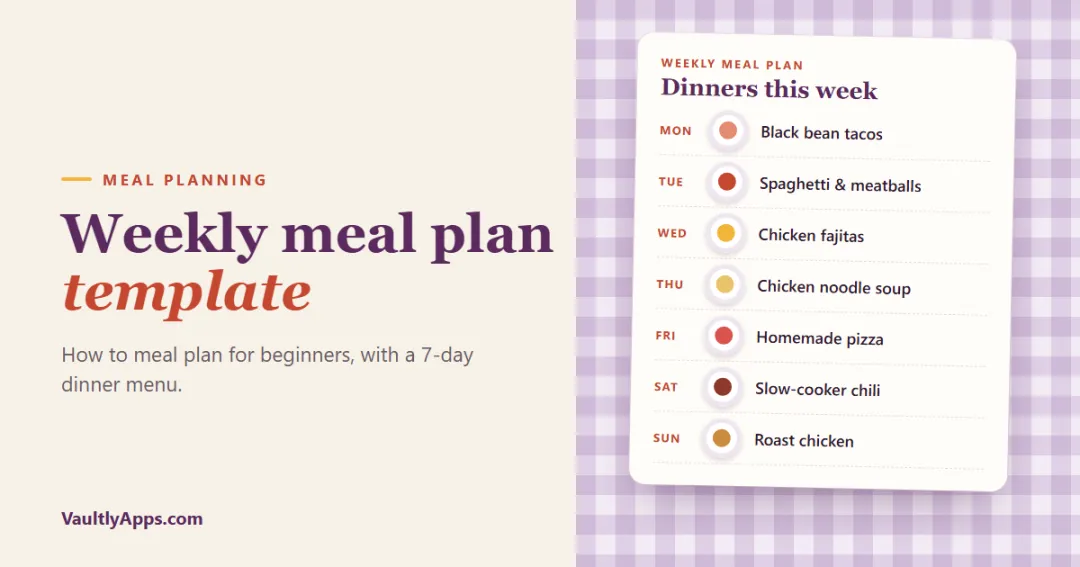
A meal plan is the single biggest money saver. When dinner is decided, you buy exactly what you need, there's no 6 p.m. takeout and the food you buy gets eaten. Start with dinners only: seven nights, including one leftovers night and one easy night. Our weekly meal plan template walks through it.
3. Shop your kitchen first
Before writing the list, look in the fridge, freezer and pantry. Plan at least two meals around what's already there, especially anything close to its use-by date.
4. Plan meals that share ingredients
If Monday's tacos use half a bunch of cilantro, put the other half in Thursday's rice bowls. Recipes that share fresh ingredients are the easiest way to stop paying for food that rots.
5. Cook once, eat twice
Double a chili, soup or pasta bake and eat it again later in the week, or freeze a portion. It saves money and a night of cooking. The free recipe converter scales any recipe in seconds.
6. Go meatless two or three nights a week
Meat is usually the most expensive part of a meal. Beans, lentils, eggs and tofu cost a fraction as much per serving. Black bean tacos, lentil soup and veggie fried rice are cheap family favorites.
7. Know what your meals cost
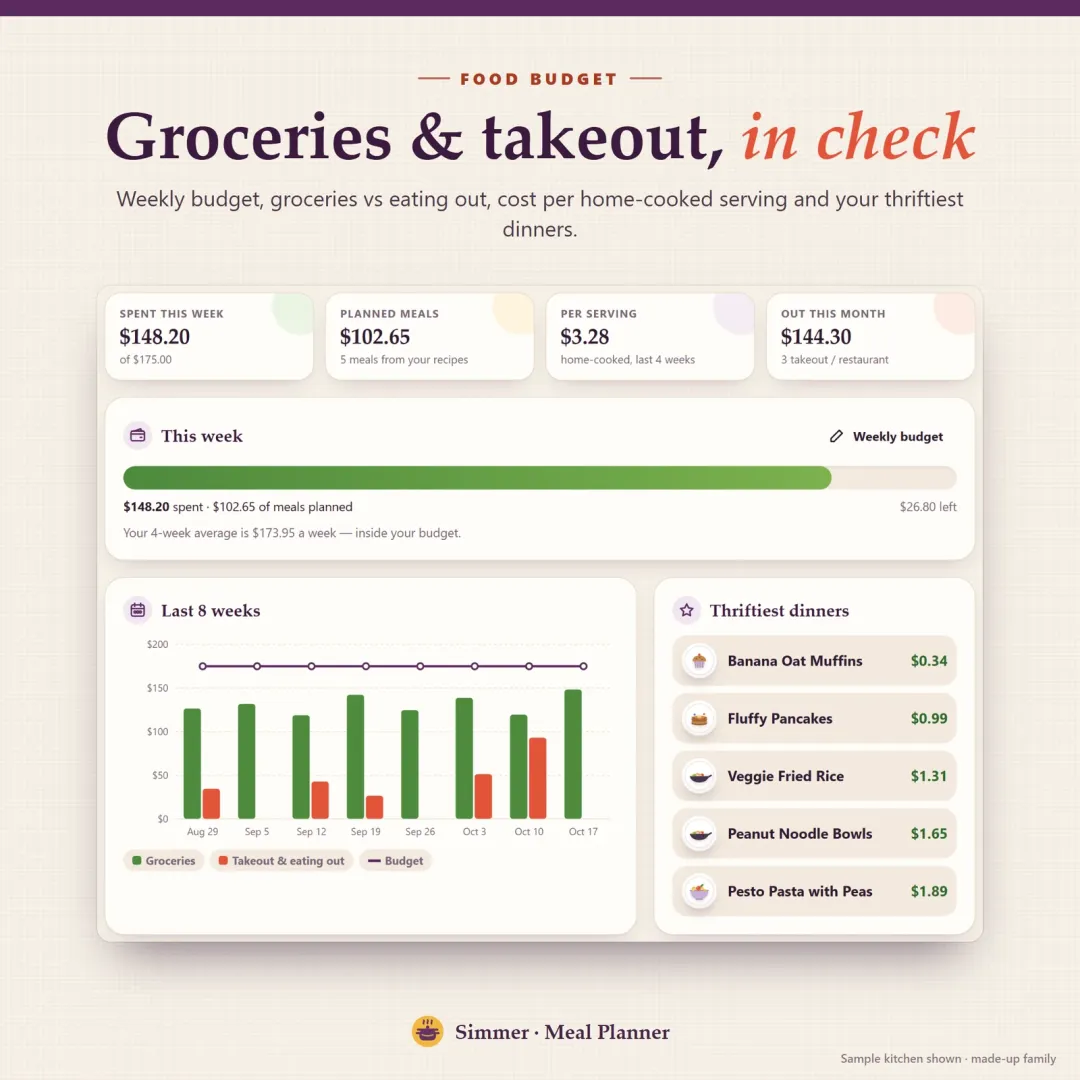
A homemade dinner usually costs $2 to $5 a serving; takeout costs $12 to $20. Price your regular dinners once with the recipe cost calculator and plan more of the cheap ones.
Write a better grocery list
8. Build the list from the plan
Go through each planned meal and write down every ingredient you don't already have. Add up repeated items: three recipes that each need garlic might need a whole bulb, not three.
9. Sort it by store section
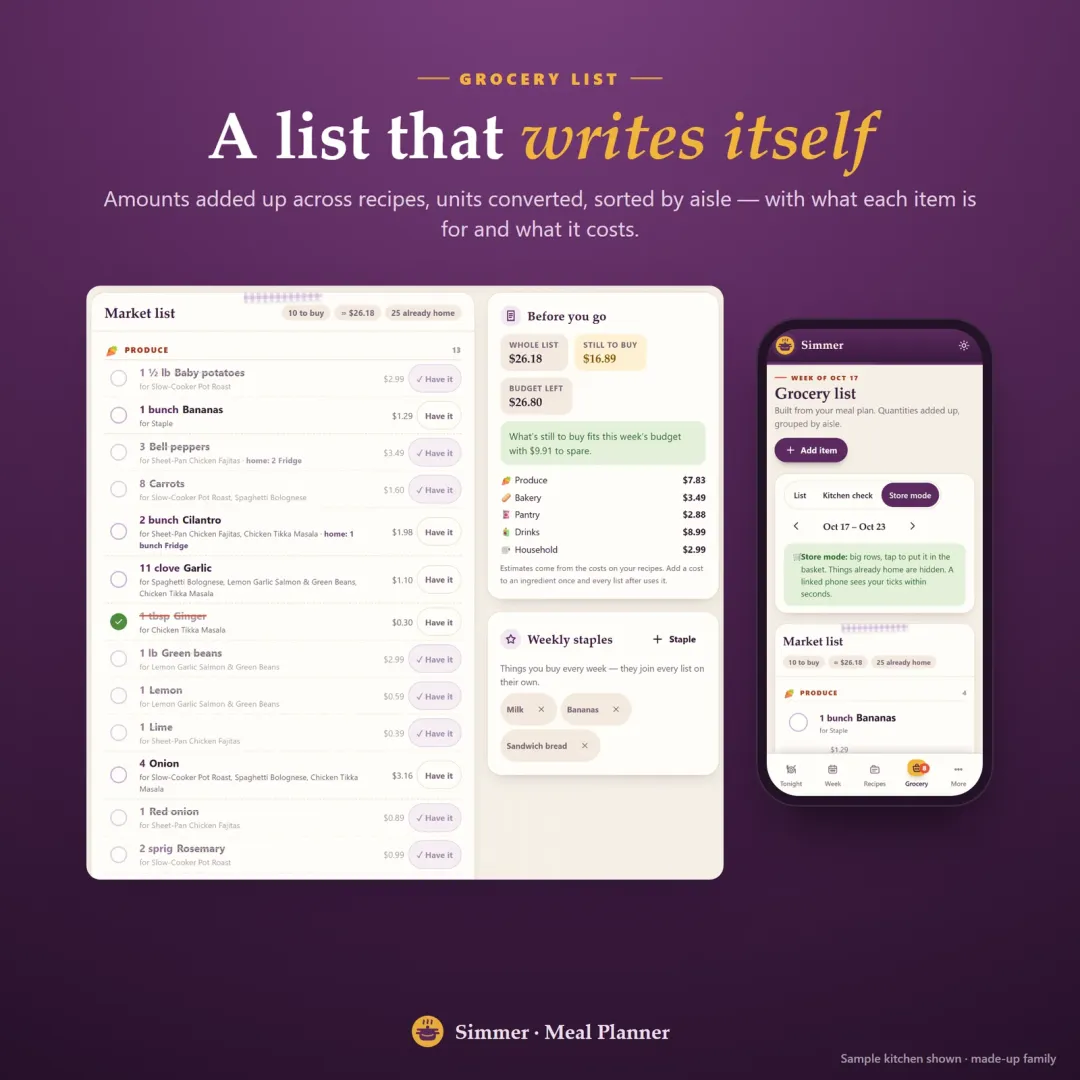
Group the list by produce, meat, dairy, bakery, pantry and frozen. You'll walk the store once, in order, and skip the aisles you don't need, which is where impulse buys live.
10. Write quantities, not just items
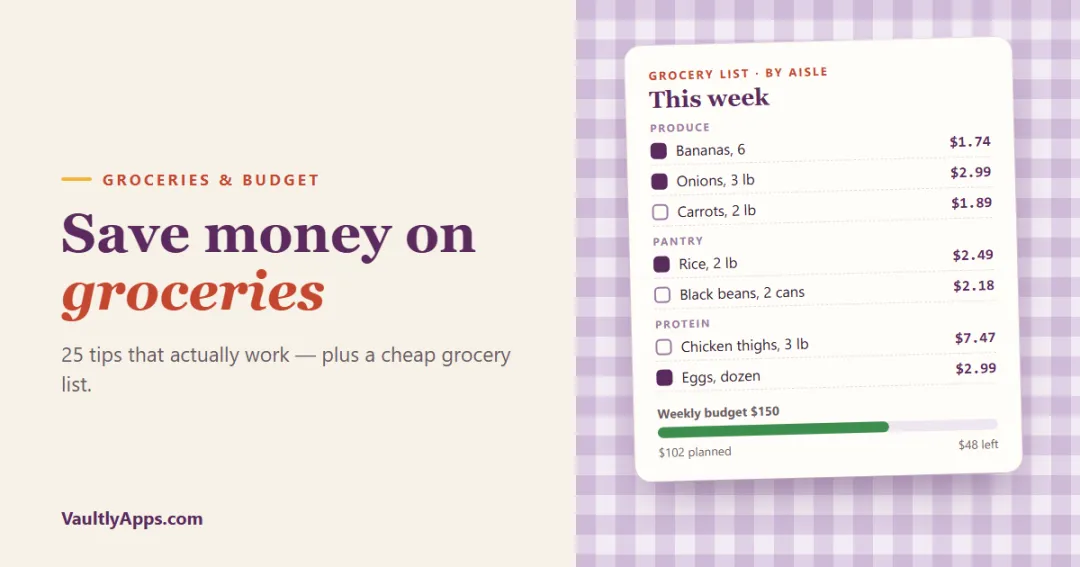
"Chicken thighs, 2 lb" stops you buying the family pack you don't need. "Bananas, 6" stops a bunch of 10 going brown.
11. Keep a running list all week
When something runs out, add it straight away. A list on your phone that the whole household can add to beats a sticky note nobody can find.
Shop smarter
12. Shop once a week (or less)
Every extra trip adds a few unplanned items. One planned trip a week, with a short top-up for milk and fruit if needed, keeps spending down.
13. Don't shop hungry or rushed
It's an old tip because it works: hungry shoppers buy more snacks and convenience food. Eat first, and give yourself enough time to compare prices.
14. Buy store brands
Store brands of staples like flour, sugar, canned tomatoes, pasta, rice, frozen vegetables and dairy are often made in the same factories as name brands and cost 20% to 30% less.
15. Compare unit prices
The shelf tag shows the price per ounce or per count. The bigger package isn't always cheaper per unit, and the sale item isn't always the best deal.
16. Buy produce in season, and frozen when it isn't
Seasonal fruit and vegetables are cheaper and taste better. Out of season, frozen vegetables and berries are just as nutritious, cheaper and never go bad in the drawer.
17. Buy whole, not cut
A whole chicken costs much less per pound than breasts; a block of cheese less than shredded; a head of lettuce less than a bag of salad; whole carrots less than baby carrots. Ten minutes of prep saves real money.
18. Stock up only on what keeps
Buy rice, oats, pasta, canned goods and frozen meat in bulk when they're on sale. Skip bulk deals on fresh food unless you have a plan for every bit of it.
19. Use the store app and loyalty card
Digital coupons and loyalty prices at the big US chains often take a few dollars off a weekly shop for a minute of tapping. Load them before you go, and only for things already on your list.
20. Try a cheaper store for staples
Discount grocers and warehouse clubs can be much cheaper for pantry staples. Even one trip a month for rice, canned goods, oil and frozen items can lower the total.
Waste less food
21. Use it first
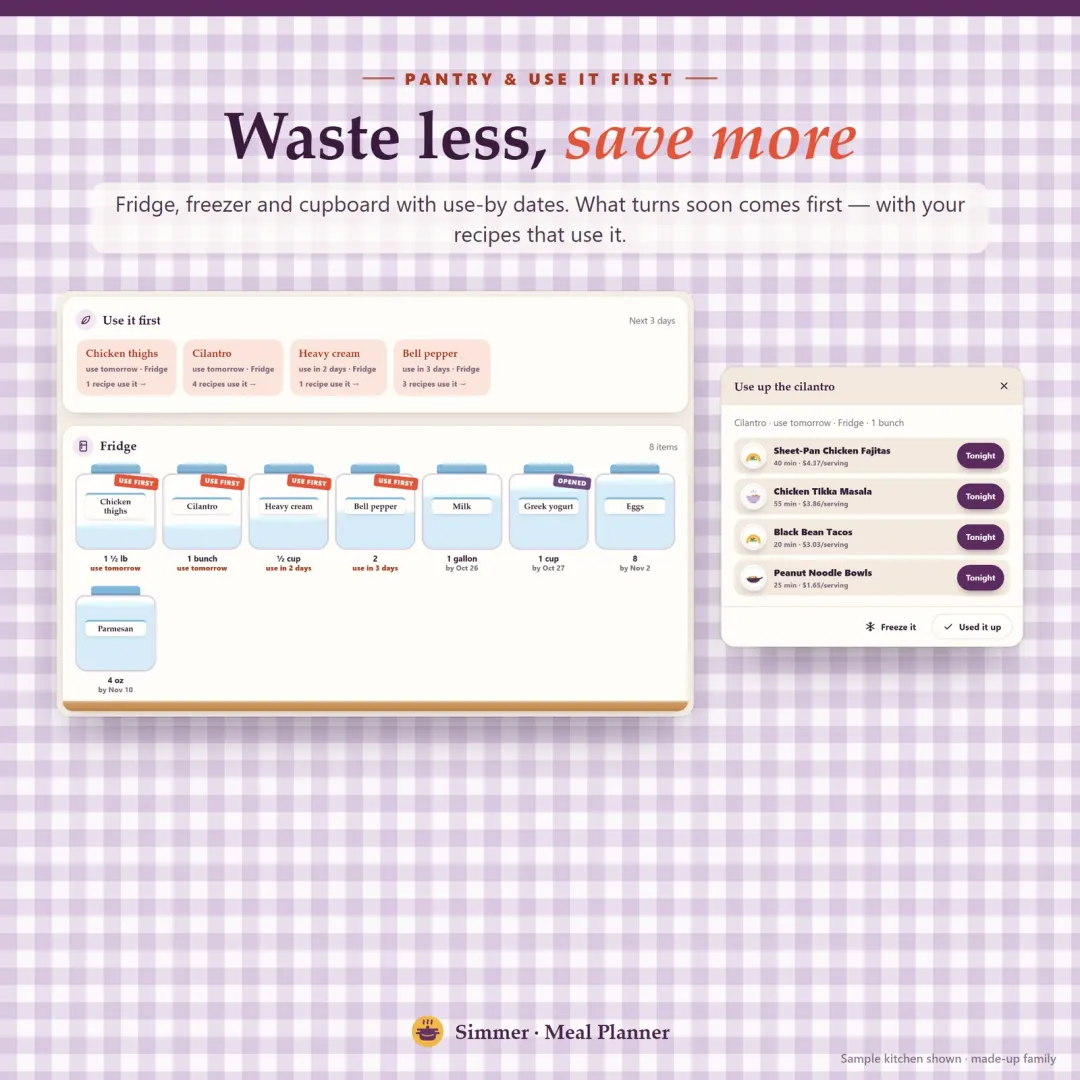
Put food that needs eating at the front of the fridge, and plan a meal around it. A "use it first" shelf or list stops forgotten spinach and half-used cream.
22. Freeze before it goes bad
Bread, bananas, cooked rice, grated cheese, meat and most leftovers freeze well. If you won't eat it in time, freeze it the same day.
23. Plan a leftovers night
One night a week, eat what's in the fridge. It clears the shelves before the next shop and saves a whole dinner's cost.
24. Store food properly
Keep herbs in a glass of water, wrap celery in foil, keep onions and potatoes apart and store berries unwashed. Fresh food that lasts longer is fresh food you don't buy twice.
25. Keep track for a month
Write down what you spend each week, and what you throw away. Seeing the numbers is often enough to change habits, and it shows you which tips are working.
A cheap grocery list for a family
These staples are among the cheapest foods per serving in US stores and make dozens of meals.
| Section | Cheap staples |
|---|---|
| Pantry | Rice, oats, pasta, dried or canned beans, lentils, canned tomatoes, peanut butter, flour, oil, broth |
| Produce | Potatoes, onions, carrots, cabbage, bananas, apples, garlic, seasonal greens |
| Protein | Eggs, chicken thighs or a whole chicken, ground turkey or beef, canned tuna, tofu |
| Dairy | Milk, block cheese, plain yogurt, butter |
| Frozen | Mixed vegetables, peas, spinach, berries |
Budget meals from that list
- Black bean tacos with cabbage slaw
- Chicken and rice with roasted carrots
- Lentil soup with crusty bread
- Egg fried rice with frozen peas and carrots
- Pasta with tomato sauce and white beans
- Baked potato bar with cheese, beans and broccoli
- Peanut noodles with cabbage and carrots
Need more dinner ideas? The free random meal generator has a "budget-friendly only" filter and builds a whole week of dinners.
Let an app do the busywork
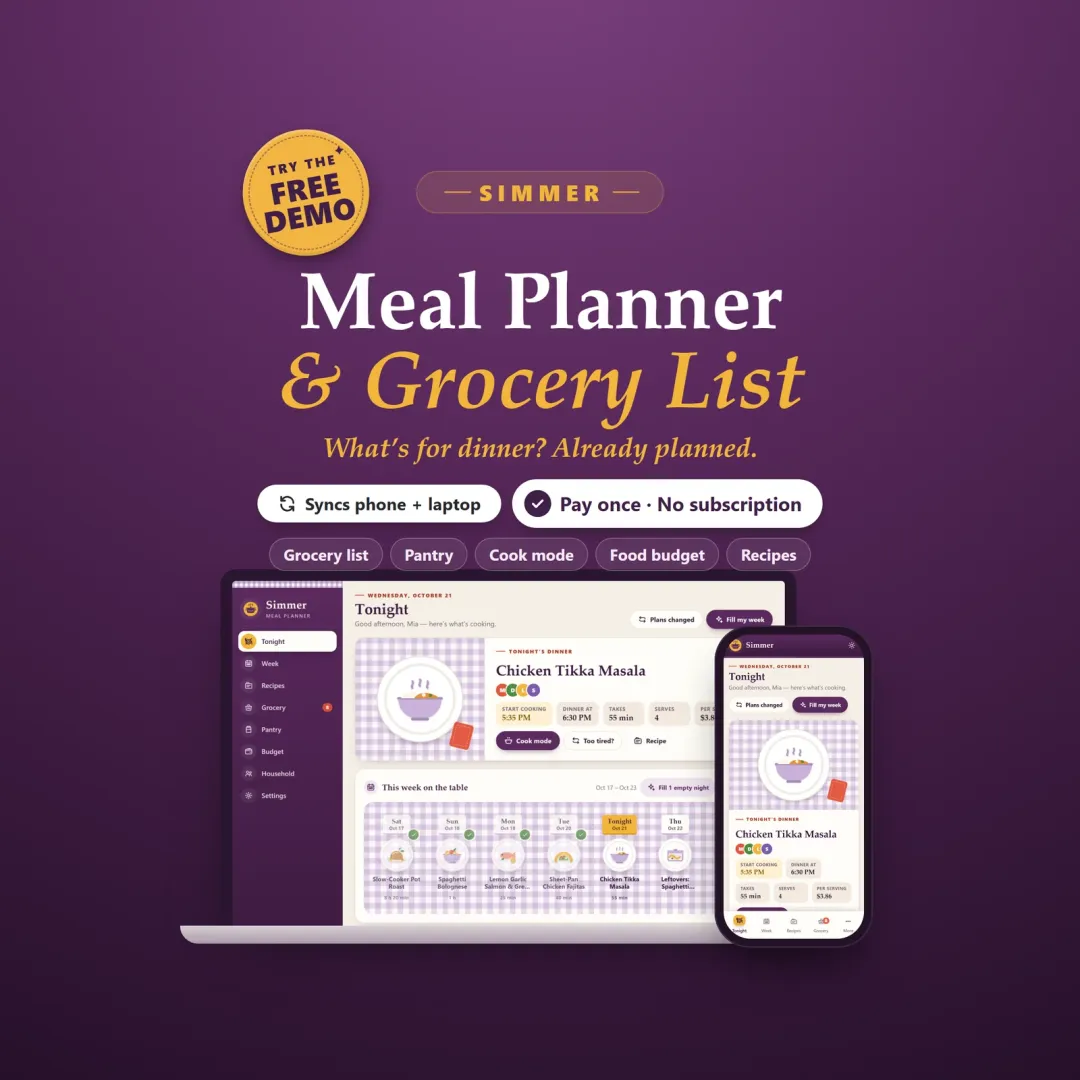
Most of the tips above come down to planning the week, building a list from the plan and using food before it goes bad. That's exactly what Simmer, our meal planner app, does for you. Plan the week from your own recipes and the grocery list writes itself, sorted by aisle with what each item costs. The pantry shows what to use first, every recipe shows its cost per serving, and the food budget tracks groceries against takeout week by week. Try the free demo with a sample family kitchen.
For the bigger budget picture, the 50/30/20 budget calculator shows where groceries fit next to rent, bills and savings, and our guide on how to stop impulse buying helps in every aisle, not just the grocery store.
Frequently asked questions
What is the fastest way to save money on groceries?
How much should a family of 4 spend on groceries?
How do I make a grocery list that saves money?
What are the cheapest foods to buy?
Is it cheaper to shop weekly or every two weeks?
Does buying in bulk save money?
How do I meal plan on a budget?
Written by
Finance Specialist & Editor, VaultlyApps
Emma Whitfield writes and edits the VaultlyApps money guides and free calculators. Her focus is US household finance — budgeting on a real paycheck, paying down credit card and student debt, emergency funds and savings goals, renting — and the money side of freelancing and small-business income, from pricing and profit margins to self-employment tax. Every guide is researched against primary sources such as IRS publications and the CFPB, every number is checked in our tested calculators, and tax content is reviewed each year when new IRS figures come out. Emma is not a licensed financial adviser or tax preparer; her work is general education, not personal advice.
Researched against primary US sources, checked with our calculators and reviewed by a finance expert on our team. Written for US readers — general education, not financial, tax or legal advice. Editorial policy · Disclaimer