Classroom Management Strategies: 20 That Actually Work (From Day One)
Twenty practical classroom management strategies and tips: routines, expectations, seating, attention signals, relationships, calm consequences, family contact and the planning habits that keep a room running smoothly.
In this article
- Before the first day
- 1. Decide your expectations and keep them few
- 2. Plan routines for the moments that cause trouble
- 3. Make a seating chart before you meet the class
- 4. Set up the room for movement
- The first weeks
- 5. Teach routines like content
- 6. Learn names fast
- 7. Build relationships on purpose
- 8. Call home with good news early
- Every lesson
- 9. Start with an immediate task
- 10. Use one attention signal
- 11. Give clear, short instructions
- 12. Plan the whole period
- 13. Move around the room
- 14. Use timers for transitions
- 15. Praise specific behavior
- When things go wrong
- 16. Use the least intrusive response first
- 17. Keep consequences calm, consistent and small
- 18. Repair, then reset
- 19. Work with families as partners
- Looking after yourself
- 20. Protect your prep time and your evenings
- Classroom management tips at a glance
- A classroom management app that does the planning
Most behavior problems don't start with a "bad" student. They start in the gaps: the two minutes while the slides load, the unclear instruction, the lesson that ran out early, the transition nobody practised. The best classroom management strategies close those gaps before anything goes wrong. Here are 20 that work in elementary, middle and high school, grouped by when you use them.
Before the first day
1. Decide your expectations and keep them few
Choose three to five expectations, phrased positively: Be ready. Be respectful. Be responsible. Do your best. Fewer rules are easier to remember and enforce. For each one, write what it looks like in practice: "Be ready" means seated with materials out when the bell rings.
2. Plan routines for the moments that cause trouble
Write down how students will:
enter the room and start work,
get your attention or ask for help,
hand in work and get materials,
go to the bathroom or the nurse,
work in groups, and what to do when finished early,
pack up and leave.
These are the moments where most disruption happens. If you don't decide the routine, students will invent one.
3. Make a seating chart before you meet the class
A seating chart on day one helps you learn names quickly, separates friends before habits form and tells students the room has a plan. Students who need to see the board, or who need extra support, go near the front. Our free seating chart generator makes one in a minute and keeps chosen pairs apart.
4. Set up the room for movement
Make sure you can reach every desk quickly, materials are where students can get them without crossing the room, and the board is visible from every seat. Rows suit tests and direct teaching, pairs suit partner work, and groups of four suit collaboration.
The first weeks
5. Teach routines like content
Don't just announce routines; model, practise and review them. Show what entering the room looks like, have students do it, give feedback, and do it again. It feels slow in the first week and saves hours by October. This is also the best answer to the question of first day of school activities: practising routines and learning names is the first-day lesson.
6. Learn names fast
Use the seating chart, name tents and every chance to say a student's name. Knowing names in the first week is one of the quickest ways to build respect, and it makes redirection quieter ("Sam, page 12").
7. Build relationships on purpose
Greet students at the door. Ask about the game, the book, the weekend. Two minutes of personal conversation with a student who's struggling, ten days in a row (the "2×10" strategy), often changes the whole relationship. Students work harder for teachers they believe like them.
8. Call home with good news early
Make positive phone calls or send positive emails in the first few weeks, before any problems. When you later need a family's help, you're already on the same side. Log every contact, with a follow-up date.
Every lesson
9. Start with an immediate task
A bell-ringer or do now on the board as students walk in (a question, a short problem, a quick write) means the lesson starts the moment they sit down. No dead time, no "what are we doing?".
10. Use one attention signal
Pick one signal (a raised hand, a call-and-response, a chime, a countdown from five) and use it every time. Wait for full silence before speaking. If you talk over noise, students learn the noise is acceptable.
11. Give clear, short instructions
Give instructions one step at a time, put them on the board, and check understanding before releasing students: "What are you doing first? How long do you have?" Most "off-task" behavior is actually "unsure-what-to-do" behavior.
12. Plan the whole period
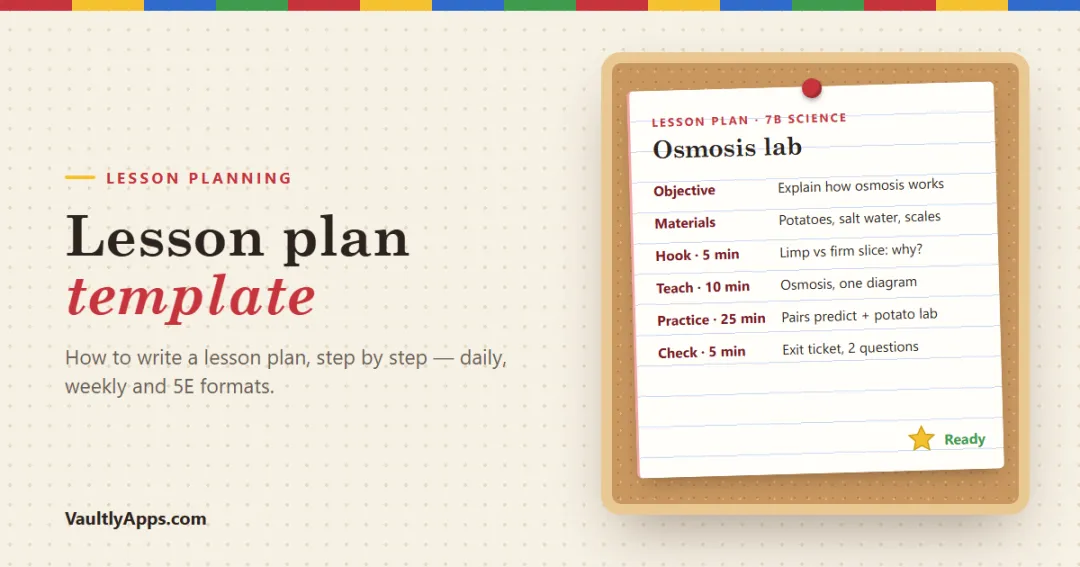
Lessons that run out early invite trouble. Plan every minute, with timings, and keep an extension or early-finisher task ready. A lesson plan template with timed steps (hook, teach, practice, check) makes this easy.
13. Move around the room
Proximity prevents more problems than any rule. Teach from different spots, circulate during practice, and stand near students who are drifting without saying a word.
14. Use timers for transitions
"You have three minutes to finish and pack up" works better with a visible timer. Students can see time passing and transitions stay tight. Our free visual timer works on any projector.
15. Praise specific behavior
"Good job" is pleasant; "Table 3, you got started straight away and you're helping each other, that's exactly it" teaches. Specific praise tells the whole class what you want, and aim for several positives for each correction.
When things go wrong
16. Use the least intrusive response first
Escalate gently: a look, moving closer, a quiet word, a reminder of the expectation, a choice ("You can work here quietly or at the side table"). Most behavior stops at the first or second step, and the lesson keeps going.
17. Keep consequences calm, consistent and small
Decide consequences in advance so you're not inventing them in the moment. Deliver them privately and calmly, without sarcasm or a lecture, then move on. Consistency matters more than severity.
18. Repair, then reset
After a consequence, find a moment to reconnect: "Yesterday was a hard lesson. Today's a fresh start." Students who know the slate gets wiped clean are more likely to try again.
19. Work with families as partners
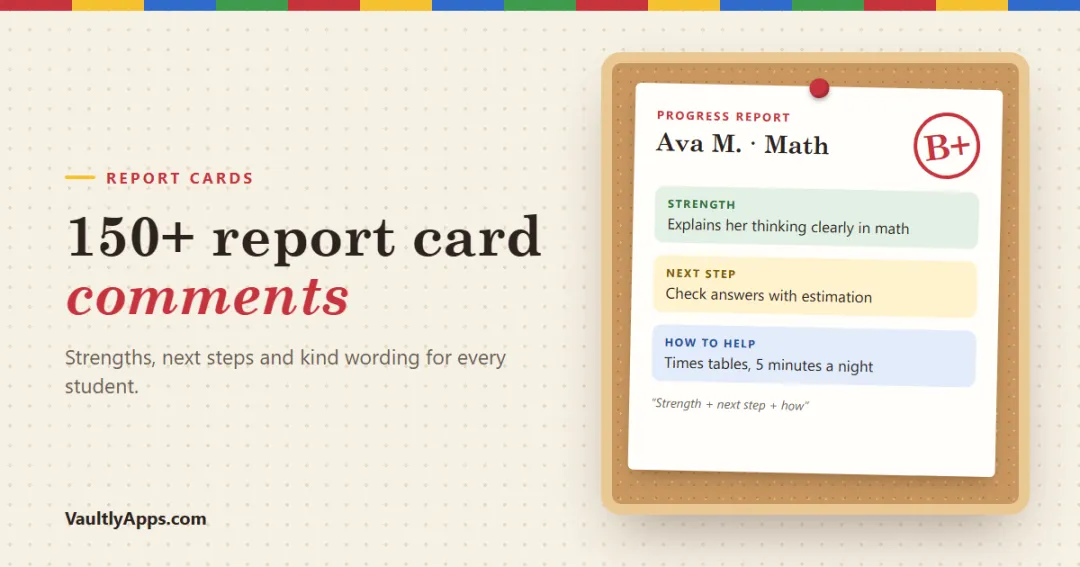
When a pattern appears, contact home early with facts, not labels: what happened, what you've tried, what you'd like to try next and how they can help. Keep a parent contact log of every call, email and meeting, and follow up when you said you would. Good parent-teacher communication solves many problems that school alone can't. Our list of report card comments has wording that's honest and kind.
Looking after yourself
20. Protect your prep time and your evenings
Tired, overloaded teachers manage classrooms less patiently, and teacher burnout is real. Plan the week so lesson prep and grading fit your prep periods, batch similar tasks, reuse lessons that worked, and decide what won't get done this week. Calm classrooms are much easier to run when the teacher isn't running on empty.
Classroom management tips at a glance
When | Strategy |
|---|---|
Before day one | Few clear expectations · routines for trouble spots · seating chart · room layout |
First weeks | Teach and practise routines · learn names · build relationships · positive calls home |
Every lesson | Do-now task · one attention signal · clear instructions · no dead time · proximity · timers · specific praise |
When it goes wrong | Least intrusive first · calm, consistent consequences · repair and reset · families as partners |
Always | Protect your prep time and energy |
A classroom management app that does the planning
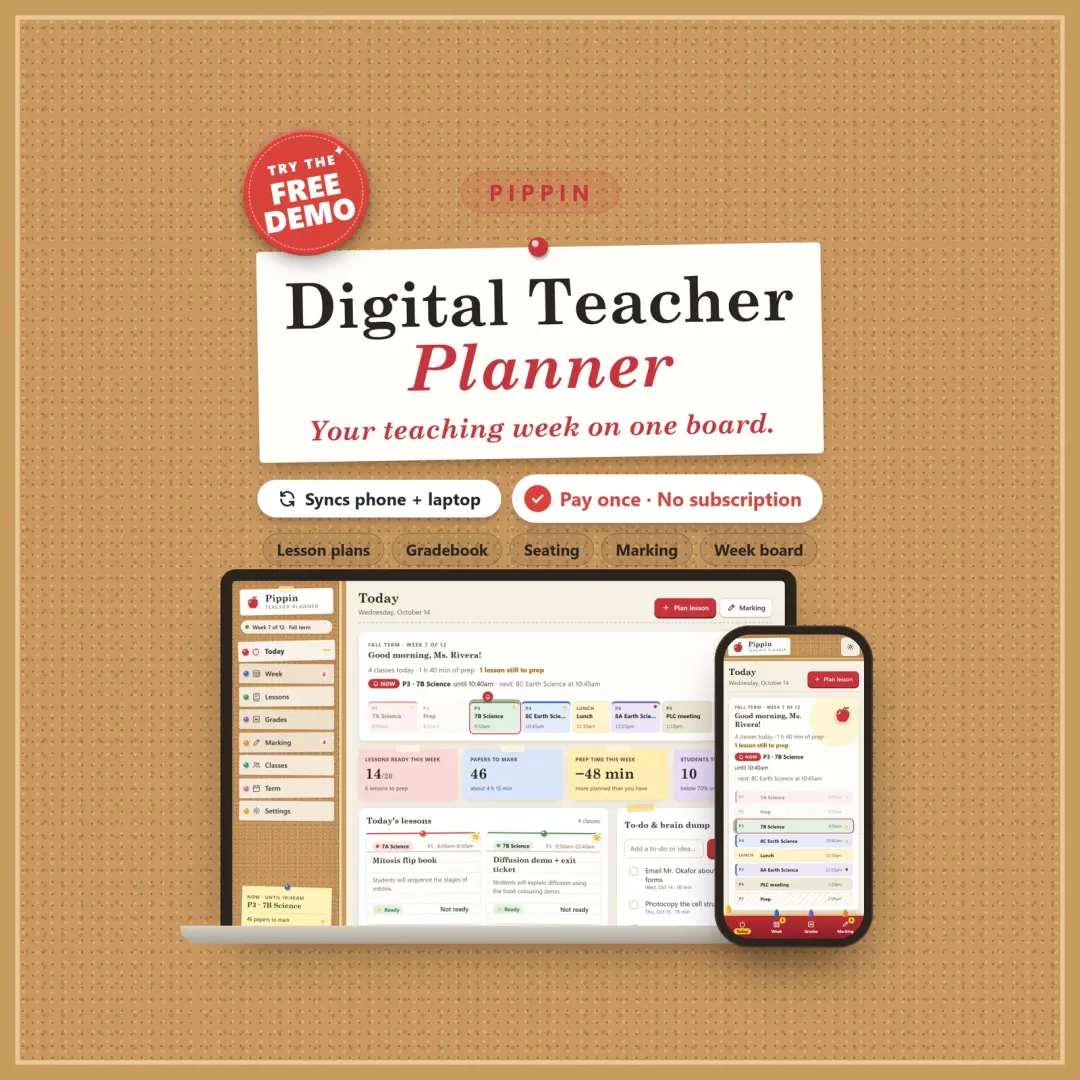
Many classroom management problems are really planning problems: the unplanned minute, the forgotten follow-up, the seating chart that never got made. Pippin, our digital teacher planner, keeps the planning side in one place. It has a bell schedule that always shows what's next, a weekly lesson planner with timed lesson plans, a seating chart for every class with shuffle and tap-to-swap, a family contact log with follow-up dates, and a prep-time protector that warns you when the week won't fit. You can try the free demo with a sample classroom.
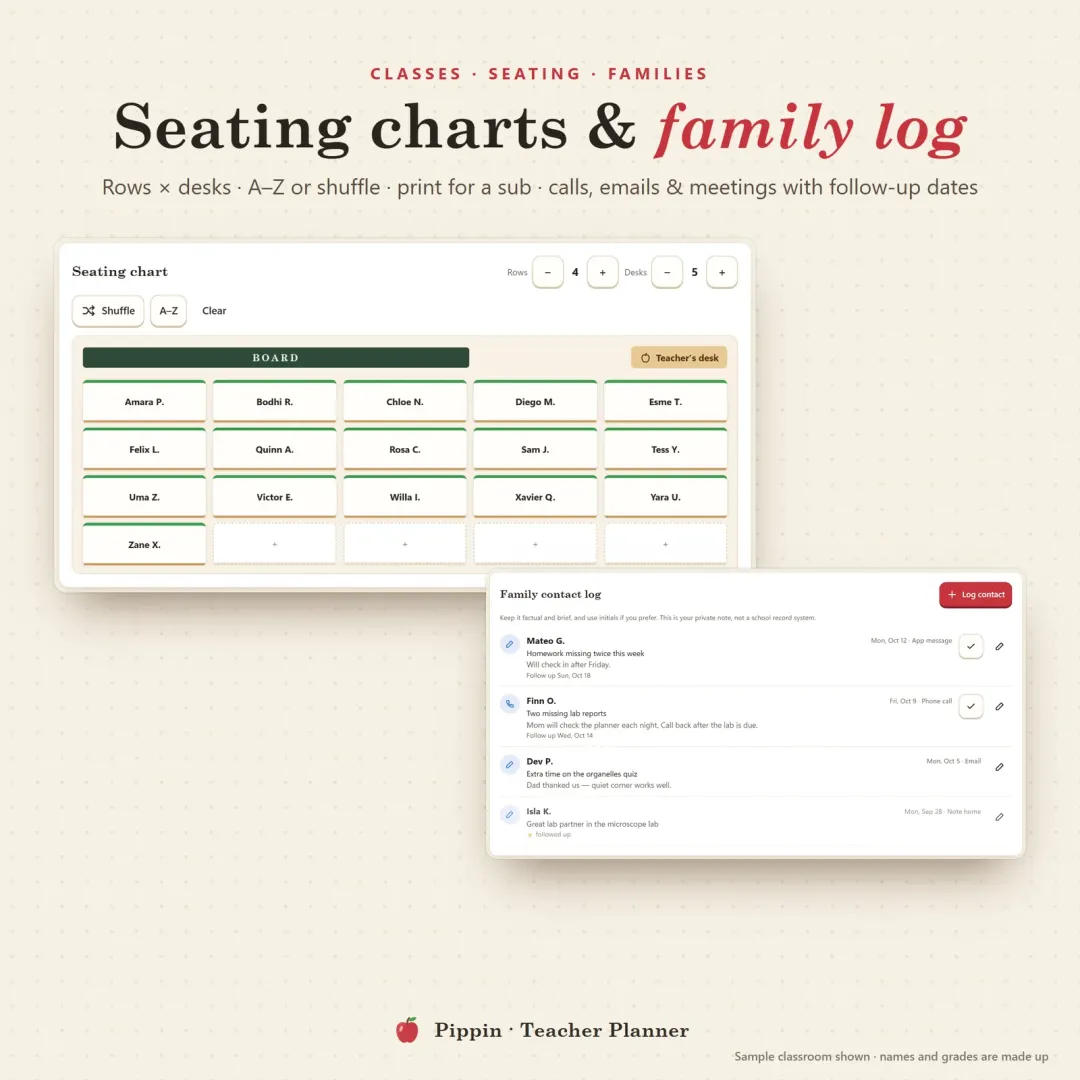
A seating chart for each class, plus a family contact log with follow-up dates.
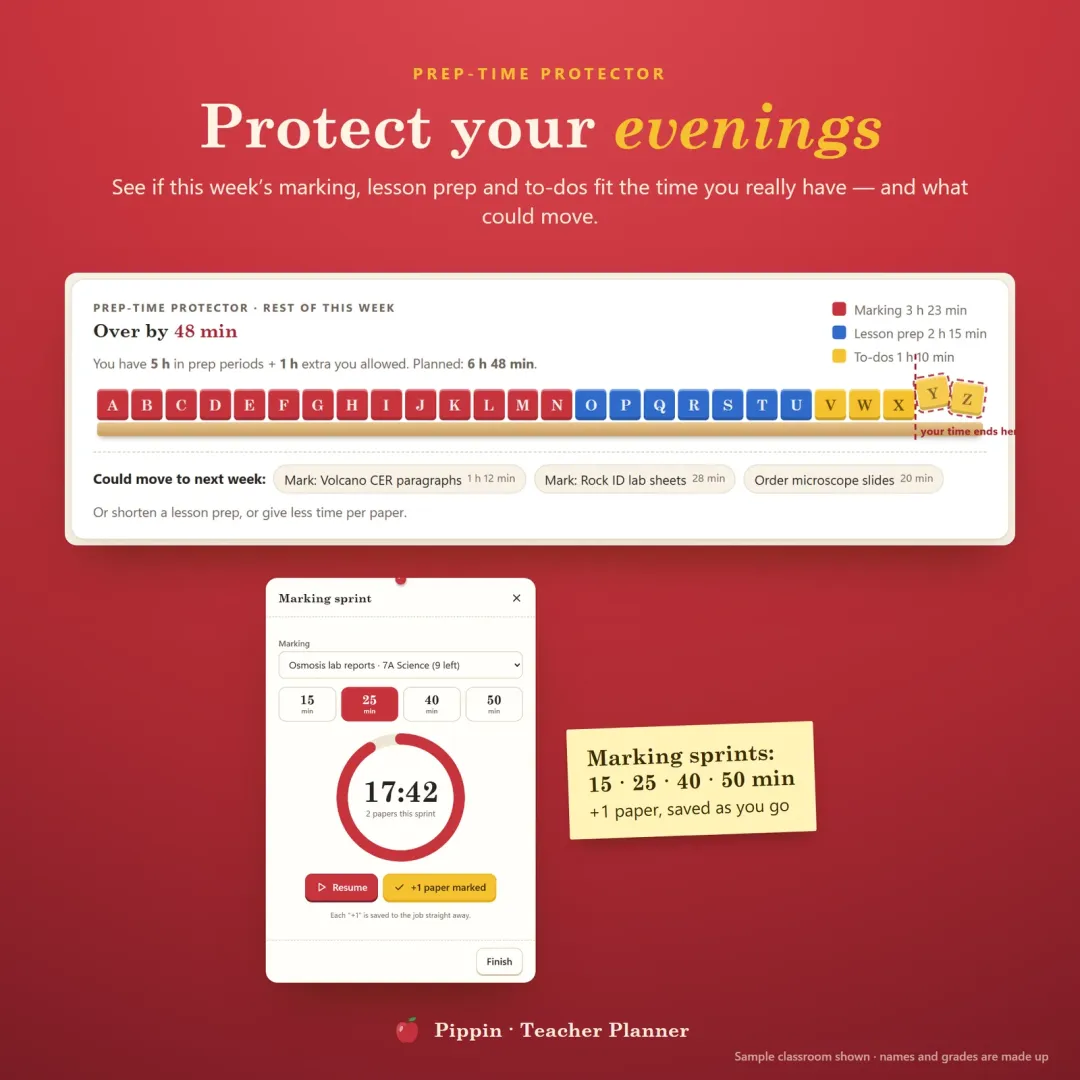
A prep-time protector: this week's marking, lesson prep and to-dos against the prep time you really have.
Frequently asked questions
What are classroom management strategies?
What is the most effective classroom management strategy?
What are the 4 types of classroom management?
How do you manage a difficult class?
How do I get students' attention without shouting?
How do new teachers manage a classroom?
Written by
Finance Specialist & Editor, VaultlyApps
Emma Whitfield writes and edits the VaultlyApps money guides and free calculators. Her focus is US household finance — budgeting on a real paycheck, paying down credit card and student debt, emergency funds and savings goals, renting — and the money side of freelancing and small-business income, from pricing and profit margins to self-employment tax. Every guide is researched against primary sources such as IRS publications and the CFPB, every number is checked in our tested calculators, and tax content is reviewed each year when new IRS figures come out. Emma is not a licensed financial adviser or tax preparer; her work is general education, not personal advice.
Researched against primary US sources, checked with our calculators and reviewed by a finance expert on our team. Written for US readers — general education, not financial, tax or legal advice. Editorial policy · Disclaimer