VaultlyApps
Tools by need

Budget App Without Bank Connection: Private Budgeting You Control

Not everyone wants a budgeting app holding live access to their bank. A budget app without bank connection keeps every number in your hands — and logging spending yourself is often what makes a budget work.

By Updated Reviewed by a finance expert

Why people want a budget app without bank sync

Bank-connected apps import transactions automatically, which sounds ideal. But a lot of people deliberately avoid them:

  • Privacy. A connection gives a third-party service ongoing access to your balances and every transaction you make.
  • Security worries. Fewer places holding your banking access means fewer places that can be breached.
  • Broken connections. Bank links drop, need re-authorizing and import duplicates — and a budget that's wrong is worse than no budget.
  • Awareness. When transactions arrive automatically, it's easy to stop looking. Logging a purchase yourself makes you notice it.
  • Subscriptions. Most bank-connected apps charge monthly or yearly, partly to pay for the data connections.

How manual budgeting works

A budget without bank connection doesn't mean typing everything every month:

  1. Set up once — your income, regular bills and budget categories. Recurring items fill in automatically each month.
  2. Log spending as you go — a few taps after each purchase, or a quick catch-up at the end of the day.
  3. Check one number — what's safe to spend after bills and goals.
  4. Reconcile now and then — match the app to your real bank balance, so a missed entry never throws you off.

If you're starting from scratch, the 50/30/20 budget calculator gives you sensible category targets in a minute.

Private budget apps from VaultlyApps

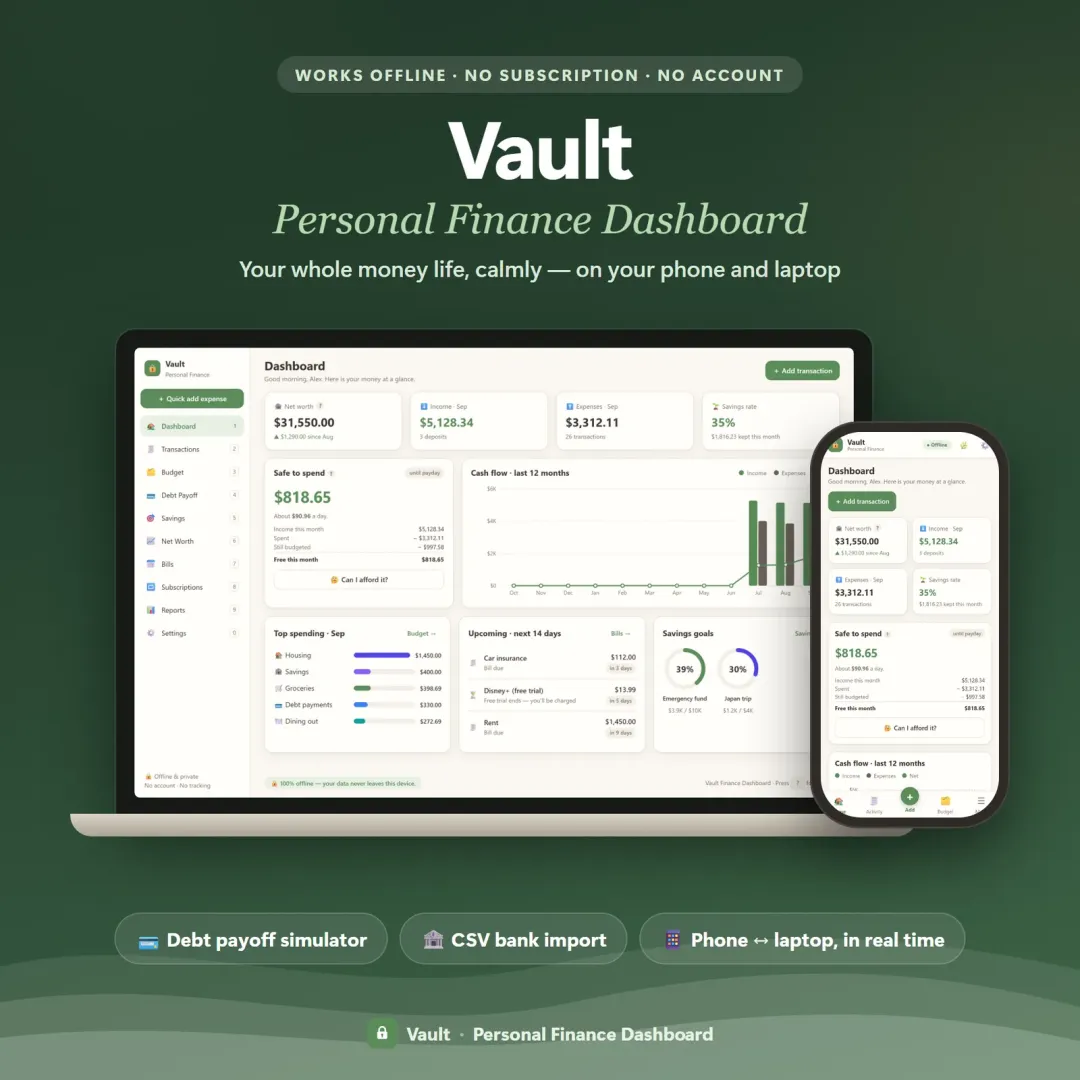
Vault — a full private dashboard. A zero-based budget, a Safe to Spend number, "Can I afford it?", bills and subscriptions, a snowball/avalanche debt planner and net worth — no bank login.

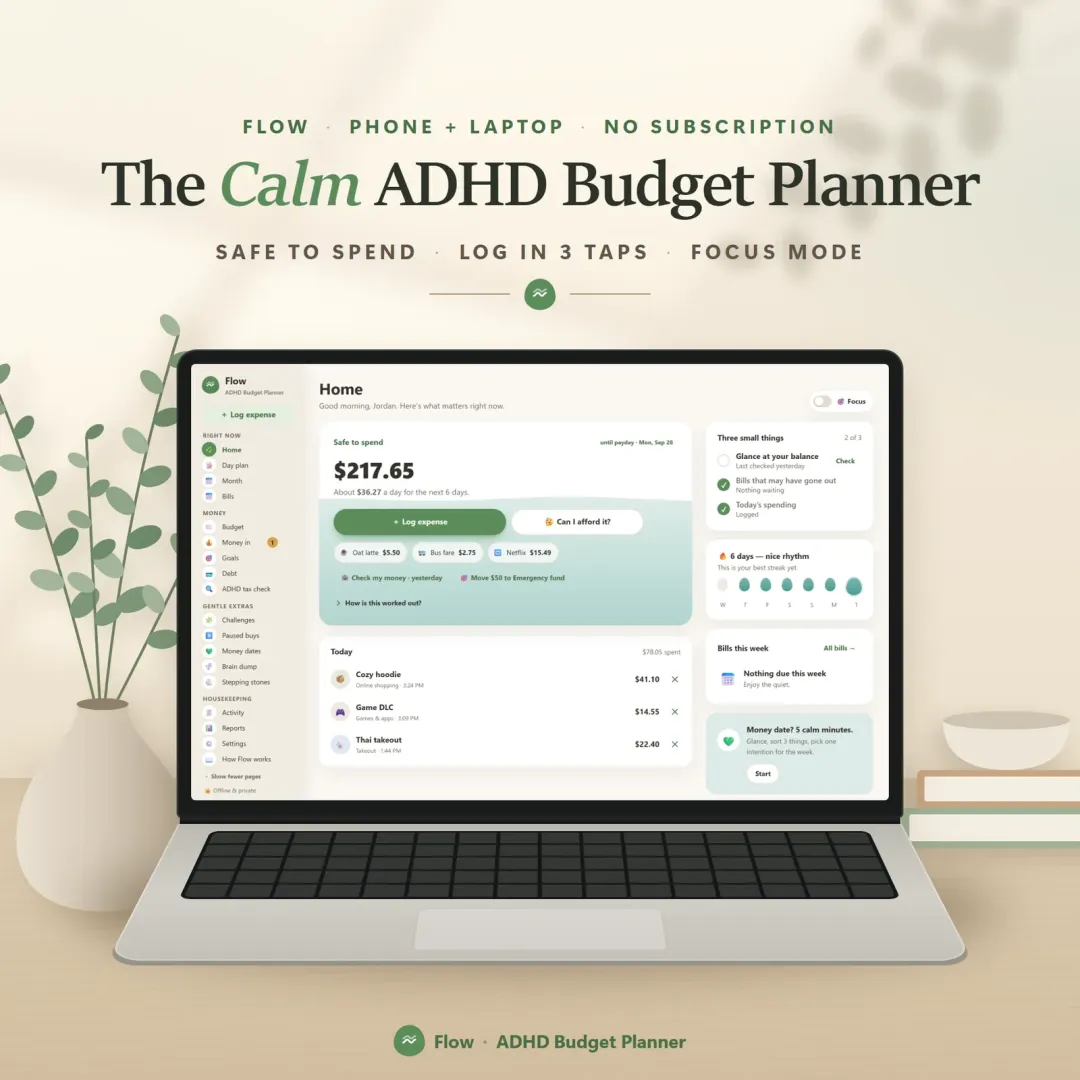
Flow — the simplest way to budget manually. One Safe to Spend number, 3-tap logging and balance reconciling built in — designed with ADHD brains in mind, so missing a few entries never breaks your budget.

Both apps:

  • Never connect to a bank and need no account.
  • Keep your data on your own devices, with private sync between them using a 6-digit code.
  • Work on phone and computer, install like an app and work offline.
  • Are a one-time purchase — no subscription.

Bank-connected or manual: which is right for you?

  • Choose a bank-connected app if you have many accounts, don't want to log anything, and are comfortable sharing access.
  • Choose a manual app if privacy matters to you, you want to really see where your money goes, and you'd rather pay once.

Comparing options? See our honest comparisons with YNAB, Monarch Money and a spreadsheet budget.

Frequently asked questions

Is there a budget app that doesn't connect to your bank?

Yes. Vault and Flow from VaultlyApps never connect to a bank. You enter income and spending yourself, there's no account to create, and your data stays on your own devices.

Is it safe to connect my bank to a budgeting app?

Many apps use established data aggregators and encryption, but connecting still gives a third party ongoing access to your financial data, and connections can break or need re-linking. If you'd rather not share that access, a manual budget app avoids it entirely.

Isn't entering transactions by hand a lot of work?

It takes a few seconds a purchase in a well-designed app — and many people find it's what keeps them on budget, because they notice every purchase. Recurring income and bills can be set once and fill in automatically each month.

Can I use it on more than one device?

Yes. Vault and Flow sync between your own phones and computers with a 6-digit code or QR, without a cloud account.

Can I try it before buying?

Yes — each app has a free live demo with sample data. It runs in your browser with no sign-up.

Written by

Emma Whitfield

Finance Specialist & Editor, VaultlyApps

Researched against primary US sources and reviewed by a finance expert on our team. Written for US readers — general education, not financial, tax or legal advice. Editorial policy · Disclaimer
From VaultlyApps

Try it free

Every app has a free live demo with sample data — open it in your browser, nothing to install.

Vault personal finance dashboard shown on a laptop and a phone, with the safe-to-spend number and cash-flow charts Live

Vault

Personal Finance Dashboard

Your whole money picture on one private dashboard — safe-to-spend, budgets, bills, goals, debt payoff and net worth, on your phone and laptop.

Flow ADHD budget planner showing a calm Safe to Spend screen Live

Flow

ADHD Budget Planner

A calm budget planner designed for ADHD brains — one Safe to Spend number, 3-tap logging, focus mode and kind overspend fixes instead of red warnings.

Free calculators

Debt Payoff Calculator

Your debt-free date, total interest and payoff order — snowball vs avalanche, side by side.

Open calculator

Key terms

Keep reading

More tools by need

Tools by need

Further reading

Guides on this topic

All articles
How to Track Subscriptions and Stop Paying for Ones You Forgot

Personal Finance

How to Track Subscriptions and Stop Paying for Ones You Forgot

Subscriptions are designed to be forgotten. A simple four-step audit — find, convert to yearly cost, decide, and set reminders — puts every recurring charge back under your control. Includes a worked audit and a cancellation checklist.

10 min read
What Is a Safe-to-Spend Number (and How Do You Calculate It)?

Personal Finance

What Is a Safe-to-Spend Number (and How Do You Calculate It)?

Your bank balance isn't what you can spend. A safe-to-spend number subtracts bills, savings and planned spending first — here's the formula, worked examples for monthly, weekly and irregular pay, and the mistakes to avoid.

11 min read

Try Vault free in your browser

Your whole money picture on one private dashboard — safe-to-spend, budgets, bills, goals, debt payoff and net worth, on your phone and laptop. The live demo uses sample data — nothing to install, no sign-up.

We use optional cookies for anonymous analytics. Nothing optional is set until you choose. Cookie policy