VaultlyApps
Money glossary

What Is a Zero-Based Budget? How It Works with an Example

The budgeting method behind many popular budget apps — and you can do it on one sheet of paper.

By Updated Reviewed by a finance expert

How a zero-based budget works

  1. Start with the take-home pay you expect this month.
  2. List fixed bills, then variable spending, then savings and debt goals.
  3. Assign dollars until income − plan = $0.
  4. Track spending during the month and move money between lines when plans change.

Example

Line Amount
Take-home pay $4,000
Rent −$1,400
Utilities & phone −$250
Groceries −$500
Transportation −$300
Fun & eating out −$350
Car insurance sinking fund −$100
Emergency fund −$400
Extra credit card payment −$700
Left to assign $0

Zero-based budget vs 50/30/20

The 50/30/20 rule splits income into three big buckets; a zero-based budget assigns every dollar to a specific line. Many people start with 50/30/20 and move to zero-based once they want more control. The budget calculator is a quick way to start, and the free monthly budget template works for both methods.

Pros and cons

  • Pros: every dollar has a purpose, overspending is visible early, and saving happens on purpose.
  • Cons: it takes a few minutes each week, and it needs adjusting when income or prices change.

Frequently asked questions

Is a zero-based budget good for beginners?

Yes, if you like detail. It shows exactly where money goes. If tracking many categories feels overwhelming, the simpler 50/30/20 rule is a good place to start.

What if I have money left over?

Then it still needs a job — put it toward savings, a sinking fund or extra debt payments until the budget balances at zero.

What if my income changes every month?

Budget from your lowest expected income, then give any extra a job as it arrives, starting with savings or upcoming bills.

Written by

Emma Whitfield

Finance Specialist & Editor, VaultlyApps

Researched against primary US sources and reviewed by a finance expert on our team. Written for US readers — general education, not financial, tax or legal advice. Editorial policy · Disclaimer

From VaultlyApps

Apps that use this

Every app has a free live demo with sample data — open it in your browser, nothing to install.

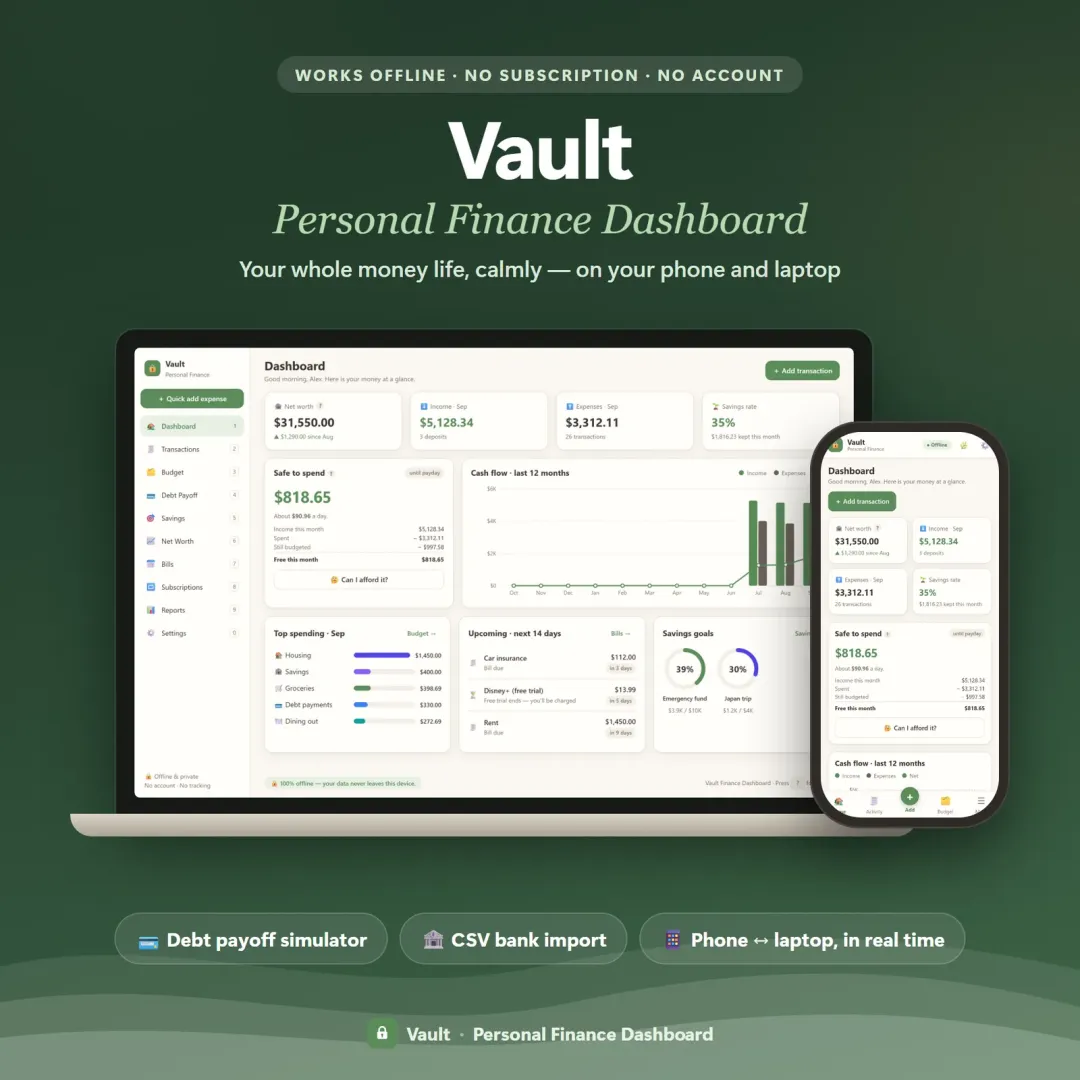
Vault personal finance dashboard shown on a laptop and a phone, with the safe-to-spend number and cash-flow charts Live

Vault

Personal Finance Dashboard

Your whole money picture on one private dashboard — safe-to-spend, budgets, bills, goals, debt payoff and net worth, on your phone and laptop.

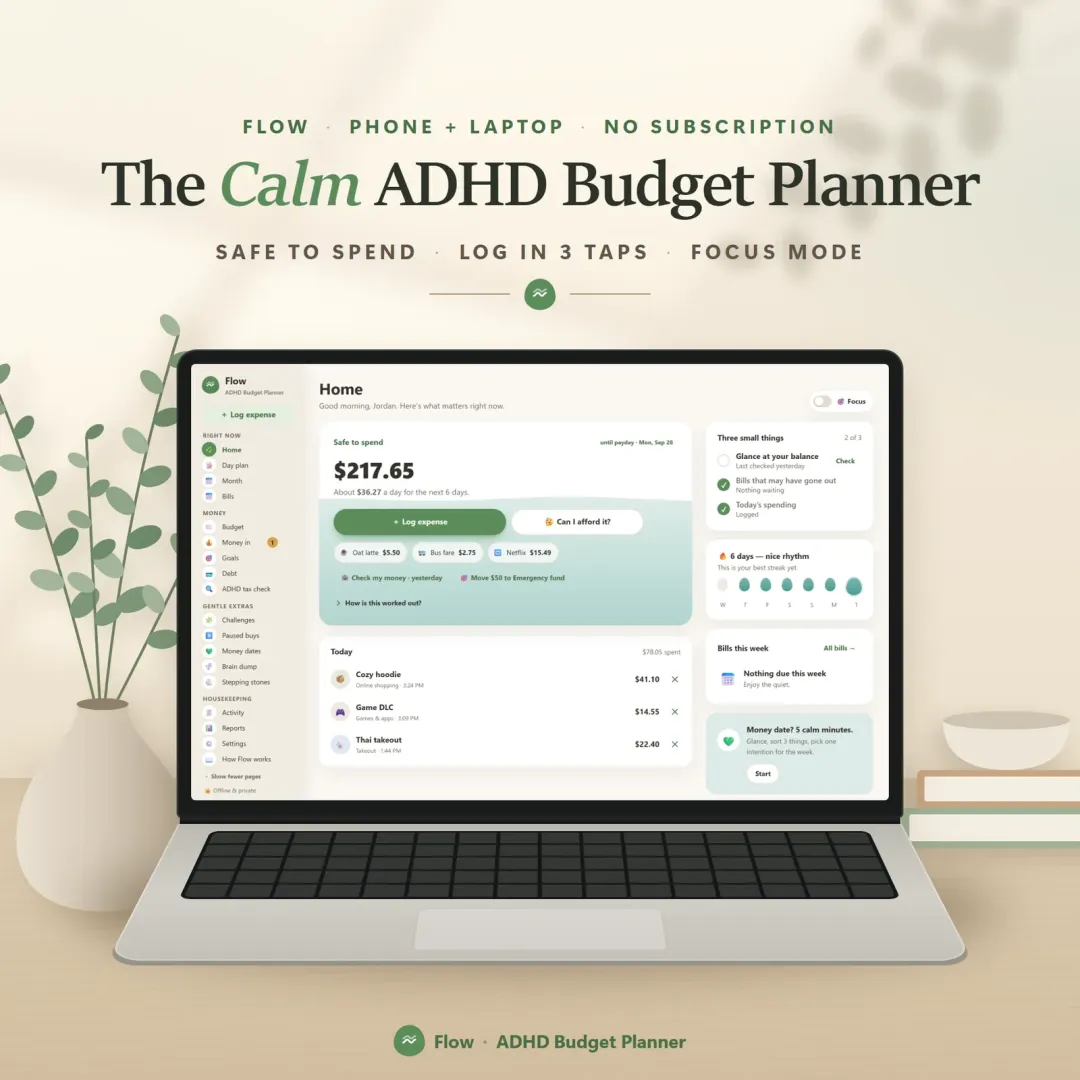
Flow ADHD budget planner showing a calm Safe to Spend screen Live

Flow

ADHD Budget Planner

A calm budget planner designed for ADHD brains — one Safe to Spend number, 3-tap logging, focus mode and kind overspend fixes instead of red warnings.

Free calculators

Take-Home Pay Calculator

Your paycheck after federal tax, FICA, state tax, 401(k) and benefits — 2026 estimate.

Open calculator

Keep reading

Related terms

Money glossary

50/30/20 rule

The 50/30/20 rule is a simple budget that splits your after-tax income into three parts: 50% for needs such as housing and groceries, 30% for wants such as dining out and entertainment, and 20% for savings and extra debt payments.

Sinking fund

A sinking fund is money you set aside a little at a time for a specific expense you know is coming — like car insurance, holidays or a new laptop — so you can pay for it in cash when it arrives instead of using a credit card.

Take-home pay

Take-home pay (net pay) is the money you actually receive after taxes and payroll deductions are taken out of your gross pay — federal and state income tax, Social Security, Medicare and pre-tax benefits such as 401(k) contributions and health insurance.

Further reading

Guides on this topic

All articles
What Is a Safe-to-Spend Number (and How Do You Calculate It)?

Personal Finance

What Is a Safe-to-Spend Number (and How Do You Calculate It)?

Your bank balance isn't what you can spend. A safe-to-spend number subtracts bills, savings and planned spending first — here's the formula, worked examples for monthly, weekly and irregular pay, and the mistakes to avoid.

11 min read

Try Vault free in your browser

Your whole money picture on one private dashboard — safe-to-spend, budgets, bills, goals, debt payoff and net worth, on your phone and laptop. The live demo uses sample data — nothing to install, no sign-up.

We use optional cookies for anonymous analytics. Nothing optional is set until you choose. Cookie policy