
How to use the credit card payment calculator
- Enter your card balance and APR from your latest statement.
- Choose what you want to find:
- My minimum payment — enter your card's formula (the percentage of the balance, whether interest is added on top, and the minimum floor). You'll see this month's minimum, how long minimum-only payments take, and what happens if you keep paying this month's amount instead.
- Payment to pay it off by a date — enter the number of months, plus any new purchases you expect to put on the card each month. You'll get the fixed monthly payment, total interest and a table for 6 to 60 months.
How credit card minimum payments are calculated
Every issuer publishes its own formula in the card agreement. The most common ones are:
| Formula | $5,000 at 22.9% APR — first month |
|---|---|
| 1% of balance + interest (floor $25) | $50.95 + $95.42 = $146.37 |
| 2% of balance (floor $25) | $101.91 |
| 3% of balance (floor $35) | $152.86 |
The percentage is taken from the statement balance, which already includes that month's interest ($5,000 + $95.42). Late fees and any past-due amount are usually added on top. If your balance is below the floor, the minimum is simply the whole balance.
Monthly interest is roughly balance × APR ÷ 12. Most cards actually charge a daily rate (APR ÷ 365) on your average daily balance, so your statement can differ by a few cents.
Why paying only the minimum takes so long
Because the minimum is a percentage of the balance, it shrinks every month — so the payoff slows down as you go. With the 1% + interest formula, a $5,000 balance at 22.9% takes about 19 years and roughly $8,300 in interest.
Here's the simple fix this calculator shows: keep paying the first month's minimum ($146.37) as a fixed amount every month. The same card is then paid off in 56 months — under five years — with about $3,170 of interest. Same starting payment, about $5,100 saved.
The payment to be debt-free by a date
To clear a balance in a set number of months, the calculator uses the standard loan formula:
payment = balance × r ÷ (1 − (1 + r)^−n)
where r is the monthly rate (APR ÷ 12) and n is the number of months.
| Pay off $5,000 at 22.9% in | Monthly payment | Total interest |
|---|---|---|
| 12 months | $470 | $642 |
| 24 months | $262 | $1,279 |
| 36 months | $193 | $1,958 |
| 48 months | $160 | $2,679 |
A shorter payoff costs more each month but far less overall.
If you keep using the card
Most payoff calculators assume you stop spending. Real life doesn't always work that way, so this one lets you add new purchases per month. Every purchase raises the balance and, while you carry a balance, usually starts charging interest straight away. With $200 a month of new purchases, the payment to clear $5,000 in 24 months rises from $262 to about $465. If that's too much, the most powerful change is to stop adding to the card while you pay it down.
Which calculator do you need?
- This calculator answers "what should I pay each month?"
- The credit card payoff calculator answers "how long will it take at the payment I can afford?"
- With several cards or loans, the debt payoff calculator plans them together using the debt avalanche or debt snowball.
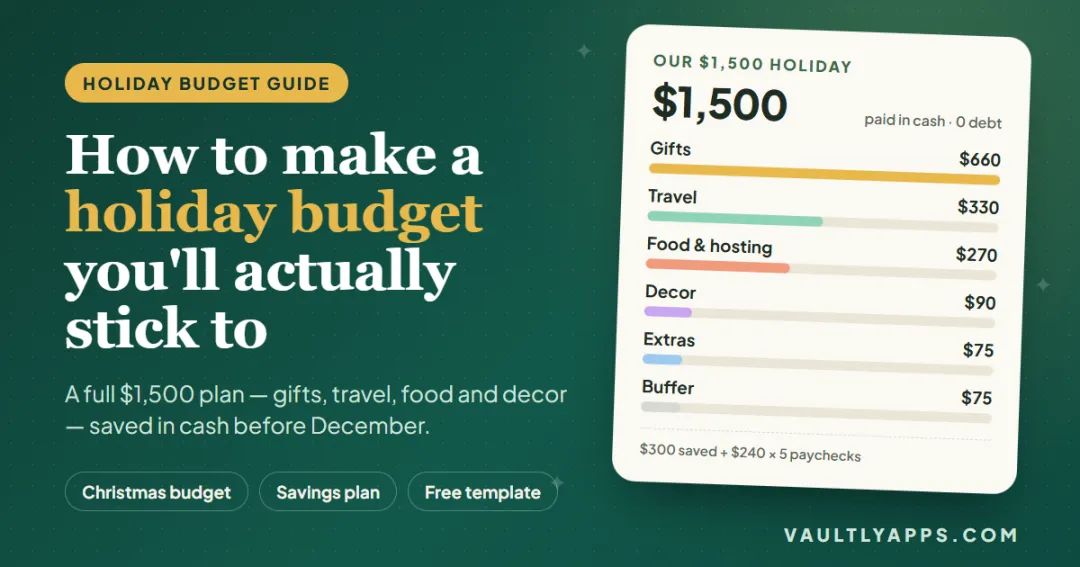
New to the terms? See what APR and a minimum payment mean in our money glossary. If holiday spending is what pushed the balance up, our holiday budget guide shows how to pay for next year in cash.
Tips to lower your credit card payments
- Pay a fixed amount, not the shrinking minimum — set it up as an automatic payment.
- Ask for a lower APR after a year of on-time payments; even a few points changes the payment table above.
- Consider a 0% balance transfer only if you can clear it before the promotion ends and the transfer fee is lower than the interest you'd pay.
- Cut subscriptions you don't use and send that money to the card — the subscription cost calculator adds them up.
Turn the payment into a plan
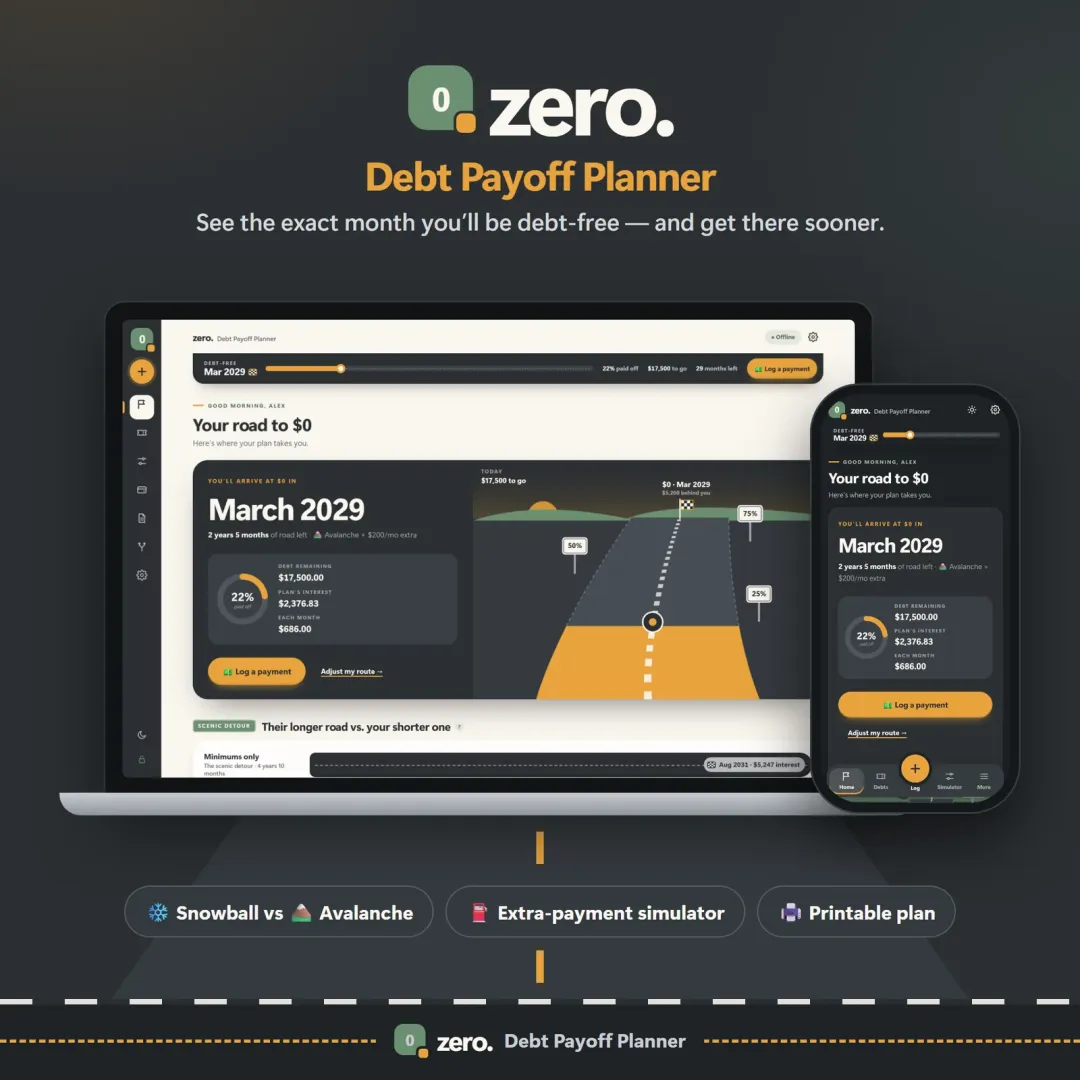
Zero, the VaultlyApps debt payoff planner, keeps your debt-free date on every screen, logs each real payment and shows how an extra $25 or $50 a month moves the finish line. It works for one card or several, and the free Zero demo runs in your browser with sample data.
Frequently asked questions
How is a credit card payment calculated?
What is the monthly payment on a $5,000 credit card?
Why does my minimum payment keep going down?
What happens if I keep using my card while paying it off?
Does paying more than the minimum help my credit score?
Is the minimum payment the same on every card?
Is my information saved or sent anywhere?
Key terms
Written by
Finance Specialist & Editor, VaultlyApps
Emma Whitfield writes and edits the VaultlyApps money guides and free calculators. Her focus is US household finance — budgeting on a real paycheck, paying down credit card and student debt, emergency funds and savings goals, renting — and the money side of freelancing and small-business income, from pricing and profit margins to self-employment tax. Every guide is researched against primary sources such as IRS publications and the CFPB, every number is checked in our tested calculators, and tax content is reviewed each year when new IRS figures come out. Emma is not a licensed financial adviser or tax preparer; her work is general education, not personal advice.
Researched against primary US sources, checked against independent calculators and reviewed by a finance expert on our team. Written for US readers — general education, not financial, tax or legal advice. Editorial policy · Disclaimer