How the debt avalanche works
- List your debts from highest APR to lowest.
- Pay the minimum on everything.
- Put every extra dollar on the highest-APR debt.
- When it's paid off, roll its payment into the next-highest rate.
Example
| Debt | Balance | APR | Minimum |
|---|---|---|---|
| Credit card | $6,500 | 24.99% | $195 |
| Store card | $1,200 | 17.99% | $40 |
| Car loan | $11,800 | 7.5% | $320 |
| Student loan | $18,500 | 5.5% | $210 |
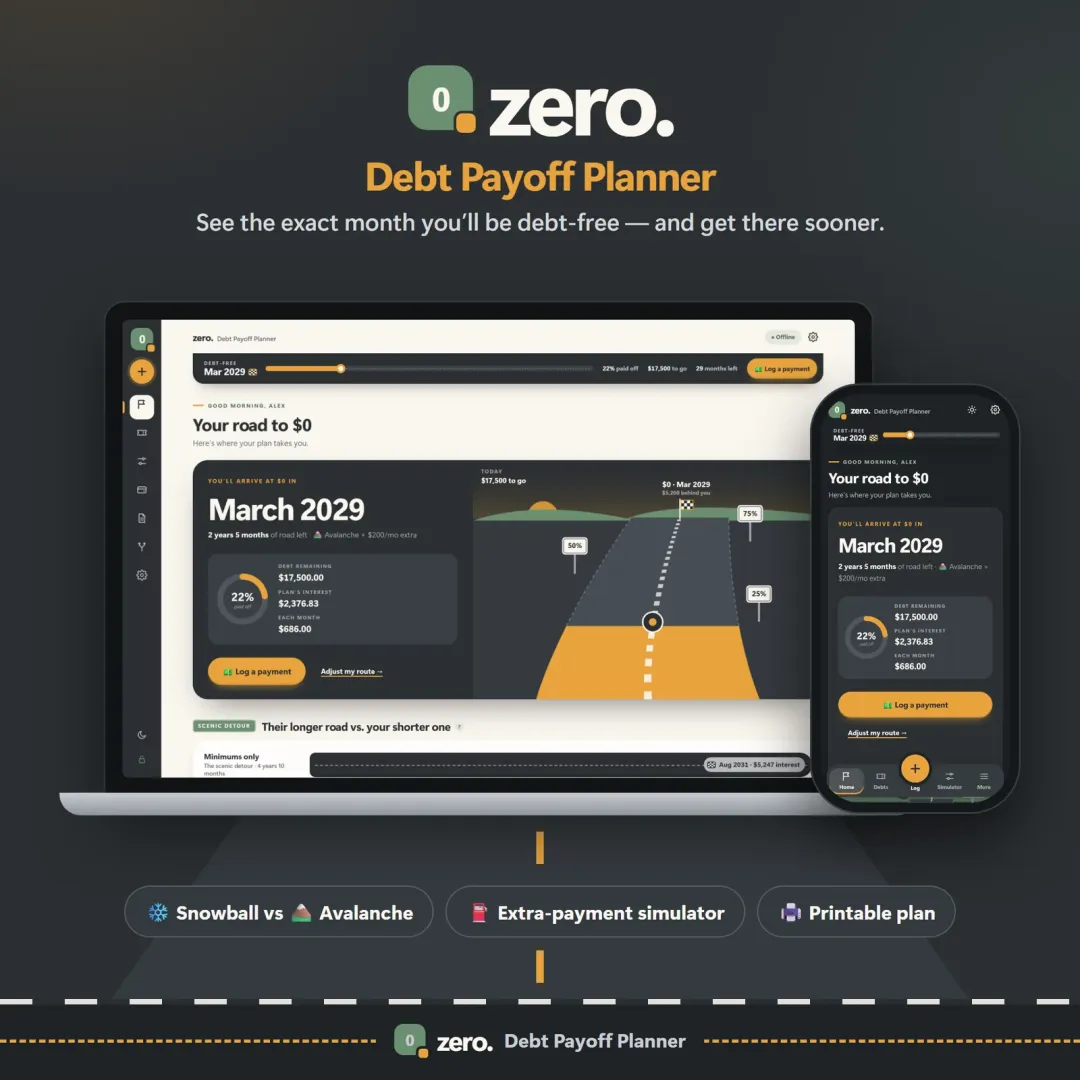
With $200 extra a month, the avalanche pays the credit card first. In our debt payoff calculator, this plan clears everything in 46 months with about $6,100 of interest — about $140 less than the snowball on the same debts. With bigger high-rate balances, the gap grows.
Avalanche vs snowball
- Avalanche: least interest, but the first win can take longer.
- Snowball: quicker wins, usually a bit more interest.
Read the full comparison in Debt Snowball vs Debt Avalanche.
Tip
Your APR can change. If a card offers you a 0% balance transfer, re-run your plan — the order may change.
Frequently asked questions
How much does the debt avalanche save?
It depends on your balances and rates. When your highest-APR debt is also large, the savings can be hundreds or thousands of dollars compared with the snowball. The debt payoff calculator shows the exact difference for your debts.
What if two debts have the same APR?
Pay the smaller balance first. You clear a debt sooner without paying more interest.
Can I switch from snowball to avalanche?
Yes. Your total monthly payment stays the same; only the order changes. Many people start with one quick snowball win, then switch to the avalanche.
Written by
Finance Specialist & Editor, VaultlyApps
Researched against primary US sources and reviewed by a finance expert on our team. Written for US readers — general education, not financial, tax or legal advice. Editorial policy · Disclaimer