VaultlyApps
Money glossary

What Is APR? Annual Percentage Rate Explained

The number lenders must show you before you borrow — and the fastest way to see what a balance really costs each month.

By Updated Reviewed by a finance expert

How APR works

Under the federal Truth in Lending Act, lenders must show you the APR before you borrow, so you can compare offers on the same basis.

  • Credit cards: the APR is the interest rate. Most cards charge interest daily using a daily periodic rate (APR ÷ 365) on your average daily balance. Cards can have several APRs — for purchases, balance transfers, cash advances and a higher penalty APR.
  • Loans and mortgages: the APR includes the interest rate plus certain fees, such as origination fees and points. That is why a mortgage APR is usually a bit higher than its interest rate.

Example

You carry a $1,000 credit card balance at 24% APR. One month of interest is about $1,000 × 24% ÷ 12 = $20. Pay only $25 and just $5 comes off the balance. Pay $100 and $80 does. The credit card payoff calculator runs these numbers month by month for your own card.

APR vs APY

APR describes what you pay on debt and doesn't include compounding. APY describes what you earn on savings and does include compounding. A card at 24% APR that compounds daily actually costs a little more than 24% over a year.

Why APR matters

When you have several debts, the APR tells you which one grows fastest. Paying the highest-APR balance first — the debt avalanche — costs the least interest overall. The debt payoff calculator shows the difference in dollars.

Frequently asked questions

What is a good APR for a credit card?

Lower is always better. Card APRs commonly run from the high teens to the high twenties. If you carry a balance, a lower APR or a 0% balance transfer saves real money; if you pay in full every month, the APR does not cost you anything.

Is APR the same as the interest rate?

On credit cards, yes. On mortgages and other loans, APR is usually a little higher than the interest rate because it also counts certain fees and costs, spread over the life of the loan.

How do I lower my APR?

Ask your card issuer — a history of on-time payments helps — move the balance to a 0% transfer card you can clear before the promo ends, or refinance a loan when your credit score improves.

Written by

Emma Whitfield

Finance Specialist & Editor, VaultlyApps

Researched against primary US sources and reviewed by a finance expert on our team. Written for US readers — general education, not financial, tax or legal advice. Editorial policy · Disclaimer

From VaultlyApps

Apps that use this

Every app has a free live demo with sample data — open it in your browser, nothing to install.

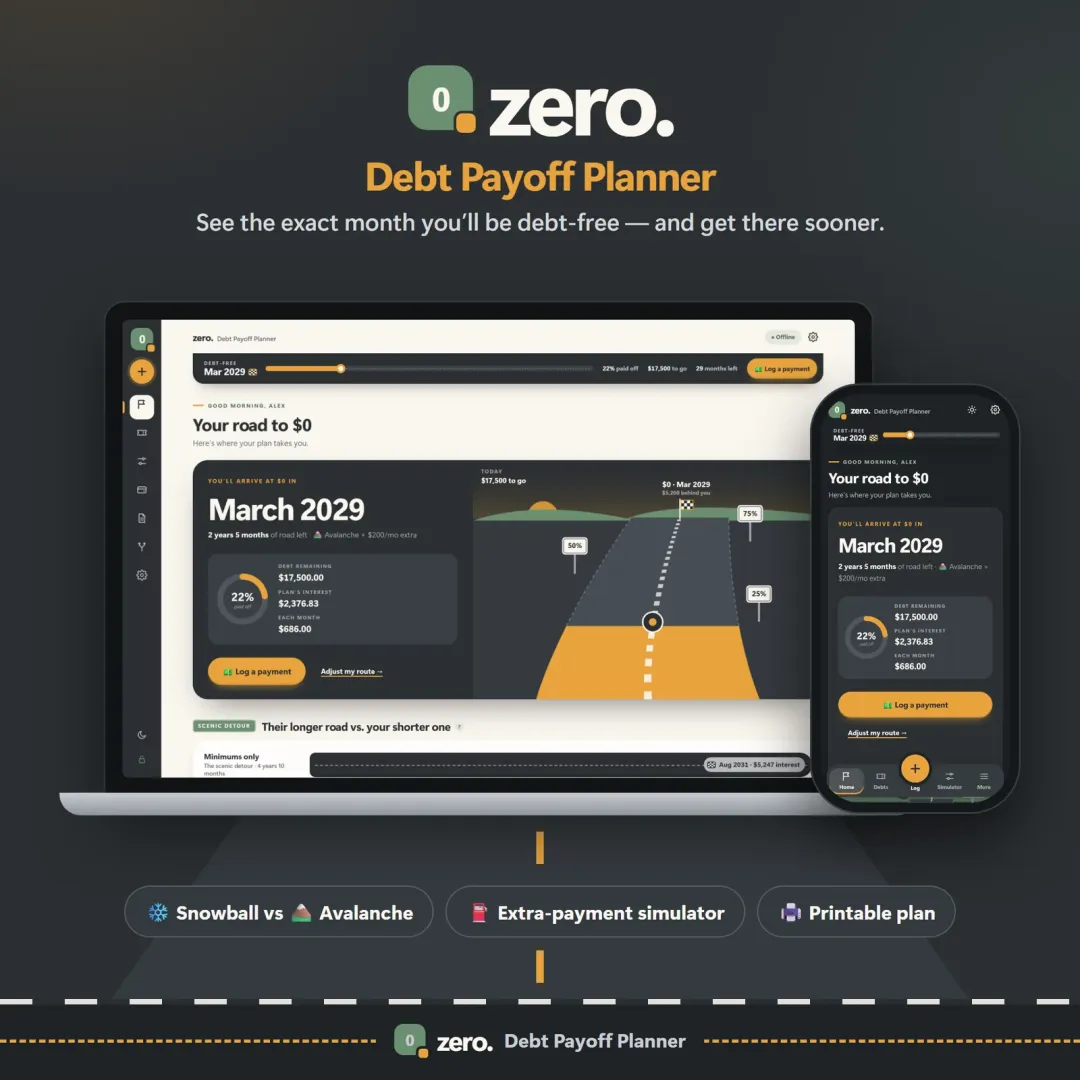
Zero debt payoff planner with a road leading to a $0 finish flag and the projected debt-free date Live

Zero

Debt Payoff Planner

See your debt-free date, compare the snowball and avalanche methods side by side, and watch extra payments pull the finish line closer.

Free calculators

Debt Payoff Calculator

Your debt-free date, total interest and payoff order — snowball vs avalanche, side by side.

Open calculator

Keep reading

Related terms

Money glossary

APY

APY (annual percentage yield) is the real amount a savings account or CD earns in one year, including compound interest, shown as a percentage. Because it counts compounding, APY is the fairest way to compare savings accounts.

Minimum payment

A minimum payment is the smallest amount you must pay on a credit card or loan by the due date to keep the account in good standing. On credit cards it is usually a small percentage of the balance plus interest and fees — so paying only the minimum can take many years and cost a lot of interest.

Debt avalanche

The debt avalanche is a debt payoff method where you pay the minimum on every debt and put all extra money toward the debt with the highest interest rate (APR) first. It is usually the cheapest way out of debt because it attacks the most expensive interest first.

Further reading

Guides on this topic

All articles
Debt Snowball vs Debt Avalanche: Which Pays Off Debt Faster?

Personal Finance

Debt Snowball vs Debt Avalanche: Which Pays Off Debt Faster?

The snowball method pays the smallest balance first; the avalanche method pays the highest interest rate first. Here's how they compare on the same debts, with real numbers — plus the hybrid method and how to choose.

11 min read

Try Zero free in your browser

See your debt-free date, compare the snowball and avalanche methods side by side, and watch extra payments pull the finish line closer. The live demo uses sample data — nothing to install, no sign-up.

We use optional cookies for anonymous analytics. Nothing optional is set until you choose. Cookie policy