How the debt snowball works
- List your debts from smallest balance to largest, ignoring interest rates.
- Pay the minimum on everything.
- Put every extra dollar on the smallest debt.
- When it's gone, add its whole payment to the next-smallest debt — and repeat.
Example
| Debt | Balance | APR | Minimum |
|---|---|---|---|
| Store card | $1,200 | 17.99% | $40 |
| Credit card | $6,500 | 24.99% | $195 |
| Car loan | $11,800 | 7.5% | $320 |
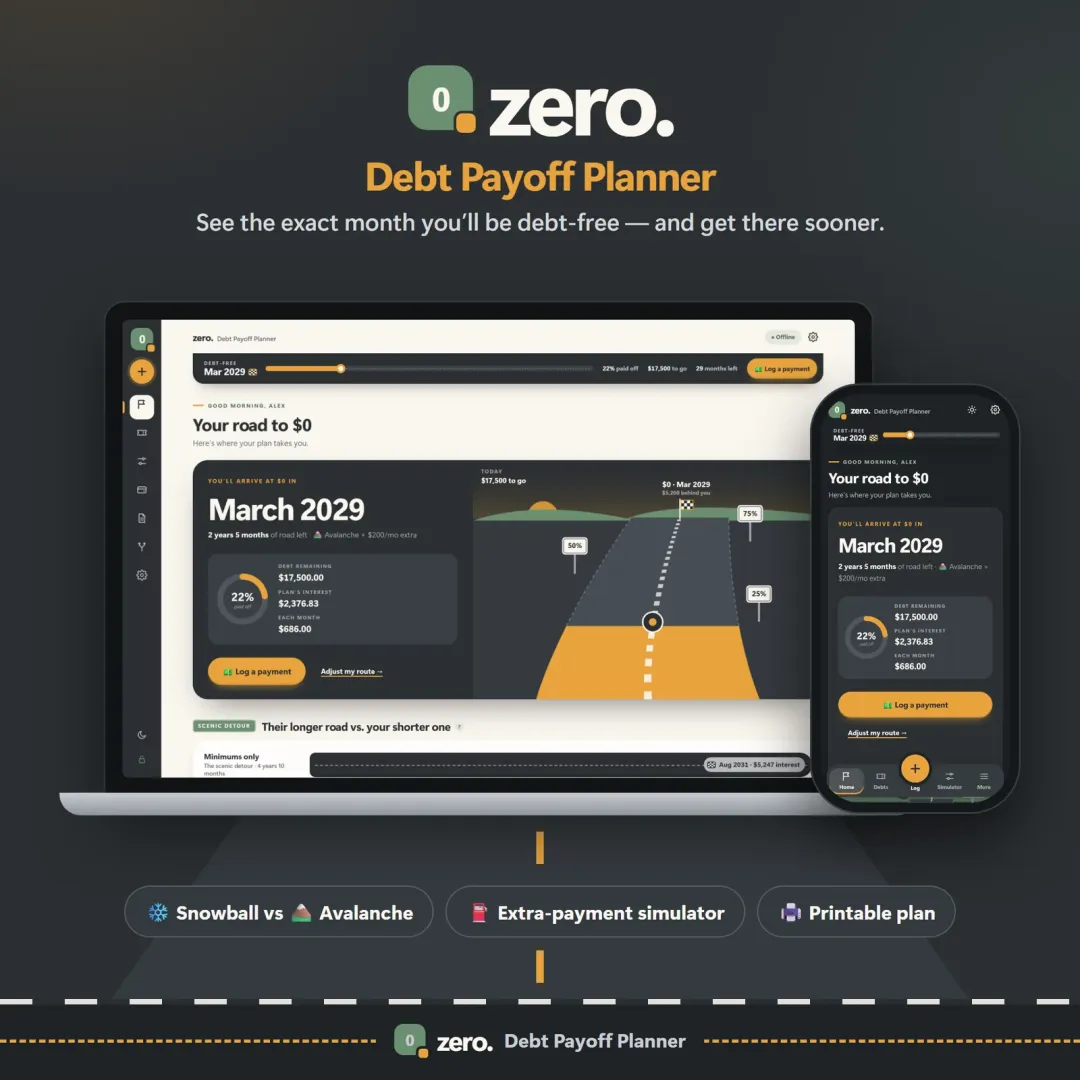
With $200 extra a month, the store card is gone in about six months. Its $40 minimum plus the $200 then go to the credit card, and so on. The debt payoff calculator shows the exact month each debt disappears.
Snowball vs avalanche
The debt avalanche targets the highest APR first and usually costs less interest. The snowball trades a little interest for faster early wins. Our guide Debt Snowball vs Debt Avalanche compares both with real numbers.
Make it work
- Stop adding new debt while you pay off the old.
- Keep a small emergency fund so surprises don't go on a card.
- Celebrate each debt you clear — that's the whole point of the snowball.
Frequently asked questions
Is the debt snowball better than the avalanche?
The avalanche usually saves more interest; the snowball often keeps people going because debts disappear sooner. If the interest difference is small, choose the method you are more likely to stick with.
Does the debt snowball include my mortgage?
Most people leave the mortgage out and use the snowball for consumer debts such as credit cards, car loans, personal loans and medical bills.
What happens to the payment when a debt is paid off?
It "rolls over": the full amount you were paying on the cleared debt is added to the payment on the next one, so your total monthly debt budget stays the same.
Written by
Finance Specialist & Editor, VaultlyApps
Researched against primary US sources and reviewed by a finance expert on our team. Written for US readers — general education, not financial, tax or legal advice. Editorial policy · Disclaimer