VaultlyApps
Money glossary

What Is Debt-to-Income Ratio (DTI)? Formula and Good DTI

The number a lender checks before almost any loan or lease.

By Updated Reviewed by a finance expert

How to calculate DTI

Add up your monthly debt payments and divide by your gross monthly income:

  • Rent or mortgage (including property tax, insurance and HOA if you own)
  • Car loan or lease
  • Student loans
  • Credit card minimum payments
  • Personal loans, child support and alimony

Example: $1,650 rent + $380 car + $220 student loan + $150 cards = $2,400. With gross income of $6,000 a month, DTI = 2,400 ÷ 6,000 = 40%.

What lenders look for

DTI How it's usually seen
35% or less Comfortable
36% – 43% Manageable; within many mortgage limits
44% – 49% High; fewer loan options
50% or more Very high

Front-end DTI counts housing costs only (often 28% or less is preferred). Back-end DTI counts housing plus all other debt.

How to lower your DTI

Pay off a small debt completely — that removes a whole monthly payment. The debt snowball is built for exactly that. Check your number any time with the free DTI calculator, and see what rent fits your DTI with the rent affordability calculator.

Frequently asked questions

What is a good debt-to-income ratio?

Under 36% is generally considered healthy. Many mortgage lenders accept up to about 43%, and some loan programs allow more with strong credit or savings. Above 50% is a warning sign.

Does DTI use gross or net income?

Gross income — your pay before taxes and deductions.

Does DTI affect my credit score?

No. Your credit score doesn't include your income, so DTI isn't part of it. But lenders look at both when you apply.

Written by

Emma Whitfield

Finance Specialist & Editor, VaultlyApps

Researched against primary US sources and reviewed by a finance expert on our team. Written for US readers — general education, not financial, tax or legal advice. Editorial policy · Disclaimer

From VaultlyApps

Apps that use this

Every app has a free live demo with sample data — open it in your browser, nothing to install.

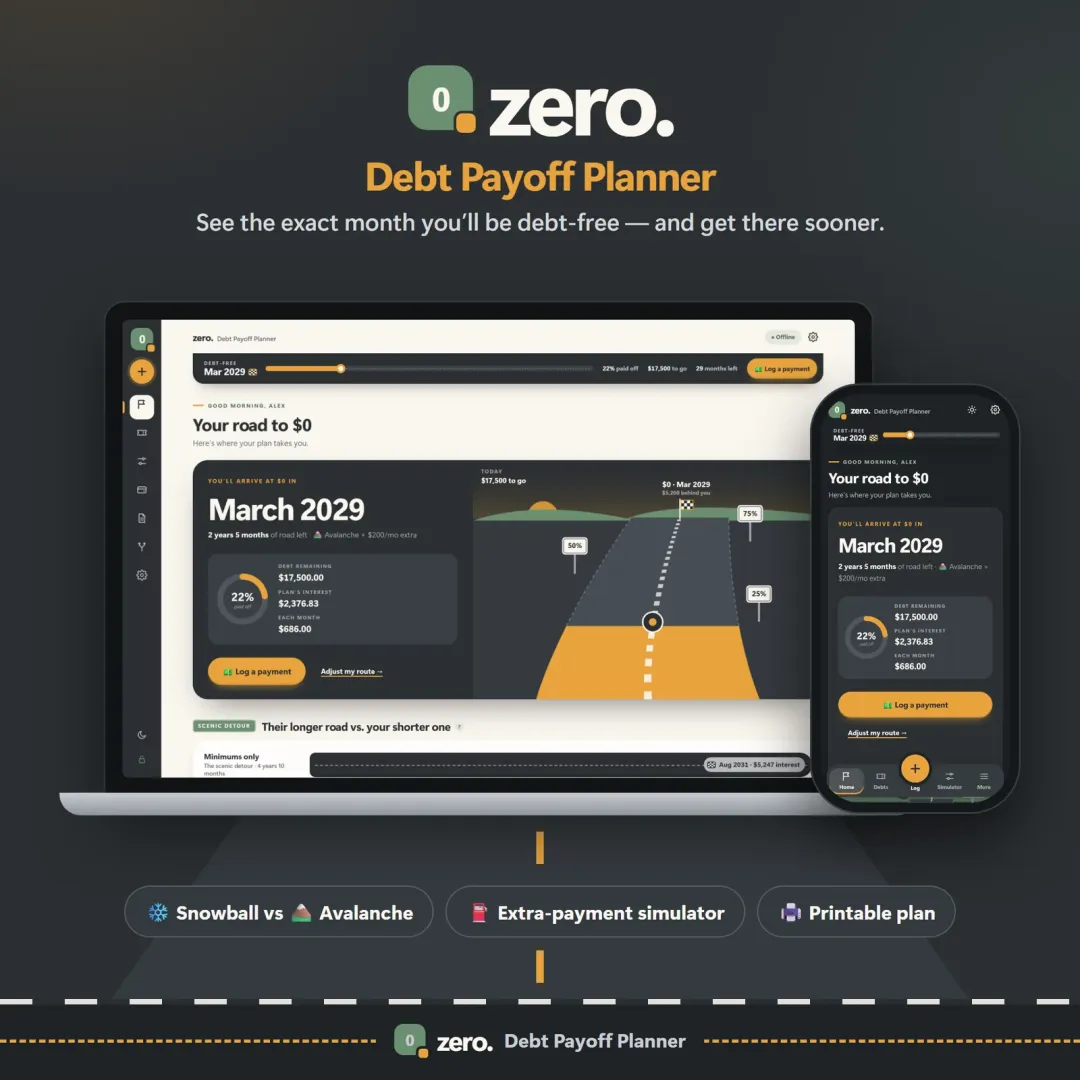
Zero debt payoff planner with a road leading to a $0 finish flag and the projected debt-free date Live

Zero

Debt Payoff Planner

See your debt-free date, compare the snowball and avalanche methods side by side, and watch extra payments pull the finish line closer.

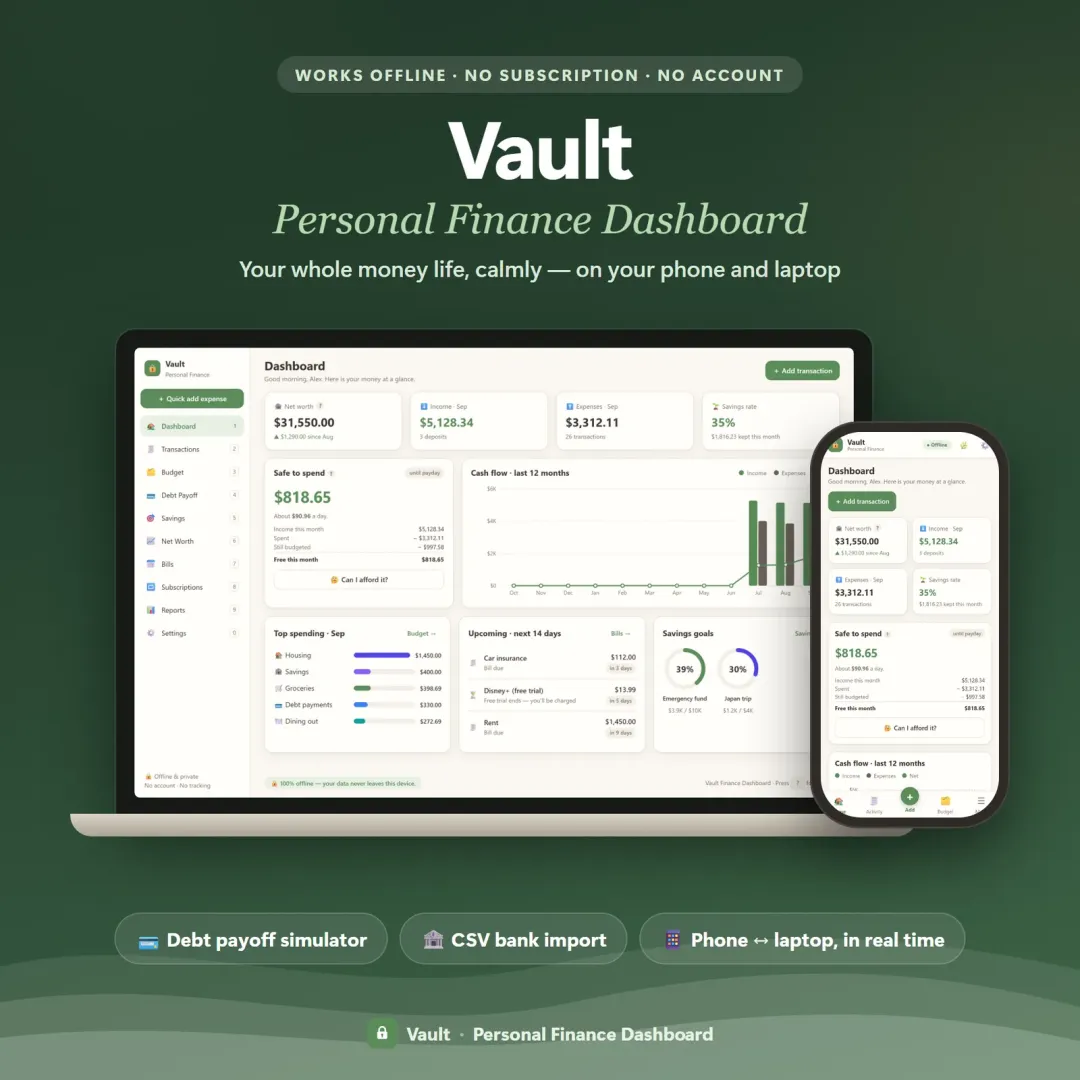
Vault personal finance dashboard shown on a laptop and a phone, with the safe-to-spend number and cash-flow charts Live

Vault

Personal Finance Dashboard

Your whole money picture on one private dashboard — safe-to-spend, budgets, bills, goals, debt payoff and net worth, on your phone and laptop.

Free calculators

Keep reading

Related terms

Money glossary

Take-home pay

Take-home pay (net pay) is the money you actually receive after taxes and payroll deductions are taken out of your gross pay — federal and state income tax, Social Security, Medicare and pre-tax benefits such as 401(k) contributions and health insurance.

Debt snowball

The debt snowball is a debt payoff method where you pay the minimum on every debt and put all extra money toward the smallest balance first. When it's paid off, its payment rolls into the next-smallest debt, so your payments grow like a snowball.

Minimum payment

A minimum payment is the smallest amount you must pay on a credit card or loan by the due date to keep the account in good standing. On credit cards it is usually a small percentage of the balance plus interest and fees — so paying only the minimum can take many years and cost a lot of interest.

Further reading

Guides on this topic

All articles
Debt Snowball vs Debt Avalanche: Which Pays Off Debt Faster?

Personal Finance

Debt Snowball vs Debt Avalanche: Which Pays Off Debt Faster?

The snowball method pays the smallest balance first; the avalanche method pays the highest interest rate first. Here's how they compare on the same debts, with real numbers — plus the hybrid method and how to choose.

11 min read

Try Zero free in your browser

See your debt-free date, compare the snowball and avalanche methods side by side, and watch extra payments pull the finish line closer. The live demo uses sample data — nothing to install, no sign-up.

We use optional cookies for anonymous analytics. Nothing optional is set until you choose. Cookie policy