
VaultlyApps logo VaultlyApps

Free calculator

529 Calculator: How Much to Save for College

Enter your child's age, what you've saved and what you add each month. Choose a type of college to see its cost grown to the year your child starts, how much of it your 529 will cover, and the monthly saving that reaches your goal.

By Updated Private — runs in your browser Free, no sign-up Save, print, PDF & CSV — with a QR code to reopen it

Tuition, fees, housing, food.

Age-based plans: 5–7% early on.

3–5% a year is typical.

Many families aim for a third or half and cover the rest with aid, income and scholarships.

Your 529 when college starts


Projected cost


Save a month to reach the goal


Saved

from you · tax-free growth

Balance by age
AgeYou put inBalance

Costs: College Board, Trends in College Pricing 2025-26 (published price before aid). 529 growth is tax-free when spent on qualified education costs, including up to $20,000 a year of K–12 tuition from 2026.

For readers in the United States. Estimates for planning only — not financial, investment, tax or legal advice. Disclaimer · How we check our numbers

Nest app icon

Want these numbers to update by themselves?

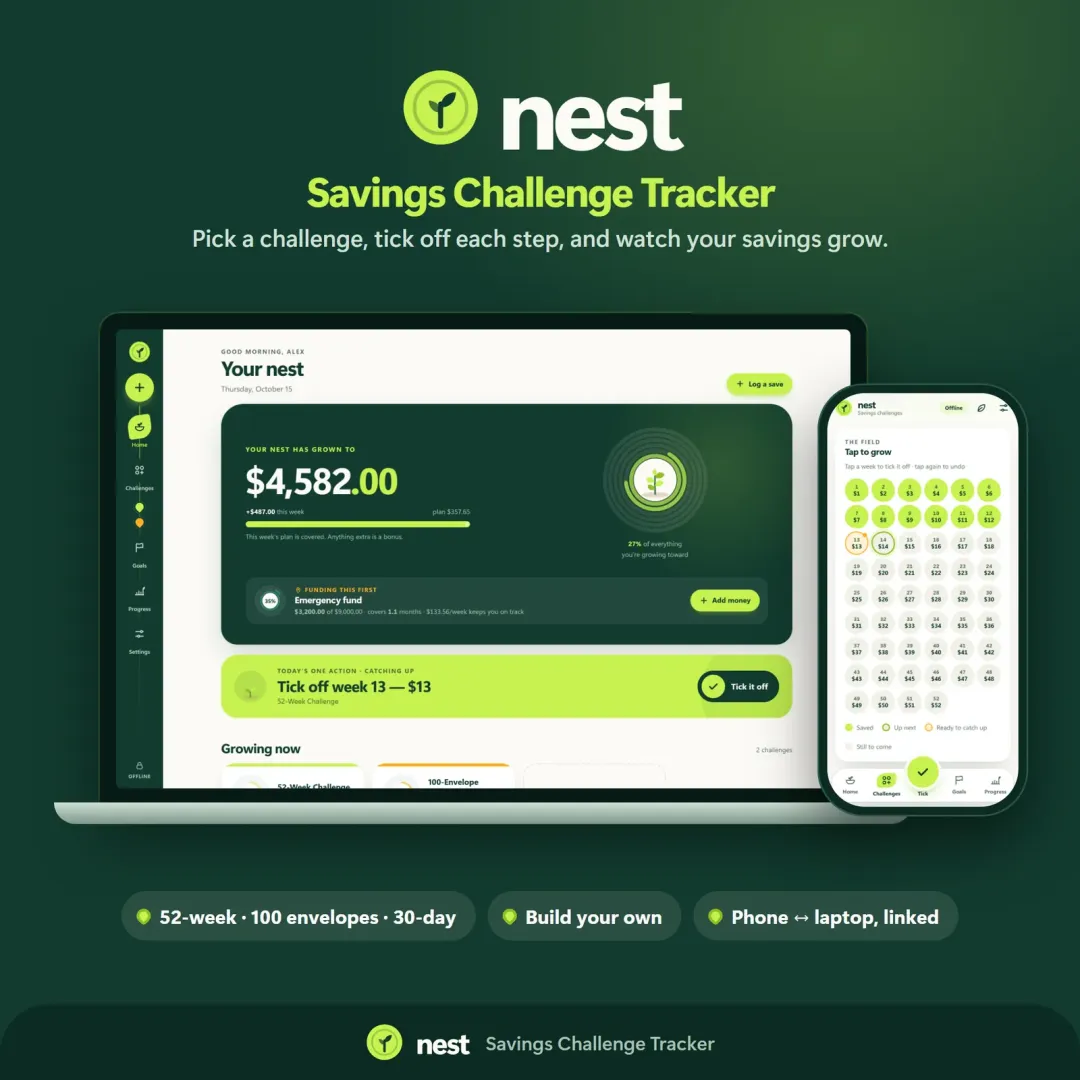
Nest — Savings Challenge Tracker — keeps this plan current as you log real payments. Try the free demo, no sign-up.

How to use the 529 calculator

  1. Enter your child's age, the age they'll start college, what you've saved so far and what you add each month.
  2. Pick a type of college, or enter your own yearly cost. Costs include tuition, fees, housing and food.
  3. Set your expected return, how fast college costs grow, the number of years of college, and the share you want to cover.

What college costs (2025-26 averages)

Type of college Tuition & fees With housing & food
Community college (living at home) $4,150 —
Public 4-year, in-state $11,950 $25,850
Public 4-year, out-of-state $31,880 $45,780
Private nonprofit 4-year $45,000 $60,920

Source: College Board, Trends in College Pricing 2025. These are published prices; after grants, the average student pays much less, especially at private colleges.

How much $100, $250 or $500 a month grows from birth

At a 6% return, saving from birth to 18:

Monthly You put in 529 at 18
$100 $21,600 $38,700
$250 $54,000 $96,800
$500 $108,000 $193,700

Starting early matters most: almost half of the $250-a-month balance is tax-free growth. Starting at age 10 instead, the same $250 grows to only about $30,700.

How a 529 plan works

A 529 is a state-sponsored investment account for education. You invest after-tax money; the growth is federally tax-free when you spend it on qualified education costs. Most plans offer age-based portfolios that move from stocks to bonds as college gets closer, so the return is higher early and lower later. Use a lower return in the calculator if the child is already a teenager.

529 rules worth knowing in 2026

  • K–12: up to $20,000 a year per student for private school tuition and related costs (it was $10,000 until 2025). Some states haven't adopted the higher limit.
  • Roth rollover: up to $35,000 over a lifetime can move to the beneficiary's Roth IRA if the 529 is at least 15 years old.
  • Gifts: grandparents and family can contribute; up to $19,000 per person per year with no gift tax paperwork.
  • Financial aid: a parent-owned 529 counts as a parent asset, which reduces aid much less than money in the student's name.

Balance college saving with your own goals

Don't pause retirement saving to fund college: students can borrow for college, but nobody lends for retirement. A common order is emergency fund, employer 401(k) match, then 529. The savings goal calculator plans any target, the compound interest calculator shows long-term growth, and if loans are still part of the plan, the student loan payoff calculator and our guide to paying off student loans faster help afterwards.

Track the college fund with your other goals

Nest is a savings tracker for goals with target dates, from a college fund to a holiday; every deposit shows your progress. Summit tracks net worth across every account. Both have a free demo with sample data.

An estimate, not investment advice; returns aren't guaranteed.

Frequently asked questions

How much should I save in a 529 per month?

It depends on the child's age and the school. To cover half of four years at an in-state public college for a five-year-old who already has $5,000 saved, you'd need about $342 a month at a 6% return. Starting at birth, $250 a month grows to about $97,000 by 18.

How much does college cost in 2026?

College Board's 2025-26 averages for tuition, fees, housing and food are $25,850 a year at a public in-state four-year college, about $45,780 out of state and about $60,920 at a private nonprofit college, before financial aid.

What can a 529 plan pay for?

College tuition, fees, books, computers, and housing and food for students enrolled at least half time; up to $20,000 a year of K–12 tuition and related costs from 2026; apprenticeships; and up to $10,000 of student loans per person over a lifetime.

What if my child doesn't go to college?

Change the beneficiary to a sibling or another family member, keep it for later study, or roll up to $35,000 over a lifetime into the child's Roth IRA if the account is 15 years old. Non-qualified withdrawals pay income tax plus a 10% penalty on the earnings only.

How much can I put in a 529?

There's no yearly limit, but gifts above $19,000 per child in 2026 ($38,000 for a couple) need a gift tax return. You can superfund five years at once: $95,000, or $190,000 for a couple.

Do I get a tax deduction for 529 contributions?

Not federally, but more than 30 states give a state income tax deduction or credit, usually only for their own state's plan. The growth is tax-free federally when spent on qualified costs.

Written by

Emma Whitfield

Finance Specialist & Editor, VaultlyApps

Emma Whitfield writes and edits the VaultlyApps money guides and free calculators. Her focus is US household finance — budgeting on a real paycheck, paying down credit card and student debt, emergency funds and savings goals, renting — and the money side of freelancing and small-business income, from pricing and profit margins to self-employment tax. Every guide is researched against primary sources such as IRS publications and the CFPB, every number is checked in our tested calculators, and tax content is reviewed each year when new IRS figures come out. Emma is not a licensed financial adviser or tax preparer; her work is general education, not personal advice.

Researched against primary US sources, checked against independent calculators and reviewed by a finance expert on our team. Written for US readers — general education, not financial, tax or legal advice. Editorial policy · Disclaimer

From VaultlyApps

Apps that do this for you

Each one has a free live demo with sample data — open it in your browser, nothing to install.

Nest savings challenge tracker with growth rings and a savings garden Live
Nest app icon

Nest

Savings Challenge Tracker

Run a 52-week, 365-day, no-spend or custom savings challenge and watch your savings grow — with goals, an emergency fund tracker and kind catch-up options.

Summit net worth tracker app showing net worth as a mountain range with one peak per monthly check-in Live
Summit app icon

Summit

Net Worth Tracker

A private net worth tracker for your phone and computer — add what you own and what you owe, check in once a month and watch your net worth climb, with milestones, a what-if forecast and a printable Net Worth Statement.

Keep planning

Related calculators

All calculators

Savings Goal Calculator

How much to save each month to hit a goal by a date — or when you'll reach it.

Open calculator

Further reading

Guides on this topic

All articles
CD vs high-yield savings account — a locked jar with a fixed rate next to an open jar with a variable rate

Personal Finance

CD vs High-Yield Savings Account: Which Is Better for Your Money?

A CD locks in a rate; a high-yield savings account keeps your money free but its rate can fall. Here's how they really compare — interest, early withdrawal penalties, taxes and safety — with worked examples, a simple rule for which money goes where, and how to build a CD ladder.

9 min read
Sinking funds — labeled jars for car repairs, holidays, insurance and travel filling up each month

Personal Finance

Sinking Funds: What They Are, Examples and How to Start (With a Simple Plan)

A sinking fund is money you set aside a little at a time for an expense you know is coming — car repairs, holidays, insurance, a vacation — so it never lands on a credit card. Here's how sinking funds work, a list of the most useful ones, how to calculate the monthly amount, and where to keep the money.

6 min read

Try Nest free in your browser

Run a 52-week, 365-day, no-spend or custom savings challenge and watch your savings grow — with goals, an emergency fund tracker and kind catch-up options. The live demo uses sample data — nothing to install, no sign-up.

We use optional cookies for anonymous analytics. Nothing optional is set until you choose. Cookie policy