
VaultlyApps logo VaultlyApps

Free calculator

T-Bill Calculator: Treasury Bill Price, Interest and Yield

Enter the face value, term and rate of a Treasury bill. See the price you pay, the interest you earn at maturity, the investment rate to compare with a savings account, and the fully taxed CD rate it equals once you count the state tax exemption.

By Updated Private — runs in your browser Free, no sign-up Save, print, PDF & CSV — with a QR code to reopen it

What you get back at maturity; you pay less up front. $100 minimum.

The rate you have

From TreasuryDirect’s auction results or your broker.

T-bill interest is exempt from it.

Interest you earn


Investment rate


Equal CD rate


After federal tax


Every term at this rate
TermYou payInterestYield

Price = 100 × (1 − discount rate × days ÷ 360). The investment rate (bond-equivalent yield) uses a 365-day year and is the one to compare with a savings account. Interest is federally taxable in the year the bill matures and exempt from state and local tax.

For readers in the United States. Estimates for planning only — not financial, investment, tax or legal advice. Disclaimer · How we check our numbers

Nest app icon

Want these numbers to update by themselves?

Nest — Savings Challenge Tracker — keeps this plan current as you log real payments. Try the free demo, no sign-up.

How to use the T-bill calculator

  1. Enter the face value: the amount paid back at maturity, in $100 steps.
  2. Choose the term, from 4 weeks to 52 weeks.
  3. Pick the rate type you have, the discount rate or the investment rate, and enter it. Auction results and brokers show both.
  4. Add your federal bracket and state income tax to see after-tax interest and the matching CD rate.

T-bill interest at a 4% discount rate ($10,000 face value)

Term Days You pay Interest Investment rate
4 weeks 28 $9,968.89 $31.11 4.07%
8 weeks 56 $9,937.78 $62.22 4.08%
13 weeks 91 $9,898.89 $101.11 4.10%
17 weeks 119 $9,867.78 $132.22 4.11%
26 weeks 182 $9,797.78 $202.22 4.14%
52 weeks 364 $9,595.56 $404.44 4.23%

Rates change at every weekly auction; enter today's rate from TreasuryDirect's auction results or your broker.

The formulas

  • Price per $100 = 100 × (1 − discount rate × days ÷ 360)
  • Interest = face value − price paid
  • Investment rate = (100 − price) ÷ price × 365 ÷ days
  • Rolled over for a year, the effective yield (like an APY) is a little higher again, because the interest is reinvested at each maturity.

The state tax advantage

T-bill interest is exempt from state and local income tax. To compare with a CD or savings account that's fully taxed:

equivalent CD rate = T-bill rate × (1 − federal rate) ÷ (1 − federal rate − state rate)

At a 4.14% T-bill yield, 22% federal and 5% state, that's 4.42%. In a state with no income tax, the two are equal; in California or New York City the T-bill advantage is larger.

T-bills vs CDs vs high-yield savings

T-bills CDs High-yield savings
Backed by US government FDIC up to $250,000 FDIC up to $250,000
State tax Exempt Taxed Taxed
Access Sell at a broker or wait for maturity Penalty to withdraw early Any time
Rate Set at each auction Fixed for the term Changes any time

Compare the numbers with the CD calculator and the savings calculator, and read CD vs high-yield savings account.

A simple T-bill ladder

Split your cash into four parts and buy 4-, 8-, 13- and 26-week bills, then roll each one as it matures. Part of your money comes due every few weeks, and you earn T-bill rates on the rest. Keep your first month or two of emergency fund in a savings account you can reach the same day.

Track cash, T-bills and every goal

Nest tracks savings goals with target dates, so you can see how each T-bill or savings deposit moves you forward. Summit keeps every account, from cash and T-bills to retirement and property, in one net worth view. Both have a free demo with sample data.

An estimate, not investment advice. Check current rates before you buy.

Frequently asked questions

How do you calculate T-bill interest?

T-bills are sold at a discount and pay face value at maturity; the interest is the difference. Price = face value × (1 − discount rate × days ÷ 360). A $10,000 26-week bill at a 4% discount rate costs $9,797.78 and earns $202.22.

What's the difference between the discount rate and the investment rate?

The discount rate is based on face value and a 360-day year. The investment rate (bond-equivalent yield) is based on what you paid and a 365-day year, so it's always a little higher. Use the investment rate to compare with a CD or savings account APY.

Are T-bills taxed?

Interest is subject to federal income tax in the year the bill matures, but exempt from state and local income tax. In a high-tax state, that makes a T-bill worth more than a CD paying the same rate.

How do I buy T-bills?

At TreasuryDirect.gov in $100 steps, or through a brokerage account, which also lets you sell before maturity. Bills are auctioned every week in terms of 4, 6, 8, 13, 17, 26 and 52 weeks.

Are T-bills better than a high-yield savings account?

They're backed by the US government and state-tax-free, and lock in a rate for the term. Savings accounts let you withdraw any day and usually change rates more slowly. Many people keep a month or two of expenses in savings and ladder T-bills for the rest.

What happens when a T-bill matures?

The face value is paid into your account. On TreasuryDirect and at most brokers you can set automatic reinvestment (rollover) into a new bill at the next auction's rate.

Written by

Emma Whitfield

Finance Specialist & Editor, VaultlyApps

Emma Whitfield writes and edits the VaultlyApps money guides and free calculators. Her focus is US household finance — budgeting on a real paycheck, paying down credit card and student debt, emergency funds and savings goals, renting — and the money side of freelancing and small-business income, from pricing and profit margins to self-employment tax. Every guide is researched against primary sources such as IRS publications and the CFPB, every number is checked in our tested calculators, and tax content is reviewed each year when new IRS figures come out. Emma is not a licensed financial adviser or tax preparer; her work is general education, not personal advice.

Researched against primary US sources, checked against independent calculators and reviewed by a finance expert on our team. Written for US readers — general education, not financial, tax or legal advice. Editorial policy · Disclaimer

From VaultlyApps

Apps that do this for you

Each one has a free live demo with sample data — open it in your browser, nothing to install.

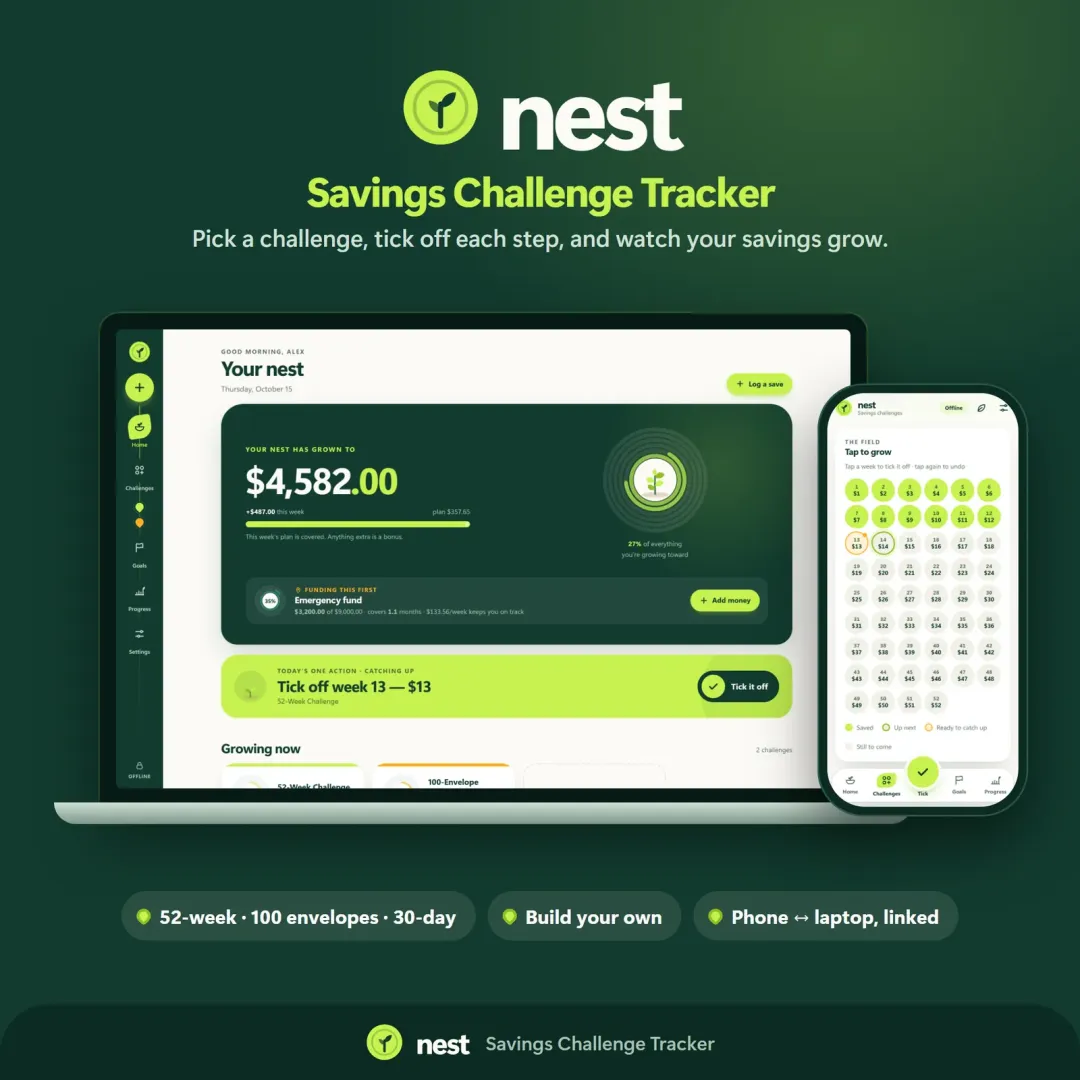
Nest savings challenge tracker with growth rings and a savings garden Live
Nest app icon

Nest

Savings Challenge Tracker

Run a 52-week, 365-day, no-spend or custom savings challenge and watch your savings grow — with goals, an emergency fund tracker and kind catch-up options.

Summit net worth tracker app showing net worth as a mountain range with one peak per monthly check-in Live
Summit app icon

Summit

Net Worth Tracker

A private net worth tracker for your phone and computer — add what you own and what you owe, check in once a month and watch your net worth climb, with milestones, a what-if forecast and a printable Net Worth Statement.

Keep planning

Related calculators

All calculators

CD Calculator

CD interest, maturity value, after-tax interest and early withdrawal cost.

Open calculator

Savings Calculator

Savings growth with monthly deposits, time to your goal and an APY comparison.

Open calculator

Further reading

Guides on this topic

All articles
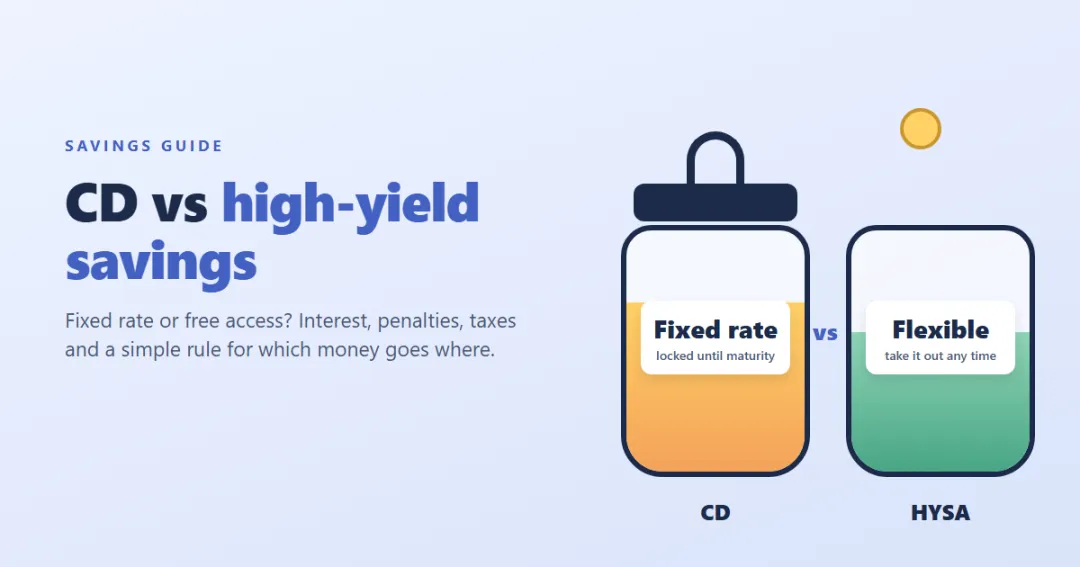
CD vs high-yield savings account — a locked jar with a fixed rate next to an open jar with a variable rate

Personal Finance

CD vs High-Yield Savings Account: Which Is Better for Your Money?

A CD locks in a rate; a high-yield savings account keeps your money free but its rate can fall. Here's how they really compare — interest, early withdrawal penalties, taxes and safety — with worked examples, a simple rule for which money goes where, and how to build a CD ladder.

9 min read
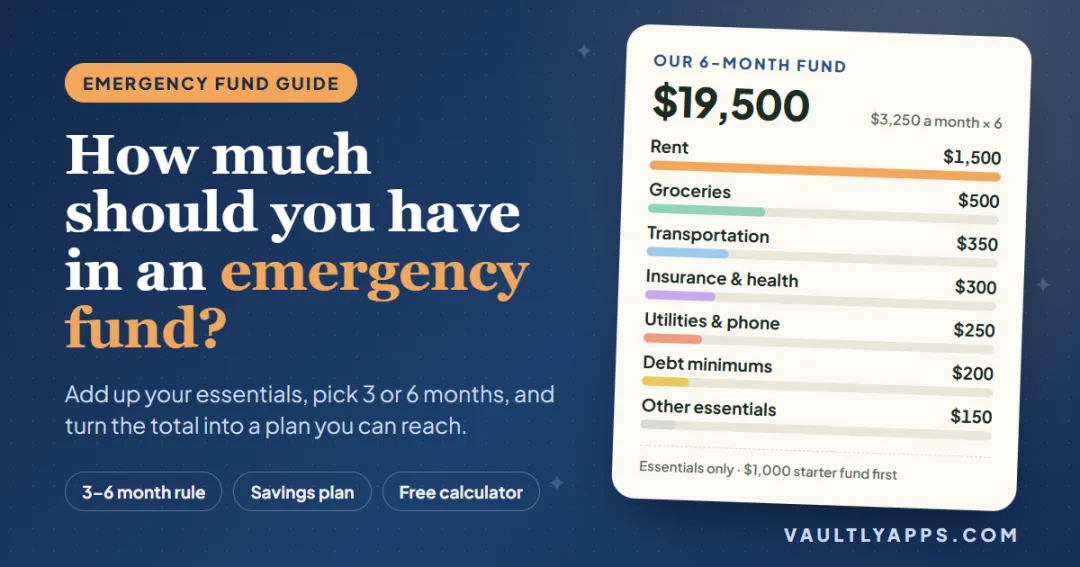
How much should you have in an emergency fund — a $19,500 six-month fund built from $3,250 of monthly essentials

Personal Finance

How Much Should You Have in an Emergency Fund?

How much emergency savings you really need, worked out step by step: add up your essentials, choose three, six or more months, and turn the total into a monthly plan you can actually reach.

7 min read
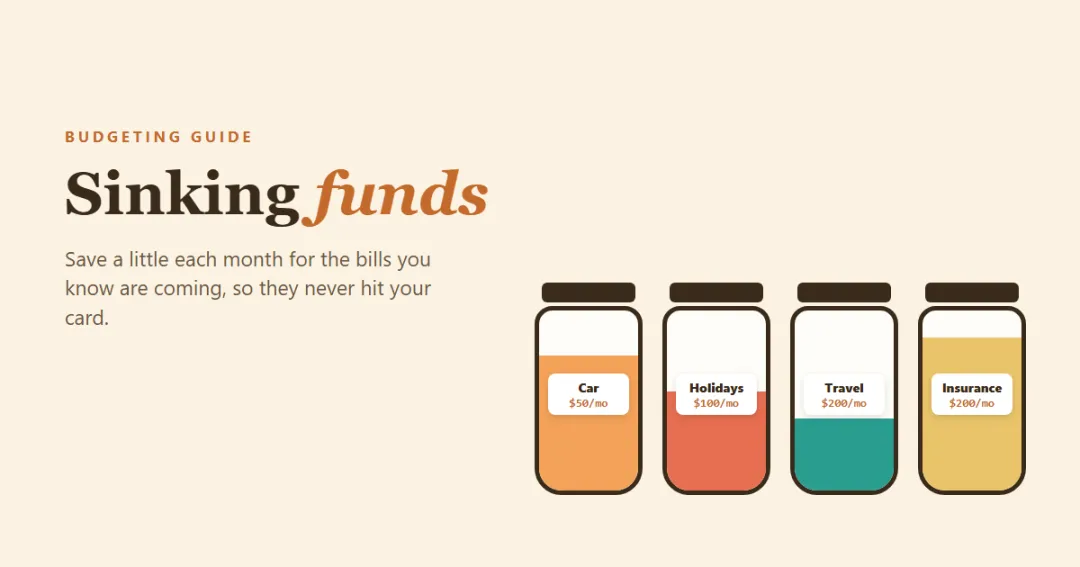
Sinking funds — labeled jars for car repairs, holidays, insurance and travel filling up each month

Personal Finance

Sinking Funds: What They Are, Examples and How to Start (With a Simple Plan)

A sinking fund is money you set aside a little at a time for an expense you know is coming — car repairs, holidays, insurance, a vacation — so it never lands on a credit card. Here's how sinking funds work, a list of the most useful ones, how to calculate the monthly amount, and where to keep the money.

6 min read

Try Nest free in your browser

Run a 52-week, 365-day, no-spend or custom savings challenge and watch your savings grow — with goals, an emergency fund tracker and kind catch-up options. The live demo uses sample data — nothing to install, no sign-up.

We use optional cookies for anonymous analytics. Nothing optional is set until you choose. Cookie policy