Word of the Year: How to Choose Yours, 150 Ideas and How to Live It
A word of the year is one word that guides your choices for twelve months — gentler than resolutions and easier to remember. How to choose yours in five steps, 150 word of the year ideas by theme, and how to keep it alive all year.
In this article
- What is a word of the year?
- Word of the year vs New Year's resolutions
- How to choose your word of the year in 5 steps
- 1. Look back at last year
- 2. Decide how you want this year to feel
- 3. Brainstorm 10 to 20 words
- 4. Test the finalists
- 5. Choose the word that comforts and stretches
- 150 word of the year ideas
- Growth and courage
- Calm and rest
- Focus and simplicity
- Joy and play
- Health and strength
- Connection and love
- Confidence and self-worth
- Money and security
- Faith and meaning
- Popular words of the year (and what they mean)
- How to live your word all year
- What if your word isn't working?
- A word of the year for families, teams and classrooms
- A word of the month
- Journal prompts for choosing your word
- The bottom line
Every January, millions of people write long lists of resolutions — and by February most of them are forgotten. A word of the year takes a different approach: instead of ten rules, you choose one word that describes how you want the year to feel, and let it guide your choices. It's easy to remember, kind on bad days and surprisingly powerful.
What is a word of the year?
A word of the year (also called "one little word") is a single word you carry through the year like a compass. When you're deciding whether to say yes to a project, what to do on a Sunday or how to react to a setback, you ask: "What would my word do here?"
It isn't a goal you can fail. If your word is rest, a busy week doesn't break it — it reminds you to plan a slower one next. That's why many people who've given up on resolutions stick with a word for years.
Word of the year vs New Year's resolutions
Resolutions | Word of the year | |
|---|---|---|
Format | A list of specific rules | One word |
Easy to remember | Not really | Yes |
What happens after a slip | Feels "broken" | Simply return to it |
Covers | One behaviour each | Every area of life |
Best for | Concrete changes | Direction and mindset |
The best approach is often both: a word for direction, and two or three small goals that put the word into action. If your word is strong, a goal might be "run a 10K by June" and a habit "walk every morning".
How to choose your word of the year in 5 steps
1. Look back at last year
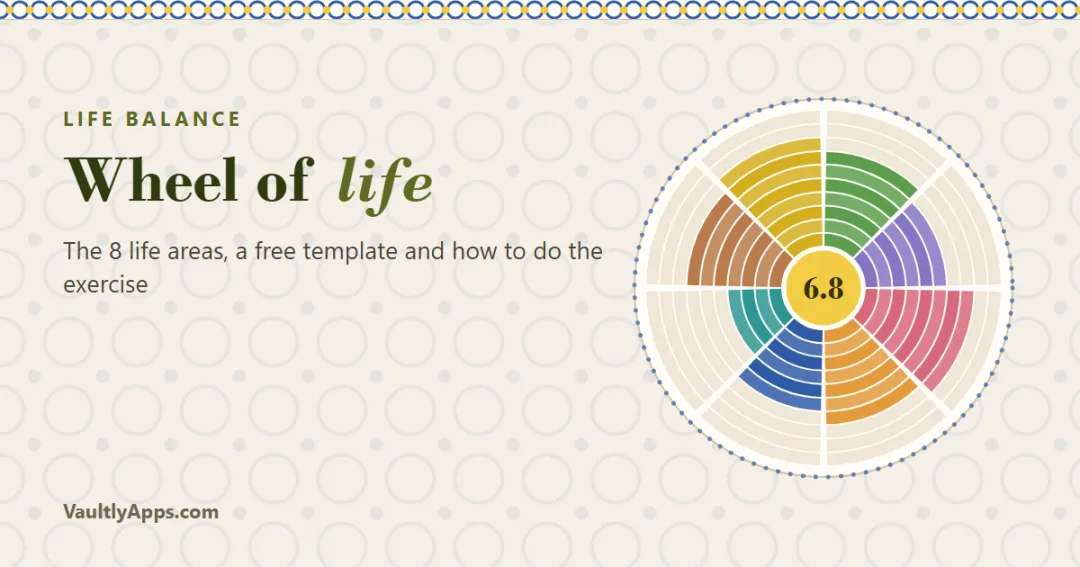
Spend fifteen minutes with these questions: What went well? What drained you? What do you want more of — and less of? Which area of life felt neglected? A quick wheel of life is a great way to see this at a glance.
2. Decide how you want this year to feel
Not what you want to achieve — how you want to feel. Calm? Brave? Free? Rooted? Write three to five feelings.
3. Brainstorm 10 to 20 words
Use the feelings, the lists below and a thesaurus. Write down every word that gives you a small "yes". Don't judge yet.
4. Test the finalists
Pick your top three and imagine real moments: a Monday morning, a hard conversation, a free Saturday, a tempting offer. Which word helps you make a better choice in each? Say each one out loud. Live with them for a few days.
5. Choose the word that comforts and stretches
The right word usually feels a little like a hug and a little like a nudge. If it only comforts, it may not change anything; if it only challenges, it may feel like a stick.
150 word of the year ideas
Growth and courage
grow, brave, bold, begin, rise, stretch, explore, leap, become, learn, dare, try, evolve, expand, venture, fearless, unstoppable, forward, build, create
Calm and rest
calm, rest, still, slow, breathe, gentle, ease, peace, quiet, soften, pause, restore, unhurried, tender, settle, cozy, simple, light, serene, unwind
Focus and simplicity
focus, simplify, clear, enough, less, essential, intentional, choose, edit, declutter, minimal, priority, one, deep, single, purpose, steady, aligned, direction, clarity
Joy and play
joy, play, delight, wonder, laugh, celebrate, savor, adventure, spark, sunshine, bloom, color, dance, fun, curious, light-hearted, sparkle, whimsy, zest, alive
Health and strength
strong, nourish, move, energy, vital, heal, well, fit, balance, care, sleep, glow, thrive, resilient, fuel, body, outdoors, fresh, renew, recover
Connection and love
love, connect, belong, open, kind, together, home, family, friendship, give, serve, listen, present, gather, community, grace, compassion, warmth, trust, share
Confidence and self-worth
worthy, capable, own, voice, confident, true, authentic, myself, boundaries, unapologetic, sovereign, rooted, whole, accept, proud, free
Money and security
abundance, invest, secure, save, wealth, generous, plan, freedom, prosper
Faith and meaning
faith, hope, grateful, believe, mindful, meaning, wisdom, patience, harmony, surrender
That's more than 150 — and if none of them feels right, that's useful information too: your word may be more personal, like garden, north or home.
Popular words of the year (and what they mean)
Enough — stop chasing more; notice what you already have.
Steady — consistency over intensity; small steps every week.
Bloom — grow in your own time, in your own way.
Present — fewer screens, more attention to the people and moments in front of you.
Brave — say yes to the thing that scares you a little.
Rest — make recovery part of the plan, not a reward for finishing everything.
Simplify — fewer commitments, fewer things, fewer decisions.
How to live your word all year
A word only works if you see it. A few ideas:
Put it everywhere. Phone wallpaper, a sticky note on the mirror, the first page of your planner, the top of your daily page.
Write a one-line meaning. "Steady means I show up a little every week, even when it's not perfect."
Link it to one goal per season. Your word is the direction; a quarterly goal is the next step.
Use it to say no. "Does this fit my word?" is a gentle filter for invitations and projects.
Review it monthly. On the first of the month, ask where your word showed up and where it didn't.
Pick a word of the month too. A smaller word for the next four weeks keeps the practice fresh.
What if your word isn't working?
It happens. Three months in, the word you loved in January feels flat. That doesn't mean the practice failed — it means you learned something.
Your word is too abstract. "Balance" can mean anything. Try a more concrete cousin: slow, home, enough.
Your word is a stick, not a compass. If it only makes you feel guilty ("discipline", "productive"), swap it for one that pulls you forward: steady, build, show up.
Life changed. A new job, a move, a baby, an illness — it's fine to choose a new word for a new season.
You forgot it. Put it back where you'll see it every day, and add it to your weekly review.
Some people find a word for each quarter works better than one for the whole year: one word for winter, one for spring, and so on.
A word of the year for families, teams and classrooms
A shared word is a lovely ritual:
Families: each person picks a word, and together you choose one for the household — together, adventure, kind. Write them on a card on the fridge and talk about them at dinner once a month.
Couples: one shared word for the relationship, like play or home, plus your own personal words.
Teams: a word such as focus, simple or care gives a team a shared filter for decisions. Revisit it at quarterly planning.
Classrooms: students choose a word, illustrate it and reflect on it at the end of each term.
A word of the month
If a whole year feels like a lot, start with a word of the month. It's a lovely part of a monthly reset: look back at the last month, choose three intentions for the next one, and sum it up in one word — Bloom, Steady, Rest.
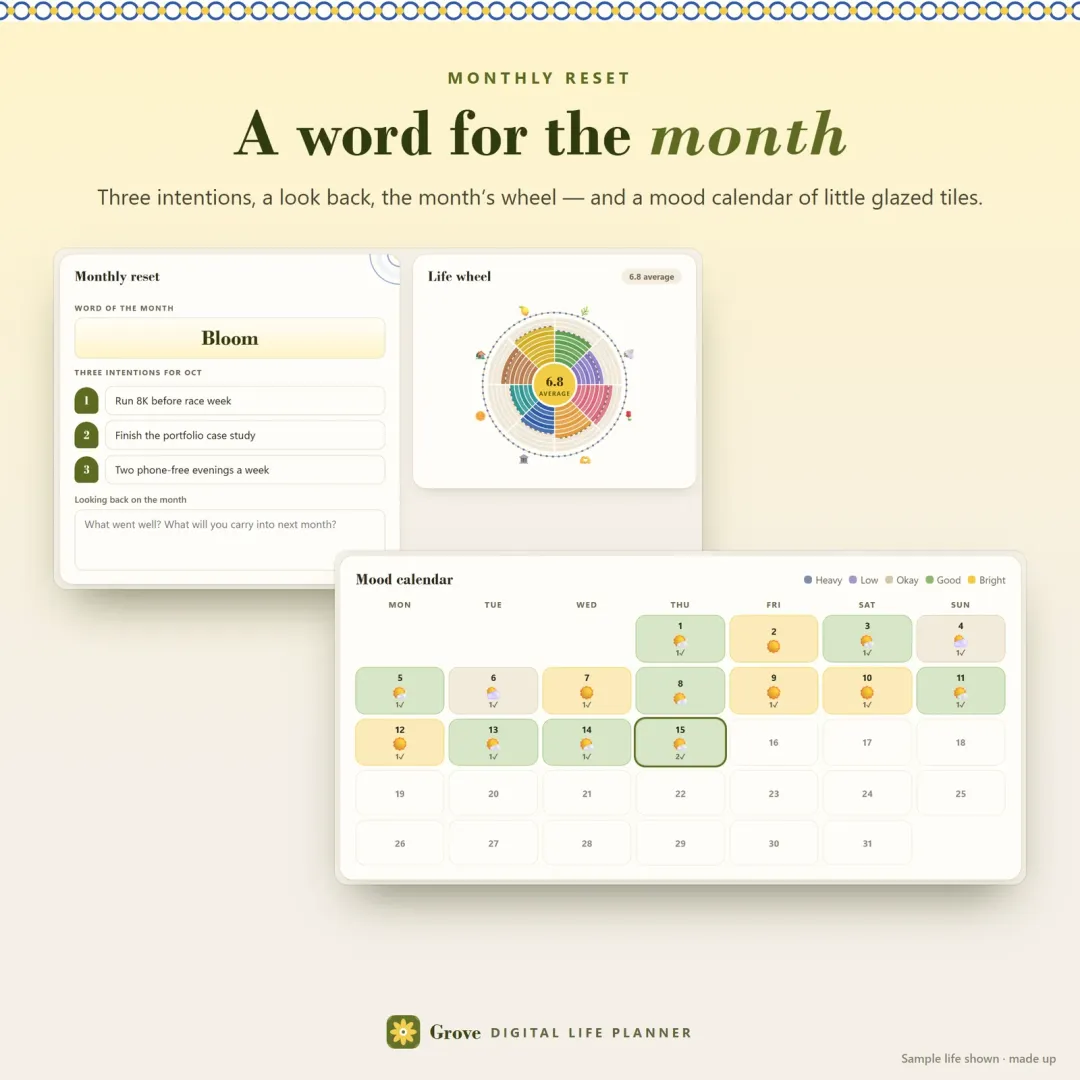
A monthly reset with a word of the month, three intentions and a mood calendar.
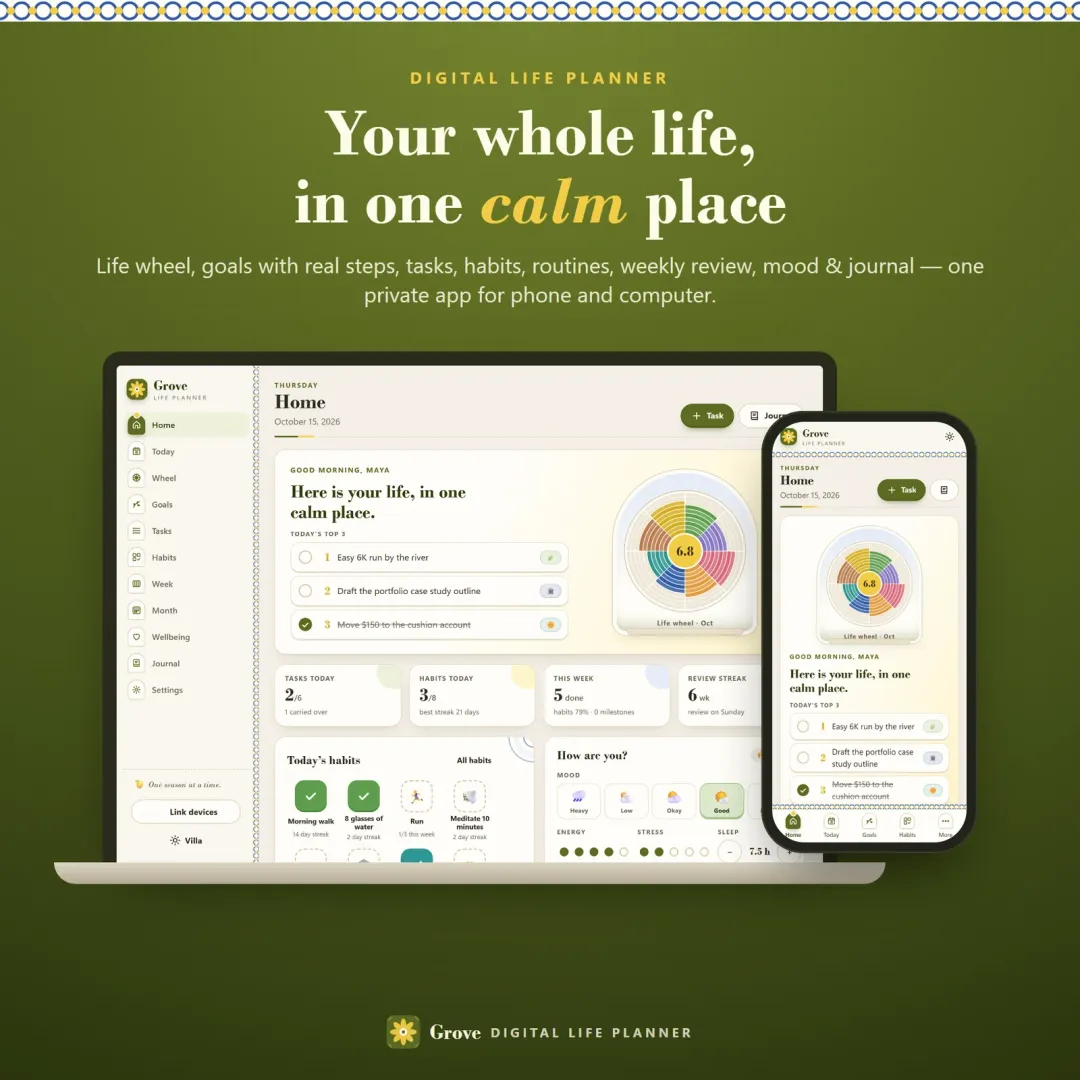
Grove, our digital life planner, has this built into its Month page: a word of the month, three intentions, a short look back, the month's life wheel and a mood calendar. You can try it in the free demo.
Journal prompts for choosing your word
What do I want to feel on an ordinary Tuesday this year?
What did last year teach me?
What am I tired of?
If this year had a title, what would it be?
What would I do more of if I weren't afraid?
Which word would my best friend choose for me?
If journaling helps you think, our guide to building a self-care routine has more gentle prompts.
The bottom line
A word of the year is one of the simplest planning tools there is: one word, chosen with care, that guides a whole year of small decisions. Look back, decide how you want to feel, test a few words in real situations, and pick the one that comforts and stretches you. Then keep it where you'll see it — and check in every month.
Frequently asked questions
What is a word of the year?
How do I choose my word of the year?
Is a word of the year better than New Year's resolutions?
Can I change my word of the year?
What are good words of the year?
What's a word of the month?
Written by
Finance Specialist & Editor, VaultlyApps
Emma Whitfield writes and edits the VaultlyApps money guides and free calculators. Her focus is US household finance — budgeting on a real paycheck, paying down credit card and student debt, emergency funds and savings goals, renting — and the money side of freelancing and small-business income, from pricing and profit margins to self-employment tax. Every guide is researched against primary sources such as IRS publications and the CFPB, every number is checked in our tested calculators, and tax content is reviewed each year when new IRS figures come out. Emma is not a licensed financial adviser or tax preparer; her work is general education, not personal advice.
Researched against primary US sources, checked with our calculators and reviewed by a finance expert on our team. Written for US readers — general education, not financial, tax or legal advice. Editorial policy · Disclaimer